We’d like to remind Forumites to please avoid political debate on the Forum.
This is to keep it a safe and useful space for MoneySaving discussions. Threads that are – or become – political in nature may be removed in line with the Forum’s rules. Thank you for your understanding.
📨 Have you signed up to the Forum's new Email Digest yet? Get a selection of trending threads sent straight to your inbox daily, weekly or monthly!
The Forum now has a brand new text editor, adding a bunch of handy features to use when creating posts. Read more in our how-to guide
Unauthorised ATM withdrawal- Ombudsman ruled in favour of bank
Comments
-
Where does the TFL barrier come into the story any way? Was it not a matter of topping up an oyster card which isn't done at the barrier but at a separate payment point?dusthug said:This a known but difficult MO to detect. In short, it involves a compromised terminal at a TFL barrier. The terminal transmits to a fraudster using a repeater and receiver with a connected card at a nearby ATM.
The wATM ithdrawal normal happens within 2 minutes of the attempted tap at the barrier.1 -
That story is nothing like your "compromised terminal" theory, it concerns a phantom withdrawal from an account, much like that reported by the OP.dusthug said:
www.spectator.co.uk/article/fraud-victim-dont-bank-on-getting-your-money-back/sausage_time said:
I have not heard of this kind of attack before. Do you have any links to reports? It it specific to TFL terminals?dusthug said:This a known but difficult MO to detect. In short, it involves a compromised terminal at a TFL barrier. The terminal transmits to a fraudster using a repeater and receiver with a connected card at a nearby ATM.
The wATM ithdrawal normal happens within 2 minutes of the attempted tap at the barrier.
That's the closest I've seen reported publicly.
You said this type of crime is "known", by whom? reported where? For a few hundred quid a time?
Nah.
1 -
This (ancient) report could be relevant:
https://www.cl.cam.ac.uk/research/security/banking/relay/
But it is an old paper, and if the vulnerability was genuine and practical I'm sure it would have been addressed by now. If not, we would see thousands of such incidents, not a handful.I’m a Forum Senior Ambassador and I support the Forum Team on the Credit Cards, Savings & Investments, Budgeting & Bank Accounts, and Techie Stuff boards. If you need any help on these boards, do let me know. Please note that Ambassadors are not moderators. Any posts you spot in breach of the Forum Rules should be reported via the report button, or by emailing forumteam@moneysavingexpert.com. All views are my own and not the official line of MoneySavingExpert.0 -
For what it worth. Ages ago I received a call from HSBC which I didn't answer. I then received a text asking me to contact their Fraud department ASAP. When I got around calling them, I was told that there was chip & pin transaction for over £200 in McDonalds about 300 miles way from where I live, which they have blocked.
I do not know anything about cloning chip & pin (though I recently learnt that when one pays contactless the information transmitted can be read/recorded from nearly 20 meters away), but I am somewhat surprised that the bank will insist it is not possible to make a fraudulent copy.0 -
It links to one of the earliest YouTube videos (Feb 2007), demonstrating Chip & PIN fraud:sausage_time said:This (ancient) report could be relevant:
https://www.cl.cam.ac.uk/research/security/banking/relay/
But it is an old paper, and if the vulnerability was genuine and practical I'm sure it would have been addressed by now. If not, we would see thousands of such incidents, not a handful.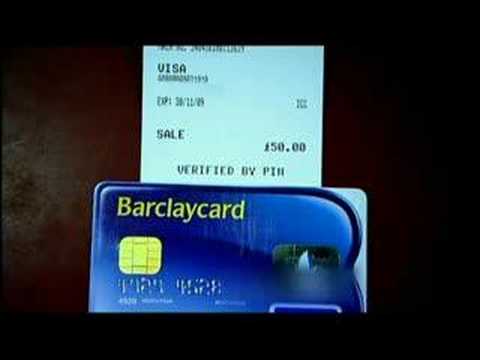 https://www.youtube.com/watch?v=X7pjUIxKoEc
Followed by an update from October 2015 (from the same professor at Cambridge University who demonstrated the above proof of concept): https://www.youtube.com/watch?v=Ks0SOn8hjG8
0 -
Banks are not the police. They do not have the authority to do this.AmityNeon said:So as far as banks are concerned:
- Customers are always lying if they claim to be victims of inexplicable fraudulent withdrawals.
- Aside from cases involving theft or coercion, ATM withdrawals are always authorised by the customer.
- They will certainly never investigate CCTV or divert resources towards courses of action that could potentially result in monetary loss via paying compensation, considering the infallibility of inherently-authorised ATM withdrawals.
Banks are not on the side of customers; bank protect only themselves from fraud, which includes attempts at fraud by their own customers.
Avoid having debit cards altogether, or keep cards frozen except at the immediate point of use (NatWest had the cheek to advise me not to do this because freezes aren't designed for such use cases — I don't care).
Everything the banks need to prove their side of the case is on their internal systems.
Banks hand over millions in fraud refunds.Life in the slow lane1











Confirm your email address to Create Threads and Reply

Categories
- All Categories
- 354.6K Banking & Borrowing
- 254.5K Reduce Debt & Boost Income
- 455.5K Spending & Discounts
- 247.5K Work, Benefits & Business
- 604.4K Mortgages, Homes & Bills
- 178.6K Life & Family
- 262K Travel & Transport
- 1.5M Hobbies & Leisure
- 16.1K Discuss & Feedback
- 37.7K Read-Only Boards