We’d like to remind Forumites to please avoid political debate on the Forum.
This is to keep it a safe and useful space for MoneySaving discussions. Threads that are – or become – political in nature may be removed in line with the Forum’s rules. Thank you for your understanding.
DIY Stable Renovation: Need Your Advice and Ideas!
Comments
-
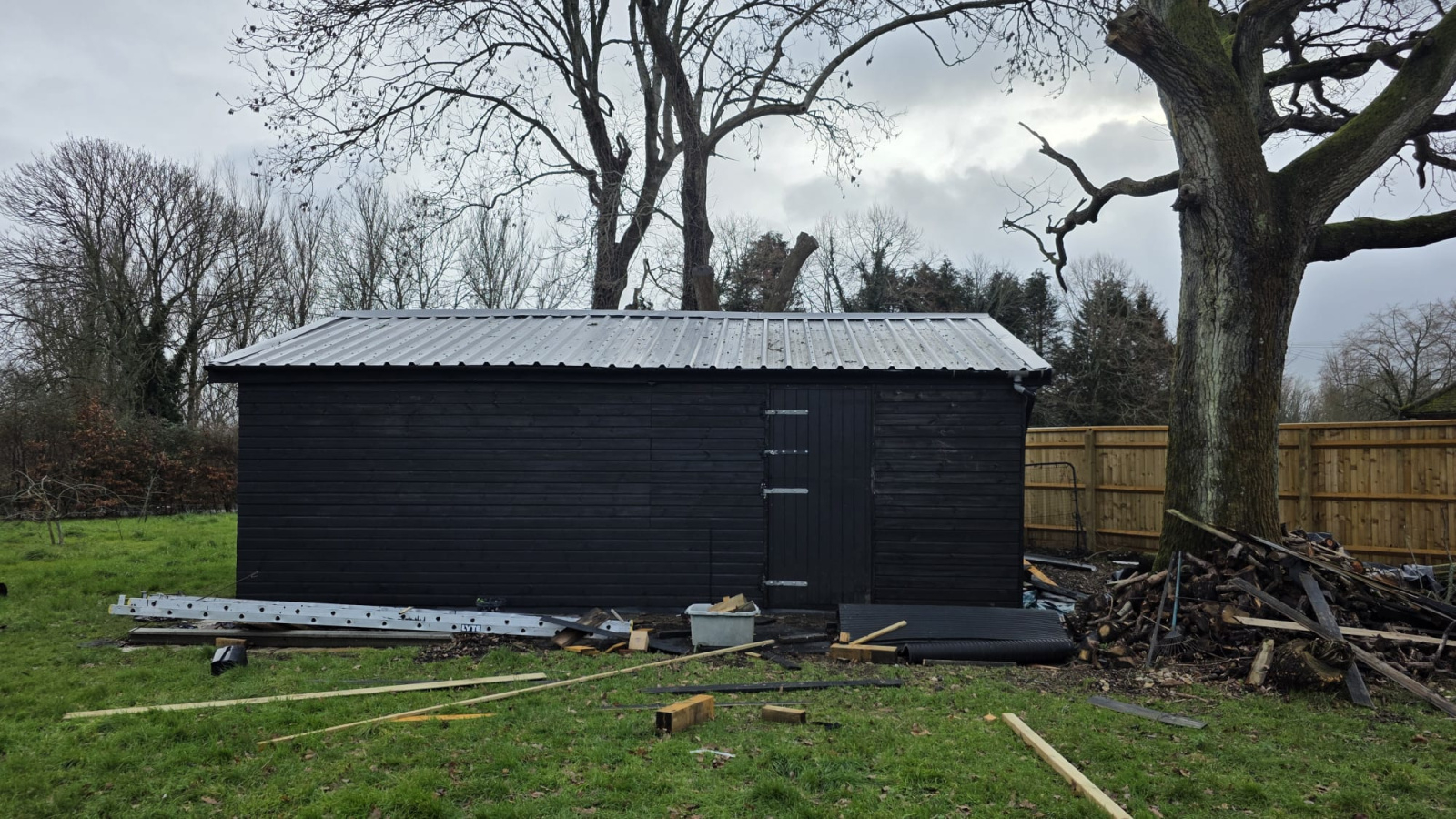
The external work is complete, apart from a few touch-ups. Now the real work begins—making it purposeful.
This was the first photo I posted with this thread in October 2024.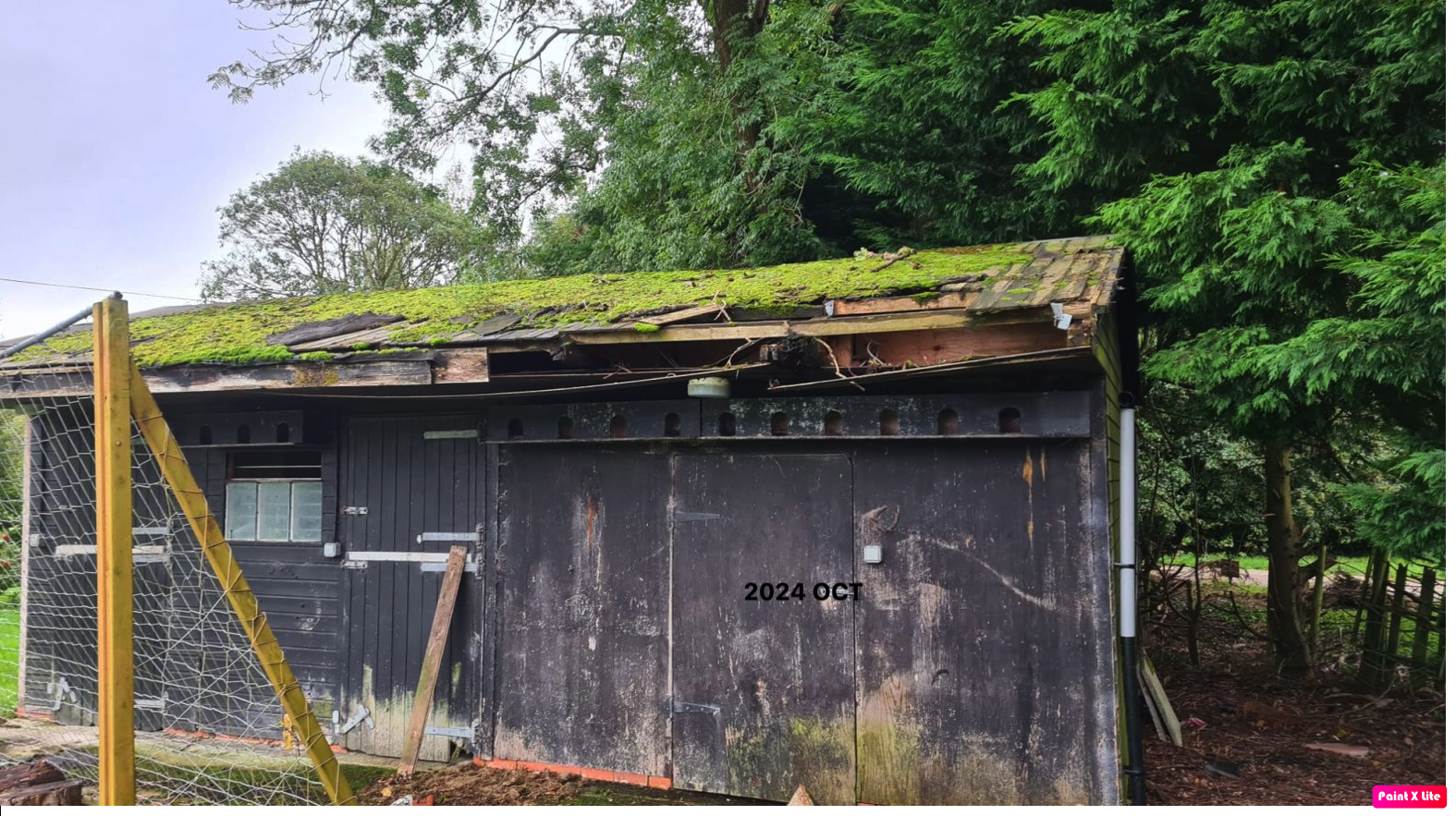
2 -
The next step is electrification, but I haven’t got a clue where to start. Surely someone here can help me with this. Having got this far, you can probably tell I’m not that bad at DIY—as long as I get some guidance. That’s how I’ve reached this stage.
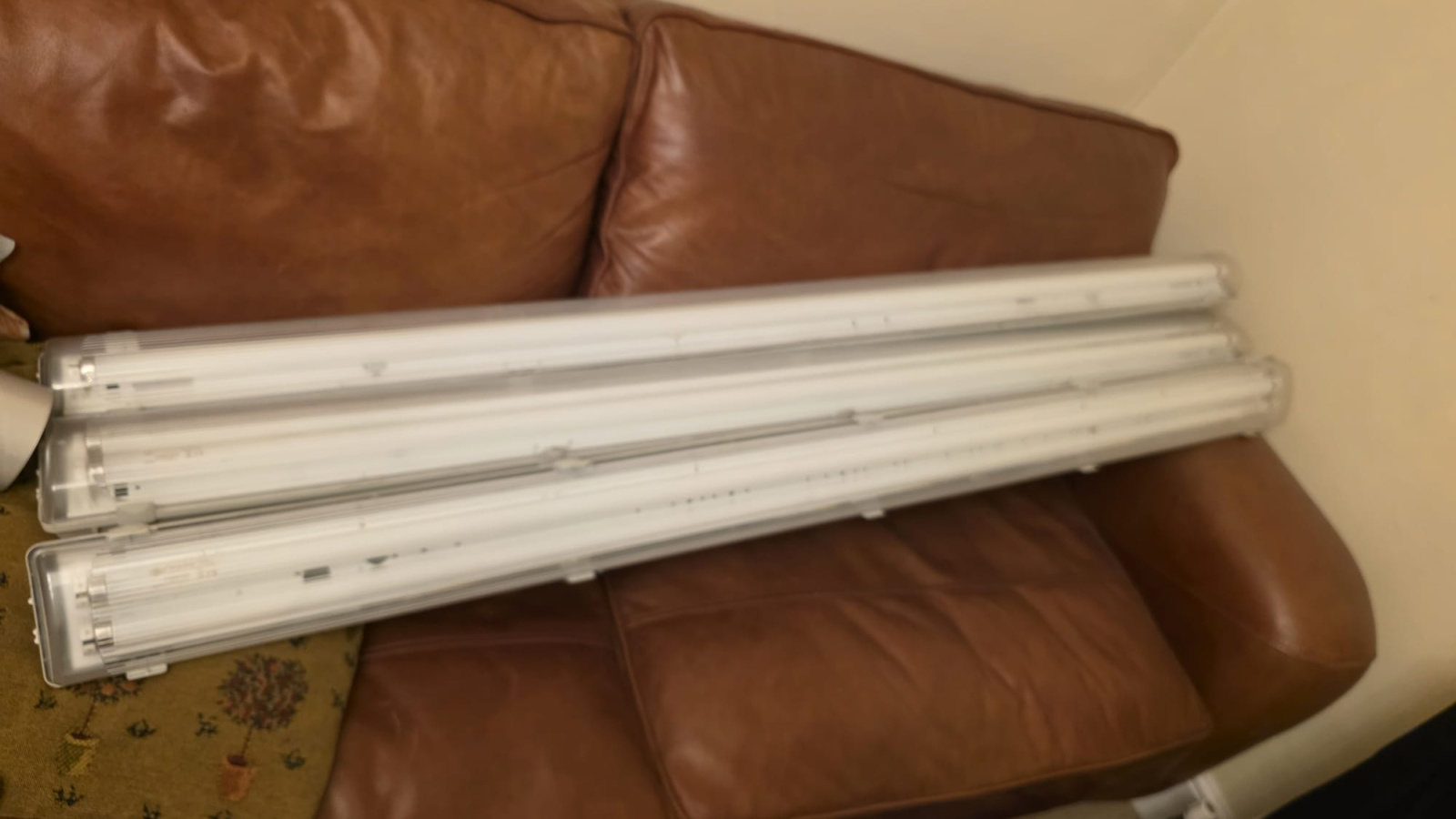
I’ve done rewiring for house extensions before, but I’m not sure how to approach something as large as this structure. I managed to salvage most of the lights (see photo) from the old connections, along with the RCBs and switches, and I’m planning to reuse as many of them as possible, especially for the additional lighting at the top.
Now that there’s no sunlight coming through the window, I need to maximise efficient lighting.
My idea is to complete all the internal wiring first and only then make the permanent connection to the supply. Until then, I’ll use an extension lead to connect power temporarily so I can test the circuits and connections.
I wish I had kept the previous wiring intact as a reference, but unfortunately I didn’t keep it in a way that I can now use as guidance.
0 -
Are you going to surface wire, or place it behind wall panelling?
Strongly suggest you go LED as much as possible - they last 'forever', and use far less power. Look for LED tubes for these fittings, if you really want to reuse them.
What will the ultimate supply be - a buried SWA from the house CU?1 -
Forgot to say - the shed looks great! 😸1
-
This wiring diagram was generated using ChatGPT.
Room1 & 2 are the main rooms and Room 3 the new space created in the extension area.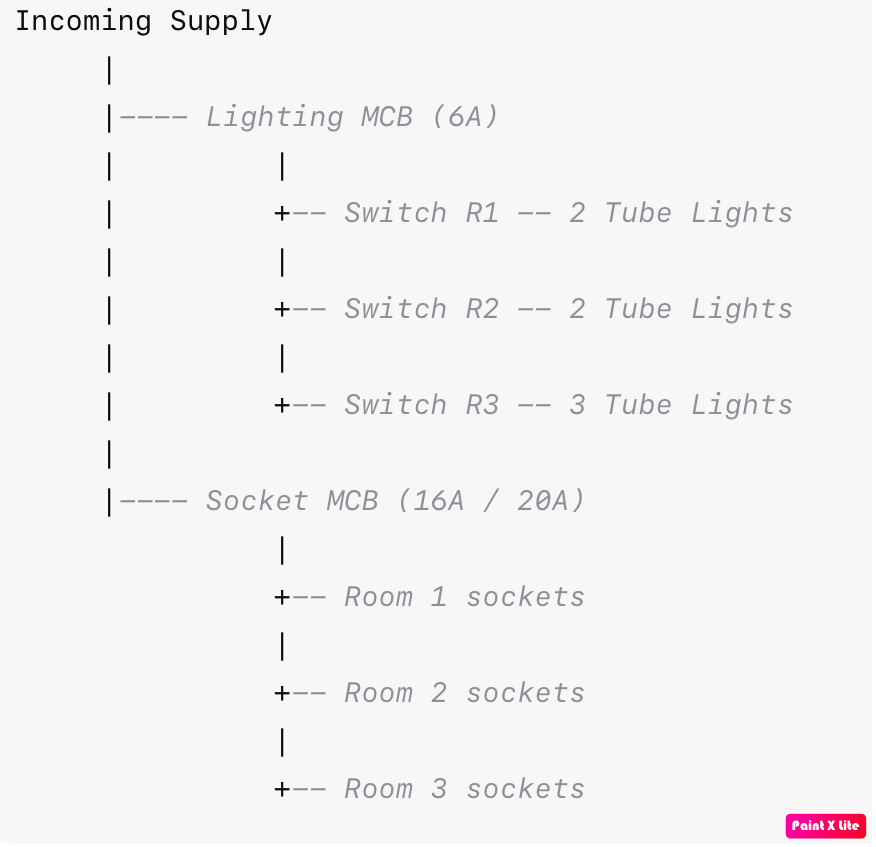
0 -
sujsuj said:This wiring diagram was generated using ChatGPT.
Room1 & 2 are the main rooms and Room 3 the new space created in the extension area.Don't use ChatGTP to design electrical systems. It has given you a meaningless image, not a 'wiring diagram'.Before anything else you need to think about WIAWSNB's question - how are you getting a supply to the shed?2 -
WIAWSNB said:Are you going to surface wire, or place it behind wall panelling?
Strongly suggest you go LED as much as possible - they last 'forever', and use far less power. Look for LED tubes for these fittings, if you really want to reuse them.
What will the ultimate supply be - a buried SWA from the house CU?I am planning to re-use some of the electrical pipes that were used previously. At that time, the wires were run inside the pipes, but the walls were not covered with plywood.
I am planning to install as many LED lights as possible. I would like to know whether these LED lights can fit into the existing tube-light frames and whether the current starters will work, or if the starters need to be replaced depending on the LED tube wattage.
I had posted the above question in 2022 to find the power supply source. I just realised that I haven’t checked some sockets on the ground floor near the stable. I am going to check them now to locate the supply.
The plan is to bury the wires inside conduits as required.
0 -
Section62 said:sujsuj said:This wiring diagram was generated using ChatGPT.
Room1 & 2 are the main rooms and Room 3 the new space created in the extension area.Don't use ChatGTP to design electrical systems. It has given you a meaningless image, not a 'wiring diagram'.Before anything else you need to think about WIAWSNB's question - how are you getting a supply to the shed?I’ve just replied to this now. This is something I need to figure out myself. Looking back, I realise there were clues that I somehow ignored when I originally posted this question on the forum in 2022, before I started planning the stable rebuild.
Now I’m going back to those leads and will try to locate the supply based on the replies given to that post.
But for the time being I am going ahead with internal wiring connecting an extension wire connection and permanent connection will be sorted out later. Thanks
0 -
sujsuj said:Section62 said:sujsuj said:This wiring diagram was generated using ChatGPT.
Room1 & 2 are the main rooms and Room 3 the new space created in the extension area.Don't use ChatGTP to design electrical systems. It has given you a meaningless image, not a 'wiring diagram'.Before anything else you need to think about WIAWSNB's question - how are you getting a supply to the shed?I’ve just replied to this now. This is something I need to figure out myself. Looking back, I realise there were clues that I somehow ignored when I originally posted this question on the forum in 2022, before I started planning the stable rebuild.
Now I’m going back to those leads and will try to locate the supply based on the replies given to that post.
But for the time being I am going ahead with internal wiring connecting an extension wire connection and permanent connection will be sorted out later. Thanks
You need to rethink this before you kill yourself or a family member.The usual method of electrical design is to work out what you will be using in the building and design the circuits back towards the supply, then check that the public mains supply is Ok for the design.The reason for asking how you were going to supply the shed is because in your case a different approach is needed - as you are doing the project in an economical way, you need to look at the costs of getting a supply to the shed, then work out what you can safely install in it given your chosen method of supply. E.g. the current capacity of 2.5mm cable is much lower than (say) 6mm cable. If you opt for 2.5mm cable to save money then what you can install in the shed will be very limited. If you just supply the shed via an extension lead you'll be limited further.There is zero point filling the shed with lights and sockets if you don't want to install a sufficient (and safe) supply for them.A wiring job like this is best left to a professional electrician as electric in outdoor buildings poses greater risks than electric in the home. But if you are going to DIY the job then you do need to understand what you are doing, and take advice on how to do it safely.1 -
sujsuj said:...I am planning to install as many LED lights as possible. I would like to know whether these LED lights can fit into the existing tube-light frames and whether the current starters will work, or if the starters need to be replaced depending on the LED tube wattage.There's no point buying LED replacement tubes to go in those old fittings. The best thing to do is to store them in your garage so you've got replacements if the lights in there fail.As you are starting from scratch in the shed, use proper LED fittings to begin with.2








Confirm your email address to Create Threads and Reply

Categories
- All Categories
- 355.7K Banking & Borrowing
- 254.9K Reduce Debt & Boost Income
- 456.1K Spending & Discounts
- 248.3K Work, Benefits & Business
- 605.9K Mortgages, Homes & Bills
- 179K Life & Family
- 263.7K Travel & Transport
- 1.5M Hobbies & Leisure
- 16.2K Discuss & Feedback
- 37.7K Read-Only Boards