We’d like to remind Forumites to please avoid political debate on the Forum.
This is to keep it a safe and useful space for MoneySaving discussions. Threads that are – or become – political in nature may be removed in line with the Forum’s rules. Thank you for your understanding.
📨 Have you signed up to the Forum's new Email Digest yet? Get a selection of trending threads sent straight to your inbox daily, weekly or monthly!
Regular Savings Accounts: The Best Currently Available List!
Comments
-
I don’t recall having to complete 5 pages of questions when I applied on Sat 24/2. Application was acknowledged immediately & approved Sun 25/2. New account appeared in app on Tue 27/2, so within 2 working days. Not immediate, but not ‘totally ridiculous’ IMO.bioboybill said:Applied for the Co-op Regular Saver for existing customers yesterday. Every other RS for existing customers I have opened with other banks has taken minutes to open and fund. I had to fill in 5 pages of questions they should already know the answers to before being told it will take them several days to give me a decision. Totally ridiculous!
I was, however, rather surprised to be thanked (by emai) for joining Co-operative bank and welcomed (by post). I’ve had a current account for over 50 years🤔1 -
So if someone is employed getting £50,000 salary through PAYE, and also receives £600 interest income, does this put them in the 40% tax band? Would their PSA be £1000 or £500?friolento said:kaMelo said:
Does it really matter? Surely maximising interest is more beneficial irrespective of any tax liability.mattojgb said:
You didn't need to even have any savings to qualify for the payment.CuparLad said:Re: the Nationwide Fairer Share PaymentThe payment is taxable savings income. This means that it is treated in the same way as any interest you may earn on your savings account or current account. We are not required to deduct any tax from the payment, but we will report it to HM Revenue & Customs (HMRC).You may be liable to income tax on the payment, depending on whether the total amount of interest you have received in the tax year is more than your Personal Savings Allowance.
I was thinking I'd kept my interest earnings below the threshold, but this would take me over.
It may well matter for those who get catapulted into Higher Rate tax by this payment. Suddenly their tax free amount drops from £1,000 to £500, and they get to pay 40% tax on anything above £500.0 -
badger09 said:
I don’t recall having to complete 5 pages of questions when I applied on Sat 24/2. Application was acknowledged immediately & approved Sun 25/2. New account appeared in app on Tue 27/2, so within 2 working days. Not immediate, but not ‘totally ridiculous’ IMO.bioboybill said:Applied for the Co-op Regular Saver for existing customers yesterday. Every other RS for existing customers I have opened with other banks has taken minutes to open and fund. I had to fill in 5 pages of questions they should already know the answers to before being told it will take them several days to give me a decision. Totally ridiculous!
I was, however, rather surprised to be thanked (by emai) for joining Co-operative bank and welcomed (by post). I’ve had a current account for over 50 years🤔
I applied for the RS on Tuesday 27 February - email acknowledged and then nothing until a letter arrived yesterday with sort code and account number saying more checks being done. The account showed on the app so I've funded it. Slow? Extremely, but it worked.
0 -
PSA would be £500 as it kicks in from income above £50,270. 50k salary plus £600 interest = £50.600NorwichMan said:
So if someone is employed getting £50,000 salary through PAYE, and also receives £600 interest income, does this put them in the 40% tax band? Would their PSA be £1000 or £500?friolento said:kaMelo said:
Does it really matter? Surely maximising interest is more beneficial irrespective of any tax liability.mattojgb said:
You didn't need to even have any savings to qualify for the payment.CuparLad said:Re: the Nationwide Fairer Share PaymentThe payment is taxable savings income. This means that it is treated in the same way as any interest you may earn on your savings account or current account. We are not required to deduct any tax from the payment, but we will report it to HM Revenue & Customs (HMRC).You may be liable to income tax on the payment, depending on whether the total amount of interest you have received in the tax year is more than your Personal Savings Allowance.
I was thinking I'd kept my interest earnings below the threshold, but this would take me over.
It may well matter for those who get catapulted into Higher Rate tax by this payment. Suddenly their tax free amount drops from £1,000 to £500, and they get to pay 40% tax on anything above £500.
1 -
NorwichMan said:
So if someone is employed getting £50,000 salary through PAYE, and also receives £600 interest income, does this put them in the 40% tax band? Would their PSA be £1000 or £500?friolento said:kaMelo said:
Does it really matter? Surely maximising interest is more beneficial irrespective of any tax liability.mattojgb said:
You didn't need to even have any savings to qualify for the payment.CuparLad said:Re: the Nationwide Fairer Share PaymentThe payment is taxable savings income. This means that it is treated in the same way as any interest you may earn on your savings account or current account. We are not required to deduct any tax from the payment, but we will report it to HM Revenue & Customs (HMRC).You may be liable to income tax on the payment, depending on whether the total amount of interest you have received in the tax year is more than your Personal Savings Allowance.
I was thinking I'd kept my interest earnings below the threshold, but this would take me over.
It may well matter for those who get catapulted into Higher Rate tax by this payment. Suddenly their tax free amount drops from £1,000 to £500, and they get to pay 40% tax on anything above £500.
The interest is part of your taxable income, so it would be £50,600 and just bring you into the HR tax band. Your PSA would only be £500 then.
1 -
friolento said:kaMelo said:
Does it really matter? Surely maximising interest is more beneficial irrespective of any tax liability.mattojgb said:
You didn't need to even have any savings to qualify for the payment.CuparLad said:Re: the Nationwide Fairer Share PaymentThe payment is taxable savings income. This means that it is treated in the same way as any interest you may earn on your savings account or current account. We are not required to deduct any tax from the payment, but we will report it to HM Revenue & Customs (HMRC).You may be liable to income tax on the payment, depending on whether the total amount of interest you have received in the tax year is more than your Personal Savings Allowance.
I was thinking I'd kept my interest earnings below the threshold, but this would take me over.
It may well matter for those who get catapulted into Higher Rate tax by this payment. Suddenly their tax free amount drops from £1,000 to £500, and they get to pay 40% tax on anything above £500.Although a niche scenario I guess it can matter. It would be better not to run things so close though by using a pension to soak up any 40% income.0 -
Lots of negative comment here about Co-op. I think expectation levels need to be lowered by some as they are, in relative terms a small independent bank so will not have the infrastructure as others do.
Like many here I'm new to them but the CA was opened and online within 2-3 working days. The RS took 7 working days to show online, but that's not an issue as like Monmouth BS the 12 month clock doesn't start until the first deposit so profit can be maximised (+£13) by funding on the 28th Mar and then again a few days later.
I haven't received any correspondence confirming the RS being open, but what does it matter, I can see it online.
ETA; Mail confirmation now arrived and it states 7% Variable as I know some received the letter stating it's fixed
4 -
But it's a scenario to be aware of. Especially those who may be already paying the max into their pension.kaMelo said:friolento said:kaMelo said:
Does it really matter? Surely maximising interest is more beneficial irrespective of any tax liability.mattojgb said:
You didn't need to even have any savings to qualify for the payment.CuparLad said:Re: the Nationwide Fairer Share PaymentThe payment is taxable savings income. This means that it is treated in the same way as any interest you may earn on your savings account or current account. We are not required to deduct any tax from the payment, but we will report it to HM Revenue & Customs (HMRC).You may be liable to income tax on the payment, depending on whether the total amount of interest you have received in the tax year is more than your Personal Savings Allowance.
I was thinking I'd kept my interest earnings below the threshold, but this would take me over.
It may well matter for those who get catapulted into Higher Rate tax by this payment. Suddenly their tax free amount drops from £1,000 to £500, and they get to pay 40% tax on anything above £500.Although a niche scenario I guess it can matter. It would be better not to run things so close though by using a pension to soak up any 40% income.
My priority of paying into accounts is 7.5% and above first, then offset mortgage (currently 6%), then accounts paying 6.5-7.5%, then ISA when the new tax year starts at 5% (currently fully paid up for this year), then accounts in descending order, with easy access taking priority over those with restricted access.
This order of priority may change should the mortgage and ISA rates change.
I'm hoping I will stay out of the PSA next tax year, and my put money into investments to help stay out of it, as this time last year it was much easier to stay out of the PSAI consider myself to be a male feminist. Is that allowed?0 -
Apologies for taking this further off topic, but this is the situation I find myself in. I thought I'd adjusted pension contributions so my salary was below the threshold, but I hadn't accounted for all my interest earnings. I'm too late now to put any more pension in via my employer, I can only put it into my SIPP. How complex is it to then unwind/claim back all the 40% tax payments? Kind of a nice problem to have, although only down to the frozen thresholds. ThankskaMelo said:friolento said:kaMelo said:
Does it really matter? Surely maximising interest is more beneficial irrespective of any tax liability.mattojgb said:
You didn't need to even have any savings to qualify for the payment.CuparLad said:Re: the Nationwide Fairer Share PaymentThe payment is taxable savings income. This means that it is treated in the same way as any interest you may earn on your savings account or current account. We are not required to deduct any tax from the payment, but we will report it to HM Revenue & Customs (HMRC).You may be liable to income tax on the payment, depending on whether the total amount of interest you have received in the tax year is more than your Personal Savings Allowance.
I was thinking I'd kept my interest earnings below the threshold, but this would take me over.
It may well matter for those who get catapulted into Higher Rate tax by this payment. Suddenly their tax free amount drops from £1,000 to £500, and they get to pay 40% tax on anything above £500.Although a niche scenario I guess it can matter. It would be better not to run things so close though by using a pension to soak up any 40% income.0 -
Message from Skipton:
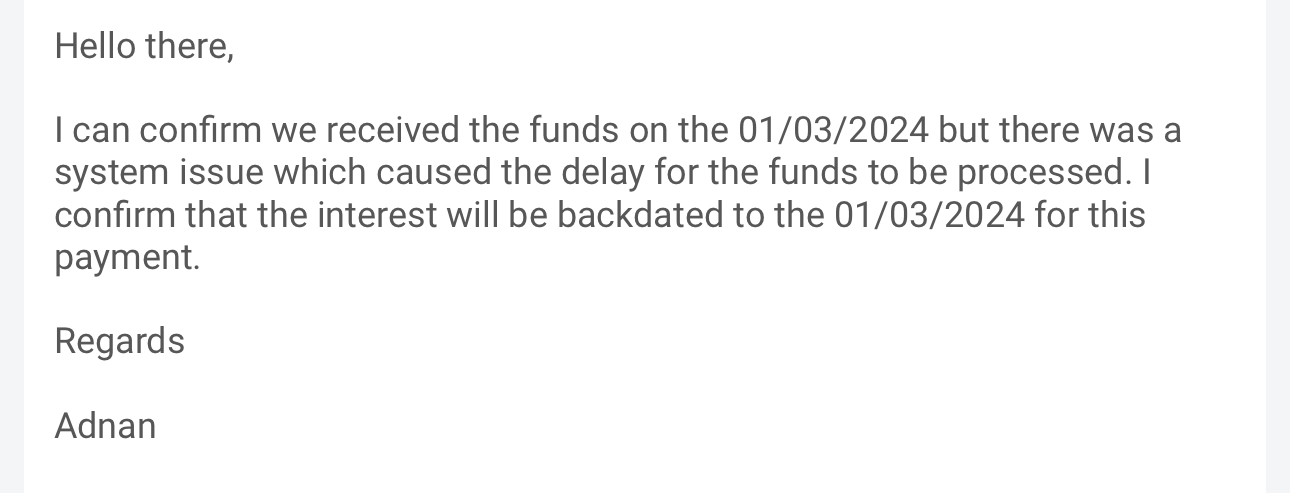 The date for the deposit still shows as the 4th. May be it will update overnight?0














This discussion has been closed.
Confirm your email address to Create Threads and Reply

Categories
- All Categories
- 355.3K Banking & Borrowing
- 254.7K Reduce Debt & Boost Income
- 455.9K Spending & Discounts
- 248K Work, Benefits & Business
- 605.2K Mortgages, Homes & Bills
- 178.9K Life & Family
- 262.9K Travel & Transport
- 1.5M Hobbies & Leisure
- 16.1K Discuss & Feedback
- 37.7K Read-Only Boards