We’d like to remind Forumites to please avoid political debate on the Forum.
This is to keep it a safe and useful space for MoneySaving discussions. Threads that are – or become – political in nature may be removed in line with the Forum’s rules. Thank you for your understanding.
📨 Have you signed up to the Forum's new Email Digest yet? Get a selection of trending threads sent straight to your inbox daily, weekly or monthly!
Stock markets are too high and set to fall?
Comments
-
I must say if I still have the mental acuity in my mid-70s to be running a portfolio comprised of 15+ funds then I'll consider myself fortunate. Both my parents started struggling and needed to simplify their affairs long before then.
4 -
I understand what you wrote but I don't understand how you think it relates to my holdings. I have held most of my equities funds for at least an average of 10 months, 5 of them for close to a year or more. I never was and never will be a long term buy and hold investor, neither my age nor my style are suitable. But neither am I a trader who buys and sells again after days, weeks or a few months. I have said previously that my investing style is to treat each financial year on its own merits. I set a target at the start of the year and I work throughout the year to achieve that, after which I derisk for the remainder of the period. If the next financial year means a totally different portfolio, so be it. During my previous ffinancial year I set a target of 15% but realised 20%, that allowed me to reduce my equities to a low level and consequently reduce my risk. My expectation for the current year are similar but the Gulf thingy has meant the horses are slow out of the gate. That was why I wanted to understand the performance difference between managed and index funds over 90 and 365 days, because the answer will influence my holdings for the new year.
0 -
I have held most of my equities funds for at least an average of 10 months, 5 of them for close to a year or more.
I rest my case, m'lud.
6 -
Is this not in essence like playing roulette or the horses? I don't say this to be critical in any way - we each gets to decide what we do with our finances. I am not sure this would fall under the "Investing" title though?
0 -
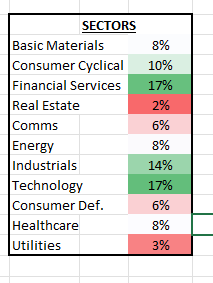
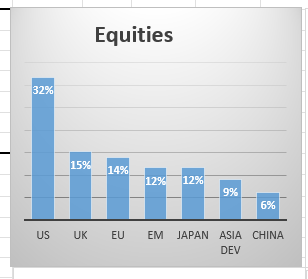
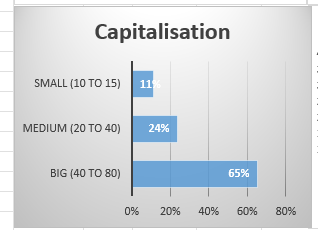
I don't see the analogy myself but I wont be offended if others think that. I put considerably more effort into selecting funds than most people. I do substantial amounts of research and compare risk and performance metrics before selecting the funds I want to hold, many of them are funds held by lots of other investors. I pay attention to downside capture rates, beta's, drawdown and volatility, I also look very closely at sector risks of each one….I know what my regional, capitalisation and sector allocations are at a detail level, across 15 funds, below is some of that data, by way of proof.
I frequently monitor performance to make sure my choices are delivering as expected and if necessary I make changes, although I haven;'t had to do this in a substantial way. Last year I did change the way that I held the US. I started with the L& G US index but decided that was too Tech concentrated so I switched to using HSBC FTSE All World in order to dilute. Later I would revert to using the Fidelity S&P 500 Index, which better met my needs and kept risk at a mimimum and allowed me to control my US exposure without adding other ballast. I did adjust regional percentage allocations a couple of times throughout the year but again, this was a risk exposure issue rather than a change of funds. I also made holdings adjustements to maintain the small/medium/large cap balance and also sector balances, if I thought they were not appropriate. I don't see anything there that suggests roulette or guesswork, in fact I see the opposte since I put lots of effort into making my choices.
Long term investors buy and hold and ride the waves, because they have many investing years ahead of them to absorb losses. Investors over age 75 don't have that luxury so one solution is to work on shorter time frames. I'd be willing to bet that the vast majority of people holding global trackers long term, haven't put even 100th of the amount and time and effort into resarching their purchase that I put into mine. My objective is to make the return that I want, just as the long term investor does, One difference between us is that when that target is reached, I derisk my holdings rather than riding whatever wave comes along. I am very risk averse. I don't mind taking risks byt they need to be calculated and understood risks an for the shortest possible duration. I can't mitigate markets contagion and there are risks I don't see which cause me loss. But wherever I can see a risk that is capable of being mitigated, I do so…isn't that what Fund Managers do. Masonic mentioned Ranmore which I continue to hold but whose return has been dissappointing of late. Ranmore is an excellent defensive fund which I continue to hold as insurance and also to maintain my small/medium caps balance, not just because Ranmore has made stellar returns in the past.
So, if anyone can tell me why they think the above represents gambling, more so than the actions of long term buy and hold investors, I'll be interested to understand their view.
 0
-
I think when people call this approach "gambling", they aren't attacking your diligence - which is clearly far above what most investors do. Instead, they are identifying risk in your execution. By regularly shifting between funds and de-risking when an arbitrary target is hit, you are practicing the art of market timing. You've explained what happens during a good year (you de-risk to leave money on the table once your target is achieved). But this mechanism offers no protection in years where returns are negative from the outset and your target is never reached. If your higher risk funds plunge 20% in your first quarter, a policy of de-risking only after hitting a target leaves you fully exposed to the drop.
You mentioned holding defensive funds like Ranmore as insurance, but if the overall portfolio architecture relies on active, intra-year adjustments to manage risk, you are effectively relying on your ability to predict or react to market contagion quickly enough. What you do when funds dive below their starting value for the year is a part of your strategy that I don't think has been mentioned.
It is entirely rational to be risk-averse given your time horizon. However, standard risk mitigation usually involves establishing a permanent, structurally defensive strategic asset allocation that protects your capital at all times, because nobody knows when that defence will actually be needed. Shifting allocations dynamically throughout the year based on targets doesn't eliminate risk, it still makes you a hostage to fortune, but relies on your ability to time your exit (and re-entry point) rather than investing above your risk capacity/tolerance and hoping for the best. The chance of such a strategy being consistently successful is going to be low.
But I do wonder if your present portfolio is actually de-risked enough as it is and could just be run for the whole period regardless of it hitting a target.
1 -
"By regularly shifting between funds and de-risking when an arbitrary target is hit, you are practicing the art of market timing". Guilty, I suppose. Although the extent to which I might shift between funds will vary based on what is being held at any point in time. As you point out at the end of your previous post, my current holdings may well be suitable to continue for another year but I haven't yet concluded that point.
"But this mechanism offers no protection in years where returns are negative from the outset and your target is never reached". There are times when I chose not to play and will remain in a holding patterm, a year ago in April was one such time when I sat out for six weeks and decided to regroup.
"What you do when funds dive below their starting value for the year is a part of your strategy that I don't think has been mentioned". I will switch out of funds that either not beating the index or are losing money, typically after an 8% loss, which is one of the benefits of being I'm spread across so many funds.
"standard risk mitigation usually involves establishing a permanent, structurally defensive strategic asset allocation that protects your capital at all times…." Mea culpa again, there's nothing standard about this approach whatsoever and I wouldn't recommend it to anyone, unless they were prepared to put in the time and effort and believed they could make it work.
"The chance of such a strategy being consistently successful is going to be low". My day job is that I act as planning manager for a family owned agriculture venture of some considerable size, a job that has next to nothing to do with my career or training! There are lots of similarities between growing crops every year and investing, both rely on a series of processes that need to be completed sucessfully in order to reduce known risks. Often it's the small and seemingly insignificant things that can cause failure, many times it's the things we take for granted and ignore.There also risks that cannot be predicted or mitigated, but if the known risks are, the overall chance of failure resulting from an unforseen risk or one that couldn't be mitigated, is significantly lower.
The other side of this coin is to buy a few index trackers and understand very little about what they actually contain….most will think they should do well because everyone recommends it, along with its popular brand name. And if it doesn't see you through this year, oh well, there's always next year!
It's late here…many thanks for your thought provoking challenges.
0 -
I prefer to hold a couple of complimentary tracker funds and play video games. But that’s just me. Can’t be asked to perform due diligence on things that are analysed to death.
0 -
I think that's probably fine for anyone who doesn't have an opinion on risk, which markets they want to invest in and to what extent, which size companies are probably best, which sectors to be in/not be in etc etc. It's also probably the safest approach for those people who only want index level returns and have no interest in beating it. Over time, that's the safest option I imagine.
0 -
The other side of this coin is to buy a few index trackers and
understand very little about what they actually contain….most will think
they should do well because everyone recommends it, along with its
popular brand name. And if it doesn't see you through this year, oh
well, there's always next year!I am interested in your opinions but I find your throw away, disparaging remarks about those that take a different view irritating. Why would you assume that investors in index trackers understand very little about what they contain, are influenced by popular brand names and are indifferent to performance?
4









Confirm your email address to Create Threads and Reply

Categories
- All Categories
- 355.8K Banking & Borrowing
- 254.9K Reduce Debt & Boost Income
- 456.2K Spending & Discounts
- 248.3K Work, Benefits & Business
- 605.9K Mortgages, Homes & Bills
- 179K Life & Family
- 263.8K Travel & Transport
- 1.5M Hobbies & Leisure
- 16.2K Discuss & Feedback
- 37.7K Read-Only Boards