We’d like to remind Forumites to please avoid political debate on the Forum.
This is to keep it a safe and useful space for MoneySaving discussions. Threads that are – or become – political in nature may be removed in line with the Forum’s rules. Thank you for your understanding.
Asset Allocations by Country and Asset Type
Comments
-
Got you. I think generally small caps and even mid caps are neglected in most index and multi-asset fund approaches, as well as in pension default funds. Where they are included at all it is at a very low weighting. My own ratio is not too dissimilar to yours, and I previously held more small caps (focused almost entirely on the UK market).chiang_mai said:
It's the capitalisation ration, 65% large/giant caps, 23% mid caps and 12% small caps.masonic said:
What does the 65/23/12 represent? I'm presuming not equities/bonds/cash equivalents as I thought your % equities was lower than that. In my view investors who say they want to reduce risk are talking about maximum drawdowns, and will invariably be needing to dial down total equities to achieve that.chiang_mai said:One problem is that investors don’t always quantify their risk, because they don’t know what’s inside their fund. Yet you hear those same investors say they want to reduce risk, when markets get scary. If you don’t know what your current risks are, how will you know when you’ve reduced them! Balance is of course subjective but there are also some broad guidelines that the novice might adopt. This novice shoots for 70/20/10 as a balanced capital ratio, it’s neither aggressive nor overly cautious and is a baseline against which I can measure where I am at any point in time. I’m currently 65/23/12, which means I’m still broadly balanced but I probably don’t want to add any more small caps soon…..that’s a useful piece of information for me to understand.
We’ve discussed geographic distribution several times so there’s no point in rehashing things. Suffice to say that it’s important to me to understand the geographic balance between markets because I have strong views on how deep I want to be in some markets and how much I want to exploit others. This is my subjective balance, if I don’t understand the internals of my holdings, I can’t maintain my preferred balance and will have no steerage.
My equities ratio currently is 46% (by value)
I understand drawdown to be the maximum peak to valley fall by the fund, the HSBC FTSE All World drawdown for example is 10.5%. I use that figure, along with volatility to help determine fund risk. For others who need a more detailed explanation of this measurement: https://www.investopedia.com/terms/p/peak-to-valley-drawdown.asp1 -
It's also worth checking yourself how much the current anti Trump rhetoric, quite rightly due to his foreign policy activities, is generating anti US sentiment and a “sell US stocks” mantra. Despite what Trump does with foreign policy, many US companies are continuing to successfully and profitably go about their business serving 300+ million Americans and more hundreds or millions, if not billions of customers around the world.The bulk of stock market returns in history have been generated by a handful of companies. Currently the top 10 is filled with US tech mega caps, in 1989 it was Japanese banks and industrials.
Yes, the top US stocks are highly valued, but famous short seller, Michael Burry, won't bet against most of them, only Nvidia, as he sees strong businesses that generate revenues outside of AI related activities in Apple, Meta, Alphabet and Amazon (he sees Tesla as hugely overvalued but won't short them).
There is a lot of media speculation about an AI bubble and parallels drawn with the 2000 dot com boom and bust, and since the end of 2024 there has been a flow of money into undervalued or safe haven assets such as emerging markets, UK and European stocks and gold/silver, however, black swan events are rarely sign posted or predicted by the media and it is not inconceivable that the next major market crashing event could be something unforeseen and unrelated to AI, emanating from a region of world we don't expect. If, and more likely when, it happens the current investing landscape could change dramatically and very quickly.
So, we can take a couple of approaches, attempt to market time and shift your portfolio around according to which way you think the wind will blow or buy and hold. However you invest it's worth focussing on making sure you have enough fixed income or risk off assets to cover annual spending needs for the foreseeable future and leave the rest invested for the long term (20/30/40 years).
In retirement, the risk off can be fixed income streams such as state pensions, annuity, defined benefit pension, fixed term bonds/gilts or cash. While working, the fixed income is your wages so you can potentially have more risk on money while accumulating.
For the risk on investments, for a buy and hold hands off approach, following this is going to serve well with decent returns over the long term but with some serious value drops along the way:
My personal situation, 1 year retired, sees us holding enough cash (earning BOE base rate interest) to get us to my state pension payout in 2034 with the wife's due in 2037. Once both state pension are in payment alongside my DB pension, this will pretty much cover our expected annual living expenses, so the invested portfolio should only be required for luxuries or inheritance for the kids after that.Minimalist Investing Philosophy: own the world, keep fees low, stay the course.
I have a small gap between 2034-2037, when my wife's SP starts paying out, to fill with some more cash which I will take from equity fund growth at some point and move it to safety, the rest stays invested in low cost index funds which are US and Tech heavy, but, as this money isn't needed to used anytime soon, I am comfortable with that as I have no idea what the future holds.1 -
I have been buying an ILG ladder recently, but haven't invested in normal Gilts at all. Can I ask when you are choosing normal gilts over indexed linked?InvesterJones said:
You mean you're becoming more and more convinced that you know something other investors don't? I admire your confidence, though it is human nature to think we're above averagechiang_mai said:A US allocation around 40% strikes me as appropriate, given the high valuations and Tech. concentration. Perhaps it's just me but it's becomming harder and harder to justify the 60% and 80% allocations of the global trackers. Rotation away from the US will happen one day, but I'm not confident I can call the timing correctly - I'm addressing volatility concerns with asset type allocation instead - especially now I've discovered the joy of gilts (both conventional and index-linked).0
 -
Terry Smith's latest letter to his Fundsmith shareholders (https://www.fundsmith.co.uk/media/4hcfd1pg/2025-fef-annual-letter-web.pdf) is pertinent to some of the issues raised in this discussion. His views on index trackers and their potential distorting effect largely mirror my own.nb: whilst Smith describes market concentration, growth of index tracker assets and dollar weakness as explanations for Fundsmith's woeful performance, he is conveniently forgetting the single biggest explanation - his strategy simply does not work in today's markets with the size of fund he is managing. I expect he could deliver decent returns if managing a £160m fund but he his approach is clearly wrong for a £16bn one. The issues he cites as explanations for Fundsmith's underperformance could as easily be positives for a fund that was able to concentrate on smaller companies and markets. Of course, he wouldn't then be able to personally extract £20m+ pa from his investors. So swings & roundabouts...3
-
For my part, the major risks are US debt levels, weak USD and Tech concentration. The politics are ugly and unpredictable but it's not something that an investor like me can try to mitigate.GazzaBloom said:It's also worth checking yourself how much the current anti Trump rhetoric, quite rightly due to his foreign policy activities, is generating anti US sentiment and a “sell US stocks” mantra. Despite what Trump does with foreign policy, many US companies are continuing to successfully and profitably go about their business serving 300+ million Americans and more hundreds or millions, if not billions of customers around the world.0 -
There should be (and have been) other threads for discussion of gilt strategy, but back when the yield curve was still inverted I was buying short dated conventional gilts that were yielding quite substantially more than inflation was likely to. Since then I've picked up further short-medium duration conventional gilts during periods when prices were low. Now the argument is much closer between conventional and ILG (break even around 3-3.1% CPIH) so I tend to hedge.tigerspill said:
I have been buying an ILG ladder recently, but haven't invested in normal Gilts at all. Can I ask when you are choosing normal gilts over indexed linked?InvesterJones said:
You mean you're becoming more and more convinced that you know something other investors don't? I admire your confidence, though it is human nature to think we're above averagechiang_mai said:A US allocation around 40% strikes me as appropriate, given the high valuations and Tech. concentration. Perhaps it's just me but it's becomming harder and harder to justify the 60% and 80% allocations of the global trackers. Rotation away from the US will happen one day, but I'm not confident I can call the timing correctly - I'm addressing volatility concerns with asset type allocation instead - especially now I've discovered the joy of gilts (both conventional and index-linked).1 -
Interesting discussion and I have been thinking fur a while to adjust my allocation as it’s 80%+ USA and <5% uk. Rest is Europe - all via various trackers. The last decade has been good to me but I realise I do need to get a better balance now that I am retired1
-
A long discussion with Terry was posted a few days ago and (while he obviously has an interest in defending active) he still made a few interesting comments (around 25mins in) about how such widespread use of passive as a momentum strategy may be inefficiently allocating capital to past winners irrespective of the companies' quality or valuation which I guess eventually damages everyone's returns. He didn't convince me enough to buy his fund or pay high fees but I find him interesting. He had similar thoughts to Vanguard to expect lower returns from such high valuations.phlebas192 said:Terry Smith's latest letter to his Fundsmith shareholders (https://www.fundsmith.co.uk/media/4hcfd1pg/2025-fef-annual-letter-web.pdf) is pertinent to some of the issues raised in this discussion. His views on index trackers and their potential distorting effect largely mirror my own.nb: whilst Smith describes market concentration, growth of index tracker assets and dollar weakness as explanations for Fundsmith's woeful performance, he is conveniently forgetting the single biggest explanation - his strategy simply does not work in today's markets with the size of fund he is managing. I expect he could deliver decent returns if managing a £160m fund but he his approach is clearly wrong for a £16bn one. The issues he cites as explanations for Fundsmith's underperformance could as easily be positives for a fund that was able to concentrate on smaller companies and markets. Of course, he wouldn't then be able to personally extract £20m+ pa from his investors. So swings & roundabouts...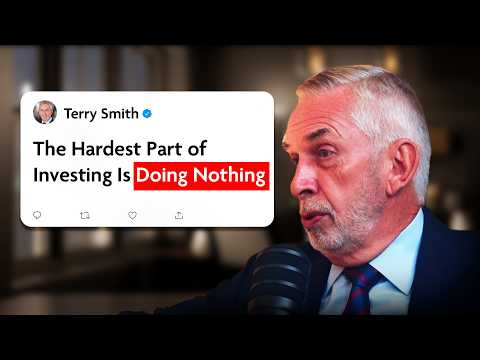 https://www.youtube.com/watch?v=BC52IcnMyVo&t=3888s 1
 -
I'm pleased with my switch from the L&G US Index tracker, into the HSBC FTSE All World last week, the latter fell 0.51% overnight whilst the former lost 1.61%. Diluting the US segment was definitely a good move.
My big fallers were Global EM's, a predictable -1.5%; Japan large caps -1.5% and interestingly, Japan small caps -0.5%, FTSE UK -1%. A modest =0.5% overall.1 -
The HSBC fund values at 12:00 UK time so yesterday's fund price won't include yesterday's US stock prices.chiang_mai said:I'm pleased with my switch from the L&G US Index tracker, into the HSBC FTSE All World last week, the latter fell 0.51% overnight whilst the former lost 1.61%. Diluting the US segment was definitely a good move.
My big fallers were Global EM's, a predictable -1.5%; Japan large caps -1.5% and interestingly, Japan small caps -0.5%, FTSE UK -1%. A modest =0.5% overall.1













Confirm your email address to Create Threads and Reply

Categories
- All Categories
- 355.7K Banking & Borrowing
- 254.9K Reduce Debt & Boost Income
- 456.1K Spending & Discounts
- 248.3K Work, Benefits & Business
- 605.9K Mortgages, Homes & Bills
- 179K Life & Family
- 263.7K Travel & Transport
- 1.5M Hobbies & Leisure
- 16.2K Discuss & Feedback
- 37.7K Read-Only Boards