We’d like to remind Forumites to please avoid political debate on the Forum.
This is to keep it a safe and useful space for MoneySaving discussions. Threads that are – or become – political in nature may be removed in line with the Forum’s rules. Thank you for your understanding.
📨 Have you signed up to the Forum's new Email Digest yet? Get a selection of trending threads sent straight to your inbox daily, weekly or monthly!
The Forum now has a brand new text editor, adding a bunch of handy features to use when creating posts. Read more in our how-to guide
Awkward Gas Situation - Advice please!
Comments
-
Photo, please, Wobag?0
-
OK, sorry it took a while. I can confirm that the manual for the fire states that the 'final connection' must be a compression fitting, and the below is the best photo I could take.
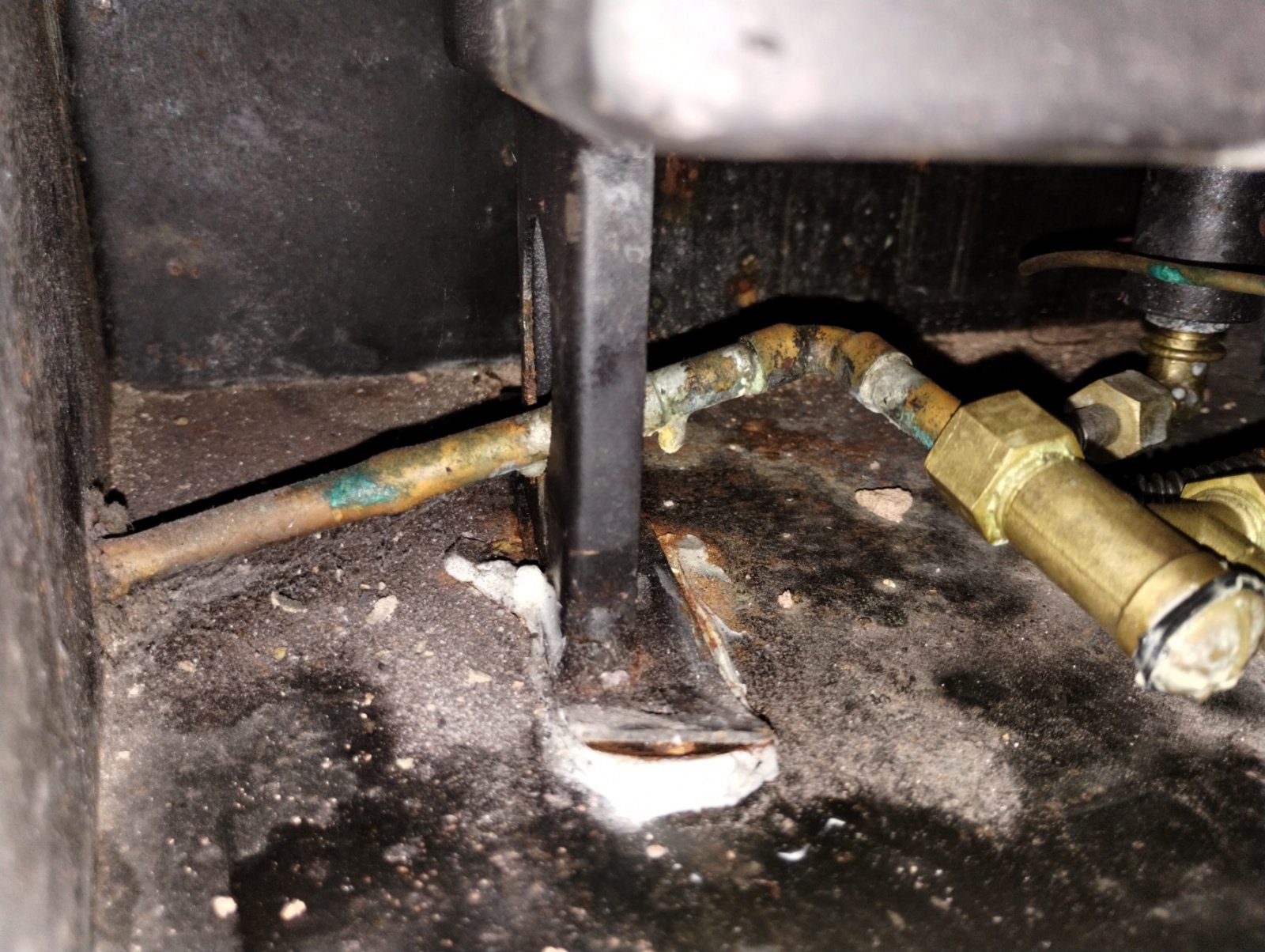
Maybe the vagueness of 'final connection' being interpreted as either the singular connection to the fire, or the last link from the wall to the fire, which here, being twisty has soldered joints in it.
Thoughts?1 -
For me, the final connection is the final connection, I wouldn’t say it’s vague. In this instance the restrictor elbow type connection. And that is compression. I would fit it like that too. If I had to be critical I’d have wrapped, or used wrapped copper pipe.WobagUK said:OK, sorry it took a while. I can confirm that the manual for the fire states that the 'final connection' must be a compression fitting, and the below is the best photo I could take.
Maybe the vagueness of 'final connection' being interpreted as either the singular connection to the fire, or the last link from the wall to the fire, which here, being twisty has soldered joints in it.
Thoughts?0 -
WobagUK said:OK, sorry it took a while. I can confirm that the manual for the fire states that the 'final connection' must be a compression fitting, and the below is the best photo I could take.
Maybe the vagueness of 'final connection' being interpreted as either the singular connection to the fire, or the last link from the wall to the fire, which here, being twisty has soldered joints in it. Thoughts?Thanks for the clear photo - that final connect is compression, and is part of the actual fire. So, all good there.Soldered connections on the gas supply pipe is the norm.I wonder if the second guy had 'concerns' about the pipe - and soldered fittings - being located under the fire, but whether there's an alternative to this - coming from the front! - I have no idea.When you think about it, tho', it barely gets warm under there. If it's going to reach anywhere near the ~200 degrees required to melt a solder joint, your house will already be in flames.You'll need a GasSafe with the required additional 'open gas fire' quals to confirm, but I am as sure as a layman can be that there's nothing amiss in that installation.Have you sent that pic to the gas fire manufacturer?
0 -
Copper pipe under a fire is standard. Normally have a cut out in the fire box for the gas pipe to enter underneath. HTR1 is the qualification needed, it’s not broken down into categories of fires although you are still assessed on the different types.ThisIsWeird said:WobagUK said:OK, sorry it took a while. I can confirm that the manual for the fire states that the 'final connection' must be a compression fitting, and the below is the best photo I could take.
Maybe the vagueness of 'final connection' being interpreted as either the singular connection to the fire, or the last link from the wall to the fire, which here, being twisty has soldered joints in it. Thoughts?Thanks for the clear photo - that final connect is compression, and is part of the actual fire. So, all good there.Soldered connections on the gas supply pipe is the norm.I wonder if the second guy had 'concerns' about the pipe - and soldered fittings - being located under the fire, but whether there's an alternative to this - coming from the front! - I have no idea.When you think about it, tho', it barely gets warm under there. If it's going to reach anywhere near the ~200 degrees required to melt a solder joint, your house will already be in flames.You'll need a GasSafe with the required additional 'open gas fire' quals to confirm, but I am as sure as a layman can be that there's nothing amiss in that installation.Have you sent that pic to the gas fire manufacturer?If I came across this on my rounds I wouldn’t look twice at the gas pipe, rather check ventilation and flue flow.1







Confirm your email address to Create Threads and Reply

Categories
- All Categories
- 354.5K Banking & Borrowing
- 254.4K Reduce Debt & Boost Income
- 455.4K Spending & Discounts
- 247.4K Work, Benefits & Business
- 604.2K Mortgages, Homes & Bills
- 178.5K Life & Family
- 261.7K Travel & Transport
- 1.5M Hobbies & Leisure
- 16K Discuss & Feedback
- 37.7K Read-Only Boards