We’d like to remind Forumites to please avoid political debate on the Forum.
This is to keep it a safe and useful space for MoneySaving discussions. Threads that are – or become – political in nature may be removed in line with the Forum’s rules. Thank you for your understanding.
HELP - Court Claim received from DCB Legal & UKPC
Comments
-
If the Particulars of Claim are sparse on your claim form just follow the link to @hharry100 profile or the link below the name to find the CEL vs Chan defence.1
-
Hi, my defence is due by 4pm today. Please can you have a look at my draft and let me know if any edits are required? Also, am I going to get a CCJ if I lose this? TIA
IN THE COUNTY COURT
Claim No.: XXXXXX
Between
UK PARKING CONTROL LIMITED
(Claimant)
- and -
XXXX
(Defendant)
_________________
DEFENCE
1. The Defendant denies that the Claimant is entitled to relief in the sum claimed, or at all. It is denied that any conduct by the driver was in breach of any term. Further, it is denied that this Claimant (understood to have a bare licence as agents) has standing to sue or form contracts in their own name. Liability is denied, whether or not the Claimant is claiming 'keeper liability', which is unclear from the boilerplate text in the Particulars of Claim ('the POC').
The facts known to the Defendant:
2. The facts in this defence come from the Defendant's own knowledge and honest belief. Conversely, the Claimant sets out a cut-and-paste incoherent and sparse statement of case. The POC appear to be in breach of CPR 16.4, 16PD3 and 16PD7, and fail to "state all facts necessary for the purpose of formulating a complete cause of action". The Defendant is unable, on the basis of the POC, to understand with certainty what case, allegation(s) and what heads of cost are being pursued, making it difficult to respond. However, the vehicle is recognised and it is admitted that the Defendant was the driver.
3. The Defendant states the vehicle was parked longer than permitted by 26 minutes and 34 seconds for the following reasons:
- Being taken ill whilst shopping and being assisted by members of staff
- Long ques in the shops stopping The Defendant from getting back to the vehicle in time
The Defendant states that the overstay was not intentional and was caused due to matters outside of the Defendants control.
4. The Claimant will concede that no financial loss has arisen and that in order to impose an inflated parking charge, as well as proving a term was breached, there must be:
(i). a strong 'legitimate interest' extending beyond mere compensation for loss, and
(Ii). 'adequate notice' of the 'penalty clause' charge which, in the case of a car park, requires prominent signs and lines.
5. The Defendant denies (i) or (ii) have been met. The charge imposed, in all the circumstances is a penalty, not saved by ParkingEye Ltd v Beavis [2015] UKSC67 ('the Beavis case'), which is fully distinguished.
Exaggerated Claim and 'market failure' currently being addressed by UK Government6. The alleged 'core debt' from any parking charge cannot exceed £100 (the industry cap). It is denied that any 'Debt Fees' or damages were actually paid or incurred.
7. This claim is unfair and inflated and it is denied that any sum is due in debt or damages. This Claimant routinely pursues an unconscionable fixed sum added per PCN, despite knowing that the will of Parliament is to ban it.
8. This is a classic example where adding exaggerated fees funds bulk litigation of weak and/or archive parking cases. No checks and balances are likely to have been made to ensure facts, merit or a cause of action (given away by the woefully inadequate POC).
9. The Department for Levelling Up, Housing and Communities ('the DLUHC') published a statutory Parking Code of Practice in February 2022: https://www.gov.uk/government/publications/private-parking-code-of-practice.
The Ministerial Foreword is damning: "Private firms issue roughly 22,000 parking tickets every day, often adopting a labyrinthine system of misleading and confusing signage, opaque appeals services, aggressive debt collection and unreasonable fees designed to extort money from motorists."
10. Despite legal challenges delaying the Code (temporarily withdrawn) it is now 'live' after a draft Impact Assessment (IA) was published on 30th July 2023. The Government's analysis is found here: https://assets.publishing.service.gov.uk/government/uploads/system/uploads/attachment_data/file/1171438/Draft_IA_-_Private_Parking_Code_of_Practice_.pdf
11. Paragraphs 4.31 and 5.19 state that the parking industry has shown the DLUHC that the true minor cost of pre-action stage totals a mere £8.42 per case (not per PCN).
12. This claim has been enhanced by a disproportionate sum, believed to enrich the litigating legal team. It appears to be double recovery, duplicating the intended 'legal fees' cap set by small claims track rules.
13. The draft IA shows that the intimidating letter-chains endured by Defendants cost 'eight times less' than the fixed +£70 per PCN. This causes immense consumer harm in the form of some half a million wrongly-enhanced CCJs each year, that Judges are powerless to prevent. MoJ statistics reveal several hundred thousand parking claims per annum, with c90% causing default CCJs totalling hundreds of millions of pounds. The false fee was enabled by the self-serving Codes of Practice of the rival parking Trade Bodies who aligned in 2021 to allow +£70, each led by a Board comprising the parking and debt firms who stood to gain from it.
14. It is denied that the added damages/fee sought was incurred or is recoverable. Attention is drawn to paras 98, 100, 193, 198 of Beavis. Also ParkingEye Ltd v Somerfield Stores Ltd ChD [2011] EWHC 4023(QB) where the parking charge was £75, discounted to £37.50 for prompt payment. Whilst £75 was reasonable, HHJ Hegarty (decision ratified by the CoA) held in paras 419-428 that 'admin costs' inflating a PCN to £135 exaggerated the cost of template letters and 'would appear to be penal'.
15. This Claimant has not incurred costs. A PCN model already includes what the Supreme Court called an 'automated letter-chain' and it generates a healthy profit. In Beavis, there were 4 pre-action letters/reminders and £85 was held to more than cover the minor costs of the operation (NB: debt collectors charge nothing in failed collection cases).
16. Whilst the new Code is not retrospective, all non-monetary clauses went unchallenged. It will replace the self-serving BPA & IPC Codes, which are not regulation and carry limited weight. It is surely a clear steer for the Courts that the DLUHC said in 2023 that it is addressing 'market failure'.
17. At last, the DLUHC's analysis overrides plainly wrong findings by Circuit Judges steered by Counsel in weak appeal cases that the parking industry steamrollered through. In Vehicle Control Services v Percy, HHJ Saffman took a diametrically opposed position to that taken by DJ Hickinbottom, DJ Jackson (as Her Honour Judge Jackson then was), and other District Judges on the North Eastern Circuit, including DJ Skalskyj-Reynolds and DJ Wright (Skipton) all of whom have consistently dismissed extortionate added 'fees/damages'. District Judges deal with private parking claims on a daily basis, whereas cases of this nature come before Circuit Judges infrequently. The Judgments of HHJ Parkes in Britannia v Semark-Jullien, and HHJ Simpkiss in One Parking Solution v Wilshaw were flawed. These supposedly persuasive judgments included a universal failure to consider the court's duty under s71 of the CRA 2015 and factual errors. In Wilshaw: a badly outdated reliance on 'ticket cases' which allowed poor signage to escape fair scrutiny and a wrong presumption that landowner authority 'is not required' (DVLA rules make it mandatory). In Percy, HHJ Saffman made an incorrect assumption about pre-action costs and even sought out the wrong Code of Practice of his own volition after the hearing, and used it to inform his judgment.
18. In addition, pursuant to Schedule 4 paragraph 4(5) of the Protection of Freedoms Act 2012 ('the POFA') the sum claimed exceeds the maximum potentially recoverable from a registered keeper. The Claimant is put to strict proof of POFA compliance if seeking 'keeper liability'.
19. The Defendant avers that there was no agreement to pay a parking charge or added 'damages' which were not even incurred, let alone quantified in bold, prominent text. This Claimant's lack of large, readable signs are nothing like the yellow & black warnings seen in Beavis, nor do they meet the signage requirements in the DLUHC Code which reflects the already statutory requirement for 'prominence' (Consumer Rights Act 2015 - the 'CRA').
CRA breaches
20. Section 71 CRA creates a statutory duty upon Courts to consider the test of fairness whether a party raises it or not. Further, claiming costs on an indemnity basis is unfair, per the Unfair Contract Terms Guidance (CMA37, para 5.14.3): https://assets.publishing.service.gov.uk/government/uploads/system/uploads/attachment_data/file/450440/Unfair_Terms_Main_Guidance.pdf
21. The CRA introduced new requirements for 'prominence' of both terms and 'consumer notices'. In a parking context, this includes a test of fairness and clarity of 'signs & lines' and all communications (written or otherwise). Signs must be prominent (lit in hours of darkness/dusk) and all terms must be unambiguous and contractual obligations clear.
22. The Defendant avers that the CRA has been breached due to unfair/unclear terms and notices, pursuant to s62 and paying regard to examples 6, 10, 14 & 18 of Schedule 2 and the duties of fair/open dealing and good faith (NB: this does not necessarily mean there has to be a finding of bad faith).
ParkingEye v Beavis is distinguished
23. Unlike in Beavis, the penalty rule remains engaged. The CRA covers disproportionate sums, which are not exempt from being assessed for fairness because a 'fee' is not the core price term and neither was it prominently proclaimed on the signs.
24. The Supreme Court held that deterrence is likely to be penal if there is a lack of a 'legitimate interest' in performance extending beyond the prospect of compensation flowing directly from alleged breach. The intention cannot be to punish a driver, nor to present them with hidden terms or cumbersome obligations ('concealed pitfalls or traps'). This Claimant has failed those tests, with small signs, hidden terms and minuscule small print that is incapable of binding a driver. Court of Appeal authorities about a lack of ‘adequate notice’ of a parking charge include:
(i) Spurling v Bradshaw [1956] 1 WLR 461 (Lord Denning's ‘red hand rule’) and
(ii) Thornton v Shoe Lane Parking Ltd [1970] EWCA Civ2,
both leading authorities that a clause cannot be incorporated after a contract has been concluded; and
(iii) Vine v London Borough of Waltham Forest: CA 5 Apr 2000, where Ms Vine won because it was held that she had not seen the terms by which she would later be bound, due to "the absence of any notice on the wall opposite the parking space''.
25. Fairness and clarity of terms and notices are paramount in the DLUHC Code and these clauses are supported by the BPA & IPC. In Parking Review, solicitor Will Hurley, CEO of the IPC, observed: "Any regulation or instruction either has clarity or it doesn’t. If it’s clear to one person but not another, there is no clarity. The same is true for fairness. Something that is fair, by definition, has to be all-inclusive of all parties involved – it’s either fair or it isn’t."
Lack of standing or landowner authority, and lack of ADR
26. DVLA data is only supplied if there is an agreement flowing from the landholder (ref: KADOE rules). It is not accepted that this Claimant (an agent of a principal) has authority to form contracts at this site in their name. The Claimant is put to strict proof of their standing to litigate.
27. The Claimant failed to offer a genuinely independent Alternative Dispute Resolution (ADR). The DLUHC Code shows that genuine disputes such as this should see PCNs cancelled, had a fair ADR existed. The rival Trade Bodies' time-limited and opaque 'appeals' services fail to properly consider facts or rules of law and reject most disputes: e.g. the IAS upheld appeals in a woeful 4% of decided cases (ref: Annual Report). This consumer blame culture and reliance upon their own 'appeals service' (described by MPs as a kangaroo court and about to be replaced by the Government) should satisfy Judges that a fair appeal was never on offer.
Conclusion
28. There is now evidence to support the view - long held by many District Judges - that these are knowingly exaggerated claims that are causing consumer harm. The July 2023 DLUHC IA analysis shows that the usual letter-chain costs eight times less than the sum claimed for it. The claim is entirely without merit and the POC embarrassing. The Defendant believes that it is in the public interest that poorly pleaded claims like this should be struck out.
29. In the matter of costs, the Defendant seeks:
(a) standard witness costs for attendance at Court, pursuant to CPR 27.14, and
(b) a finding of unreasonable conduct by this Claimant, and further costs pursuant to CPR 46.5.
30. Attention is drawn to the (often-seen) distinct possibility of an unreasonably late Notice of Discontinuance. Whilst CPR r.38.6 states that the Claimant is liable for the Defendant's costs after discontinuance (r.38.6(1)) this does not 'normally' apply to claims allocated to the small claims track (r.38.6(3)). However, the White Book states (annotation 38.6.1): "Note that the normal rule as to costs does not apply if a claimant in a case allocated to the small claims track serves a notice of discontinuance although it might be contended that costs should be awarded if a party has behaved unreasonably (r.27.14(2)(dg))."
Statement of Truth
I believe that the facts stated in this defence are true. I understand that proceedings for contempt of court may be brought against anyone who makes, or causes to be made, a false statement in a document verified by a statement of truth without an honest belief in its truth.
Signature:
Date:
0 -
Also, am I going to get a CCJ if I lose this? TIAYou will get a CCJ (County Court Judgment) against you, but it will have zero effect on your credit rating as long as you pay off the cost order in full within the timescale directed by the Judge. But as this is a UKPC/DCB Legal case, the greater likelihood is that the claim will be discontinued.Please note, we are not a legal advice forum. I personally don't get involved in critiquing court case Defences/Witness Statements, so unable to help on that front. Please don't ask. .
I provide only my personal opinion, it is not a legal opinion, it is simply a personal one. I am not a lawyer.
Give a man a fish, and you feed him for a day; show him how to catch fish, and you feed him for a lifetime.#Private Parking Firms - Killing the High Street2 -
"If the Particulars of Claim are sparse on your claim form........"
Suggest you look at the Template Defence sticky which has been recently updated to add CEL v Chan case if the PoC are not stating what the breach of T & C's are - as mentioned above.1 -
Hi, the PoC on the claim form state:1505grandad said:"If the Particulars of Claim are sparse on your claim form........"
Suggest you look at the Template Defence sticky which has been recently updated to add CEL v Chan case if the PoC are not stating what the breach of T & C's are - as mentioned above.
"The Defendant is indebted to the Claimant for a Parking Charge issued to vehicle XXX at XXX. The PCN details are XXX. The PCN was issued on private land owned or managed by Claimant. The vehicle was parked in breach of the Terms on Claimants signs (the contract), thus incurring the PCN. The driver agreed to pay within 28 days but did not. Defendant is liable as the driver or keeper. Despite requests, the PCN is outstanding. The contract entitles Claimant to damages.
AND THE CLAIMANT CLAIMS
1. £170 being the total of the PCN and damages. 2. Interest at a rate of 8% per annum pursuant to s.69 of the County Courts Act 1984 from the date hereof at a daily rate of £0.02 until judgment or sooner payment. 3. Costs and court fees0 -
Hi, the PoC on the claim form state:Le_Kirk said:If the Particulars of Claim are sparse on your claim form just follow the link to @hharry100 profile or the link below the name to find the CEL vs Chan defence.
"The Defendant is indebted to the Claimant for a Parking Charge issued to vehicle XXX at XXX. The PCN details are XXX. The PCN was issued on private land owned or managed by Claimant. The vehicle was parked in breach of the Terms on Claimants signs (the contract), thus incurring the PCN. The driver agreed to pay within 28 days but did not. Defendant is liable as the driver or keeper. Despite requests, the PCN is outstanding. The contract entitles Claimant to damages.
AND THE CLAIMANT CLAIMS
1. £170 being the total of the PCN and damages. 2. Interest at a rate of 8% per annum pursuant to s.69 of the County Courts Act 1984 from the date hereof at a daily rate of £0.02 until judgment or sooner payment. 3. Costs and court fees
0 -
In which case you can use the @hharry100 defence.2
-
Thankyou! Using @hharry100 defence I have updated my template below.Le_Kirk said:In which case you can use the @hharry100 defence.IN THE COUNTY COURT
Claim No.: XXXX
Between
UK PARKING CONTROL LIMITED
(Claimant)
- and -
XXXX
(Defendant)
_________________
DEFENCE
1. The Defendant denies that the Claimant is entitled to relief in the sum claimed, or at all. It is denied that any conduct by the driver was in breach of any term. Further, it is denied that this Claimant (understood to have a bare licence as agents) has standing to sue or form contracts in their own name. Liability is denied, whether or not the Claimant is claiming 'keeper liability', which is unclear from the boilerplate text in the Particulars of Claim ('the POC').
Preliminary matter: The claim should be struck out
2. The Defendant draws to the attention of the allocating Judge that there is now a persuasive Appeal judgment to support striking out the claim (in these exact circumstances of typically poorly pleaded private parking claims, and the extant PoC seen here are far worse than the one seen on Appeal). The Defendant believes that dismissing this meritless claim is the correct course, with the Overriding Objective in mind. Bulk litigators (legal firms) should know better than to make little or no attempt to comply with the Practice Direction. By continuing to plead cases with generic auto-fill unspecific wording, private parking firms should not be surprised when courts strike out their claims based in the following persuasive authority.
3. A recent persuasive appeal judgment in Civil Enforcement Limited v Chan (Ref. E7GM9W44) would indicate the POC fails to comply with Civil Procedure Rule 16.4(1)(e) and Practice Direction Part 16.7.5. On the 15th August 2023, in the cited case, HHJ Murch held that 'the particulars of the claim as filed and served did not set out the conduct which amounted to the breach in reliance upon which the claimant would be able to bring a claim for breach of contract'. The same is true in this case and in view of the Chan judgment (transcript below) the Court should strike out the claim, using its powers pursuant to CPR 3.4.
The facts known to the Defendant:
4. On the day in question, the Defendant had gone shopping and when doing so his wife fell ill and required assistance from NEXT staff causing a delay in getting back to the vehicle. In addition to this, the ques in the shops were longer than usual causing further delay.
5. Upon entering the car park, signage of the parking conditions is not clear or is there adequate signing positioned where the defendant parked the car as shown below.
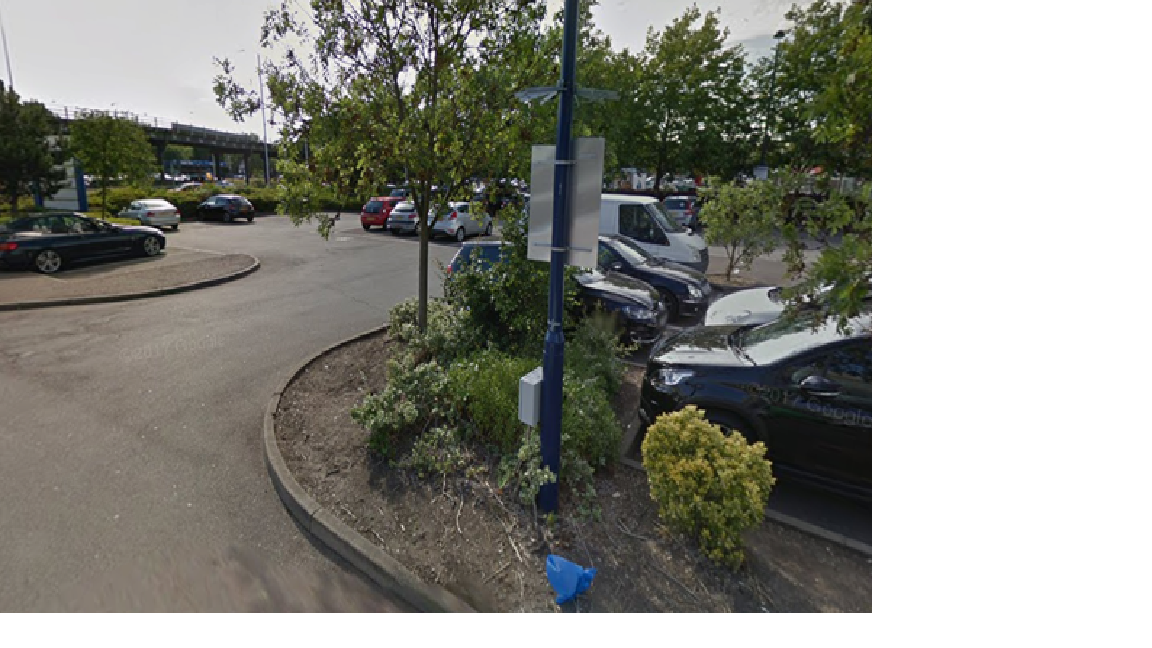
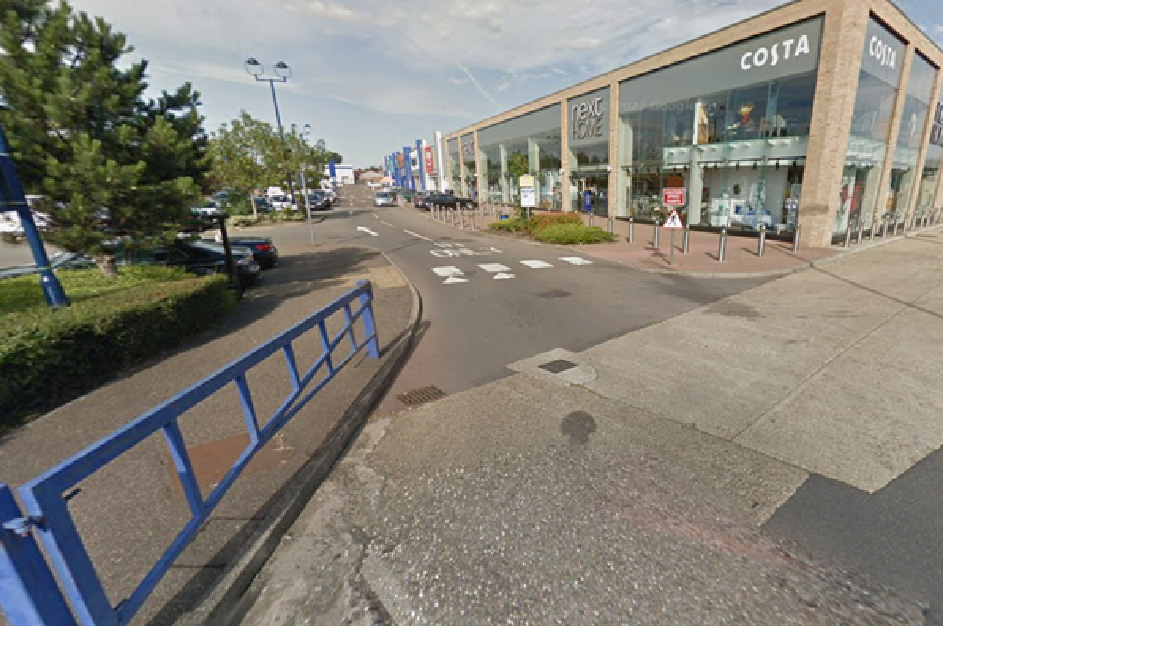
6. The claim has been issued via Money Claims Online and, as a result, is subject to a character limit for the Particulars of Claim section of the Claim Form. The fact that generic wording appears to have been applied has obstructed any semblance of clarity. The Defendant trusts that the court will agree that a claim pleaded in such generic terms lacks the required details and would have required proper particularisation in a detailed document within 14 days, per 16PD.3. No such document has been served.
7. The Defendant believes the Claim should be struck out at Allocation stage and should not have been accepted by the CNBC due to a represented parking firm Claimant knowingly breaching basic CPRs.
8. The Claimant will concede that no financial loss has arisen and that in order to impose an inflated parking charge, as well as proving a term was breached, there must be:
(i). a strong 'legitimate interest' extending beyond mere compensation for loss, and
(Ii). 'Adequate notice' of the 'penalty clause' charge which, in the case of a car park, requires prominent signs and lines.
** FOLLOWED BY DEFENCE TEMPLATE**0 -
If you are using the @hharry100 defence it's because of sparse particulars so don't add in anything that might make the judge believe you know what it is all about. Anyway evidence (apart from the CEL V Chan) does not go with a defence but later with the witness statement.2
-
Pictures of the car park should not be in your Defence. They come later - at Witness Statement and evidence time.
You have misspelt the word 'queues'.3











Confirm your email address to Create Threads and Reply

Categories
- All Categories
- 355.3K Banking & Borrowing
- 254.7K Reduce Debt & Boost Income
- 455.9K Spending & Discounts
- 248K Work, Benefits & Business
- 605.2K Mortgages, Homes & Bills
- 178.9K Life & Family
- 262.9K Travel & Transport
- 1.5M Hobbies & Leisure
- 16.1K Discuss & Feedback
- 37.7K Read-Only Boards