We’d like to remind Forumites to please avoid political debate on the Forum.
This is to keep it a safe and useful space for MoneySaving discussions. Threads that are – or become – political in nature may be removed in line with the Forum’s rules. Thank you for your understanding.
📨 Have you signed up to the Forum's new Email Digest yet? Get a selection of trending threads sent straight to your inbox daily, weekly or monthly!
The Forum now has a brand new text editor, adding a bunch of handy features to use when creating posts. Read more in our how-to guide
Advice needed for a cracked wall.
Comments
-
Thanks stuart45. Much appreciate your wise comments.
I will be looking at getting an SE in for assessment shortly.0 -
One question that came to me.
If I ever made a claim for whatever reason unrelated and during the claim it came out that the issue preexisted is it at all likely for the lender to pull out the mortgage?
Just to add that the lender never did in person valuation but just a desktop one.0 -
I'm guessing a bit on layout but if the far ends of the cantilever structure are above the steel it is possible it has been jacked up too much when the steel was put in and pivoted on the walls to the side of the bay. Probably made worse when the window was removed.stuart45 said:I would look at getting an SE in to look for a solution. The structure has moved down a bit, so there is a problem. It may well have started with the window replacement. The beam could be steel, timber or a flitch beam.
Jettying has been used for hundreds of years, so it does work if done properly. It is more commonly done with timber frame, as that is more forgiving of any movement.
Although the strut is a bit loose, a lot of the system works by cantilever.
They wouldn't have put a steel in if it wasn't supporting something.Living the dream in the Austrian Alps.0 -
They aren't built like that. The floor joists cantilever over the top at the same level of the bressummer beam. The beam takes the weight of the wall above. It isn't put in later by jacking up the joists.chris_n said:
I'm guessing a bit on layout but if the far ends of the cantilever structure are above the steel it is possible it has been jacked up too much when the steel was put in and pivoted on the walls to the side of the bay. Probably made worse when the window was removed.stuart45 said:I would look at getting an SE in to look for a solution. The structure has moved down a bit, so there is a problem. It may well have started with the window replacement. The beam could be steel, timber or a flitch beam.
Jettying has been used for hundreds of years, so it does work if done properly. It is more commonly done with timber frame, as that is more forgiving of any movement.
Although the strut is a bit loose, a lot of the system works by cantilever.
They wouldn't have put a steel in if it wasn't supporting something.0 -
I'm talking about the steel that was put in later that may be under the far end of the joists.stuart45 said:
They aren't built like that. The floor joists cantilever over the top at the same level of the bressummer beam. The beam takes the weight of the wall above. It isn't put in later by jacking up the joists.chris_n said:
I'm guessing a bit on layout but if the far ends of the cantilever structure are above the steel it is possible it has been jacked up too much when the steel was put in and pivoted on the walls to the side of the bay. Probably made worse when the window was removed.stuart45 said:I would look at getting an SE in to look for a solution. The structure has moved down a bit, so there is a problem. It may well have started with the window replacement. The beam could be steel, timber or a flitch beam.
Jettying has been used for hundreds of years, so it does work if done properly. It is more commonly done with timber frame, as that is more forgiving of any movement.
Although the strut is a bit loose, a lot of the system works by cantilever.
They wouldn't have put a steel in if it wasn't supporting something.Living the dream in the Austrian Alps.0 -
This one.fandyman said:I have got insurance on the building already - are you saying if anything happens I would not be able to claim through it?
I am not sure about lintel in the first area. I have some photos from the time it was refurbished and the door seem to be untouched (far end on photo nr 2). I've also noticed there used to be door leading to the garage which was bricked up (right side on photo nr 1 and near end on photo nr 2) to create space for new kitchen (this could have only reinforced the wall?) but the old door at the end of the area were left intact. If it was left out as originally designed I can only assume there must have been lintel put in place above it?
One thing to mention is a wall was removed (not a load bearing wall AFAIK) and a steel beam added to reinforce the area. This has been done in between the two areas I posted about originally and can be shown on the following two photos: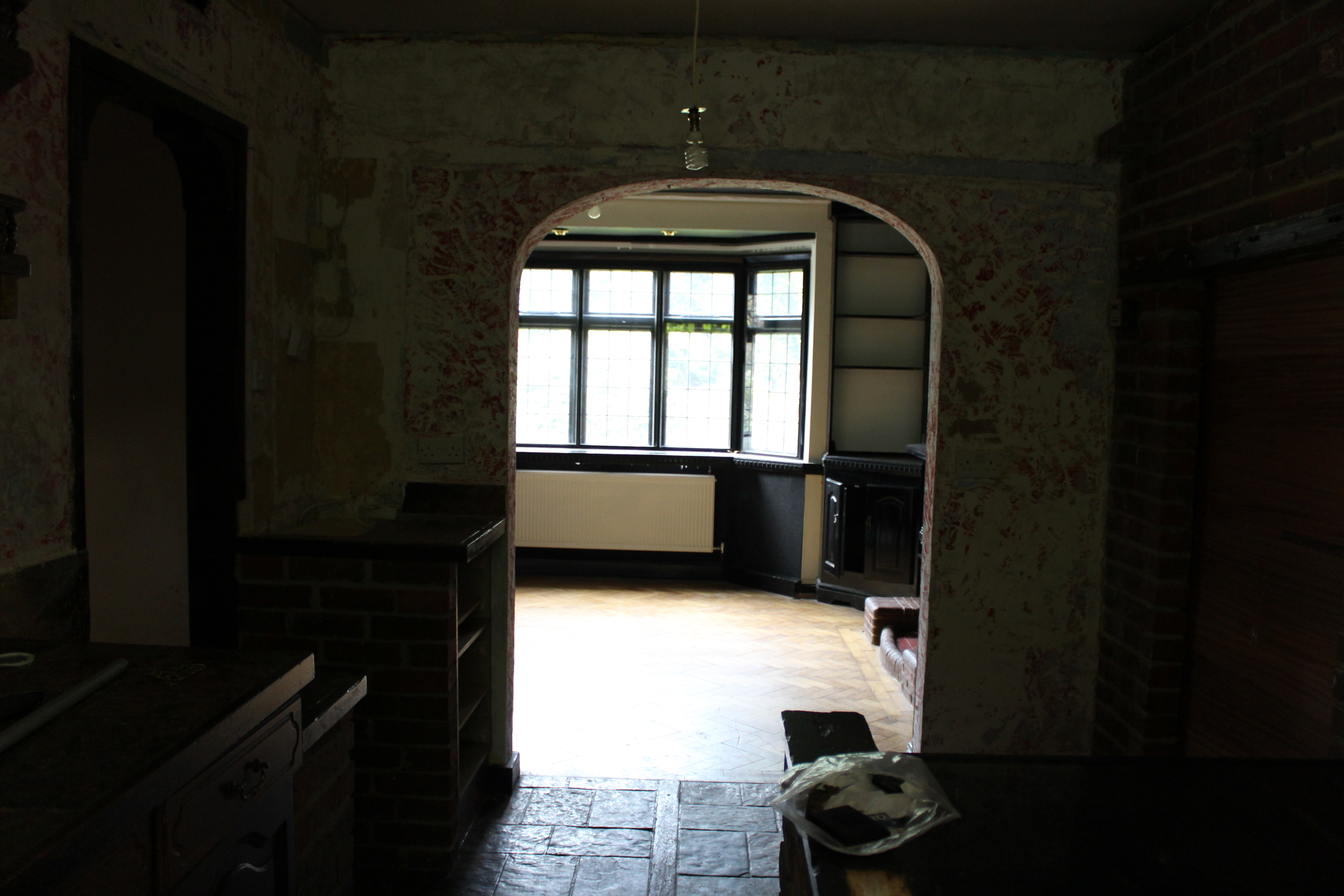
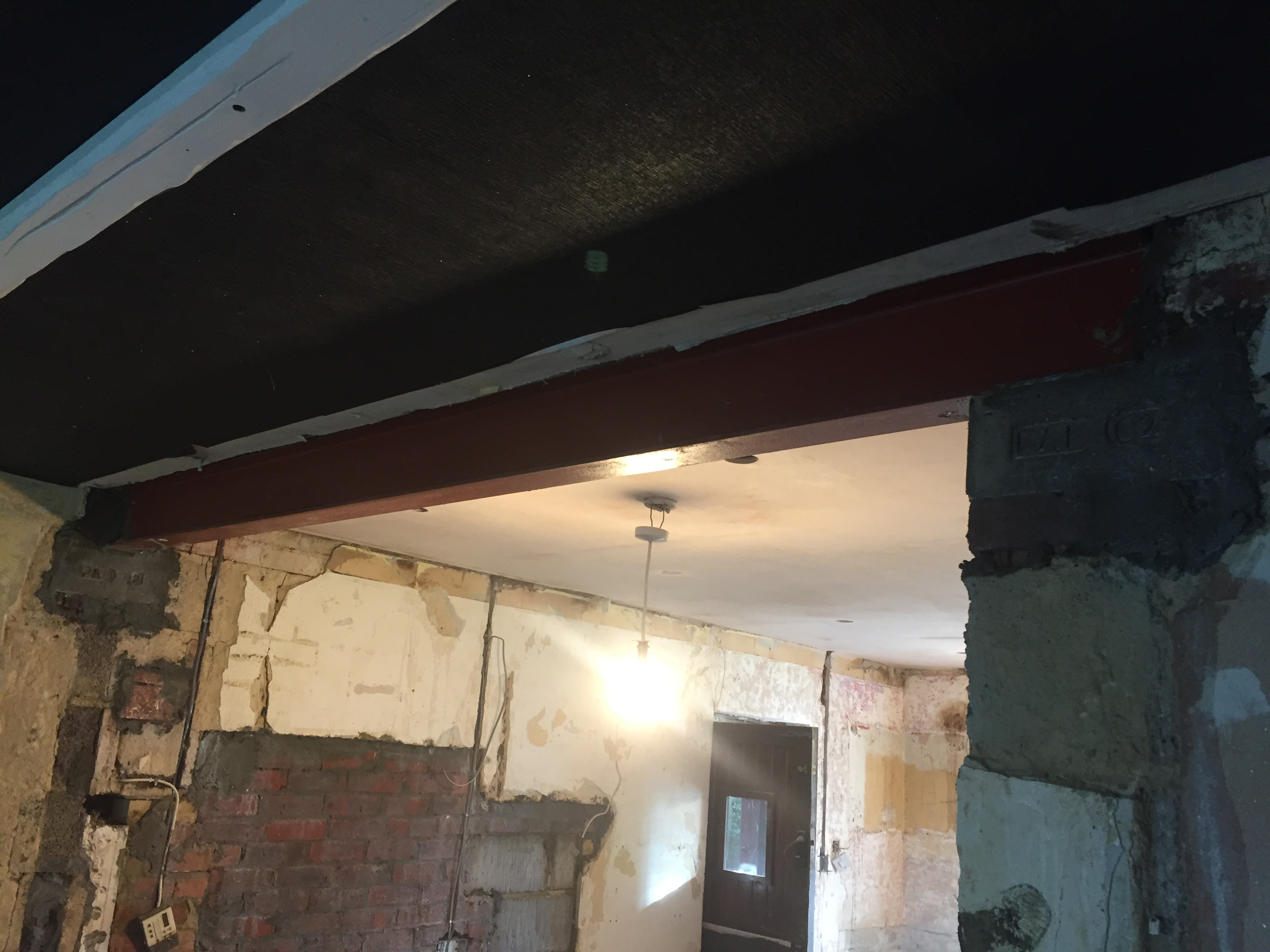 Living the dream in the Austrian Alps.0
 -
I don't think that steel is near the bay, but the OP would know more.0
-
It could be picking up the ends of the joists that go over the bay.0
-
A floor plan of upstairs, showing the locations of the damage and the relationship to the removed wall / inserted steel would be interesting.Living the dream in the Austrian Alps.0








Confirm your email address to Create Threads and Reply

Categories
- All Categories
- 354.1K Banking & Borrowing
- 254.3K Reduce Debt & Boost Income
- 455.3K Spending & Discounts
- 247.1K Work, Benefits & Business
- 603.7K Mortgages, Homes & Bills
- 178.3K Life & Family
- 261.2K Travel & Transport
- 1.5M Hobbies & Leisure
- 16.1K Discuss & Feedback
- 37.7K Read-Only Boards