We’d like to remind Forumites to please avoid political debate on the Forum.
This is to keep it a safe and useful space for MoneySaving discussions. Threads that are – or become – political in nature may be removed in line with the Forum’s rules. Thank you for your understanding.
Living off dividends?
Comments
-
Why don't you just make additional contributions IF 'they' move the goalposts? They will not do it without giving those affected chance to take action, based on past state pension age changes.bostonerimus said:
I continue to pay voluntary Class 2 NI even though I have more than 35 years of contributions because of the wording about myAlbermarle said:If the government does keep its promise of a state pension that's an extra 😉The possibility that any UK government would cancel the State Pension is approx zero, as it would be political suicide.
Older people vote in large numbers , hence why we have the expensive Triple/Double Lock increases every year.
if the government a) puts state pension and workplace pension up to a rediculous age
The plans for this are already largely known and in place
You should plan your pension/retirement plans on what is known today, and not on some unknown changes that may or may not come in future, especially one so unlikely to happen as the state pension stopping .
forecast being valid under "current legislation". They've moved the goal posts on me once before so I can see them doing it again - at least until I start getting the SP.2 -
I agree it's best to have a mix of income and growth funds, but at present most growth funds aren't doing very well when inflation is rising.bostonerimus said:Dividends are a good foundation for income, but you also need some growth or indexing to take care of inflation.0 -
If you are looking at a "Total Return" approach then you have to be able to ride out the bad times; it's right there in the most basic rubric for such an approach. The diversity of your portfolio should insulate you from the chill of downturns and keep you warm until the Sun shines again. Well now we have a falling market and could well have several tough years ahead and let's hope people have a good plan to make their retirement work, it will be testing times for portfolios and stomaches.Audaxer said:
I agree it's best to have a mix of income and growth funds, but at present most growth funds aren't doing very well when inflation is rising.bostonerimus said:Dividends are a good foundation for income, but you also need some growth or indexing to take care of inflation.“So we beat on, boats against the current, borne back ceaselessly into the past.”2 -
The bottom line is that dividends and growth are essentially the same thing in investment terms. By that, I mean that what everyone wants is maximum return on their investment. If you get more dividend return than you need you can reinvest the extra. If you get more growth than you need you can sell some of your investments to lead the life you want to lead.
Ideally, you want to pitch your total return average a little higher than you expect you need to combat inflation and cost of living so that you can build up your 'pot' during the good times and take from it during the bad times.
All that alongside having 6 to 18 months of funds available to ride out short term downturns.
2 -
Sure it's all money, but dividends tend to be more reliable than growth.lozzy1965 said:The bottom line is that dividends and growth are essentially the same thing in investment terms. By that, I mean that what everyone wants is maximum return on their investment. If you get more dividend return than you need you can reinvest the extra. If you get more growth than you need you can sell some of your investments to lead the life you want to lead.
Ideally, you want to pitch your total return average a little higher than you expect you need to combat inflation and cost of living so that you can build up your 'pot' during the good times and take from it during the bad times.
All that alongside having 6 to 18 months of funds available to ride out short term downturns.“So we beat on, boats against the current, borne back ceaselessly into the past.”3 -
bostonerimus said:
Sure it's all money, but dividends tend to be more reliable than growth.lozzy1965 said:The bottom line is that dividends and growth are essentially the same thing in investment terms. By that, I mean that what everyone wants is maximum return on their investment. If you get more dividend return than you need you can reinvest the extra. If you get more growth than you need you can sell some of your investments to lead the life you want to lead.
Ideally, you want to pitch your total return average a little higher than you expect you need to combat inflation and cost of living so that you can build up your 'pot' during the good times and take from it during the bad times.
All that alongside having 6 to 18 months of funds available to ride out short term downturns.Reliable does not mean good for investment. T-Bond, Gilts, Fixed term Savings are all very reliable but having a sizeable percentage of this sort of assets is a certain many losing strategy in investment.Also I have not read any strategist /analyst, book quoting the dividends as the main reason of making an investment decision. Most of them (If not) will recommend good to have it as a bonus.These stocks are or were blue chip stocks. Paying good dividends.If you are the early investors, see what happen with your money now ??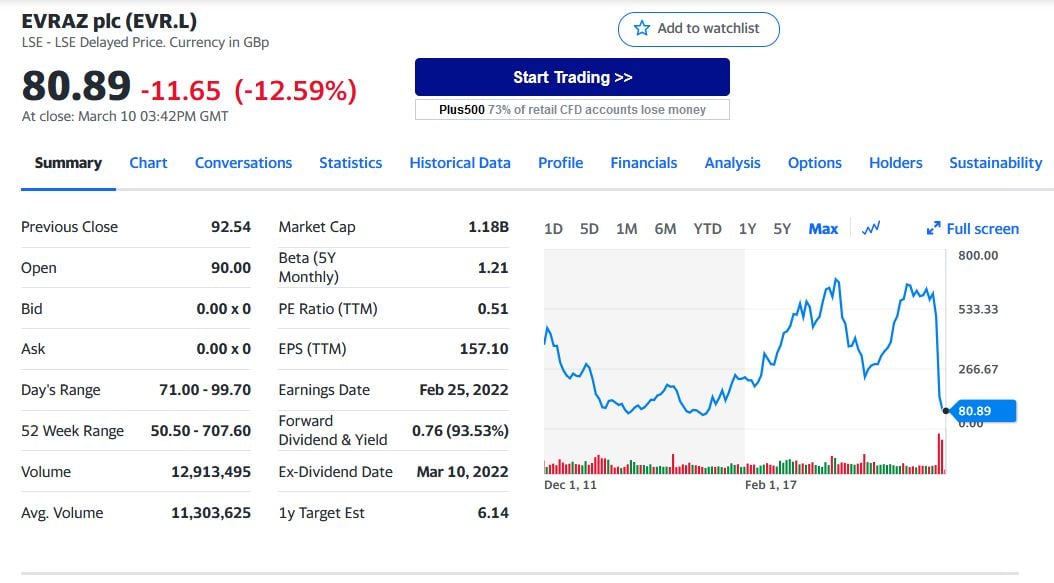 Similarly this stock has a forward dividend yield estimated of around 5.23%. If you are the early investors, see what happen with your money now ??
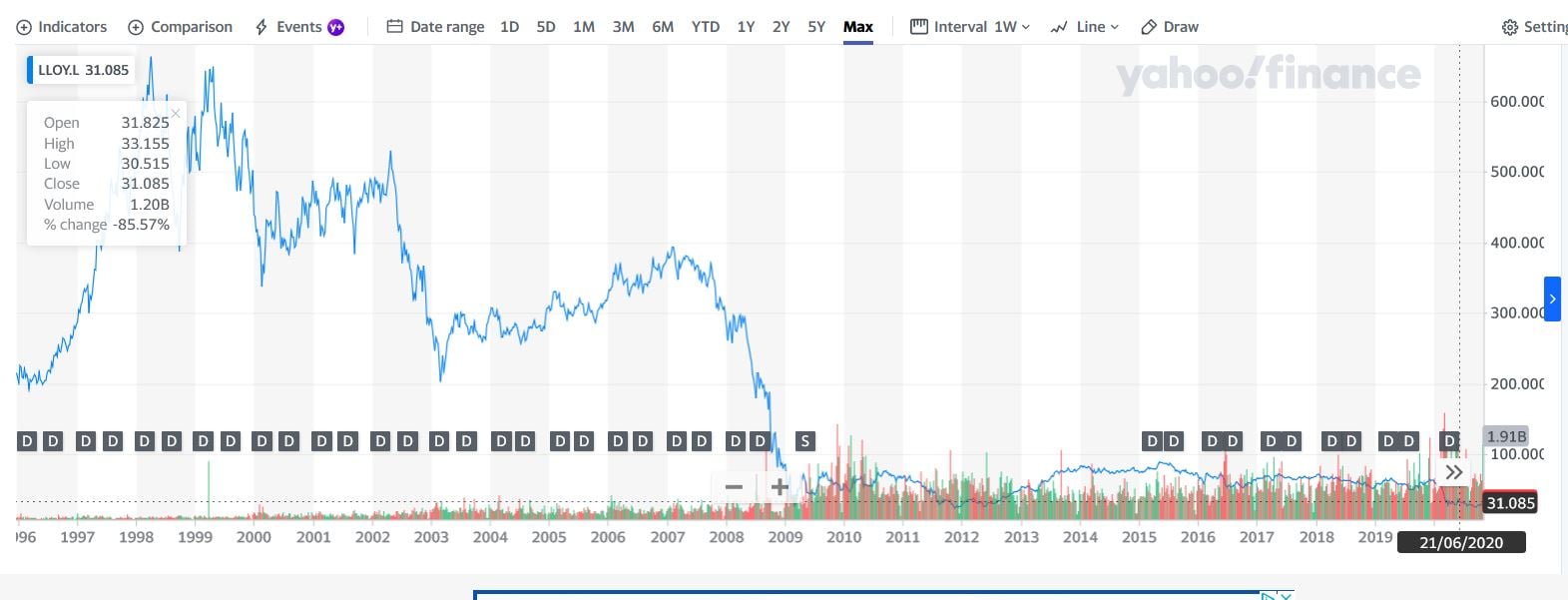 Now assuming similar thing, you are the early investor. Compare the end result of your money with other blue chip growth stocks such as Amazon, Tesla, AMD, Netflix which are not pay dividend. Similarly with MSFT, Apple, which only pay very small dividend.Another one is comparing of the total return of S&P 500 companies coming from Dividend and from Growth (unfortunately I could not find the most recent statistics)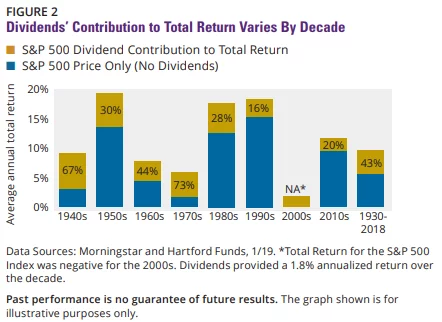
0 -
The US is probably not the best market to compare growth v dividends tbh.....share buybacks seem to be becoming the preferred method of returning cash to investors on that side of the pondDividends have taken a bit of a hammering in general during the pandemic (though recovering now). Income focussed investment trusts could be an option here though......some have delivered steadily rising dividends for decades, and while I personally wouldn't want to rely just on that, if the level of those dividends is high enough, then it could be a viable option for some (ITs can only really do this by withholding income in good years, to establish a reserve to cover bad years, but if income stream stability is the goal.......of course, if you are disciplined enough, you can do this "smoothing" yourself from any income producing investments)0
-
Most of the investment trusts will reinvest the dividends they receive rather than holding them in cash and therefore at dividend time need to sell some capital to pay their own - pretty much the same as an accumulation fund would. Some of them don't get enough dividends to cover their own and just pay out of capital growth. Regardless, as you say any of us can do that ourself just by taking regular payments so I don't really see the attraction of getting the IT to do it for us.MK62 said:The US is probably not the best market to compare growth v dividends tbh.....share buybacks seem to be becoming the preferred method of returning cash to investors on that side of the pondDividends have taken a bit of a hammering in general during the pandemic (though recovering now). Income focussed investment trusts could be an option here though......some have delivered steadily rising dividends for decades, and while I personally wouldn't want to rely just on that, if the level of those dividends is high enough, then it could be a viable option for some (ITs can only really do this by withholding income in good years, to establish a reserve to cover bad years, but if income stream stability is the goal.......of course, if you are disciplined enough, you can do this "smoothing" yourself from any income producing investments)1 -
I'm not sure about the OP, but I would like to be in a position where I could have enough money to survive coming in (10k is more than I'm spending at the moment on general living expenses) and then have the luxury to figure out what I want to do to make some more money.soulsaver said:I get c. £10k div income pa from £200k from a few fairly safe shares, which I use as an alternative to cash eroding by inflation in the bank .
But I couldn't imagine relying on them/it as my only source of income.
I don't think living off dividends is the answer though.0 -
I know I could sell capital from growth or accumulation funds to create my own income. However for dividend paying equity income funds I feel a bit reluctant to sell capital to smooth out income, as it means I will have less units and therefore lower dividends in future from these funds, meaning I would need to keep selling capital. So not sure if that would work long term?Prism said:
Most of the investment trusts will reinvest the dividends they receive rather than holding them in cash and therefore at dividend time need to sell some capital to pay their own - pretty much the same as an accumulation fund would. Some of them don't get enough dividends to cover their own and just pay out of capital growth. Regardless, as you say any of us can do that ourself just by taking regular payments so I don't really see the attraction of getting the IT to do it for us.MK62 said:The US is probably not the best market to compare growth v dividends tbh.....share buybacks seem to be becoming the preferred method of returning cash to investors on that side of the pondDividends have taken a bit of a hammering in general during the pandemic (though recovering now). Income focussed investment trusts could be an option here though......some have delivered steadily rising dividends for decades, and while I personally wouldn't want to rely just on that, if the level of those dividends is high enough, then it could be a viable option for some (ITs can only really do this by withholding income in good years, to establish a reserve to cover bad years, but if income stream stability is the goal.......of course, if you are disciplined enough, you can do this "smoothing" yourself from any income producing investments)2










Confirm your email address to Create Threads and Reply

Categories
- All Categories
- 353.6K Banking & Borrowing
- 254.2K Reduce Debt & Boost Income
- 455.1K Spending & Discounts
- 246.7K Work, Benefits & Business
- 603K Mortgages, Homes & Bills
- 178.1K Life & Family
- 260.7K Travel & Transport
- 1.5M Hobbies & Leisure
- 16K Discuss & Feedback
- 37.7K Read-Only Boards