We’d like to remind Forumites to please avoid political debate on the Forum.
This is to keep it a safe and useful space for MoneySaving discussions. Threads that are – or become – political in nature may be removed in line with the Forum’s rules. Thank you for your understanding.
Green, ethical, energy issues in the news
Comments
-
Bit more research going into wave energy, and it's in UK waters.
€30 million EU project launches to push UK wave energy
A consortium of six companies has launched a project aimed at addressing the competitiveness and bankability of wave energy farms by validating the technology in conditions required for large-scale deployment in UK waters.
The consortium includes European Marine Energy Centre (EMEC), The University of Edinburgh, Ocean Energy Europe, Renewable Risk Advisers and Kristinehamn Teknik & Service, with CorPower Ocean leading the €30 million POWER-Farm EU Project.
The initiative, partly funded by a €19 million grant from Horizon Europe, aims to underscore wave energy’s role as a mainstream renewable energy sector. With potential to supply up to 17% of electricity in key EU countries by 2050, the project also targets volume manufacturing across the EU.Mart. Cardiff. 8.72 kWp PV systems (2.12 SSW 4.6 ESE & 2.0 WNW). 28kWh battery storage. Two A2A units for cleaner heating. Two BEV's for cleaner driving.
For general PV advice please see the PV FAQ thread on the Green & Ethical Board.3 -
Update on the Australian home battery subsidy scheme launched in the summer. Huge success, with around 1,000 installs per day.
It's now being updated, with some earlier tapering (from May 2026), and a tripling of the budget. Deployments exceeded 2GWh by late October, and now (with changes) hoped to reach ~2m households and ~40GWh by 2030.
Just a guess on my part, but prices are falling fast. So if the 30% support has this much impact, then in a couple of years, prices will probably be at that level without support.
PV and batts, are good news for the UK, but of course bigger news for most of the world's population that lives in sunnier climes. So Australia's supercharging of deployments should help elsewhere.Home batteries subsidy overhauled with $5bn injection as Australians rush to take up discount
Discounts for larger systems will be wound back under a popular home battery scheme as the program’s budget is tripled.
The federal subsidy, which has been in place for five months, will get a generous top-up to $7.2bn across four years after initially being earmarked to cost $2.3bn, the energy minister, Chris Bowen, said.
The fund was thought to be running out rapidly, in part because households were installing systems up to the maximum subsidised size to take full advantage of the one-time offer.
Bowen said he expected the $2.3bn to be depleted in the coming year.
“We’ve been installing consistently 1,000 a day batteries each and every working day and a little bit less on Saturdays, but still around 500 every Saturday and around 1,000 every working day,” Bowen said.
“I would say it was even more successful than we thought.”From 1 May, systems up to 14kWh – deemed suitable for small households – would get the full 30% discount for each kWh.
Discounting would then taper off for medium-sized kits and again for large systems above 28 kWh.Mart. Cardiff. 8.72 kWp PV systems (2.12 SSW 4.6 ESE & 2.0 WNW). 28kWh battery storage. Two A2A units for cleaner heating. Two BEV's for cleaner driving.
For general PV advice please see the PV FAQ thread on the Green & Ethical Board.1 -
This is quire a large heat pump.
The giant heat pumps designed to warm whole districts - BBC News1 -
Carbon Commentary Newsletter from Chris Goodall:
1, Methane ‘plasmalysis’ (similar to pyrolysis). French start-up Spark raised €30m to commercialise its innovative technology, first developed at Stanford, for separating the hydrogen and the carbon in methane (CH4). The approach is aimed at decarbonising heavy industry by placing equipment that delivers pulsed plasma on an existing gas supply pipe, separating hydrogen to flow on to the industrial burners and extracting pure carbon in the form of carbon black. This approach has already been trialled in several industries. One key potential advantage of this approach is that it is said to use only a fifth of the electricity required by electrolysis to deliver the same amount of hydrogen. And it will also provide carbon black, currently a valuable product that is used in batteries. Perhaps this approach, or the similar technique of pyrolysis, will be the best route to lower cost hydrogen.
2, CCS. The Northern Lights consortium in Norway said that its third CO2 transport ship had begun its initial journey from the shipyard. This vessel will transport CO2 from a Yara fertiliser factory in the Netherlands to a collection point in Norway and hence via pipeline to an undersea storage site in the North Sea. Progress on this world leading project is very impressive but even at completion it will capture only 5 million tonnes a year. A larger but very early stage project reached the news in the US. NextEra, the country’s largest renewables developer is working with Exxon to develop a site for a data centre using 1 gigawatt of electricity provided by a new gas-fired power station. The resulting CO2 will be captured and stored. While it is troubling to see NextEra reverting to fossil fuels, this project may be one of the earliest to experiment with capturing relatively dilute carbon dioxide from the exhaust of a gas power station. This task will be vital to decarbonising electricity production in some countries.
3, Advanced geothermal. Fervo gained its drilling expertise by developing oil and gas fields It is now building what may become the largest single enhanced geothermal project in the world in Utah. The company raised another $462m in an oversubscribed round that will be used to complete its 500 MW project and begin development of other sites. In a world increasingly worried by the electricity demands of hyperscale data centres, enhanced geothermal is a potential source of 24 hour reliable supply (but only in some parts of the world). And geothermal has avoided the regulatory restrictions and cutbacks that have affected other low carbon sources. Chris Wright, the current US energy secretary, was CEO of Liberty Energy when it made a 2022 investment in Fervo.
4, EPR costs. French electricity supplier EDF announced a further increase in the prospective costs of the next generation of EPRs, raising the likely bill to around €73bn (2020 money and more than €80bn in 2025 terms) for six 1.6 GW reactors. This is 40% up on the figures presented in 2022 and after financing costs the eventual total will be more than €100bn.
5, Solar for data centres in space. Low earth orbit satellites are being asked to do many tasks that few imagined even ten years ago. Aetherflux said it is targeting a Q1 2027 launch for its first orbital data centre satellite. The satellite will process information sent from Earth powered by a solar array and, if successful, will be joined by others to create a ‘constellation of nodes’ that will replicate existing data centres. The company says this plan is an extension of its existing scheme to transmit energy via lasers from satellites to what it calls ‘contested environments’. (I think this what I would call ‘war zones’). The Financial Times columnist Anjana Ahuja laid into the multiple contending uses for low earth orbit, reminding us that this ‘commons’ is likely to get dangerously overcrowded.
6, Biochar impact on yields. Biochar, which is largely carbon, is the result of heating organic matter to very high temperatures in the absence of oxygen. Trials on okra fields in Taiwan have demonstrated that biochar can improve yields while also improving soil quality. The treated areas saw reduced nitrous oxide emissions, suggesting that fertilisers applied to the fields were being used more effectively by the plants. Fields treated with biochar at a rate of 30 tonnes per hectare saw crop production 41% above the areas used as controls for the experiment.
7, German hydrogen network. Gas network operator Gascade said it had completed the conversion to hydrogen of 400 km of a 1.4 metre natural gas pipeline. This section of the German gas grid runs from the Baltic coast southwards and is part of a proposed network that will eventually reach southern Germany, which is likely to be the region with maximum hydrogen demand. Gascade has said in the past that the network will handle up to 20 GW of energy transfer. For comparison, this is more than half the UK’s average electricity demand, showing the potential importance of relatively low cost hydrogen pipelines for energy transmission.
8, Synthetic fuels for aviation. The Swiss startup Synhelion uses concentrated solar energy to merge water vapour and CO2 into aviation fuel and other forms of hydrocarbon. It has a pilot plant in Germany and will open a second in Spain in 2027. SWISS, the airline of its home country, said it had committed to buy a small initial quantity of the fuel. Metafuels, also a Swiss firm, has a technology that converts methanol to aviation fuel. (The route to low carbon methanol is well understood but requires carbon capture). Metafuels commissioned the final design of its first commercial plant in Rotterdam, intended to be opened in 2028. This will produce larger quantities of fuel than the Synhelion plant, but the amounts are far too small to meet the EU’s requirement for a 1.2% share for sustainable fuels not made with biomass by 2030.
9, Hydrogen and ammonia plant in China. The world’s largest combined renewable hydrogen and ammonia factory was completed in China. Output is stated to be 45,000 tonnes of hydrogen and 200,000 tonnes of green ammonia and methanol (perhaps requiring a further 30,000 tonnes of H2). The site is also said to have large hydrogen storage capacity, allowing either a) power to be generated when renewables are not available or b) methanol to made at all times, whether or not electricity is available or c) both. Another example of a new industry being developed in China much faster than in the rest of the world. (I saw this on H2View).
10, Electricity costs in UK. I did an analysis of the causes of rising retail electricity prices in the UK, a subject of continuous debate. My numbers suggested that about one third of the increase from 2019/20 to today arose because of higher wholesale costs, principally driven by the increased prices paid by generators for natural gas. A roughly equal portion of the rise comes from costs imposed to speed up the energy transition. The final third of the increase was caused by other factors, including a steep rise in the share of the final price retained by retailers. Forecasts for the next five years show a decrease in wholesale costs but sharp increases in the portion of retail bills needed to pay for decarbonisation, particularly including the need for a huge expansion of investment in high voltage transmission networks. In other words, UK electricity prices will continue to rise at least for the next five years even as wholesale costs fall . Most of the data for my analysis came from the superb www.electricitybills.uk.
Best wishes for the holiday season to all subscribers. And thank you very much indeed for the comments and suggestions over recent months. Chris.
Mart. Cardiff. 8.72 kWp PV systems (2.12 SSW 4.6 ESE & 2.0 WNW). 28kWh battery storage. Two A2A units for cleaner heating. Two BEV's for cleaner driving.
For general PV advice please see the PV FAQ thread on the Green & Ethical Board.3 -
Carbon Commentary newsletter from Chris Goodall:
1, Green ammonia. Mixed news over the last few weeks. The fully flexible plant at Ramme in Denmark started operation, using wind power and electricity from a newly installed solar farm. In a world first, ammonia is made only when energy is available. The factory has no hydrogen store, substantially reducing production costs. This is a vitally important advance towards making key chemicals only when electricity is cheap. But the major green ammonia project in northern Sweden – ‘Power2Earth’ – was finally abandoned. And a large scheme in southern Chile was put on hold. Ignis, the developer, blamed the slow development of the green hydrogen market for its decision but others pointed at the severe regulatory barriers in the country.
2, Green steel in China. Baowu Steel, the world’s largest producer, opened a one million tonne hydrogen direct reduction site in southern China, avoiding the use of coal in the making of the iron. I think this is the largest hydrogen steel plant in the world. The CO2 savings are specified at over 3 tonnes per tonne of steel, suggesting complete decarbonisation of both the direct reduction and the subsequent electric arc furnace. (Primary steel production typically entails only about 2-2.5 tonnes of carbon dioxide emissions). This would be a superb achievement although the company itself says it will save only ‘50%-80%’ of emissions.
3, Hydrogen for Total refinery. RWE said it had begun commissioning its green hydrogen production facility in north west Germany. The output from this 100 MW initial stage will be transported via a 600 km pipeline to Total’s refinery in Leuna in the east of the country. Storage will be provided at an underground site close to the point of production which is due to open in mid 2026. Total indicates it wants to use 100% green hydrogen for its refinery operations. It has already contracted to buy 200,000 tonnes a year for its European locations and intends to purchase a further 300,000 tonnes when available.
4, Non-biological synfuels. HIF Global operates a trial production site for synthetic gasoline in Chile and is developing four other locations around the world at commercial scale. It is also experimenting with direct air capture to deliver the CO2 it need alongside the green hydrogen required for the production of the various fuels it intends to commercialise. HIF announced an agreement with the government of Uruguay to push ahead with a major production site that will produce almost 900,000 tonnes of e-methanol. E-methanol is likely to be a key shipping fuel and can be used as a precursor to other synthetic fuels, including aviation kerosene.The project has a budget of more than $5bn. While still at an early stage, the agreement lays out how renewable energy will be provided for the new plant, commits to an upgrade of the railway to be used to transport the fuel to the port of Montevideo, indicates how the CO2 will be routed to the new plant and deals with issues such as environmental permitting.
5, Agrivoltaics. As note 10 below suggests, many countries are disturbed - probably to an excessive degree - by the impact of ground-mounted PV on food production. In France, for example, obtaining permission to use productive land for solar panels is very demanding. PV developers can combine farming with solar to ease their way through regulatory barriers. In Italy, European Energy announced that its 225 MW agrivoltaic project in Sicily would go ahead after receiving a Contract for Difference. This park will use elevated structures to hold the panels well above field level, allowing agriculture to take place underneath. The company says this will be largest solar farm in Italy when constructed. European Energy said it had also won CfDs for two small agrivoltaic projects in France. In Germany, construction was completed by another developer of a site in Bavaria of about 17 MW capacity, the biggest agrivoltaic park in the country. Here the panels are also elevated and wheat will be grown underneath.
6, Sodium ion batteries. Recent price reductions in lithium ion batteries have reduced interest in the sodium-based alternative. A new study looks at the likely evolution of the costs of the two types and concludes that sodium will still be likely to become the lower cost version. In addition, metal sodium is also less subject to price variations and its sourcing and processing can be more widely distributed around the globe. The study says that lithium ion battery production lines can be easily switched to sodium equivalents, removing another important obstacle. In a perhaps surprising set of conclusions, the researchers also offer agressive predictions for future battery manufacturing rates, suggesting that over 100 TWh a year is possible worldwide by 2050. (For comparison, around a third of the UK’s annual electricity production). They also suggest that the declining prices of batteries means that storage costs should not be seen as any form of impediment to a transition away from fossil fuels. Batteries will not add significantly to the overall price of reliable renewable electricity, they conclude.
7, Cheaper electric trucks. As concerns mount about the future of light electric commercial vehicles, emphasised by the withdrawal of the Ford 150 all electric pickup, one design studio in California is continuing to develop low cost light trucks. Backed by more than $700m of investment from Jeff Bezos among others, Slate Auto aims to have electric vehicles for sale in late 2026. In an unusual move, it aims for a radically reduced sticker price of around $25,000, compared to more than twice that for the Ford 150. But this lower cost only gets the customer the most basic of trucks and doesn’t seem even to include paint. Nevertheless Slate says that 150,000 customers have spent $50 to reserve their space in the queue for this vehicle with its range of about 150 miles/240 kilometres.
8, EV battery use per kilometre travelled. Current electric cars deliver about 6 kilometres per kilowatt hour on typical moderate speed journeys in reasonably warm weather. Renault shared details of a test that achieved over 12 km/kWh using a specially designed vehicle driven at consistently high speeds and at lower than average temperatures, both of which increase battery use. The experimental car will never enter production but key features such as limited weight and low rolling resistance for the tyres will eventually find their way into new models.
9, Chinese hydrogen gas turbine. Faced with long backlogs in the delivery of new gas turbines, few electricity producers are looking at adding substantial extra capacity in the next years. However China is developing its own manufacturing industry. It recently installed the world’s first turbine that will burn 100% hydrogen. This relatively small 30 MW unit will be used to generate electricity at times of grid shortage with the hydrogen having been made using electrolysis during periods of surplus renewable production and then stored.
10, Solar land use. Loss of agricultural and other land to solar installations is a concern in many countries, including the UK. An online site recently reported that UK government estimates show that only about 0.6% of the country’s agricultural land area will be used by solar at the end of 2030 if the national target of 47 GW capacity is met by that date. Strangely, this estimate assumes that almost all PV installed over the next five years will be ground-mounted (i.e. rooftop installations cease). Even allowing for this unusual decision, I looked at the numbers and concluded that they are too pessimistic. The average future need for land for UK solar is estimated at around 2 hectares a megawatt and the extra capacity required to get to the 2030 target is about 25.5 GW. Using government estimates of total agricultural land area and the area already taken by solar, my numbers would suggest a maximum of 0.4%, not 0.6% of agricultural land. (Estimates for other countries would be different because space requirements are partly tied to the latitude of the installation). And as rooftop installations are still strongly growing, the eventual land use for solar will be well below this figure.
Mart. Cardiff. 8.72 kWp PV systems (2.12 SSW 4.6 ESE & 2.0 WNW). 28kWh battery storage. Two A2A units for cleaner heating. Two BEV's for cleaner driving.
For general PV advice please see the PV FAQ thread on the Green & Ethical Board.5 -
6.4kWp (16 * 400Wp REC Alpha) facing ESE + 5kW Huawei inverter + 10kWh Huawei battery. Vaillant Arotherm Pro 7kW heat pump.2
-
Coal power generation falls in both China and India in 2025, per The Guardian:N. Hampshire, he/him. Octopus Intelligent Go elec / Fuse gas / Vodafone BB / iD mobile. Kirk Hill Co-op member.Economy 7 cap explainer. Gas vs E7 vs peak elec heating costs, Ecoflow Stream, Best kettle :-)
2.72kWp PV facing SSW installed Jan 2012. 11 x 247w panels, 3.6kw inverter. 37 MWh generated, long-term average 2.6 Os.3 -
Orsted granted injunction to resume work on Rhode Island https://www.offshorewind.biz/2026/01/13/us-federal-court-clears-revolution-wind-to-resume-construction-as-orsted-skyborns-lawsuit-against-stop-work-orders-progresses/
Wonder if it will affect their decisions re UK offshore .4.8kWp 12x400W Longhi 9.6 kWh battery Giv-hy 5.0 Inverter, WSW facing Essex . Aint no sunshine ☀️ Octopus gas fixed 5.07 + Octopus Intelligent Flux leccy
CEC Email energyclub@moneysavingexpert.com3 -
I note that gas is rising lately too https://tradingeconomics.com/commodity/uk-natural-gas , not the best for my Gas Tracker, but it’s warmer this week to offset that fortunately.4.8kWp 12x400W Longhi 9.6 kWh battery Giv-hy 5.0 Inverter, WSW facing Essex . Aint no sunshine ☀️ Octopus gas fixed 5.07 + Octopus Intelligent Flux leccy
CEC Email energyclub@moneysavingexpert.com2 -
Also decent chance China has reached peak oil. They are still importing roughly the same amount, but last year were busy filling their strategic reserve. Car sales are now over 50% PEV, and even heavy trucks are ~25% BEV, so consumption (for transport) may be falling. Also indications that the refineries are changing output slightly with a reduction on transportation fuels and shift to more specialised chemicals (such as for plastics).QrizB said:Coal power generation falls in both China and India in 2025, per The Guardian:Mart. Cardiff. 8.72 kWp PV systems (2.12 SSW 4.6 ESE & 2.0 WNW). 28kWh battery storage. Two A2A units for cleaner heating. Two BEV's for cleaner driving.
For general PV advice please see the PV FAQ thread on the Green & Ethical Board.1









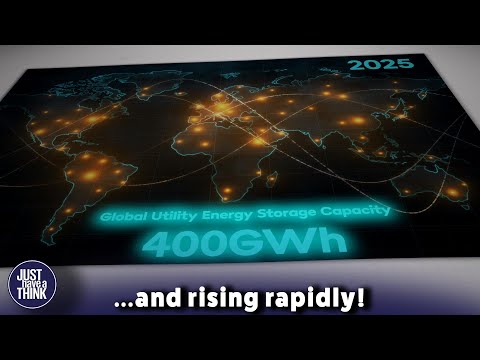 https://www.youtube.com/watch?v=fR--t-eMq_Y


Confirm your email address to Create Threads and Reply

Categories
- All Categories
- 355.7K Banking & Borrowing
- 254.9K Reduce Debt & Boost Income
- 456.1K Spending & Discounts
- 248.3K Work, Benefits & Business
- 605.9K Mortgages, Homes & Bills
- 179K Life & Family
- 263.7K Travel & Transport
- 1.5M Hobbies & Leisure
- 16.2K Discuss & Feedback
- 37.7K Read-Only Boards