We’d like to remind Forumites to please avoid political debate on the Forum.
This is to keep it a safe and useful space for MoneySaving discussions. Threads that are – or become – political in nature may be removed in line with the Forum’s rules. Thank you for your understanding.
POPLA Decisions
Comments
-
Morning Coupon Mad,
Thank you I agree absolutly.
My wife was once a Parking Representations Manager for a London Borough and she said no way would they (The Council) try such a trick! She spotted the omission straight away.
It was for Euro Car Parks…..
The driver and I await the claim with excited anticipation :)
3 -
From our Friends at the IAS, a Friday win.
Blaze Parking Management.
Interesting that the Notice to Keeper only offering a 30% early payment bribe instead of at least a 40% one (as specified in the joint code of practice and previous ipc versions) wasn't appraised.
…or that they never submitted authority from the landowner despite being put to strict proof.
Adjudicator's Decision
The adjudicator made their decision on 21/05/2026 21:59:45.
This PCN was issued on the basis that the Appellant was parked in a disabled bay without displaying a valid blue badge, which is not in dispute.One of the first issues I must consider when determining an appeal such as this is whether the signage was sufficient to have brought to the attention of the Appellant the terms and conditions that apply to parking on this site. Indeed, one of the Appellant's grounds of appeal is that the signage was not sufficient.
The Appellant states that the entrance sign does not state that a blue badge must be displayed and that there was no other signage located at or near the disabled bay he parked in stating this term. I have checked all of the signage proofs that the Operator has provided of the various signs on this site and none of them appear to state that a blue badge must be displayed when parking in a disabled bay.
I also agree with the Appellant's assertion that the small blue badge holder sign that the Operator has provided a photograph of does not appear to be located in the area where the Appellant was parked.
The photograph provided by the Operator does not show the location of that sign relative to where the Appellant was parked and it cannot be seen in any of the images of the Appellant's vehicle. As such, in the absence of clear sign stating the relevant term concerning displaying a blue badge, I cannot be satisfied that the signage on the site is sufficient and I will allow the appeal on that basis.
I have considered all the issues raised by both parties in this Appeal and I am not satisfied that the Operator has established that the Parking Charge Notice was properly issued and therefore this Appeal is allowed.3 -
Anyone aware of any issues at Popla?
7 weeks and counting is absolutely dire.
It's certainly not fit for purpose from a functional standpoint, corruption aside.2 -
I had almost three months from initial POPLA appeal recently.
4 -
perhaps the staff are jumping ship 😉
2 -
DecisionSuccessful
Assessor summary of operator case
The operator has issued the parking charge notice (PCN) for electric vehicle charging only.
Assessor summary of your case
The appellant has raised a detailed appeal. As I have decided to allow this appeal, I have only listed the grounds of appeal that persuaded me to allow. • They appeal as the vehicle hirer. • The PCN has not complied with the strict requirements of Schedule 4 of the Protection of Freedoms Act 2012 (POFA). • The operator failed to deliver a notice to hirer that was fully compliant with the requirements of POFA. • The creditor must also provide the hirer with a copy of the documents mentioned in Paragraph 13(2), together with a copy of the notice to keeper, and the operator did not provide these documents. The appellant has provided images of the site, an image of a parking receipt and weblinks relating to their grounds of appeal. This has been considered in my determination. After reviewing the operator’s evidence, the appellant has reiterated their case and said the operator has not addressed the grounds of appeal they raised.
Assessor supporting rational for decision
The appellant has raised several grounds for appeal. However, my findings will focus on how the PCN was issued, as this ground has persuaded me to allow the appeal. It is the responsibility of the operator to provide POPLA with sufficient, clear evidence in order to rebut the appellant’s claims and prove that it issued the Parking Charge Notice (PCN) correctly. From the evidence provided in the operator’s case file, it is clear that the registered keeper of the vehicle is Enterprise Rent-a-Car UK Limited, which provided the operator with the name of the person which had hired or leased the vehicle at the time of the alleged contravention, Ahmet Cayir, to which the operator then issued a notice to hirer. After reviewing the evidence provided by both parties, I am not satisfied that the driver of the vehicle has been identified. The Protection of Freedoms Act (POFA) 2012, paragraph 4 (1) states “the creditor has the right to recover any unpaid parking charges from the keeper of the vehicle”. Section 13 (2) goes on to state that “the creditor may not exercise the right under paragraph 4 to recover from the keeper any unpaid parking charges specified in the notice to keeper if, within the period of 28 days beginning with the day after that on which that notice was given, the creditor is given – (a) A statement signed by or on behalf of the vehicle-hire firm to the effect that at the material time the vehicle was hired to a named person under a hire agreement; (b) A copy of the hire agreement; and (c) A copy of a statement of liability signed by the hirer under that hire agreement.” As such, Section 14(2)(a) requires the documents referred to above to be sent together with the notice to hirer. The operator has failed to provide a copy of these documents in its evidence to POPLA. As a result, I am not satisfied that the operator has met the strict requirements set out in POFA 2012. As such, I must allow the appeal on the basis that the operator has failed to demonstrate that the appellant is the driver and therefore liable for the charge. I note the appellant has raised other issues as grounds for appeal, however, as I have decided to allow the appeal for this reason, I did not feel they required further consideration.
2 -
👆👆For context, which PPC?
Please note, we are not a legal advice forum. I personally don't get involved in critiquing court case Defences/Witness Statements, so unable to help on that front. Please don't ask. .
I provide only my personal opinion, it is not a legal opinion, it is simply a personal one. I am not a lawyer.
Give a man a fish, and you feed him for a day; show him how to catch fish, and you feed him for a lifetime.#Private Parking Firms - Killing the High Street2 -
GroupNexus Moto Burton in Kendal (POPLA Successsful)
Appeal as advised:
I appeal this Parking Charge Notice [PCN reference number] as the registered keeper.
The driver has not been identified and I am under no obligation to name the driver.
If you intend to hold the keeper liable, you must fully comply with Schedule 4 of the Protection of Freedoms Act 2012. This Notice to Keeper does not do so. In particular, it does not properly comply with paragraph 9(2)(e)(i), and it does not correctly identify the creditor as required by paragraph 9(2)(h).
As you have not met the statutory conditions required to transfer liability from the driver to the keeper, there is no keeper liability in this matter.
I therefore require you to cancel the Parking Charge Notice or issue the relevant POPLA code for independent appeal.
initial response from CP Plus:
Dear Sir/Madam,
Thank you for your correspondence relating to your Parking Charge.
The representations stated in your correspondence have been noted and considered. Please forward to us the full name and address of the driver at the time this charge was incurred so that we can update our records accordingly.
We are placing this Charge on hold for 14 days from the date of this email to allow you to provide the details requested.
Yours faithfully,
CP Plus Ltd
Response sent:
Subject: Parking Charge [insert reference]
Dear Sir or Madam,
Thank you for your email.
The driver will not be identified. There is no obligation upon the keeper to provide the name or address of the driver.
My appeal was made on the clear basis that you cannot transfer liability to the keeper because the Notice to Keeper does not comply with the requirements of Schedule 4 of the Protection of Freedoms Act 2012, including but not limited to paragraphs 9(2)(e) and 9(2)(h).
Your response does not address those points at all. Instead, it merely requests the driver’s details. That request is declined.
Please now properly consider the appeal as submitted and either cancel the charge or issue a formal rejection together with the POPLA verification code.
Yours faithfully
[Name]
Inintial Appeal rejection:
Dear Sir/Madam,
Thank you for your correspondence relating to your Parking Charge.
The Charge was issued and the signage is displayed in compliance with The British Parking Association’s Approved Operator Scheme Code of Practice and all relevant laws and regulations.
Clear signs at the entrance of this site and throughout inform drivers of the requirement to pay for parking in excess of the free 2 hour period, and it is not possible to access any part of the premises without passing multiple signs. Your representations are not considered a mitigating circumstance for appeal.
We confirm the Charge was issued under Schedule 4 of the Protection of Freedoms Act 2012. As no driver details have been provided, we are holding the registered keeper of the vehicle liable.
In light of this, on this occasion, your representations have been carefully considered and rejected.
We can confirm that we will hold the Charge at the current rate of £60 for a further 14 days from the date of this correspondence. If no payment is received within this period, and no further appeal to POPLA is made, the Charge will escalate and further costs may be added.
POPLA appeal:
I am the registered keeper of the vehicle and I appeal against this Parking Charge Notice.
The driver has not been identified and I am under no obligation to identify the driver. The operator has expressly stated in its rejection that it is seeking to rely on Schedule 4 of the Protection of Freedoms Act 2012 to hold the keeper liable. It may only do so if the Notice to Keeper fully complies with the strict requirements of Schedule 4. It does not. Accordingly, no keeper liability arises and the appeal must be allowed.
I also attach a copy of the sealed order in ParkingEye Ltd v Ghansah, claim number M4FC56Q6, dated 29 December 2025. Whilst not binding authority, it is directly relevant because the court expressly held that a claim against a keeper failed where the notice to keeper did not include the invitation to pay required by PoFA paragraph 9(2)(e). It demonstrates that this is a real statutory defect with real legal consequences, not a matter that can properly be brushed aside.
1. No keeper liability. The Notice to Keeper does not comply with PoFA Schedule 4 paragraph 9(2)(e).
Paragraph 9(2)(e) requires the Notice to Keeper to state that the creditor does not know both the name of the driver and a current address for service for the driver and to invite the keeper either to pay the unpaid parking charge or, if the keeper was not the driver, to notify the creditor of the name of the driver and a current address for service for the driver and to pass the notice to the driver.This Notice to Keeper does not properly give that statutory invitation to the keeper. Instead, it refers to the driver being liable and seeks the driver’s details, but it does not properly invite the keeper to pay the unpaid parking charge in the form required by PoFA. Keeper liability is purely statutory. If the operator wishes to rely upon it, it must comply strictly with the statute. It has not done so.
This is not a trivial or academic point. I attach a recent county court order, ParkingEye Ltd v Ghansah, claim number M4FC56Q6, dated 29 December 2025, in which the court expressly dismissed the claim because the claimant pursued the defendant as keeper, not driver, and the claimant’s notice to keeper “does not include the invitation to pay required by POFA paragraph 9(2)(e)”. That is not cited as binding authority, but as a clear example of a court recognising that this exact defect is fatal where keeper liability is being asserted. POPLA is not being asked to treat that order as precedent, but it is invited to recognise the obvious point it illustrates: paragraph 9(2)(e) is a mandatory statutory condition, not an optional form of words.
The operator’s rejection letter makes its position plain. It states that the charge was issued under Schedule 4 of PoFA and that, because no driver details were provided, the registered keeper is being held liable. That is an express reliance on PoFA. It therefore remains for the operator to demonstrate full compliance with paragraph 9(2)(e). It cannot do so.
As the Notice to Keeper does not comply with paragraph 9(2)(e), the operator has failed to establish any right to recover the charge from the keeper.
2. No keeper liability. The Notice to Keeper does not comply with PoFA Schedule 4 paragraph 9(2)(h).
Paragraph 9(2)(h) requires the Notice to Keeper to identify the creditor. That means the legal person said to be entitled to recover the parking charge.This Notice to Keeper does not clearly identify the creditor. It uses GroupNexus branding, refers in the footer to CP Plus Limited (company number 02595379) t/a GroupNexus, and elsewhere refers to “our Client’s property”. That wording is not clear identification of the creditor. It leaves the recipient to infer the alleged creditor’s identity rather than stating it expressly.
That defect is particularly serious here because GroupNexus is no longer merely a trading name used by CP Plus Limited. GroupNexus Limited (company number 15560549) is now itself a separate incorporated legal entity. That is the crucial point. Historically, an operator might have argued that “GroupNexus” was simply branding for CP Plus Limited and nothing more. That is no longer safely arguable once GroupNexus Limited exists as a distinct company in its own right.
Accordingly, when this Notice to Keeper uses “GroupNexus” branding, refers in the footer to CP Plus Limited (company number 02595379) t/a GroupNexus, and also refers to “our Client’s property”, the recipient is left uncertain as to which legal person is allegedly the creditor. Is it said to be CP Plus Limited? Is it said to be GroupNexus Limited (company number 15560549)? Or is it some unnamed client or principal? The Notice does not say.
That is not a trivial technicality. The whole purpose of paragraph 9(2)(h) is to ensure that the recipient knows the identity of the creditor. PoFA requires the creditor to be identified clearly within the Notice to Keeper itself. It is not enough for the recipient to be left to guess from branding, trading styles or vague references to a client.
POPLA is therefore invited to understand the precise implication here: once GroupNexus Limited exists as a separate legal entity, the old casual use of “GroupNexus” as if it were merely a harmless trading label is no longer sufficient for PoFA purposes. The Notice must make clear which legal person is the creditor. This Notice fails to do so. Paragraph 9(2)(h) has therefore not been complied with.
The operator may not cure that defect later by assertion in its rejection letter. The statutory notice itself must comply.
3. The operator has not shown that the appellant is the driver.
I am the registered keeper. I am appealing only as keeper. The driver has not been identified.There is no lawful presumption that the keeper was the driver and I am under no obligation to name the driver. If the operator cannot rely on PoFA, it cannot recover the parking charge from the keeper merely because the keeper has not named the driver.
The operator’s own rejection confirms that it is not alleging that it knows who the driver was. Instead, it seeks to rely on Schedule 4. Once that reliance fails, the appeal must succeed.
4. The operator has not shown a valid period of parking as required for keeper liability.
PoFA paragraph 9(2)(a) requires the Notice to Keeper to specify the relevant period of parking.Operators using ANPR commonly record only entry and exit timestamps. Those are not the same thing as a proved period of parking. They merely show the times a vehicle passed cameras at the perimeter. They do not show when the vehicle was parked, whether the vehicle was queuing, manoeuvring, waiting for a space, reading signage, or exiting the site.
To the extent that this Notice to Keeper relies on ANPR entry and exit times, that is not the same as specifying an actual period of parking. The burden rests on the operator to prove that the period relied upon is in fact a period of parking and not merely site circulation time.
This is particularly important where the operator seeks to impose keeper liability under PoFA, because PoFA requires a period of parking, not simply two timestamped images showing the vehicle in motion.
5. The operator has not shown that the terms were clearly brought to the attention of the driver.
The operator asserts that there are clear signs at the entrance and throughout the site. That is not evidence. It is merely an assertion.The operator is put to strict proof of the signage in place on the material date, including clear contemporaneous photographs and a site map showing the location of each sign, the wording on each sign, and the route by which a driver would encounter and be able to read them before any contract could be formed.
The operator’s rejection also mischaracterises my appeal as if it were based on mitigation. It was not. The appeal challenged keeper liability under statute. The stock rejection referring to “mitigating circumstances” suggests that the operator did not properly consider the actual grounds raised.
If the operator wishes to rely on signage to establish contractual liability, POPLA is invited to require strict proof that the signage was sufficiently prominent, legible and positioned so that the driver was given a fair opportunity to read and understand the terms before any contract could be formed.
6. The operator has not shown that it has landowner authority.
The operator is put to strict proof of full contemporaneous landowner authority for the material site and date.A mere witness statement or redacted agreement is not enough unless it clearly shows that the operator was authorised by the landowner to issue parking charges and to pursue them in its own name. POPLA is invited to require production of the contemporaneous contract or chain of authority showing exactly who contracted with the operator and what rights were granted.
This is particularly relevant where the Notice to Keeper refers to “our Client’s property” rather than clearly identifying the creditor. That wording itself raises a question as to the legal basis on which the operator says it is entitled to recover the charge.
7. ANPR evidence is not sufficient without proof of accuracy, synchronisation and compliance.
If the operator relies on ANPR, it is put to strict proof that the system was working correctly on the material date, that the cameras were properly synchronised, that the images relate to the same single visit, and that the timestamps are accurate.ANPR images of a vehicle entering and leaving a site do not, of themselves, establish the terms accepted, the point of contract formation, or the actual period parked. Nor do they prove that the driver saw, read and accepted any terms.
The operator should therefore be required to produce strict proof of the ANPR system’s reliability, calibration and audit trail for the material date.
For all of those reasons, the operator has failed to establish keeper liability and has failed to prove its case. I respectfully request that POPLA allows this appeal.
Operator response:
Operator response/evidence pack
Response to operators response/evidence pack:
The operator’s evidence does not rebut the appeal as made. It simply asserts that the Notice to Keeper is compliant with Schedule 4 of the Protection of Freedoms Act 2012 and then invites POPLA to accept that assertion without properly addressing the specific statutory defects raised by the appellant. That is not a proper rebuttal.
The issue for POPLA is not whether the operator says it issued the Parking Charge under Schedule 4. The issue is whether the Notice to Keeper actually complies with every mandatory requirement of Schedule 4. Keeper liability is purely statutory. It does not arise through substantial compliance, broad compliance, or something the operator considers close enough. It arises only if every mandatory condition is met. If any mandatory requirement is not complied with, keeper liability does not arise.
The operator has failed to rebut the appellant’s point under paragraph 9(2)(e). Paragraph 9(2)(e) requires the Notice to Keeper to state that the creditor does not know both the name of the driver and a current address for service for the driver, and to invite the keeper either to pay the unpaid parking charge or, if the keeper was not the driver, to provide the driver’s details and pass the notice to the driver. That wording is mandatory. It is not optional and it is not something that can be loosely approximated.
The Notice to Keeper relied upon by the operator does not properly give that required invitation to the keeper to pay. Instead, it refers to the driver being liable and seeks the driver’s details. That is not the same thing. The operator’s evidence does not explain how the wording used is said to comply with paragraph 9(2)(e). It merely repeats the assertion that the notice was issued under Schedule 4 and that the keeper is therefore liable. That is not the test. The question for POPLA is not whether the operator says it relied upon PoFA. The question is whether the Notice to Keeper actually complies with PoFA. On this point it does not. POPLA is therefore respectfully invited to address this issue directly and expressly. If the Notice to Keeper does not contain the statutory invitation to the keeper in the form required by paragraph 9(2)(e), keeper liability does not arise.
The operator has also failed to rebut the appellant’s point under paragraph 9(2)(h). Paragraph 9(2)(h) requires the Notice to Keeper to identify the creditor clearly. That means the actual legal person said to be entitled to recover the parking charge, and that must be stated clearly in the Notice to Keeper itself.
The operator may seek to say that CP Plus Limited can trade as “GroupNexus”. That misses the point entirely. The issue is not whether CP Plus Limited may use “GroupNexus” as branding. The issue is whether the Notice to Keeper clearly identifies the creditor without ambiguity.
It does not.
CP Plus Limited is one legal entity, company number 02595379. GroupNexus Limited is another legal entity, company number 15560549, incorporated on 13 March 2024. They are separate companies. That matters. Once GroupNexus Limited existed as its own incorporated company, the word “GroupNexus” no longer pointed to only one possible legal person. From that point onwards, the use of “GroupNexus” in a Notice to Keeper became legally ambiguous unless the notice made crystal clear which company was said to be the creditor. Companies House records show both entities exist separately and are active. ([Find and Update Company Information][1])
This Notice to Keeper does not do that. It uses GroupNexus branding, refers to CP Plus Ltd t/a GroupNexus, and the operator’s own signage says the site is managed and operated on behalf of Moto Hospitality Ltd by CP Plus Ltd, T/A GroupNexus. That leaves multiple legal entities in play. The recipient is left to guess whether the creditor is said to be CP Plus Limited, GroupNexus Limited, or Moto Hospitality Ltd. The operator’s own sign wording demonstrates that ambiguity.
That is precisely what paragraph 9(2)(h) is designed to prevent. The creditor must be identified clearly, not left to implication, branding, trading style or guesswork. Even if CP Plus Limited is entitled to trade as “GroupNexus”, that does not rescue this Notice to Keeper. Once GroupNexus Limited existed as a separate company, the use of “GroupNexus” without clear identification of the actual creditor became materially ambiguous. The Notice to Keeper had to tell the keeper, clearly and unambiguously, which legal entity was claiming to be entitled to recover the charge. It failed to do so. POPLA is therefore respectfully invited to address this issue directly and expressly. If the Notice to Keeper does not clearly identify the creditor, keeper liability does not arise.
The operator’s attempt to sweep those PoFA defects aside with a bare assertion that the Notice to Keeper is compliant is not a rebuttal. POPLA is asked not to dispose of these issues with a bare conclusion that the Notice to Keeper is “PoFA compliant”. The appeal raises two specific statutory defects under paragraphs 9(2)(e) and 9(2)(h). Each requires express consideration. Unless the operator can show full compliance with each mandatory element of Schedule 4, it cannot recover the charge from the keeper.
The operator’s response on landowner authority is also misconceived and should be rejected. The burden is not on the appellant to prove a negative. It is for the operator, as the party asserting contractual standing, to produce proper evidence that it had authority from the landowner on the material date to operate the site, issue parking charges and, if asserted, pursue them in its own name. The operator’s attempt to reverse that burden, and to suggest that the appellant should have gone to the BPA to disprove authority, is unsustainable.
The operator relies on a bare witness statement rather than the contemporaneous contract itself. That is not strict proof of standing. It is especially inadequate where the document is not on headed paper, merely bears the name and job title of Shaun Stanley, “Head of Commercial & Fuel”, and does not, on its face, establish that the signatory had authority to make binding statements on behalf of the landowner as to the scope of the operator’s contractual rights, the land covered, or any right to issue charges and pursue them in its own name. A bare witness statement is not the contract and should not be treated as if it were.
Nor is the existence of signage or equipment proof of any subsisting contract. Signs can remain in place after contracts have expired, been varied, been terminated or otherwise ceased to confer the rights asserted. The presence of signs proves only that signs were present. It does not prove the existence of any subsisting contract on the material date, nor the scope of any rights allegedly granted. The operator must prove standing by proper contemporaneous contractual evidence, not by assertion, not by inference from signage, and not by inviting POPLA to assume that authority must have existed because enforcement apparatus was present on site.
This point is made even more important by the operator’s own sign wording, which states that the site is managed and operated on behalf of Moto Hospitality Ltd by CP Plus Ltd, T/A GroupNexus. That wording itself suggests an agency-style arrangement and reinforces the need for proper contractual proof of the operator’s standing and of the identity of the creditor.
The operator also mischaracterises the appeal as if it were about mitigation. It is not. The appeal is a legal challenge to keeper liability and standing. Assertions about signage, grace periods, or lack of mitigation do not answer the statutory defects identified in the Notice to Keeper, nor do they prove landowner authority.
In short, the operator has not rebutted the appeal as made. It has not shown compliance with paragraph 9(2)(e). It has not shown compliance with paragraph 9(2)(h). It has not provided proper contractual evidence of standing. It has merely asserted conclusions that it has not proved. POPLA is therefore respectfully invited to address these issues directly and expressly. If the operator cannot show full compliance with every mandatory requirement of Schedule 4, and cannot show proper standing by contemporaneous contractual evidence, the appeal must be allowed.
The appellant also respectfully notes that these are questions of statutory and contractual compliance, not matters of discretion. If POPLA declines to engage with those issues properly, any adverse decision will not determine the matter. POPLA’s decision is not binding on the appellant, who will simply leave the operator to prove its case before a court, where these legal issues can be examined properly and impartially.
POPLA decision (Assessor: Paul E Walker. Case: ET6121/001)
The appellant appeals on several grounds and has provided supporting evidence. I won’t summarise all of the grounds raised, or the evidence provided, because I’m allowing the appeal based on the single appeal ground summarised below:
The charge notice didn’t comply with the Protection of Freedoms Act 2012 (POFA) because it didn’t clearly identify the creditor. Having seen the parking operator’s response to their appeal, the appellant expands on their original appeal grounds.
Assessor supporting rational for decision:I’m allowing this appeal for the following reasons. The appellant raised specific appeal grounds, but I won’t necessarily address them because the appeal’s been allowed.
My role is to assess, based on the evidence put forward, whether the charge was correctly issued. It’s for the parking operator to provide evidence both to support its case and to answer any relevant appeal grounds raised.
Parking operators can pursue payment of charges either from the drivers of vehicles or from vehicles’ keepers or hirers using a law called the Protection of Freedoms Act 2012 (POFA). The driver hasn’t been identified in this case, and there’s no suggestion the vehicle was on hire, so the operator can only possibly pursue the vehicle’s keeper for the charge.
POFA lets operators transfer liability to keepers if certain rules are followed. The rules include having to send a notice containing specific information to the keeper. POFA makes clear such a notice must “identify the creditor”, with the creditor being “a person who is for the time being entitled to recover unpaid parking charges from the driver of the vehicle”.
The appellant appeals, in part, on the basis the charge notice in this case didn’t clearly identify the driver. Specifically, they say the charge notice was branded as having been issued by Group Nexus and signed off by CP Plus Limited trading as Group Nexus.
They claim that Group Nexus Limited exists as a company in its own right, separate from CP Plus Limited, and therefore that the information on the notice wasn’t clear about who “the creditor” was. I’m not satisfied the information or evidence put forward by the parking operator is sufficient to answer the appeal grounds raised.
The operator makes no reference at all in its evidence to the appellant’s claim the notice didn’t clearly identify the creditor, nor to the appellant’s claim that Group Nexus Limited exists as its own entity rather than simply a trading name of CP Plus Limited.
Based on the evidence, the parking operator may not have any basis to pursue the keeper for this charge, so I’m allowing this appeal.
5 -
Seems to apply for APCOA pcns, as well as Group Nexus, C P PLUS LTD cases, so well done
Link below
1 -
🤣🤣🤣🤣🤣🤣🤣🤣🤣
Unsuccessful
Assessor Name Sultana Yasmin
Assessor summary of operator case
The operator has issued the Parking Charge Notice (PCN) due to exceeded maximum stay.
Assessor summary of your case
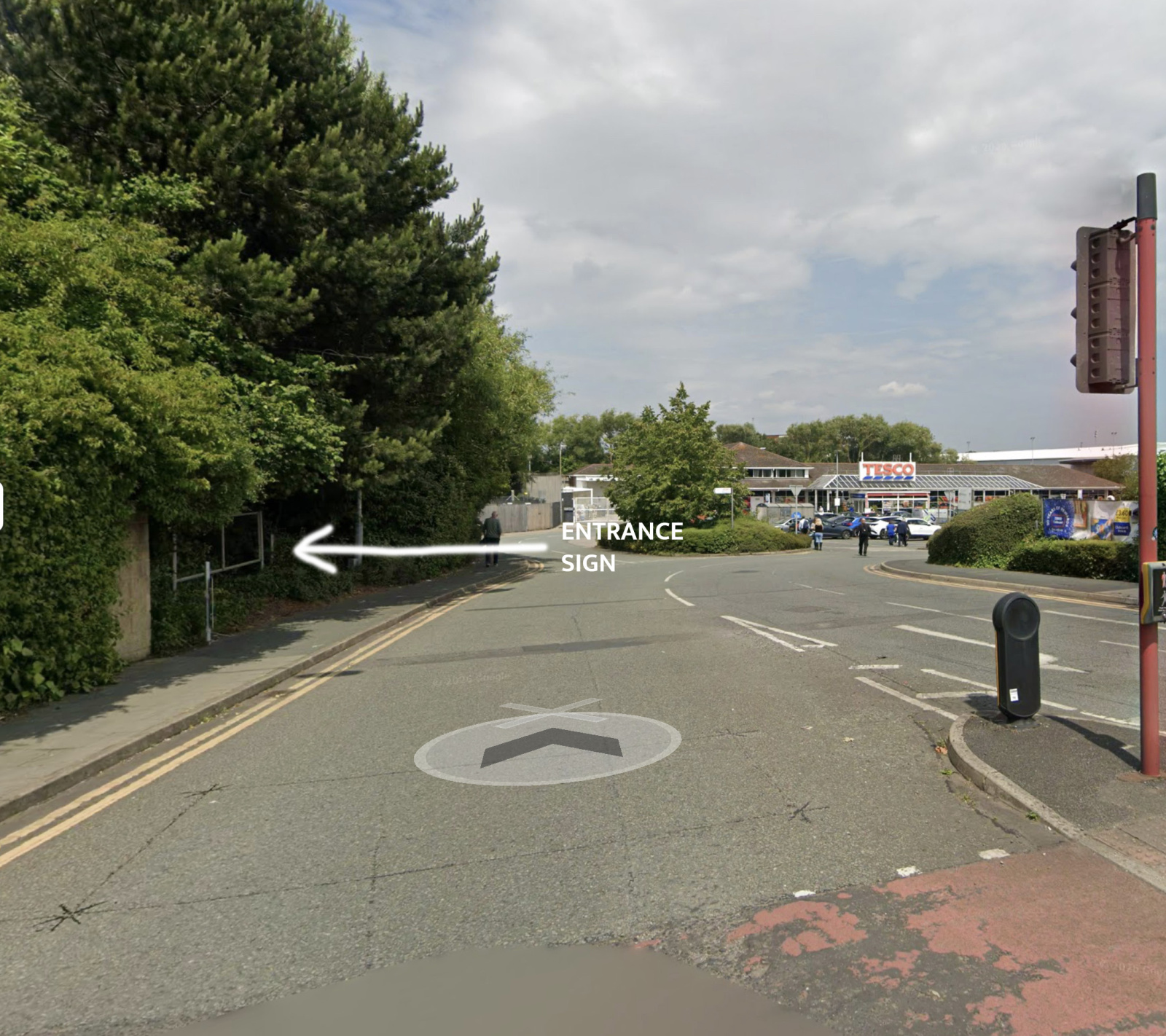
The appellant has provided a detailed account surrounding the parking event in question. For the purpose of my report, I have summarised the grounds raised into the points below. • The appellant argues that no enforceable contract was formed between the driver and Horizon Parking because one of the essential elements of a contract, namely a valid offer, was absent. As a result, the appellant contends that no contractual agreement existed and therefore no parking charge can be enforced. • The appellant further submits that the signage at the site was insufficient to create a binding contract. They maintain that the signage was inadequate and that the purported entrance sign was only visible when exiting the site, meaning the terms were not properly brought to the driver's attention before parking. • The appellant also challenges the operator's authority to issue parking charges, arguing that Horizon Parking must provide a valid, site-specific contract with the landowner demonstrating its authority to manage the site and pursue parking charges. The appellant states that a generic contract would not be sufficient evidence. • In addition, the appellant notes that they did not provide evidence of the vehicle breakdown because they consider the issue irrelevant where no contract was formed. They argue that any attempt to rely on a reduced charge under the Code of Practice would also be invalid in the absence of a contract. • The appellant further states that, while an argument of frustration of contract could potentially arise from the vehicle breakdown, such an argument is unnecessary because no contract was formed in the first place. • The appellant has provided 1. Copy of signage After reviewing the operator’s evidence, the appellant has provided a copy of signage to support their appeal. All of the above has been considered in making my determination.
Assessor supporting rational for decision
The Private Parking Sector Single Code of Practice (The Code) sets the standards its parking operators need to comply with. The Protection of Freedoms Act (PoFA) is a law that allows parking operators to transfer liability to the registered keeper in the event the driver or hirer is not identified. In this case, it is not clear who the driver of the appellant’s vehicle is, so I must consider the Protection of Freedoms Act (PoFA) 2012, as the operator issued the Parking Charge Notice (PCN) to the keeper of the vehicle. The operator has provided photographic evidence of the signage in place at the car park, which details the terms and conditions of parking. The signs advise motorists that there is a maximum stay of 3 hours and that vehicles must comply with the parking conditions displayed on site. The motorist is also advised that failure to comply with the terms and conditions will result in a PCN being issued for £ 70. The operator has provided ANPR records, photographs of the vehicle and signage evidence to demonstrate that the vehicle remained on site for 3 hours and 36 minutes, exceeding the maximum stay permitted at the location. I have acknowledged and considered the appellants concerns. The appellant argues that no contract was formed because the signage was insufficient and that no valid offer was made. I have carefully considered the appellant's submissions. However, the operator has provided photographs of the entrance signage and multiple signs displayed throughout the site. The signage advises motorists of the parking restrictions, including the maximum stay period and the charge that may be incurred in the event of a breach. Having reviewed the evidence, I am satisfied that the terms and conditions were sufficiently brought to the attention of motorists using the site. Accordingly, I am satisfied that a contract was capable of being formed between the driver and the operator. Section 3.1.1 of the Single Code of Practice states that there must be an entrance sign displayed and maintained at the entrance to the site, to inform drivers whether parking is permitted subject to terms and conditions or prohibited. Section 3.1.2 of the Code contains the principles the entrance sign must display, including whether public parking is available and if a payment is required. Its design must also comply with the standard format as described in Annex A. The entrance sign must take into account the speed of vehicles approaching the car park. In this case the parking operator’s evidence shows clear entrance signage which tells motorists the car park is privately owned land and that there are terms and conditions attached to the car park. Section 3.1.3 of the Single Code of Practice contains the requirements for signs displaying the terms and conditions. The signs must be placed throughout the site, so that drivers have the opportunity to read them when parking or leaving their vehicle. The terms and conditions must be clear and unambiguous, using a font and contrast that is be conspicuous and legible. In this case the operator's evidence clearly demonstrates this. The appellant states that the operator should provide evidence of authority to manage the site. I acknowledge the appellant's comments. The operator has provided landowner authority documentation as part of its evidence pack. Having reviewed the evidence, I am satisfied that the operator has demonstrated sufficient authority to manage parking and issue PCN at this location. Section 14.1 of the Code states that where controlled land is being managed on behalf of a landowner, written confirmation must be obtained before a parking charge can be issued. The appellant refers to a vehicle breakdown and explains why supporting evidence was not supplied. I appreciate that unexpected vehicle issues can occur and understand why the appellant may feel this should be considered. However, the operator specifically invited the appellant to provide supporting evidence, such as a breakdown report, invoice or receipt, so that the circumstances could be reviewed. The evidence pack confirms that no supporting evidence was provided. In the absence of evidence demonstrating that a breakdown occurred and necessitated the extended stay, I am unable to conclude that the overstay should be exempted from enforcement. The appellant states that the operator has failed to comply with the applicable Code of Practice. Having reviewed the evidence provided, including signage photographs, ANPR evidence and landowner authority documentation, I am satisfied that the operator has demonstrated compliance with the relevant requirements necessary to enforce the parking terms at this site. Accordingly, I conclude that the PCN was issued correctly. Therefore, the appeal is refused.
2












Confirm your email address to Create Threads and Reply

Categories
- All Categories
- 355.7K Banking & Borrowing
- 254.9K Reduce Debt & Boost Income
- 456.1K Spending & Discounts
- 248.3K Work, Benefits & Business
- 605.9K Mortgages, Homes & Bills
- 179K Life & Family
- 263.7K Travel & Transport
- 1.5M Hobbies & Leisure
- 16.2K Discuss & Feedback
- 37.7K Read-Only Boards