We’d like to remind Forumites to please avoid political debate on the Forum.
This is to keep it a safe and useful space for MoneySaving discussions. Threads that are – or become – political in nature may be removed in line with the Forum’s rules. Thank you for your understanding.
IMPORTANT: Please make sure your posts do not contain any personally identifiable information (both your own and that of others). When uploading images, please take care that you have redacted all personal information including number plates, reference numbers and QR codes (which may reveal vehicle information when scanned).
📨 Have you signed up to the Forum's new Email Digest yet? Get a selection of trending threads sent straight to your inbox daily, weekly or monthly!
UKPC POPLA Appeal- Registered Users Only




Hi All
I've got a couple of days left to file my POPLA against UKPC for a PCN my dad received for parking in a 'registered users only' car park. He last used it in 2023 prior to UKPC taking over so was unaware of the restrictions. My draft POPLA is below- I'd welcome any comments or recommendations. I haven't mentioned it at all as I wasnt sure if it's relevent in this case but he is a Blue badge holder and parked directly outside a healthy facility office rather than following their instructions to park 300m down the road, because of his mobility difficulties.
Vehicle Registration: *******
Parking Charge Reference Number: *************
POPLA Reference number: ***********
I, the registered keeper of the above vehicle, received a letter dated ******, acting as a notice to the registered keeper. My appeal to the operator UK Parking Control (UKPC), was submitted and acknowledged on ****** and subsequently rejected by letter dated ******. I contend that I, as the keeper, am not liable for the alleged parking charge and wish to appeal against it on the following grounds:
- The signs in this car park are not prominent, clear or legible from all parking spaces and there is insufficient notice of the sum of the parking charge itself
- The operator has not shown that the individual who it is pursuing is in fact the driver who was liable for the charge
- No evidence of Landowner Authority - the operator is put to strict proof of full compliance with the BPA Code of Practice
- No Evidence of Period Parked – NtK does not meet PoFA2012 requirements
- The ANPR System is Neither Reliable nor Accurate
- The Signs Fail to Transparently Warn Drivers of what the ANPR Data will be used for
- The signs in this car park are not prominent, clear or legible from all parking spaces and there is insufficient notice of the sum of the parking charge itself
I note that within the Protection of Freedoms Act (POFA) 2012 it discusses the clarity that needs to be provided to make a motorist aware of the parking charge. Specifically, it requires that the driver is given 'adequate notice' of the charge. POFA 2012 defines 'adequate notice' as follows:
''(3) For the purposes of sub-paragraph (2) 'adequate notice' means notice given by: (a) the display of one or more notices in accordance with any applicable requirements prescribed in regulations under paragraph 12 for, or for purposes including, the purposes of sub-paragraph (2); or (b) where no such requirements apply, the display of one or more notices which: (i) specify the sum as the charge for unauthorised parking; and (ii) are adequate to bring the charge to the notice of drivers who park vehicles on the relevant land''.
Even in circumstances where POFA 2012 does not apply, I believe this to be a reasonable standard to use when making my own assessment, as appellant, of the signage in place at the location. Having considered the signage in place at this particular site against the requirements of Section 18 of the BPA Code of Practice and POFA 2012, I am of the view that the signage at the site - given the minuscule font size of the £sum, which is illegible in most photographs and does not appear at all at the entrance - is NOT sufficient to bring the parking charge (i.e. the sum itself) to the attention of the motorist.
There was no contract nor agreement on the 'parking charge' at all. It is submitted that the driver did not have a fair opportunity to read about any terms involving this huge charge, which is out of all proportion and not saved by the dissimilar 'ParkingEye Ltd v Beavis' case.
In the Beavis case, which turned on specific facts relating only to the signs at that site and the unique interests and intentions of the landowners, the signs were unusually clear and not a typical example for this notorious industry. The Supreme Court were keen to point out the decision related to that car park and those facts only:In the Beavis case, the £85 charge itself was in the largest font size with a contrasting colour background and the terms were legible, fairly concise and unambiguous. There were 'large lettering' signs at the entrance and all around the car park, according to the Judges.
Here is the 'Beavis case' sign as a comparison to the signs under dispute in this case:
This case, by comparison, does not demonstrate an example of the 'large lettering' and 'prominent signage' that impressed the Supreme Court Judges and swayed them into deciding that in the specific car park in the Beavis case alone, a contract and existed.
Here, the signs are sporadically placed, indeed obscured and hidden in some areas. They are unremarkable, not immediately obvious as parking terms and the wording is mostly illegible, being crowded and cluttered with small print. It is indisputable that placing letters too close together in order to fit more information into a smaller space can drastically reduce the legibility of a sign, especially one which must be read BEFORE the action of parking and leaving the car.
It is vital to observe, since 'adequate notice of the parking charge' is mandatory under the POFA Schedule 4 and the BPA Code of Practice, these signs do not clearly mention the parking charge which is hidden in small print (and does not feature at all on some of the signs). Areas of this site are unsigned and there are no full terms displayed - i.e. with the sum of the parking charge itself in large lettering - at the entrance either, so it cannot be assumed that a driver drove past and could read a legible sign, nor parked near one.
This case is more similar to the signage in POPLA decision 5960956830 on 2.6.16, where the Assessor Rochelle Merritt found as fact that signs in a similar size font in a busy car park where other unrelated signs were far larger, was inadequate:''the signage is not of a good enough size to afford motorists the chance to read and understand the terms and conditions before deciding to remain in the car park. [...] In addition the operators signs would not be clearly visible from a parking space [...] The appellant has raised other grounds for appeal but I have not dealt with these as I have allowed the appeal.''From the evidence I have seen so far, the terms appear to be displayed inadequately, in letters no more than about half an inch high, approximately. I put the operator to strict proof as to the size of the wording on their signs and the size of lettering for the most onerous term, the parking charge itself.
The letters seem to be no larger than .40 font size going by this guide:
As further evidence that this is inadequate notice, Letter Height Visibility is discussed here:
''When designing your sign, consider how you will be using it, as well as how far away the readers you want to impact will be. For example, if you are placing a sales advertisement inside your retail store, your text only needs to be visible to the people in the store. 1-2' letters (or smaller) would work just fine. However, if you are hanging banners and want drivers on a nearby highway to be able to see them, design your letters at 3' or even larger.''I note that within the Protection of Freedoms Act (POFA) 2012 it discusses the clarity that needs to be provided to make a motorist aware of the parking charge. Specifically, it requires that the driver is given 'adequate notice' of the charge. POFA 2012 defines 'adequate notice' as follows:
''(3) For the purposes of sub-paragraph (2) 'adequate notice' means notice given by: (a) the display of one or more notices in accordance with any applicable requirements prescribed in regulations under paragraph 12 for, or for purposes including, the purposes of sub-paragraph (2); or (b) where no such requirements apply, the display of one or more notices which: (i) specify the sum as the charge for unauthorised parking; and (ii) are adequate to bring the charge to the notice of drivers who park vehicles on the relevant land''.
Even in circumstances where POFA 2012 does not apply, I believe this to be a reasonable standard to use when making my own assessment, as appellant, of the signage in place at the location. Having considered the signage in place at this particular site against the requirements of Section 18 of the BPA Code of Practice and POFA 2012, I am of the view that the signage at the site - given the minuscule font size of the £100 sum, which is illegible in most photographs and does not appear at all at the entrance - is NOT sufficient to bring the parking charge (i.e. the sum itself) to the attention of the motorist.
There was no contract nor agreement on the 'parking charge' at all. It is submitted that the driver did not have a fair opportunity to read about any terms involving this huge charge, which is out of all proportion and not saved by the dissimilar 'ParkingEye Ltd v Beavis' case.
In the Beavis case, which turned on specific facts relating only to the signs at that site and the unique interests and intentions of the landowners, the signs were unusually clear and not a typical example for this notorious industry. The Supreme Court were keen to point out the decision related to that car park and those facts only:
In the Beavis case, the £85 charge itself was in the largest font size with a contrasting colour background and the terms were legible, fairly concise and unambiguous. There were 'large lettering' signs at the entrance and all around the car park, according to the Judges.
Here is the 'Beavis case' sign as a comparison to the signs under dispute in this case:This case, by comparison, does not demonstrate an example of the 'large lettering' and 'prominent signage' that impressed the Supreme Court Judges and swayed them into deciding that in the specific car park in the Beavis case alone, a contract and 'agreement on the charge' existed.
Here, the signs are sporadically placed, indeed obscured and hidden in some areas. They are unremarkable, not immediately obvious as parking terms and the wording is mostly illegible, being crowded and cluttered with a lack of white space as a background. It is indisputable that placing letters too close together in order to fit more information into a smaller space can drastically reduce the legibility of a sign, especially one which must be read BEFORE the action of parking and leaving the car.
It is vital to observe, since 'adequate notice of the parking charge' is mandatory under the POFA Schedule 4 and the BPA Code of Practice, these signs do not clearly mention the parking charge which is hidden in small print (and does not feature at all on some of the signs). Areas of this site are unsigned and there are no full terms displayed - i.e. with the sum of the parking charge itself in large lettering - at the entrance either, so it cannot be assumed that a driver drove past and could read a legible sign, nor parked near one.
This case is more similar to the signage in POPLA decision 5960956830 on 2.6.16, where the Assessor Rochelle Merritt found as fact that signs in a similar size font in a busy car park where other unrelated signs were far larger, was inadequate:
''the signage is not of a good enough size to afford motorists the chance to read and understand the terms and conditions before deciding to remain in the car park. [...] In addition the operators signs would not be clearly visible from a parking space [...] The appellant has raised other grounds for appeal but I have not dealt with these as I have allowed the appeal.''
From the evidence I have seen so far, the terms appear to be displayed inadequately, in letters no more than about half an inch high, approximately. I put the operator to strict proof as to the size of the wording on their signs and the size of lettering for the most onerous term, the parking charge itself.
The letters seem to be no larger than .40 font size going by this guide:
As further evidence that this is inadequate notice, Letter Height Visibility is discussed here:''When designing your sign, consider how you will be using it, as well as how far away the readers you want to impact will be. For example, if you are placing a sales advertisement inside your retail store, your text only needs to be visible to the people in the store. 1-2' letters (or smaller) would work just fine. However, if you are hanging banners and want drivers on a nearby highway to be able to see them, design your letters at 3' or even larger.''
...and the same chart is reproduced here:http://www.signazon.com/help-center/sign-letter-height-visibility-chart.aspx''When designing an outdoor sign for your business keep in mind the readability of the letters. Letters always look smaller when mounted high onto an outdoor wall''.
''...a guideline for selecting sign letters. Multiply the letter height by 10 and that is the best viewing distance in feet. Multiply the best viewing distance by 4 and that is the max viewing distance.''
So, a letter height of just half an inch, showing the terms and the 'charge' and placed high on a wall or pole or buried in far too crowded small print, is woefully inadequate in an outdoor car park. Given that letters look smaller when high up on a wall or pole, as the angle renders the words less readable due to the perspective and height, you would have to stand right in front of it and still need a stepladder (and perhaps a torch and/or magnifying glass) to be able to read the terms.
Under Lord Denning's Red Hand Rule, the charge (being 'out of all proportion' with expectations of drivers in this car park and which is the most onerous of terms) should have been effectively: 'in red letters with a red hand pointing to it' - i.e. VERY clear and prominent with the terms in large lettering, as was found to be the case in the car park in 'Beavis'. A reasonable interpretation of the 'red hand rule' and the 'signage visibility distance' tables above and the BPA Code of Practice, taking all information into account, would require a parking charge and the terms to be displayed far more transparently, on a lower sign and in far larger lettering, with fewer words and more 'white space' as background contrast. Indeed in the Consumer Rights Act 2015 there is a 'Requirement for transparency':
(1) A trader must ensure that a written term of a consumer contract, or a consumer notice in writing, is transparent.
(2) A consumer notice is transparent for the purposes of subsection (1) if it is expressed in plain and intelligible language and it is legible.
The Beavis case signs not being similar to the signs in this appeal at all, I submit that the persuasive case law is in fact 'Vine v London Borough of Waltham Forest [2000] EWCA Civ 106' about a driver not seeing the terms and consequently, she was NOT deemed bound by them.
This judgment is binding case law from the Court of Appeal and supports my argument, not the operator's case:http://www.signazon.com/help-center/sign-letter-height-visibility-chart.aspxThis was a victory for the motorist and found that, where terms on a sign are not seen and the area is not clearly marked/signed with prominent terms, the driver has not consented to - and cannot have 'breached' - an unknown contract because there is no contract capable of being established. The driver in that case (who had not seen any signs/lines) had NOT entered into a contract. The recorder made a clear finding of fact that the plaintiff, Miss Vine, did not see a sign because the area was not clearly marked as 'private land' and the signs were obscured/not adjacent to the car and could not have been seen and read from a driver's seat before parking.
BPA Code of Practice Section 19.2 states:
“Entrance signs play an important part in establishing a parking contract and deterring trespassers. Therefore, as well as the signs you must have telling drivers about the terms and conditions for parking, you must also have a standard form of entrance sign at the entrance to the parking area. Entrance signs must tell drivers that the car park is managed and that there are terms and conditions they must be aware of. Entrance signs must follow some minimum general principles and be in a standard format. The size of the sign must take into account the expected speed of vehicles approaching the car park.”
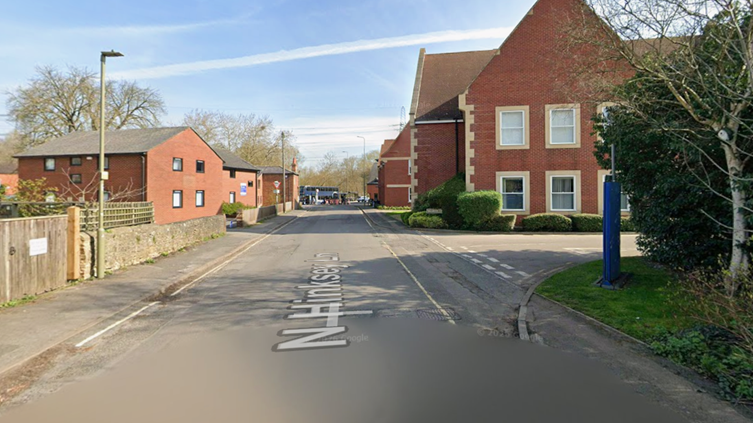
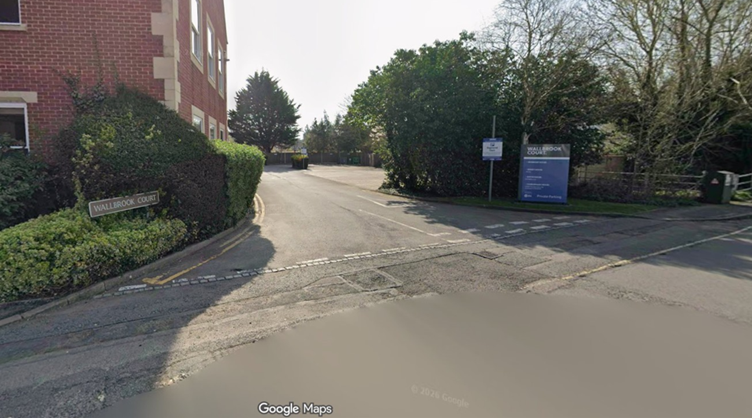
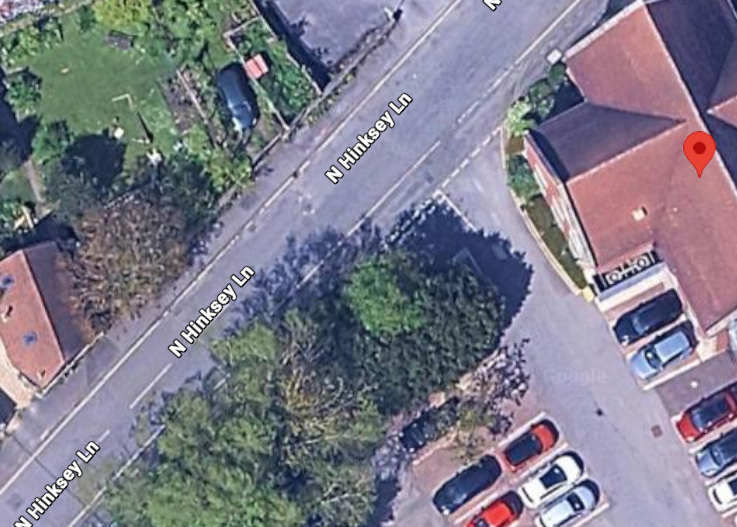
So, for this appeal, I put this operator to strict proof of where the car was parked and (from photos taken in the same lighting conditions) how their signs appeared on that date, at that time, from the angle of the driver's perspective. Equally, I require this operator to show how the entrance signs appear from a driver's seat, not stock examples of 'the sign' in isolation/close-up. I submit that full terms simply cannot be read from a car before parking and mere 'stock examples' of close-ups of the (alleged) signage terms will not be sufficient to disprove this. Having visited the site at Wallbrook Court since receiving communication from UKPC, I am confident that the entrance signage is insufficient and not visible when approaching from the south as demonstrated below:
2) The operator has not shown that the individual who it is pursuing is in fact the driver who was liable for the charge
In cases with a keeper appellant, yet no POFA 'keeper liability' to rely upon, POPLA must first consider whether they are confident that the Assessor knows who the driver is, based on the evidence received. No presumption can be made about liability whatsoever. A vehicle can be driven by any person (with the consent of the owner) as long as the driver is insured. There is no dispute that the driver was entitled to drive the car and I can confirm that they were, but I am exercising my right not to name that person.
In this case, no other party apart from an evidenced driver can be told to pay. As there has been no admission regarding who was driving, and no evidence has been produced, it has been held by POPLA on numerous occasions, that a parking charge cannot be enforced against a keeper without a valid NTK.
As the keeper of the vehicle, it is my right to choose not to name the driver, yet still not be lawfully held liable if an operator is not using or complying with Schedule 4. This applies regardless of when the first appeal was made and regardless of whether a purported 'NTK' was served or not, because the fact remains I am only appealing as the keeper and ONLY Schedule 4 of the POFA (or evidence of who was driving) can cause a keeper appellant to be deemed to be the liable party.
The burden of proof rests with the Operator to show that (as an individual) I have personally not complied with terms in place on the land and show that I am personally liable for their parking charge. They cannot.
Furthermore, the vital matter of full compliance with the POFA was confirmed by parking law expert barrister, Henry Greenslade, the previous POPLA Lead Adjudicator, in 2015:
Understanding keeper liability'There appears to be continuing misunderstanding about Schedule 4. Provided certain conditions are strictly complied with, it provides for recovery of unpaid parking charges from the keeper of the vehicle.
There is no 'reasonable presumption' in law that the registered keeper of a vehicle is the driver. Operators should never suggest anything of the sort. Further, a failure by the recipient of a notice issued u……………..988, a keeper sent a Schedule 4 notice has no legal obligation to name the driver. [...] If {POFA 2012 Schedule 4 is} not complied with then keeper liability does not generally pass.'Therefore, no lawful right exists to pursue unpaid parking charges from myself as keeper of the vehicle, where an operator cannot transfer the liability for the charge using the POFA.
This exact finding was made in 6061796103 against ParkingEye in September 2016, where POPLA Assessor Carly Law found:''I note the operator advises that it is not attempting to transfer the liability for the charge …………..he appellant is the driver and therefore liable for the charge. As I am allowing the appeal on this basis, I do not need to consider the other grounds of appeal raised by the appellant. Accordingly, I must allow this appeal.''
3) No evidence of Landowner Authority - the operator is put to strict proof of full compliance with the BPA Code of Practice
As this operator does not have proprietary interest in the land then I require that they produce an unredacted copy of the contract with the landowner.
The contract and any 'site agreement' or 'User Manual' setting out details - such as any 'genuine customer' or 'genuine resident' exemptions or any site occupier's 'right of veto' charge cancellation rights, and of course all enforcement dates/times/days, and the boundary of the site - is key evidence to define what this operator is authorised to do, and when/where.
It cannot be assumed, just because an agent is contracted to merely put some signs up and issue Parking Charge Notices, that the agent is authorised on the material date, to make contracts with all or any category of visiting drivers and/or to enforce the charge in court in their own name (legal action regarding land use disputes generally being a matter for a landowner only).
Witness statements are not sound evidence of the above, often being pre-signed, generic documents not even identifying the case in hand or even the site rules. A witness statement might in some cases be accepted by POPLA but in this case I suggest it is unlikely to sufficiently evidence the definition of the services provided by each party to the agreement.
Nor would it define vital information such as charging days/times, any exemption clauses, grace periods (which I believe may be longer than the bare minimum times set out in the BPA CoP) and basic but crucial information such as the site boundary and any bays where enforcement applies/does not apply. Not forgetting evidence of the only restrictions which the landowner has authorised can give rise to a charge, as well as the date that the parking contract began, and when it runs to, or whether it runs in perpetuity, and of course, who the signatories are: name/job title/employer company, and whether they are authorised by the landowner to sign a binding legal agreement.
Paragraph 7 of the BPA CoP defines the mandatory requirements and I put this operator to strict proof of full compliance:
7.2 If the operator wishes to take legal action on any outstanding parking charges, they must ensure that they have the written authority of the landowner (or their appointed agent) prior to legal action being taken.
7.3 The written authorisation must also set out:
a) the definition of the land on which you may operate, so that the boundaries of the land can be clearly defined
b) any conditions or restrictions on parking control and enforcement operations, including any restrictions on hours of operation
c) any conditions or restrictions on the types of vehicles that may, or may not, be subject to parking control and enforcement
d) who has the responsibility for putting up and maintaining signs
e) the definition of the services provided by each party to the agreement
4) No Evidence of Period Parked – NtK does not meet PoFA2012 requirements
Contrary to the mandatory provisions of the BPA Code of Practice, there is no record
to show that the vehicle was parked versus attempting to read the terms and
conditions before deciding against parking/entering into a contract.
PoFA 2012 Schedule 4 paragraph 9 refers at numerous times to the “period of
parking”. Most notably, paragraph 9(2)(a) requires the NtK to:
“specify the vehicle, the relevant land on which it was parked and the period of
parking to which the notice relates;”
UKPC’s NtK simply claims that the vehicle “entered Wallbrook Court on ****** at **** and departed at ****”. At no stage does UKPC explicitly specify the “period of parking to which the notice relates”, as required by POFA 2012.
UKPC uses ANPR to capture images of vehicles entering and leaving the vast unbounded and unmarked area to calculate their length of stay.
Any vehicle passing by or simply turning around at the entrance will be captured by ANPR. UKPC however, does not provide any direct evidence of its alleged violation. It is not in the gift of UKPC to substitute “entry/exit” or “length of stay” in place of the POFA
requirement - “period of parking” - and hold the keeper liable as a result.
By virtue of the nature of an ANPR system recording only entry and exit times, UKPC are not able to definitively state the period of parking.
I require UKPC to provide evidence to show the vehicle in question was
parked on the date/time (for the duration claimed) and at the location stated in the
NtK.
The ANPR System is Neither Reliable nor Accurate
UKPC’s NtK simply claims “that the vehicle “entered Wallbrook Court on ****** at **** and departed at ****”. UKPC states the images and time stamps are collected
by its ANPR camera system installed on site. In terms of the technology of the ANPR cameras themselves, POPLA please take note and bin your usual 'ANPR is generally OK' template because:
The British Parking Association DOES NOT AUDIT the ANPR systems in use by
parking operators, and the BPA has NO WAY to ensure that the systems are in good
working order or that the data collected is accurate. Independent research has NOT
found that the technology is 'generally accurate' or proportionate, or reliable at all, and
this is one of the reasons why Councils are banned from using it in car parks.
As proof of this assertion here are two statements by the BPA themselves, the first
one designed to stop POPLA falling into error about assumed audits:
Steve Clark, Head of Operational Services at the BPA emailed a POPLA 'wrong
decision' victim back in January 2018 regarding this repeated misinformation about
BPA somehow doing 'ANPR system audits', and Mr Clark says:
"You were concerned about a comment from the POPLA assessor who determined
your case which said:
"In terms of the technology of the cameras themselves, the British Parking
Association audits the camera systems in use by parking operators in order to ensure
that they are in good working order and that the data collected is accurate"
You believe that this statement may have been a contributory factor to the POPLA
decision going against you, and required answers to a number of questions from us.
This is not a statement that I have seen POPLA use before and therefore I
queried it with them, as we do not conduct the sort of assessments that the
Assessor alludes to.
POPLA have conceded that the Assessor's comments may have been a
misrepresentation of Clause 21.3 of the BPA Code which says:
''21.3 You must keep any ANPR equipment you use in your car parks in good working
order. You need to make sure the data you are collecting is accurate, securely held
and cannot be tampered with. The processes that you use to manage your ANPR
system may be audited by our compliance team or our agents.''
Our auditors check operators compliance with this Code clause and not the cameras
themselves.''
Secondly, ANPR data processing and/or system failure is well known, and is certainly
inappropriate in a mixed retail, office and residential areas, such as the location in question.
The BPA have backed this up and publicly expressed their concerns with ANPR accuracy: https://www.britishparking.co.uk/ANPR
As with all new technology, there are issues associated with its use:
a) Repeat users of a car park inside a 24 hour period sometimes find that their first entry is paired with their last exit, resulting in an ‘overstay’.
b) Some ‘drive in/drive out’ motorists that have activated the system receive a charge certificate even though they have not parked or taken a ticket.
In April 2026, Consumer Group Which? also posted an online article investigating how ANPR technology is plagued by so many inaccuracies
UKPC is put to strict proof that the system has not failed any motorists entering the land at Wallbrook Court.
POPLA cannot use your usual 'the BPA audits it' erroneous template which needs consigning to the bin. If in doubt, please show the above email from Steve Clark, to your Lead Adjudicator.
Kindly stop assuming ANPR systems work, and expecting consumers to prove the
impossible about the workings of a system over which they have no control but where
independent and publicly available information about its inherent failings is very
readily available.
The Signs Fail to Transparently Warn Drivers of what the ANPR Data will be used for
The signs fail to transparently warn drivers of what the ANPR data will be used for
which breaches the BPA Code of Practice and the Consumer Protection from Unfair
Trading Regulations 2008 due to inherent failure to indicate the 'commercial intent' of
the cameras.
Paragraph 22.1 of the BPA Code of Practice advises operators that “they may use
ANPR camera technology to manage parking on controlled lands, as long as you do so overtly and in a reasonable, consistent and transparent manner”
Given that UKPC’s signage does not communicate it’s intention to use ANPR technology to issue PCNs in order to generate revenue, I would argue that there has been no attempt at being transparent under the BPA Code of Practice.
Comments
-
I wouldn't even try POPLA.
I am not seeing a winning point and I think a rejection will scare a vulnerable disabled person into thinking they have to pay.
Best advice is:
- try Plan A first (retailer complaint);
- email Ukpc's DPO, as the disabled person, giving YOUR POSTAL ADDRESS as their new address, so that you handle all the £170 threatograms
- Ignore the £170 threatograms
- Come back here only if a claim form arrives, having read post 4 then post of the NEWBIES thread.
PRIVATE 'PCN'? DON'T PAY BUT DON'T IGNORE IT (except N.Ireland).
CLICK at the top or bottom of any page where it says:
Home»Motoring»Parking Tickets Fines & Parking - read the NEWBIES THREAD4 -
Sorry Coupon-Mad, why is there no winning point? My dad is in his 60s and fairly switched on and he isn't going to be scared into paying up hence why he's passed the £60 invoice into me to help fight.
Are UKPC likely to go to court? Plan A was attempted but no success. Can any harm come from sending a POPLA and still supply my address as the postal?
0 -
It's not a £60 invoice, they never are, its a £100 invoice
UKPC don't go to court, but they do regularly issue Money Claims via lawyers like DCB LEGAL
Sometimes a popla appeal is counter productive, it can be easier to fight a future Money Claim
If coupon mad says there is no winning appeal points, then it wont win
We may well be pensioners or similar too, but age is irrelevant, we are talking about legal contracts and roboclaims here, its currently an unregulated industry and popla don't take account of half the things we would expect, because they are paid by the private parking industry ( its not a true independent or fair appeal system. )
Popla are more likely to decide that the pcn was correctly issued and therefore pass the buck
4 -
Takung a quick stab, if it says registered users only, then isn't that prohibitive?
From the Plain Language Commission:
"The BPA has surely become one of the most socially dangerous organisations in the UK"3 -
Thank you. I dont doubt for a minute then advice is sound, it was more a case of understanding why and implications of sending it off. I feel a bit silly now for spending a good couple of hours this morning going through all the POPLA stuff in the newbies thread and putting this appeal together if it wasn't worth it. Having fought a few PCNS before, I was under the impression the POPLA process was always worth doing if BPA but I guess you learn something new every day...
0 -
It used to be when London Councils ran it , but these days its only worth trying if you have an excellent legal point that is a winner, not sure about your scattergun appeal that hopes to hit the target with at least one arrow
So if there were, no signs at all, or a total failure to comply with Pofa2012 and not being the driver but a non driving keeper who was in Tokyo or New York at the time
The keeper and driver of this vehicle parked the car on a private car park, where there are signs, plus UKPC probably have a contract with the landowner or landlord or business to manage the parking on that site
If you have a legal point that can win it for him, despite plan A failing, then please explain what it actually is and why do you believe that its £60 ? The pcn will clearly state that the parking charge is £100
We dont wish to be unkind, but realistic, maybe things will change next year, with regulation, but we have been waiting for regulation since March 2019 , with coupon mad being heavily involved in the process
So if she read the popla appeal and decided its not worth it, I for one wouldn't disagree UNLESS you have a really good legal rebuttal against the issue of the £100 pcn invoice , a popla appeal never mentions £60
3 -
My point was he could have just paid the £60 within 14 days but insisted on fighting it, even if the invoice is actually £100.
My 'scattergun approach' was based on the commended 26 page example within the newbies thread but edited for the points most relevant to this case. Having written a POPLA back in 2018 against Smart Parking and using these templates, I was successful.
Anyway, I'll obviously follow the advice on here and from Coupon Mad to forget about the POPLA and contact UKPC DPO, changing the address to my own. Thank you.
1 -
"
Having written a POPLA back in 2018 against Smart Parking and using these templates, I was successful."Everyone was because Smart didn't use the POFA until last year.
UKPC are likely to have sent a POFA compliant notice, and they will contest a POPLA appeal with images of signs and a landowner authority agreement.
So, unless there is a smoking gun (such as a change of restrictions with no added warning sign at the entrance, or a non-POFA NTK), there isn't a point that would win at POPLA.
I'm a retired woman in my 60s and I could cope with the letters like your dad could, but as you are the one posting here I would definitely get the £170 threatograms and claim form to arrive at your house so there's no scariness for dad and no delay in putting in the Template Defence.
He must tell UKPC again if the address changes. You must open all letters promptly but don't panic about the Claim Form.
Claim stage is the 'end game' you want!
PRIVATE 'PCN'? DON'T PAY BUT DON'T IGNORE IT (except N.Ireland).
CLICK at the top or bottom of any page where it says:
Home»Motoring»Parking Tickets Fines & Parking - read the NEWBIES THREAD3 -
A lot has changed since 2018, with a few BPA codes of practice since then, plus Smart Parking now comply with Pofa2012 and are IPC AOS members now, so no popla, ...but
Was your UKPC popla draft amended to show the April 2026 Joint Code of Practice. ? And also takes into account the actual £100 on the signs ?
You do realise that a popla appeal automatically cancels the £40 mugs discount and costs UKPC money if they actually contest it. ? ( its always been that way since October 2012 )
If he was an unauthorised user of a private car park that requires users to be registered, then it could be argued that he was trespassing as an unauthorised user, so possibly no parking contract offered to him as a trespassers, no offer, no acceptance, no contract
Easier to argue in a future court claim, difficult at popla , but try it if you want, just dont be disappointed if it fails, because its not a binding decision on the appellant
What is needed is a proper regulated ADR like the traffic penalty tribunal system, hence why I agree with coupon mad
4 -
No actually… quotations were amended to reflect new clause numbers as I noticed those in previous templates were out of date but you're right, only BPA was quoted and not joint….
2






Confirm your email address to Create Threads and Reply

Categories
- All Categories
- 355.8K Banking & Borrowing
- 254.9K Reduce Debt & Boost Income
- 456.2K Spending & Discounts
- 248.3K Work, Benefits & Business
- 605.9K Mortgages, Homes & Bills
- 179K Life & Family
- 263.8K Travel & Transport
- 1.5M Hobbies & Leisure
- 16.2K Discuss & Feedback
- 37.7K Read-Only Boards