We’d like to remind Forumites to please avoid political debate on the Forum.
This is to keep it a safe and useful space for MoneySaving discussions. Threads that are – or become – political in nature may be removed in line with the Forum’s rules. Thank you for your understanding.
📨 Have you signed up to the Forum's new Email Digest yet? Get a selection of trending threads sent straight to your inbox daily, weekly or monthly!
The Forum now has a brand new text editor, adding a bunch of handy features to use when creating posts. Read more in our how-to guide
Dishwasher fit - too much pipework?
Comments
-
Section62 said:It wouldn't though. If the hose is on the ground and the ends of the 'pipe' are open (i.e. no vacuum to cause siphonage) then only the water in the hose which is above the bottom of the inside of the machine could backflow - the machine is not going to suck the water back up from a hose which is lower than itself.Furthermore, (and I might just be lucky here) every dishwasher I've taken apart for spares had a simple one-way valve in the pump assembly to prevent backflow from the drain hose. Maybe not all manufacturers do that though.Good point - yes, only the height of water in the last bit would drain back, so no more than in any other scenario.I noticed that one-way valve - a round plastic ball - in the Bosch when I had the pump out recently.Yes, a perfectly straight fall would be tricky to achieve, but a wobbly fall should still do the task of draining most of the hose - but whether that's important...It appears that either layout should work, and the YouTube video shows the 'ground' method.
0 -
I don't think it is. But if there were a reason to run the drain at high level (for example where the plinth can't be removed) I'd probably do the run through the cupboards using 40mm waste pipe (making it easier to achieve a constant fall and less sagging) with a straight washing machine spigot on the end of the run. I.e. don't use an extension hose at all.WIAWSNB said:Section62 said:It wouldn't though. If the hose is on the ground and the ends of the 'pipe' are open (i.e. no vacuum to cause siphonage) then only the water in the hose which is above the bottom of the inside of the machine could backflow - the machine is not going to suck the water back up from a hose which is lower than itself.Furthermore, (and I might just be lucky here) every dishwasher I've taken apart for spares had a simple one-way valve in the pump assembly to prevent backflow from the drain hose. Maybe not all manufacturers do that though.Good point - yes, only the height of water in the last bit would drain back, so no more than in any other scenario.I noticed that one-way valve - a round plastic ball - in the Bosch when I had the pump out recently.Yes, a perfectly straight fall would be tricky to achieve, but a wobbly fall should still do the task of draining most of the hose - but whether that's important...It appears that either layout should work, and the YouTube video shows the 'ground' method.
0 -
Section62 said:I don't think it is. But if there were a reason to run the drain at high level (for example where the plinth can't be removed) I'd probably do the run through the cupboards using 40mm waste pipe (making it easier to achieve a constant fall and less sagging) with a straight washing machine spigot on the end of the run. I.e. don't use an extension hose at all.Hose inside the waste pipe to keep it straight (nice idea) or water flowing through the waste pipe (how)?
0 -
WIAWSNB said:Section62 said:I don't think it is. But if there were a reason to run the drain at high level (for example where the plinth can't be removed) I'd probably do the run through the cupboards using 40mm waste pipe (making it easier to achieve a constant fall and less sagging) with a straight washing machine spigot on the end of the run. I.e. don't use an extension hose at all.Hose inside the waste pipe to keep it straight (nice idea) or water flowing through the waste pipe (how)?Either, but preferably the latter, as the 40mm pipe will have less resistance to flow than a length of extension hose. And since you'd be paying for a length of 40mm pipe there's no point spending more money on a small diameter pipe to go inside it.The connection would be via one of these -
Possibly using a 45 degree elbow between this and the pipe so the hose discharge point is an inch or two above the centreline of the pipe run.1 -
I like. Hard-plumbed at the sink end?Section62 said:WIAWSNB said:Section62 said:I don't think it is. But if there were a reason to run the drain at high level (for example where the plinth can't be removed) I'd probably do the run through the cupboards using 40mm waste pipe (making it easier to achieve a constant fall and less sagging) with a straight washing machine spigot on the end of the run. I.e. don't use an extension hose at all.Hose inside the waste pipe to keep it straight (nice idea) or water flowing through the waste pipe (how)?Either, but preferably the latter, as the 40mm pipe will have less resistance to flow than a length of extension hose. And since you'd be paying for a length of 40mm pipe there's no point spending more money on a small diameter pipe to go inside it.The connection would be via one of these -
Possibly using a 45 degree elbow between this and the pipe so the hose discharge point is an inch or two above the centreline of the pipe run.
It would mean a larger pipe inside the units that might interfere with drawer backs, but a neat solution.0 -
Thank you. I'm embarking on the trap/standpipe raise now. Does it matter if the plastic waste pipe is touching the copper pipe?WIAWSNB said:Oookkkaaayyy... The outlet hose exits the DW at near-bottom level, so what Grumpy suggested earlier - running a hose extension under the base units behind the plinths - is a valid option, and I've seen a YouTube vid with a good plumber on there doing just this. That option is available to you if you prefer it.It would involve drilling a suitable hole 1.25" or so (see yellow oval in pic) through the DW space side 'plinth' panel, under the base unit's floor level, towards the very back where it'll be behind the DW - just under the existing waste pipe makes sense. The plinths of the base units on the way to the sink unit are removed to allow this hose and the extension hose to be connected under there at the most suitable point - this uses a purpose-made jointing connector and clips (should come with the ext hose). Inside the sink base unit, a similar hole is drilled through the unit floor to allow the extension hose to come up at the back, perform a loop at the top, and connect to the existing spigot from above.Once the DW is in place, the two hoses are joined under the base unit.Or, do the original idea - which is what I would personally do; fit the DW waste at the back as previously discussed. It will sit better than you've currently trialled - the vertical waste pipe will only be held outwards by the thickness of the copper pipes, and I notice that they are pretty tight against the back wall? In other words, the waste will be an overall 55mm out from the back wall - the 40mm waste + 15mm copper pipe. Clip the vertical pipe to the RH unit side - there will be room for the clip screws.I am in excess of 99.999% certain that the correct waste will work, despite the U-bend being slightly higher than 'normal'. Vertical waste pipe heights are a very fluid figure - I'd have the top of yours set to ~80cm from the floor, provided the gap above allows the hose to be easily inserted.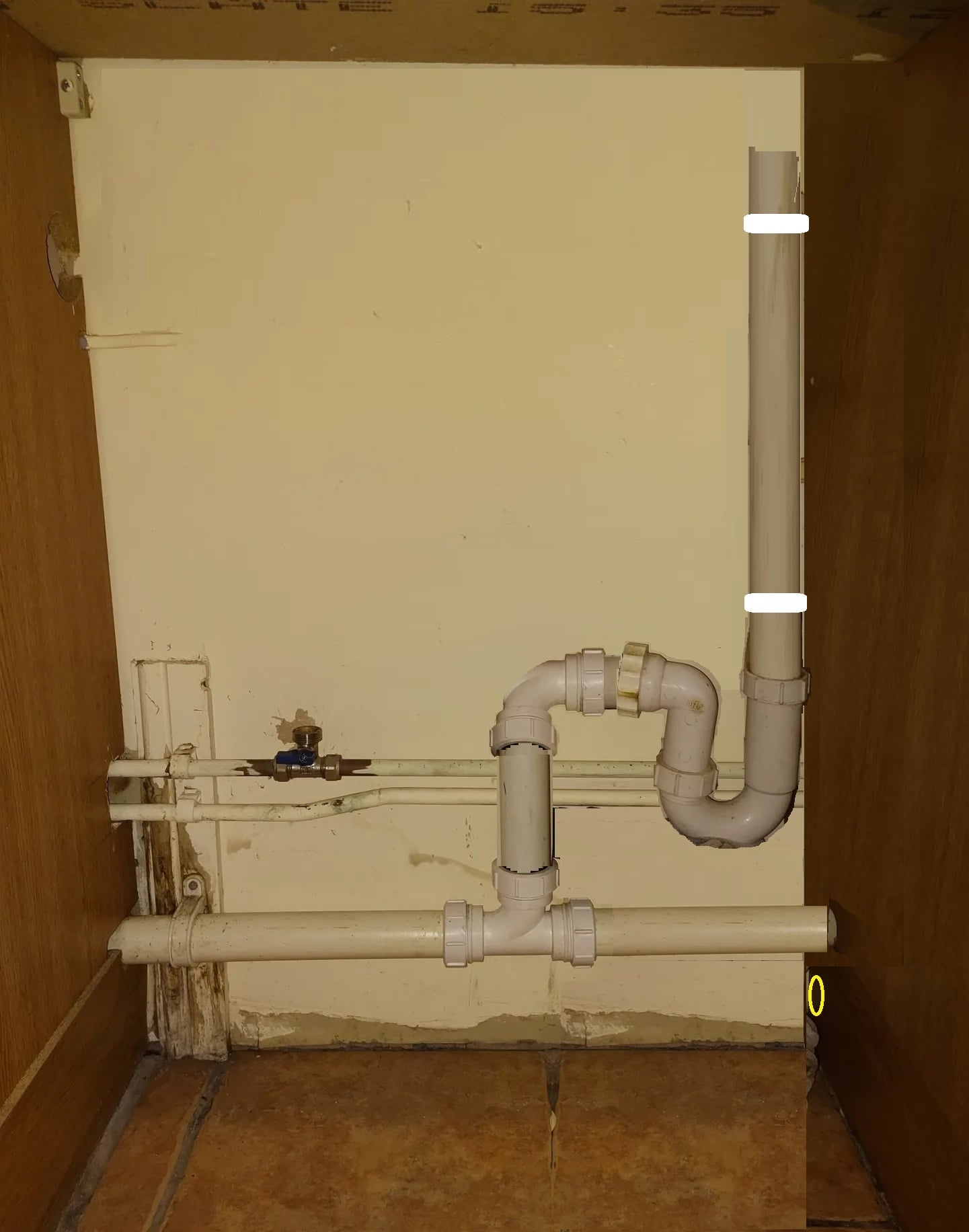
Also will the dishwasher hose just sit inside the standpipe or is there a way to secure it?1 -
OOOHMAAAGAWD! Do you KNOW what'll happen if PVC touches copper? Correct - nothing
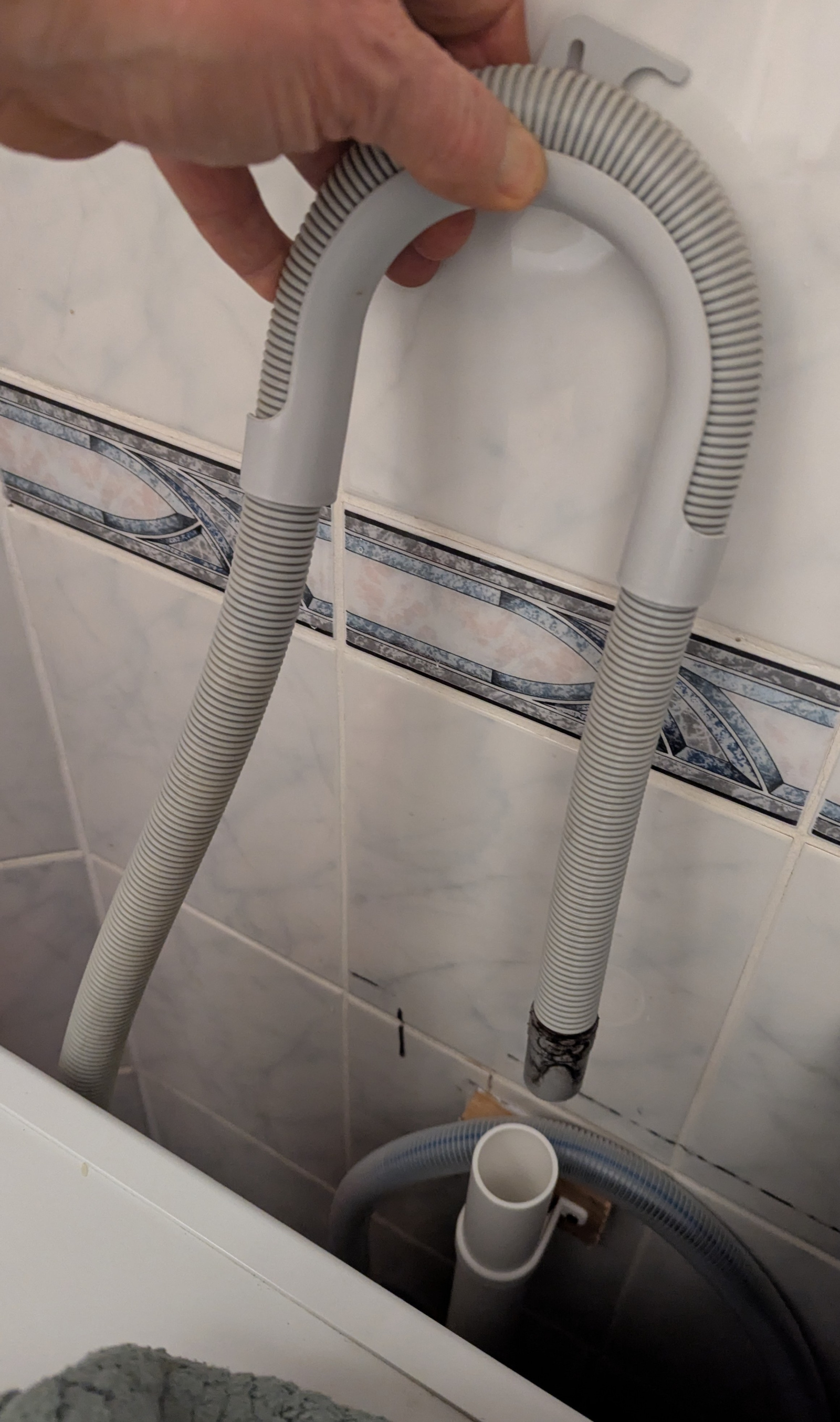
 (OK, if the copper pipe was super-hot, then possibly, but not in this case. Touch away...)The DW hose should be inserted by enough to prevent it from popping out, but not go all the way down where it could be immersed in water and therefore not provide the 'break'. So, insert it precisely 15.65".(Must apologise - I've had three Christmas whiskies.)Anything up to, say, one foot should be ok. Mine is that, but that's the most I'd imagine is needed.Does your DW hose come with a clip that puts a nice semi-circle in it? If so, insert the hose into this, and have - ooh - up to one foot max sticking out.I'll show you mine. (Missus!)
 1
1 -
That dangly looks a bit long IMO, 100 to 150 mm is recommended. With mine I have a bit of cord looped through the screw hole and tied round the pipe bracket, it ain't popping out.2
-
Thank you molerat and matron (sorry, I mean WIAWSNB),WIAWSNB said:OOOHMAAAGAWD! Do you KNOW what'll happen if PVC touches copper? Correct - nothing(OK, if the copper pipe was super-hot, then possibly, but not in this case. Touch away...)The DW hose should be inserted by enough to prevent it from popping out, but not go all the way down where it could be immersed in water and therefore not provide the 'break'. So, insert it precisely 15.65".(Must apologise - I've had three Christmas whiskies.)Anything up to, say, one foot should be ok. Mine is that, but that's the most I'd imagine is needed.Does your DW hose come with a clip that puts a nice semi-circle in it? If so, insert the hose into this, and have - ooh - up to one foot max sticking out.I'll show you mine. (Missus!)
WIAWSNB/matron, are you proud of me?! I've done some plumbing! And have sawn things for the first time in my life!
Thank you to you and others on here for teaching me everything I know!
Here's the not-quite-finished product (I'll put the nuts and standpipe on later...was just checking my measurements worked).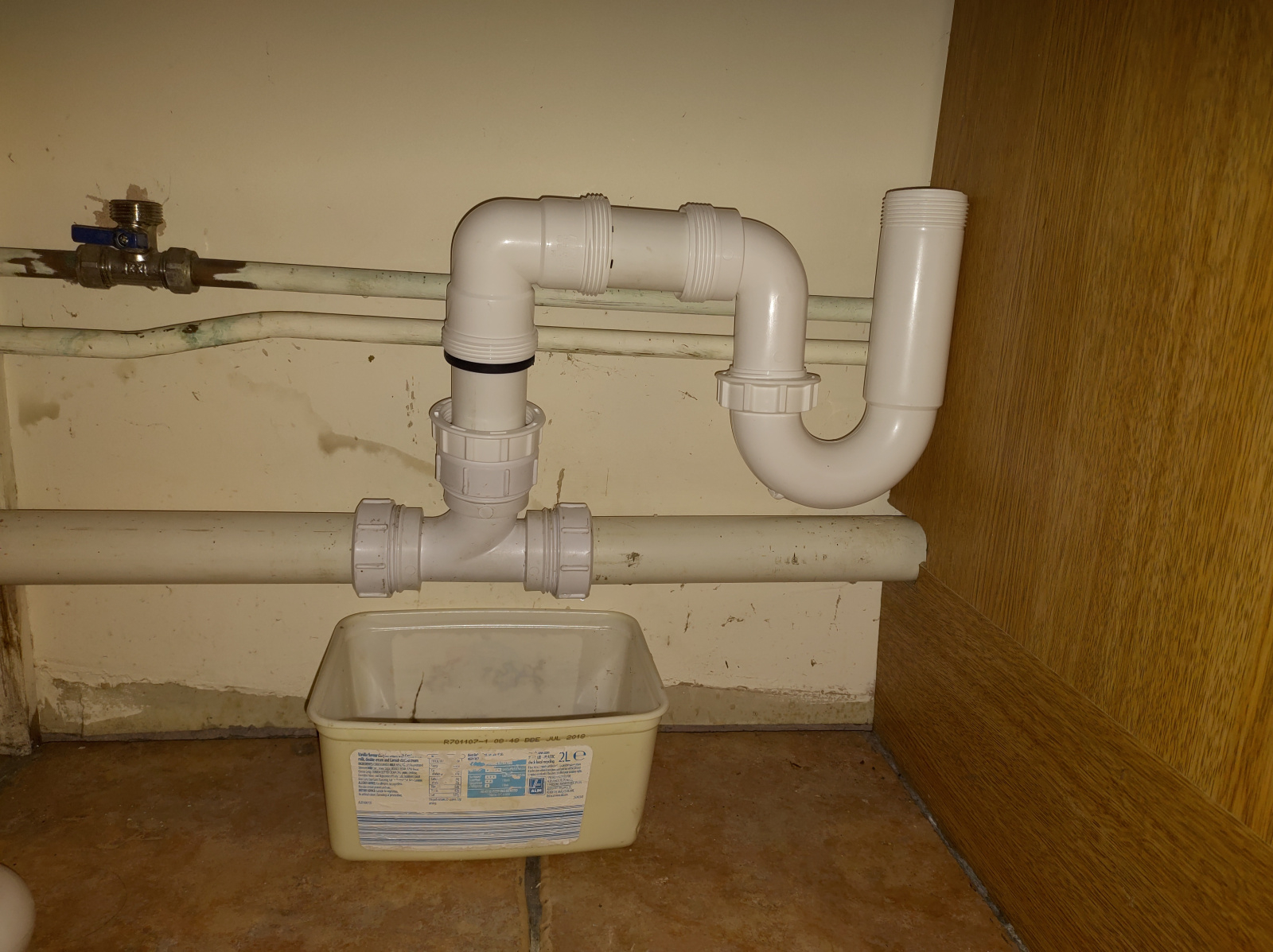
Have I done it all wrong?! And as usual, I have some more questions (sorry, but soon you'll be rid of me)!
There's about 21 inches between the trap weir and the underside of the worktop. How much space do I need to leave between top of standpipe and underside of worktop?
Re: the WM trap from Screwfix, for the joint between the trap and standpipe, there's no plastic washer, and only a narrower rubber washer than usual compared with other compression joints. But also the nut is a bit smaller than others (the washers from other joints won't fit inside) so I'm guessing this is all correct and Screwfix haven't missed a bit?! Is it that that particular joint doesn't need such a secure fitting for various reasons (I can imagine a few but won't write them all down).
Enjoy your whisky!
Ps don't know yet what the DW hose comes with. We'll see!1 -
Joy_12345 said:Thank you molerat and matron (sorry, I mean WIAWSNB),
WIAWSNB/matron, are you proud of me?! I've done some plumbing! And have sawn things for the first time in my life!
Thank you to you and others on here for teaching me everything I know!
Here's the not-quite-finished product (I'll put the nuts and standpipe on later...was just checking my measurements worked).
Have I done it all wrong?! And as usual, I have some more questions (sorry, but soon you'll be rid of me)!
There's about 21 inches between the trap weir and the underside of the worktop. How much space do I need to leave between top of standpipe and underside of worktop?
Re: the WM trap from Screwfix, for the joint between the trap and standpipe, there's no plastic washer, and only a narrower rubber washer than usual compared with other compression joints. But also the nut is a bit smaller than others (the washers from other joints won't fit inside) so I'm guessing this is all correct and Screwfix haven't missed a bit?! Is it that that particular joint doesn't need such a secure fitting for various reasons (I can imagine a few but won't write them all down).
Enjoy your whisky!
Ps don't know yet what the DW hose comes with. We'll see!That looks spot on :-)The plastic washer is there to prevent friction from the screw-on collar against the rubber washer. There should be one - are you certain it ain't there? If it's truly missing, then your options are to go back to SF, or just lube the rubber washer with washing-up liquid.As for height, What does the new pipe go up to from there? Don't cut it unless it's necessary. 800mm above floor level will be ok - it would usually be a bit less, but your U-bend is a bit higher than normal.Is there enough room for the hose to go in easily above it? If so, almost certainly it's good to go.0








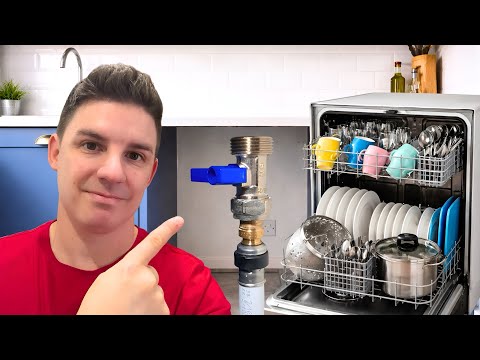 https://youtu.be/EC2WytI9XBE?si=kxSsRxnqb_SeEIES


Confirm your email address to Create Threads and Reply

Categories
- All Categories
- 354.6K Banking & Borrowing
- 254.4K Reduce Debt & Boost Income
- 455.5K Spending & Discounts
- 247.4K Work, Benefits & Business
- 604.3K Mortgages, Homes & Bills
- 178.5K Life & Family
- 261.8K Travel & Transport
- 1.5M Hobbies & Leisure
- 16.1K Discuss & Feedback
- 37.7K Read-Only Boards