We’d like to remind Forumites to please avoid political debate on the Forum.
This is to keep it a safe and useful space for MoneySaving discussions. Threads that are – or become – political in nature may be removed in line with the Forum’s rules. Thank you for your understanding.
Southern Water Bill
Comments
-
Very true. I have yet to find a water jug that comes with a calibration certificate.QrizB said:Alternative hypothesis:Your meter does not over read. Your measuring jug is uncalibrated and oversized.
I tried my best to check the amount of water as best I could - with the state of my eyes now after having a stroke a couple of months ago, I doubt I could read the jug to within 20 ml now in any case. I accept your point that my jug has no calibration certificate and even if you buy expensive jugs they do not state the tolerance of accuracy. I would hope that a 2 ltr jug tolerance used for adding fluids into cooking recipes is not out by 3% (60ml) but could be wrong.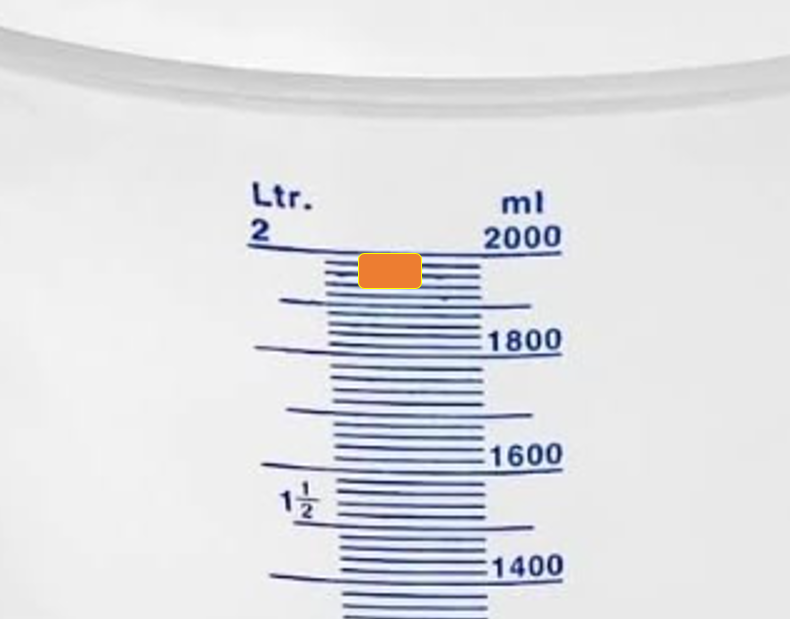
I suppose I could of weighed the jug before and after but I am guessing that we could argue that the weigh scales are not calibrated either. (1 litre of water equals 1000g)
I have witnessed one water meter that over reads by 10%. The volume test proved 10% and also the inline non billing meter that was installed in series showed the difference. The water company did not argue with the photos of both meters and replaced the faulty meter .
To put the shoe on the other foot - I have not seen a calibration certificate for the water meter from the water company. When was it tested? How old is it, when was it last inspected. Some are outside in manholes that have water inside that can be subject to a wide range of temperatures.
My point is that there is a simple test that can be done to check yourself without a big outlay of cost or effort to give a very rough idea that you could be over paying.
The alternative is to just trust that the water meter is working within the tolerances.
Back in 2019 I was paying £3.58 per cubic meter of water inc. waste.
If I used athe expected volume of 400 litres per day the consumption would be 146 cubic meters.
Therefore back in 2019 3% would be £16 per year which is not worth complaining about. Now I am paying £6.26 per cubic meter of water/waste - 3% would be £28 per year.
Remember that this is the tolerance that is acceptable - some meters like my friends were over 3%. Today his 10% over read would equate to an overcharge of £91 per year.
I did the test and my results was within 3% so no point doing anything.
0 -
IOWJJBTM2025 said:To put the shoe on the other foot - I have not seen a calibration certificate for the water meter from the water company. When was it tested? How old is it, when was it last inspected.I'm fairly sure that the "M17" in a square on the photos of the water meter you've shared in this thread indicated that it was manufacured and certified in 2017.The most recent type approval certificate is here. This is issue 12; an earlier issue will have been in force when you meter was manufatured.N. Hampshire, he/him. Octopus Intelligent Go elec / Fuse gas / Vodafone BB / iD mobile. Kirk Hill Co-op member.Ofgem cap table, Ofgem cap explainer. Economy 7 cap explainer. Gas vs E7 vs peak elec heating costs, Best kettle!
2.72kWp PV facing SSW installed Jan 2012. 11 x 247w panels, 3.6kw inverter. 37 MWh generated, long-term average 2.6 Os.1 -
QrizB said:IOWJJBTM2025 said:To put the shoe on the other foot - I have not seen a calibration certificate for the water meter from the water company. When was it tested? How old is it, when was it last inspected.I'm fairly sure that the "M17" in a square on the photos of the water meter you've shared in this thread indicated that it was manufacured and certified in 2017.The most recent type approval certificate is here. This is issue 12; an earlier issue will have been in force when you meter was manufatured.
Many thanks for the type approval document you have linked. While interesting it does not answer questions on testing/accuracy.
I do remember my meter being fitted and it was 2017. I was at work and my wife called to say that we had no water – there was a problem with the old shut off valve. They dug up the pavement and a whole new assembly was fitted. That makes it 8 years old. My friends new meter starts M23 which sounds correct for 2023. His old brass meter had numbers stamped on the front of it starting 8701 – not sure if this relates to January 1987. I do remember them saying it was over 30 years old so could be true.
I have since done some searching on the internet and found some information.
https://www.gov.uk/guidance/water-abstraction-how-to-make-sure-your-meter-is-accurate
I think that this is for farmers who pump water from rivers. They have to prove meter accuracy at intervals dictated by the environment agency. They have to be 5% accurate.
https://studylib.net/doc/7810829/nmi-r-49-1-water-meters-intended-for-the-metering-of-cold...
This standard does indicate that class 2 water meters shall not exceed 3% error in the lower flow rates. It also describes the testing required for the manufacturer in particular for type testing.
https://engineerfix.com/when-and-how-to-replace-a-water-meter/
Extract - Water meters are mechanical instruments that experience wear and tear, eventually leading to inaccurate readings. Most residential meters have an expected service life of 15 to 20 years before their accuracy significantly declines. Visible physical damage, such as a cracked glass face, a frozen dial, or visible rust and corrosion on the meter body or seals, is a clear indication that replacement is necessary.
Inconsistency in billing is another common sign that a meter is failing, especially if consumption patterns have not changed. Older meters often under-register flow, particularly at low rates, meaning small leaks may not be measured. Conversely, internal component degradation can lead to over-registration, resulting in unexpectedly high water bills. Some utilities also follow mandated replacement schedules, proactively exchanging older meters every 10 to 15 years to uphold measurement standards.
We still do not know how accurate the water meter was when it was manufactured is – I very much doubt that it has ever been tested. I am guessing that they would have selected random meters from the production batch to test for tolerance of the machine tools manufacturing the components. Do they send meters for test and then take to pieces to reset to zero.
After installing the meter was the accuracy validated? Do they check accuracy of meters at intervals?
All that we do know is that my water supplier has told me that so long as it is reading within 3% accuracy they will not do anything because it is compliant.
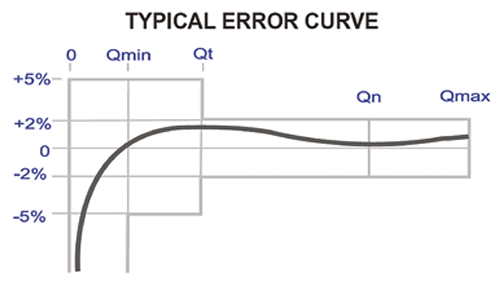
I managed to find a data sheet on a JET type water meter and it shows a typical error curve.
Looking at this the meters are typically manufactured to over read by just under 2%. Under normal flow rates.
What can we do if we are unhappy with the amount of money we are charged.
Taking into account that they take the water meter reading and multiply it by the supply rate (mine is £2.753 per Cu Meter)
They then take 92.5% of the water meter reading and multiply it by the waste rate (Mine is £3.794 per Cu Meter) and charge this as well. Therefore for every cu meter on the meter they charge £6.26. The meters that they provide are created by design to over read by 2%, however this could be as much as 3% and still be within guidelines. Over time the meter can wear as my friends did to over read by more than 3%.
We can ask the water supplier to test but I do not know if they would or charge for this?
We could fit our own meter in the house so that we can monitor.
If you were to be told by the local petrol station that they meter the fuel from a using a device that was many years old with no record of original calibration and no annual checks to re-validate we would no be happy.
I realise that water has not hit the price of petrol yet but it is enough when an annual bill for the average family is hitting £1000 per year.0







Confirm your email address to Create Threads and Reply

Categories
- All Categories
- 355.6K Banking & Borrowing
- 254.8K Reduce Debt & Boost Income
- 456.1K Spending & Discounts
- 248.2K Work, Benefits & Business
- 605.7K Mortgages, Homes & Bills
- 179K Life & Family
- 263.5K Travel & Transport
- 1.5M Hobbies & Leisure
- 16.1K Discuss & Feedback
- 37.7K Read-Only Boards