We’d like to remind Forumites to please avoid political debate on the Forum.
This is to keep it a safe and useful space for MoneySaving discussions. Threads that are – or become – political in nature may be removed in line with the Forum’s rules. Thank you for your understanding.
IMPORTANT: Please make sure your posts do not contain any personally identifiable information (both your own and that of others). When uploading images, please take care that you have redacted all personal information including number plates, reference numbers and QR codes (which may reveal vehicle information when scanned).
📨 Have you signed up to the Forum's new Email Digest yet? Get a selection of trending threads sent straight to your inbox daily, weekly or monthly!
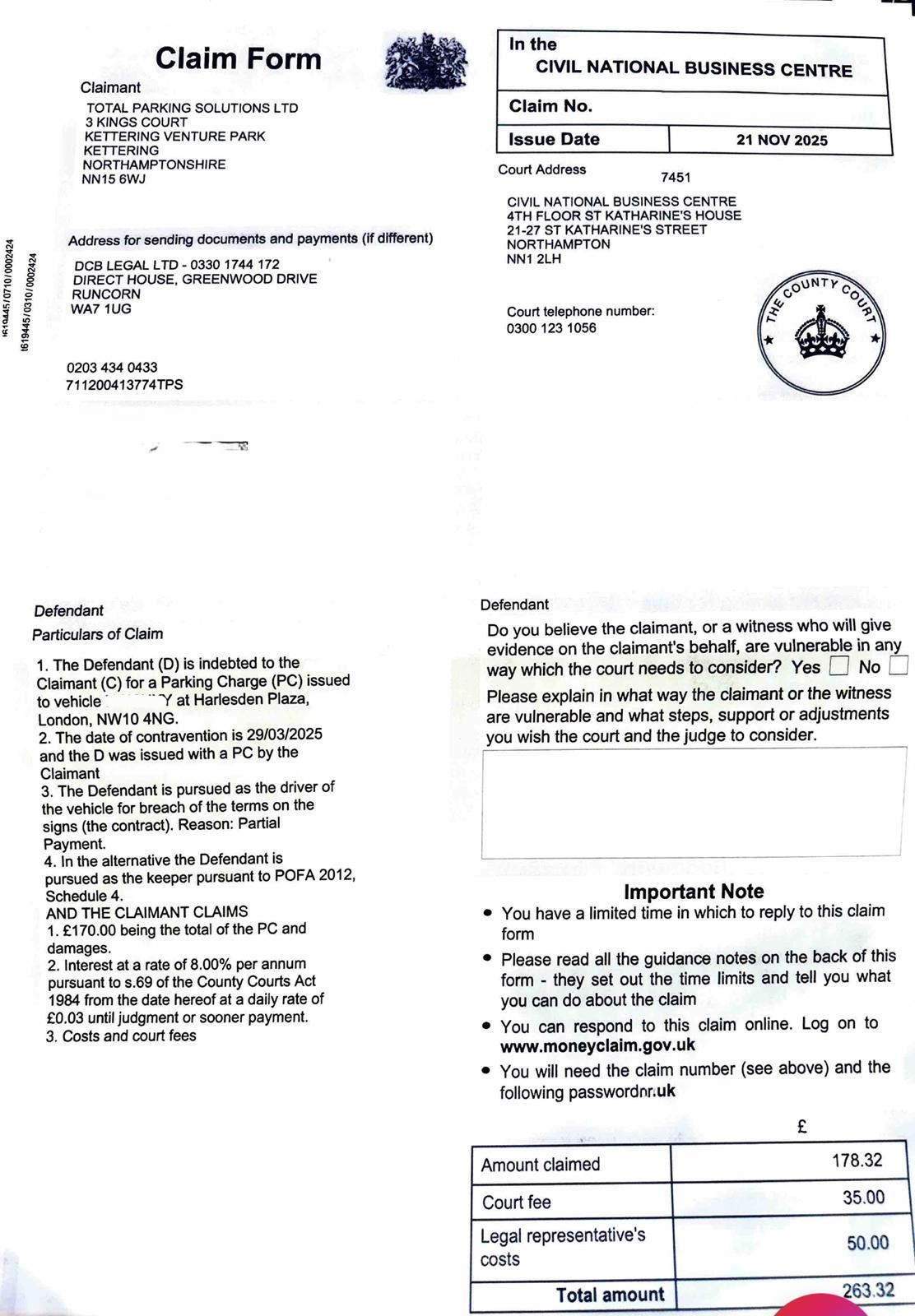
Total Parking Solutions & DCB Legal - Harlesden Claim Form




I have received the attached claim form, but I do not recall this incident. I am the registered keeper of the vehicle, however I was not the driver. I have used the standard template defence without making any additions.
I have recently received another PCN for the same location. Fortunately, the site now accepts payment via the RingGo app, and I was able to show proof of full payment made in two separate transactions. I appealed that PCN and requested cancellation.
Would it be worthwhile to include a reference to this in my defence as per below in Point 3?
“3.The Defendant notes that the Claimant has recently issued a PCN at the same site despite full and valid payment being made via the RingGo app. This demonstrates that the Claimant’s systems and/or data records are unreliable, and therefore the Defendant puts the Claimant to strict proof of the accuracy of the alleged unpaid parking charge in this claim.”
Thank you for the support and guidance in advance.
FYI - I have acknowledged on Fri 28-Nov via MCOL
Comments
-
"Partial payment" is an odd one. What do the signs say?2
-
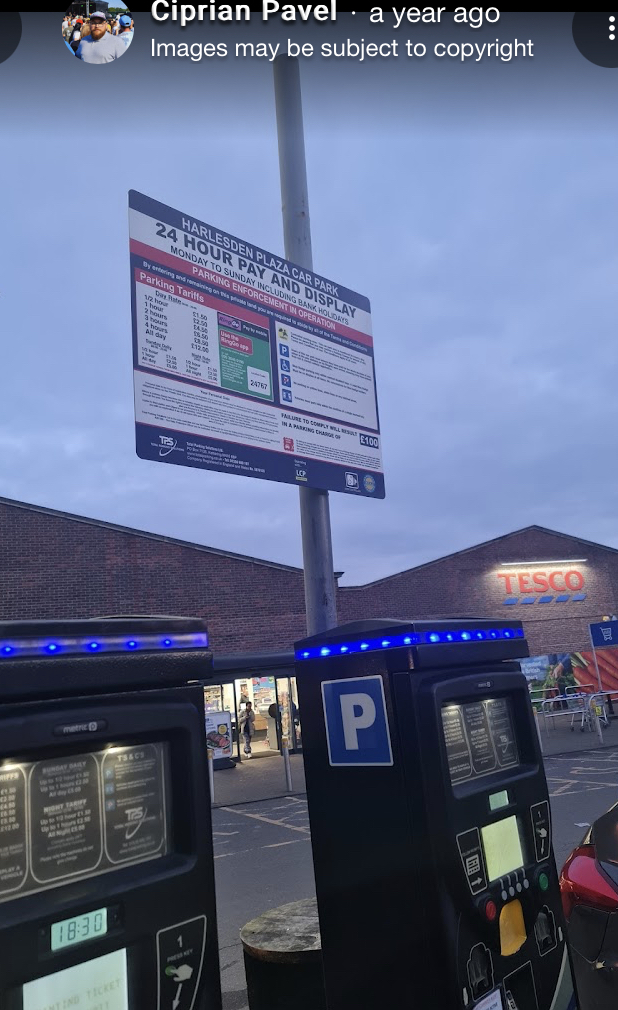
Four years ago the photos online (and even current Parkopedia style entries) show the Operator as LCP Parking Services:
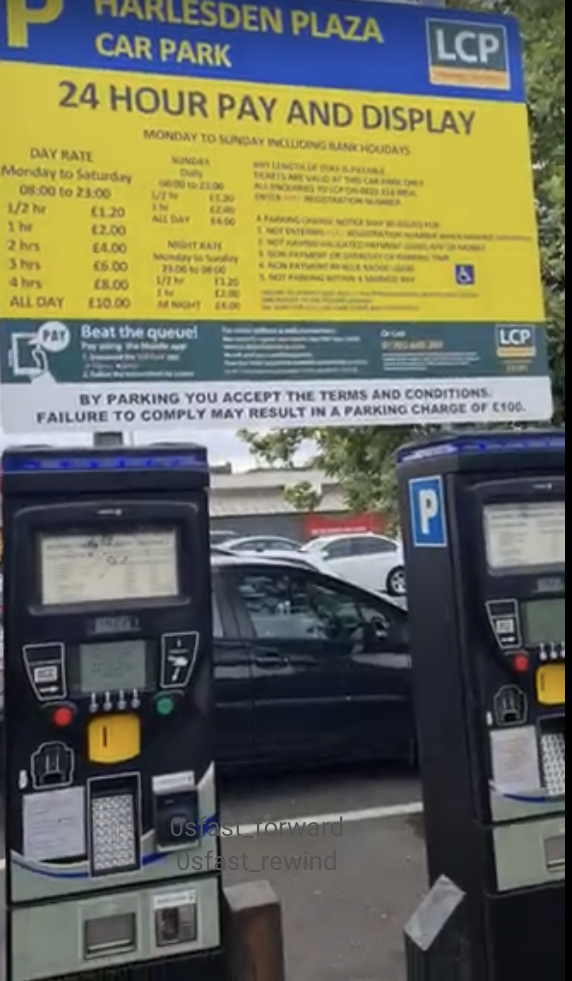
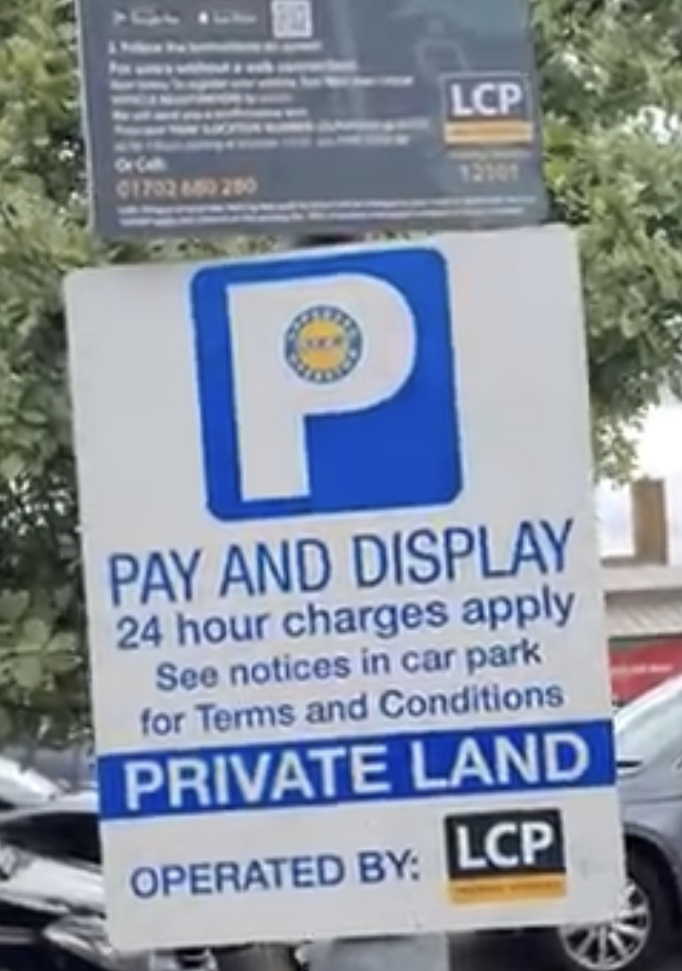 However, a photo taken a year ago shows that by 2024 it had changed to TPS:
 Was the NTK worded to comply with POFA?
(Not the recent one).PRIVATE 'PCN'? DON'T PAY BUT DON'T IGNORE IT (except N.Ireland).
CLICK at the top or bottom of any page where it says:
Home»Motoring»Parking Tickets Fines & Parking - read the NEWBIES THREAD3 -
The usual essay then.
Just check the wording of the contract does actually say you "agree" to pay £100 should you not pay the entire tariff. Those are quite specific terms that may not be stated on the sign, or be worded in a different way than they are claiming.3 -
I honestly do not recall receiving the NTK so cannot checkCoupon-mad said:Four years ago the photos online (and even current Parkopedia style entries) show the Operator as LCP Parking Services:However, a photo taken a year ago shows that by 2024 it had changed to TPS:Was the NTK worded to comply with POFA?
(Not the recent one).
1 -
Might pop into the car park to take a look at the signage on thisCar1980 said:The usual essay then.
Just check the wording of the contract does actually say you "agree" to pay £100 should you not pay the entire tariff. Those are quite specific terms that may not be stated on the sign, or be worded in a different way than they are claiming.1 -
going back to my question, is it worth adding this or leave it out?
“3.The Defendant notes that the Claimant has recently issued a PCN at the same site despite full and valid payment being made via the RingGo app. This demonstrates that the Claimant’s systems and/or data records are unreliable, and therefore the Defendant puts the Claimant to strict proof of the accuracy of the alleged unpaid parking charge in this claim.”0 -
I'm toying with new template defence wording for DCB Legal cases, along these lines (I've added a para 3 suitable for your case).JPCN said:
I have received the attached claim form, but I do not recall this incident. I am the registered keeper of the vehicle, however I was not the driver.
Tell me if this is too long to fit in MCOL.
I suspect it is too long but am playing with the wording. You could remove the final paragraph about your costs, which is optional and could wait until WS stage.
-----------------------------------------1. The allegation(s) and supposed heads of cost are denied; no charges, fees or damages were incurred and the claim exceeds both the Code of Practice £100 cap and the maximum sum set in law. Pursuant to Schedule 4 of the Protection of Freedoms Act 2012 ('the POFA') the claimed sum is exaggerated and unrecoverable; ref: Explanatory Note 221: 'The creditor may not make a claim against the keeper ... for more than the amount of the unpaid parking related charges as they stood when the notice to the driver was issued (para 4(5))'.
2. It is neither admitted nor denied that a term was breached but to form a contract, there must be an offer, agreement and valuable consideration. The Consumer Rights Act 2015 (s71) mandates a 'test of fairness' duty on Courts and sets a high bar for prominence of terms and 'consumer notices'. Paying regard to Sch2 (examples 6, 10, 14 & 18), also s62 and the duties of fair, open dealing/good faith, the Defendant notes that this Claimant uses wordy (unfair) terms/notices and no damages are specified. They are put to strict proof of every element of their case because the Defendant has too little information to go on, save to admit that they were the registered keeper, but denies being the driver.
3. The Defendant notes that the Claimant has recently issued a PCN at the same site despite a full, valid payment made via the app. This demonstrates that the Claimant’s systems are unreliable, therefore the Defendant puts the Claimant to strict proof of the alleged 'partial payment' in this claim. The Defendant neither recalls this incident nor receiving a Notice about it but going by the retail location - and given that this is the family car - it is denied that the Defendant was driving. The Claimant has the burden to prove full compliance with the POFA, without which a registered keeper cannot be held liable, in law.
4. DVLA keeper data is only supplied on the basis of prior written landowner authority. This Claimant (a mere agent) is put to strict proof of their standing to sue and a copy of their signage and their landowner agreement, including exemptions, hours of operation, tariffs, grace periods, schedules and a verified map of the site signed by the landowner, not just a mocked up Google Maps aerial view.
5. The Claimant seeks false 'damages' and improper interest with the object or effect of unjustly enriching them - and/or DCB Legal - in every undefended case. This bulk litigation model appears to seek most of its profits (a) from high sums paid out of fear before litigation due to the aggressive demands, and (b) from enhanced default CCJs.
6. These claims represent systemic abuse of the court process. It cannot be right that this rogue industry makes more money from later stage cases than the face value of a Parking Charge ('PC') if paid in full earlier. The courts should not allow the situation to continue whereby DCB Legal exaggerate the quantum in every boilerplate claim, by:
(i) pre-loading fixed interest as if it was part of the alleged debt. S69 of the County Courts Act 1984 grants courts a discretionary power to award simple interest but these claims from DCB Legal seek 8% (calculated on an unconscionably high sum from an unspecified date) pre-loaded on the top line of claims. This means improper interest is being automatically granted for every default CCJ (the vast majority of cases);
(ii) adding a fake sum layered on top of the PC, pleaded vaguely as 'damages'. This is double recovery but these sums are granted in every default CCJ case. The costs of a typical ANPR business model are address traces (DVLA plus a later 'soft' trace) and an automated letter chain. All minor, standard costs already accounted for in the PC itself, according to binding case law.
7. Attention is drawn to the binding judgments in: (i) ParkingEye v Somerfield Stores ChD [2011] EWHC 4023(QB) which remains as the only parking case law that addressed false 'admin costs'. HHJ Hegarty (High Court, later ratified by the CoA) held that hiking a £75 PC - already increased from £37.50 - to £135 'would appear to be penal' (ref: paras 419-428);
(ii) ParkingEye v Beavis [2015] UKSC67:
At para 98: The £85 PCs 'provided an income stream to enable ParkingEye to meet the costs of operating the scheme and make a profit.'
At para 99: ParkingEye 'sells its services as the managers of such schemes and meets the costs of doing so from charges for breach...'
At para 100: 'None of this means that ParkingEye could charge overstayers whatever it liked. It could not charge a sum which would be out of all proportion to its interest. [...] But there is no reason to suppose that £85 is out of all proportion to its interests. The trial judge...found that the £85 charge was neither extravagant nor unconscionable having regard to the levels imposed by local authorities'.
At para 193: The scheme 'covered Parking Eye’s costs of operation and gave their shareholders a healthy annual profit.'
At para 198: 'The charge has to be and is set at a level which enables the managers to recover the costs of operating the scheme. It is here also set at a level enabling ParkingEye to make a profit.'
8. So, contrary to misinformation spread by the private parking industry, the truth is that the costs of an automated ANPR business model were considered by the Supreme Court who allowed £85 as a self-financing (PC to LBC) acceptable business model from ANPR 'specialists'. In fact, the invoices generated such a huge profit that a surplus of £1000 per week was paid to the landowner. The minor costs covered by the PC included DVLA look-up (£2.50) and a Credit Reference Agency trace (under 30 pence in bulk) and all 'letter chain' costs: i.e. the reminders set as mandatory since 2012 in the BPA Code of Practice and a template Letter before Claim (current total cost using ZatPark software: £1.88 per letter). The vast majority of cases involve reminder letters because - for various reasons - most people do not immediately pay private PCs. Thus, these are standard costs within the PC, not extra 'damages' to be layered on top.
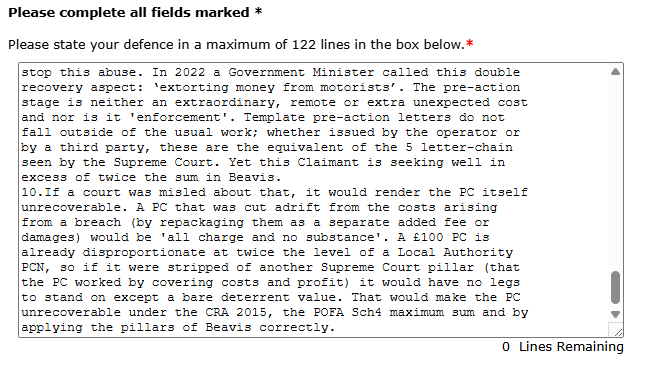
9. The parking sector has been getting away with counting these costs twice for years and it is up to the MoJ and/or the MHCLG to stop this abuse. In 2022 a Government Minister called this double recovery aspect: ‘extorting money from motorists’. The pre-action stage is neither an extraordinary, remote or extra unexpected cost and nor is it 'enforcement'. Template pre-action letters do not fall outside of the usual work; whether issued by the operator or by a third party, these are the equivalent of the 5 letter-chain seen by the Supreme Court. Yet this Claimant is seeking well in excess of twice the sum in Beavis.
10. If a court was misled about that, it would render the PC itself unrecoverable. A PC that was cut adrift from the costs arising from a breach (by repackaging them as a separate added fee or damages) would be 'all charge and no substance'. A £100 PC is already disproportionate at twice the level of a Local Authority PCN, so if it were stripped of another Supreme Court pillar (that the PC worked by covering costs and profit) it would have no legs to stand on except a bare deterrent value. That would make the PC unrecoverable under the CRA 2015, the POFA Sch4 maximum sum and by applying the pillars of Beavis correctly.
11. The Defendant seeks fixed costs and further costs (CPR 46.5). The most common outcome of defended DCB Legal cases is discontinuance, making Claimants liable for costs (r.38.6(1)). Whilst this does not 'normally' apply to the small claims track (r.38.6(3)) the White Book has this annotation: 'Note that the normal rule as to costs does not apply if a claimant in a case allocated to the small claims track serves a notice of discontinuance although it might be contended that costs should be awarded if a party has behaved unreasonably (r.27.14(2)(dg))'.
PRIVATE 'PCN'? DON'T PAY BUT DON'T IGNORE IT (except N.Ireland).
CLICK at the top or bottom of any page where it says:
Home»Motoring»Parking Tickets Fines & Parking - read the NEWBIES THREAD6 -
Thank you. This fits within the MCOL limit if I exclude point 11 about the fixed costs as you expected.Coupon-mad said:I'm toying with new template defence wording for DCB Legal cases, along these lines (I've added a para 3 suitable for your case).JPCN said:I have received the attached claim form, but I do not recall this incident. I am the registered keeper of the vehicle, however I was not the driver.
Tell me if this is too long to fit in MCOL.
I suspect it is too long but am playing with the wording. You could remove the final paragraph about your costs, which is optional and could wait until WS stage.
-----------------------------------------1. The allegation(s) and supposed heads of cost are denied; no charges, fees or damages were incurred and the claim exceeds both the Code of Practice £100 cap and the maximum sum set in law. Pursuant to Schedule 4 of the Protection of Freedoms Act 2012 ('the POFA') the claimed sum is exaggerated and unrecoverable; ref: Explanatory Note 221: 'The creditor may not make a claim against the keeper ... for more than the amount of the unpaid parking related charges as they stood when the notice to the driver was issued (para 4(5))'.
2. It is neither admitted nor denied that a term was breached but to form a contract, there must be an offer, agreement and valuable consideration. The Consumer Rights Act 2015 (s71) mandates a 'test of fairness' duty on Courts and sets a high bar for prominence of terms and 'consumer notices'. Paying regard to Sch2 (examples 6, 10, 14 & 18), also s62 and the duties of fair, open dealing/good faith, the Defendant notes that this Claimant uses wordy (unfair) terms/notices and no damages are specified. They are put to strict proof of every element of their case because the Defendant has too little information to go on, save to admit that they were the registered keeper, but denies being the driver.
3. The Defendant notes that the Claimant has recently issued a PCN at the same site despite a full, valid payment made via the app. This demonstrates that the Claimant’s systems are unreliable, therefore the Defendant puts the Claimant to strict proof of the alleged 'partial payment' in this claim. The Defendant neither recalls this incident nor receiving a Notice about it but going by the retail location - and given that this is the family car - it is denied that the Defendant was driving. The Claimant has the burden to prove full compliance with the POFA, without which a registered keeper cannot be held liable, in law.
4. DVLA keeper data is only supplied on the basis of prior written landowner authority. This Claimant (a mere agent) is put to strict proof of their standing to sue and a copy of their signage and their landowner agreement, including exemptions, hours of operation, tariffs, grace periods, schedules and a verified map of the site signed by the landowner, not just a mocked up Google Maps aerial view.
5. The Claimant seeks false 'damages' and improper interest with the object or effect of unjustly enriching them - and/or DCB Legal - in every undefended case. This bulk litigation model appears to seek most of its profits (a) from high sums paid out of fear before litigation due to the aggressive demands, and (b) from enhanced default CCJs.
6. These claims represent systemic abuse of the court process. It cannot be right that this rogue industry makes more money from later stage cases than the face value of a Parking Charge ('PC') if paid in full earlier. The courts should not allow the situation to continue whereby DCB Legal exaggerate the quantum in every boilerplate claim, by:
(i) pre-loading fixed interest as if it was part of the alleged debt. S69 of the County Courts Act 1984 grants courts a discretionary power to award simple interest but these claims from DCB Legal seek 8% (calculated on an unconscionably high sum from an unspecified date) pre-loaded on the top line of claims. This means improper interest is being automatically granted for every default CCJ (the vast majority of cases);
(ii) adding a fake sum layered on top of the PC, pleaded vaguely as 'damages'. This is double recovery but these sums are granted in every default CCJ case. The costs of a typical ANPR business model are address traces (DVLA plus a later 'soft' trace) and an automated letter chain. All minor, standard costs already accounted for in the PC itself, according to binding case law.
7. Attention is drawn to the binding judgments in: (i) ParkingEye v Somerfield Stores ChD [2011] EWHC 4023(QB) which remains as the only parking case law that addressed false 'admin costs'. HHJ Hegarty (High Court, later ratified by the CoA) held that hiking a £75 PC - already increased from £37.50 - to £135 'would appear to be penal' (ref: paras 419-428);
(ii) ParkingEye v Beavis [2015] UKSC67:
At para 98: The £85 PCs 'provided an income stream to enable ParkingEye to meet the costs of operating the scheme and make a profit.'
At para 99: ParkingEye 'sells its services as the managers of such schemes and meets the costs of doing so from charges for breach...'
At para 100: 'None of this means that ParkingEye could charge overstayers whatever it liked. It could not charge a sum which would be out of all proportion to its interest. [...] But there is no reason to suppose that £85 is out of all proportion to its interests. The trial judge...found that the £85 charge was neither extravagant nor unconscionable having regard to the levels imposed by local authorities'.
At para 193: The scheme 'covered Parking Eye’s costs of operation and gave their shareholders a healthy annual profit.'
At para 198: 'The charge has to be and is set at a level which enables the managers to recover the costs of operating the scheme. It is here also set at a level enabling ParkingEye to make a profit.'
8. So, contrary to misinformation spread by the private parking industry, the truth is that the costs of an automated ANPR business model were considered by the Supreme Court who allowed £85 as a self-financing (PC to LBC) acceptable business model from ANPR 'specialists'. In fact, the invoices generated such a huge profit that a surplus of £1000 per week was paid to the landowner. The minor costs covered by the PC included DVLA look-up (£2.50) and a Credit Reference Agency trace (under 30 pence in bulk) and all 'letter chain' costs: i.e. the reminders set as mandatory since 2012 in the BPA Code of Practice and a template Letter before Claim (current total cost using ZatPark software: £1.88 per letter). The vast majority of cases involve reminder letters because - for various reasons - most people do not immediately pay private PCs. Thus, these are standard costs within the PC, not extra 'damages' to be layered on top.
9. The parking sector has been getting away with counting these costs twice for years and it is up to the MoJ and/or the MHCLG to stop this abuse. In 2022 a Government Minister called this double recovery aspect: ‘extorting money from motorists’. The pre-action stage is neither an extraordinary, remote or extra unexpected cost and nor is it 'enforcement'. Template pre-action letters do not fall outside of the usual work; whether issued by the operator or by a third party, these are the equivalent of the 5 letter-chain seen by the Supreme Court. Yet this Claimant is seeking well in excess of twice the sum in Beavis.
10. If a court was misled about that, it would render the PC itself unrecoverable. A PC that was cut adrift from the costs arising from a breach (by repackaging them as a separate added fee or damages) would be 'all charge and no substance'. A £100 PC is already disproportionate at twice the level of a Local Authority PCN, so if it were stripped of another Supreme Court pillar (that the PC worked by covering costs and profit) it would have no legs to stand on except a bare deterrent value. That would make the PC unrecoverable under the CRA 2015, the POFA Sch4 maximum sum and by applying the pillars of Beavis correctly.
11. The Defendant seeks fixed costs and further costs (CPR 46.5). The most common outcome of defended DCB Legal cases is discontinuance, making Claimants liable for costs (r.38.6(1)). Whilst this does not 'normally' apply to the small claims track (r.38.6(3)) the White Book has this annotation: 'Note that the normal rule as to costs does not apply if a claimant in a case allocated to the small claims track serves a notice of discontinuance although it might be contended that costs should be awarded if a party has behaved unreasonably (r.27.14(2)(dg))'.
 1
1 -
Thanks! Put yours in without that.PRIVATE 'PCN'? DON'T PAY BUT DON'T IGNORE IT (except N.Ireland).
CLICK at the top or bottom of any page where it says:
Home»Motoring»Parking Tickets Fines & Parking - read the NEWBIES THREAD2 -
Quick update on this: I have now received a hearing date of 25 August 2026. However, it has been listed as a remote hearing, which wasn't what I expected, as I specifically requested my local court on the N180 form.
I'll now start preparing my witness statement, but I'm struggling to put the story together. As I stated in my defence, I do not recall the alleged incident or ever receiving a Notice. I'm also unsure what the claimant is referring to by the alleged "partial payment,".
FYI - I also got a cheeky email from them :-)
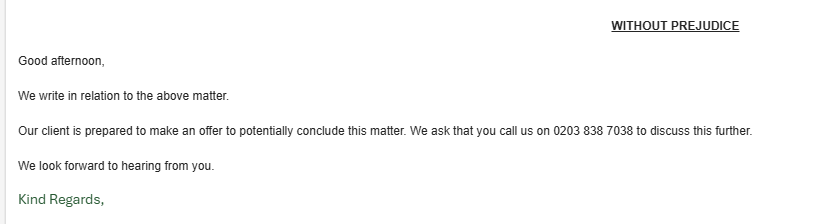
Should I respond and ask them to share the notice with the alleged incident?
0







Confirm your email address to Create Threads and Reply

Categories
- All Categories
- 355.8K Banking & Borrowing
- 254.9K Reduce Debt & Boost Income
- 456.2K Spending & Discounts
- 248.3K Work, Benefits & Business
- 606K Mortgages, Homes & Bills
- 179K Life & Family
- 263.8K Travel & Transport
- 1.5M Hobbies & Leisure
- 16.2K Discuss & Feedback
- 37.7K Read-Only Boards