We’d like to remind Forumites to please avoid political debate on the Forum.
This is to keep it a safe and useful space for MoneySaving discussions. Threads that are – or become – political in nature may be removed in line with the Forum’s rules. Thank you for your understanding.
📨 Have you signed up to the Forum's new Email Digest yet? Get a selection of trending threads sent straight to your inbox daily, weekly or monthly!
Anyone know the practical issues with a type AC outdoor socket?
Comments
-
Thanks - very clear.Mine is TT.0
-
WIAWSNB said:Thanks - very clear.Mine is TT.If you're on TT, then you are relying on an RCD tripping if there's a fault that makes something live. Because it's unlikely that a circuit breaker will trip or a fuse will blow.The problem with type AC RCD's is that they are easily "blinded" by anything other than normal AC running through them. It's possible that a faulty rectifier in the car's charging circuit could cause a significant DC component in the charging current. At that point, an AC RCD will lock up and never trip.If it sticks, force it.
If it breaks, well it wasn't working right anyway.1 -
Thanks.Yes, I acknowledge that an A or B would provide this infinitesimally increased protection in an infinitesimally unlikely scenario, and will keep an eye out for a replacement.I have three RCDs effectively in the circuit - the house main, the separate garage isolator fitted in the house to handle the PV, and this new socket. I guess they are all less-than-ideal types of RCD.I know that the increase in EVs has brought this to more attention, but what is seemingly being suggested is, "You plugging a PSU into an outdoor socket with an AC RCD?! Lawdie - you aware of the risks?! Take them Chrimbo lights down right away!"0
-
I used one of these, with a ground rod & separate consumer unit (for Later updates, battery, heat pump) wired into Henley blocks straight from the meter, with surge protection (I know it's a bit keen) installed by a local certified sparky.
Just a note, if it's a zoe charger, they are famous for causing lots of interference down the wiring.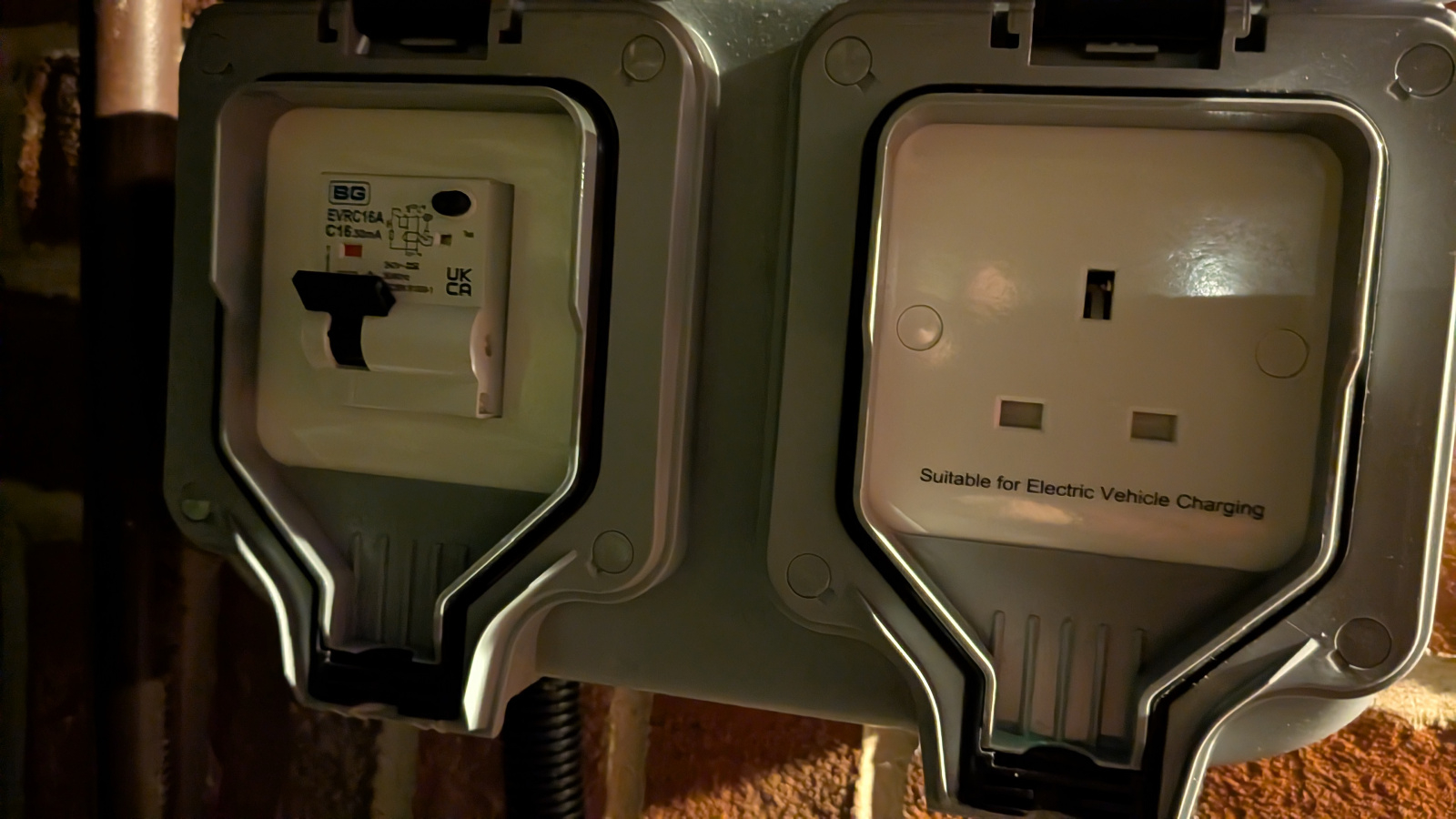
 Deepest Kent. 4.6kW Growatt inverter, solar i boost+ 5.9kW Solar Edge
ok so far...1 -
Blimey!nologo said:I used one of these, with a ground rod & separate consumer unit (for Later updates, battery, heat pump) wired into Henley blocks straight from the meter, with surge protection (I know it's a bit keen) installed by a local certified sparky.
Just a note, if it's a zoe charger, they are famous for causing lots of interference down the wiring.
I don't have any issues further down or up the wiring, but only that my Ford charger occasionally shows an amber fault light when switched on.
Since it happens seemingly randomly, and before it's plugged in to the car, I'm guessing it's an issue with the charger itself, and a new one - different make - is winging its way.
Or possibly it's down to my PV panels? These are mounted on the garage roof where my outdoor socket is fitted, so possibly the tiny voltage fluctuations - fractionally higher than grid - from this may be affecting the charger?
Anyhoo, I can swap chargers the next time it happens.0 -
Some cars are fussier than others about chargers. I have a Renault Zoe, and they are known for refusing to charge if they think the circuit isn't properly earthed.Other cars might be picky about the voltage. The voltage in the UK shouldn't ever be over 253V. But it might be on an installation with lots of solar panels, and a poor mains supply.If it sticks, force it.
If it breaks, well it wasn't working right anyway.1





Confirm your email address to Create Threads and Reply

Categories
- All Categories
- 355.6K Banking & Borrowing
- 254.8K Reduce Debt & Boost Income
- 456.1K Spending & Discounts
- 248.2K Work, Benefits & Business
- 605.7K Mortgages, Homes & Bills
- 179K Life & Family
- 263.5K Travel & Transport
- 1.5M Hobbies & Leisure
- 16.1K Discuss & Feedback
- 37.7K Read-Only Boards