We’d like to remind Forumites to please avoid political debate on the Forum.
This is to keep it a safe and useful space for MoneySaving discussions. Threads that are – or become – political in nature may be removed in line with the Forum’s rules. Thank you for your understanding.
Boiler issues
Comments
-
The boiler was fitted with a similar timer (which stopped working). The heating will not function without itThisIsWeird said:Is this timer part of the boiler, or an add-on mounted just below it?1 -
JuzaMum said:
The boiler was fitted with a similar timer (which stopped working). The heating will not function without itThisIsWeird said:Is this timer part of the boiler, or an add-on mounted just below it?Ah, ok - I'd assumed it was a separate device, with wiring to the boiler already in place.I'd need to look up that boiler to see the best way to upgrade it. Your second pic above is of the timer? Could you write down the model number, please?There are a few ways to handle this, from mounting an external digital programmable timer to do the same on/off job as that 'clock', but with more timing options and easier to override, to what I think is - by far - the best solution for you, and that's to fit a receiver near the boiler, and a programmable room stat to be mounted on a wall in, say, your sitting room. Ie, two birdies, one stone.Whilst that might appear more electrically scary, it isn't really; mounting and wiring a 'receiver' is no more complex than ditto a normal digi prog timer. But, with the receiver comes a wall stat, and a Smart one if you wish, that you can control via your phone.You currently don't have a room stat, and that is pretty poor and wasteful; almost certainly you are burning unnecessary gas. So, the receiver + wall stat option is better for you.You have, yourself, replaced that analogue clock? Coolbeans. How far above this do your DIY leccy abilities go, tho'? You can wire a plug?! Could you wire a ceiling rose?! Fitting a receiver should fall somewhere between these two :-)Do you have the installation instructions for your boiler? If so, have a read of the 'wiring controls' part. I'll do the same when I can.Of course, all the options come with different price tags. The best - a 'Smart', wireless, with wall-mounted Prog-'stat - can be had from just under £100 - eg https://www.screwfix.com/p/hive-mini-wireless-heating-smart-thermostat-white-grey/150pvOther options are available...
0 -
You currently don't have a room stat, and that is pretty poor and wasteful; almost certainly you are burning unnecessary gas.
To digress a little, I have never been convinced about the usefulness of room thermostats, although I guess it depends on the property layout.
For example if the stat is in the hallway ( as is often recommended) and the right temperature has been reached and it has switched the heating off. Then someone opens the front door, temp drops, stat turns heating back on even though other rooms are at the right temperature, and now could get too hot, unless the TRV's are all adjusted correctly. Or stat is in the living room and person in there thinks it is too warm so turns the stat down, then soon people in other rooms get cold even if the TRV's are on full.
In my opinion ( and that is all it is ) best just to leave the heating on ( in colder weather and when you are in and not at night) and use the room TRV's, especially now gas boilers and pumps can modulate right down,
1 -
Albermarle said:You currently don't have a room stat, and that is pretty poor and wasteful; almost certainly you are burning unnecessary gas.
To digress a little, I have never been convinced about the usefulness of room thermostats, although I guess it depends on the property layout.
For example if the stat is in the hallway ( as is often recommended) and the right temperature has been reached and it has switched the heating off. Then someone opens the front door, temp drops, stat turns heating back on even though other rooms are at the right temperature, and now could get too hot, unless the TRV's are all adjusted correctly. Or stat is in the living room and person in there thinks it is too warm so turns the stat down, then soon people in other rooms get cold even if the TRV's are on full.
In my opinion ( and that is all it is ) best just to leave the heating on ( in colder weather and when you are in and not at night) and use the room TRV's, especially now gas boilers and pumps can modulate right down,
Good point, and it is certainly a compromise. Yes, whichever room has the 'stat then largely dictates whether the rest of the house gets heat! And it does require a reasonably well-balanced system, so that all the rooms achieve their individually-desired temps at roughly the same time.From a few years back it became a breach of Building Regs to not have a 'boiler interlock', ie a method of fully turning off the boiler when demand was reached. Having a boiler running on just a timer, with each rad controlled by their TRVs, will tend to have the boiler wastefully running when not required.As you say, it certainly isn't clear-cut. If you have a family with different requirements - eg teenagers using their own bedrooms as evening bases - then they may well complain if the heating goes off when the 'stat-room says "I'm good".For most family situations - folk gathering in the main living area of an evening - then it probably does make sense. In any case, having a wall stat doesn't mean you have to listen to it... 0
0 -
Albermarle said: In my opinion ( and that is all it is ) best just to leave the heating on ( in colder weather and when you are in and not at night) and use the room TRV's, especially now gas boilers and pumps can modulate right down,There are not that many gas boilers that will modulated right down. Most appear to have a minimum of 6KW or higher. I think Viessmann lead the market with the Vitodens 200 which can go down to 2.5KW, and Worcester Bosch is down to 3KW on the Greenstar 8000 30KW. But to make full use of the modulation range, you need some form of "smarts" that can tell the boiler to reduce its output. Relying on the boiler throttling back to maintain an arbitrary flow temperature is not particularly efficient, especially if it can't modulate right down.In an ideal world, one would have thermostats in every room along with smart TRVs on all the radiators (smart TRVs will have a temperature sensor built in) with everything linked to a central control When one thermostat calls for heat, it would fire up the boiler, setting it to an appropriate output, and direct the heat to the radiator that needs it. In effect, zoning every room in the house. However, an expensive solution that many would shy away from.Any language construct that forces such insanity in this case should be abandoned without regrets. –
Erik Aronesty, 2014
Treasure the moments that you have. Savour them for as long as you can for they will never come back again.0 -
From a few years back it became a breach of Building Regs to not have a 'boiler interlock', ie a method of fully turning off the boiler when demand was reached. Having a boiler running on just a timer, with each rad controlled by their TRVs, will tend to have the boiler wastefully running when not required.
I have a room stat, but just have it whacked up to max ( > 30 degrees) so it is always on .
So I act as the human roomstat, and turn the heating off and on as needed. In these colder spells though I have been just leaving it on for most of the time between early morning and late evening, as the house is normally always occupied by at least one person, usually more. Plus an occasional tweak of the TRV's.
Keeps me out of trouble anyway
1 -
Albermarle said:From a few years back it became a breach of Building Regs to not have a 'boiler interlock', ie a method of fully turning off the boiler when demand was reached. Having a boiler running on just a timer, with each rad controlled by their TRVs, will tend to have the boiler wastefully running when not required.
I have a room stat, but just have it whacked up to max ( > 30 degrees) so it is always on .
So I act as the human roomstat, and turn the heating off and on as needed. In these colder spells though I have been just leaving it on for most of the time between early morning and late evening, as the house is normally always occupied by at least one person, usually more. Plus an occasional tweak of the TRV's.
Keeps me out of trouble anyway
and your pockets empty...
0 -
Ive attached a pick of the back of the drop down timer, I assume some of that information on the back is the model number. I 'm not sure where the boiler papereork is, hopefully i will remember! I am happy to do simple electrical stuff, changing like for like, I've changed sockets, lightswitches and ceiling lights but wouldnt want to do anything more technical.ThisIsWeird said:JuzaMum said:
The boiler was fitted with a similar timer (which stopped working). The heating will not function without itThisIsWeird said:Is this timer part of the boiler, or an add-on mounted just below it?Ah, ok - I'd assumed it was a separate device, with wiring to the boiler already in place.I'd need to look up that boiler to see the best way to upgrade it. Your second pic above is of the timer? Could you write down the model number, please?There are a few ways to handle this, from mounting an external digital programmable timer to do the same on/off job as that 'clock', but with more timing options and easier to override, to what I think is - by far - the best solution for you, and that's to fit a receiver near the boiler, and a programmable room stat to be mounted on a wall in, say, your sitting room. Ie, two birdies, one stone.Whilst that might appear more electrically scary, it isn't really; mounting and wiring a 'receiver' is no more complex than ditto a normal digi prog timer. But, with the receiver comes a wall stat, and a Smart one if you wish, that you can control via your phone.You currently don't have a room stat, and that is pretty poor and wasteful; almost certainly you are burning unnecessary gas. So, the receiver + wall stat option is better for you.You have, yourself, replaced that analogue clock? Coolbeans. How far above this do your DIY leccy abilities go, tho'? You can wire a plug?! Could you wire a ceiling rose?! Fitting a receiver should fall somewhere between these two :-)Do you have the installation instructions for your boiler? If so, have a read of the 'wiring controls' part. I'll do the same when I can.Of course, all the options come with different price tags. The best - a 'Smart', wireless, with wall-mounted Prog-'stat - can be had from just under £100 - eg https://www.screwfix.com/p/hive-mini-wireless-heating-smart-thermostat-white-grey/150pvOther options are available...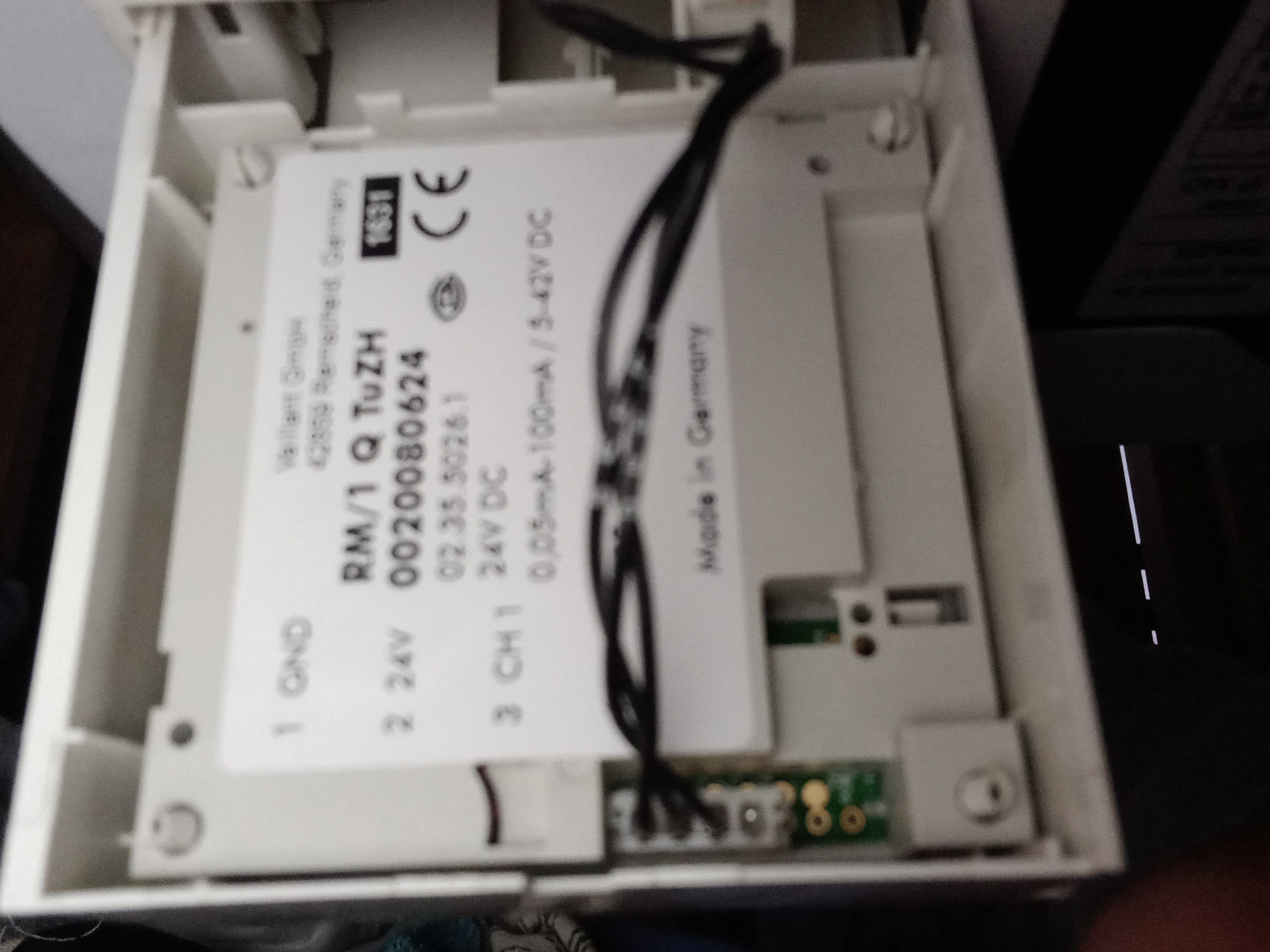
1 -
On the other side if we had a roomstat in the living room, there would be a constant battle of me turning it down, and my OH turning it up. So at least doing it my way is less stressfulThisIsWeird said:Albermarle said:From a few years back it became a breach of Building Regs to not have a 'boiler interlock', ie a method of fully turning off the boiler when demand was reached. Having a boiler running on just a timer, with each rad controlled by their TRVs, will tend to have the boiler wastefully running when not required.I have a room stat, but just have it whacked up to max ( > 30 degrees) so it is always on .
So I act as the human roomstat, and turn the heating off and on as needed. In these colder spells though I have been just leaving it on for most of the time between early morning and late evening, as the house is normally always occupied by at least one person, usually more. Plus an occasional tweak of the TRV's.
Keeps me out of trouble anyway
and your pockets empty... 1 -
1. That is a built in central heating timer. It runs off 24V DC, from the boiler.
2. As others have said, a separate, external timer could be fitted. However, for it to work the broken internal timer would have to be replaced with a working one, which would be set to permanently on. Someone with good electronics knowledge and the right equipment could probably re-wire that white plug into which the black wires go to achieve the same effect with the old timer.
3. A new programmer could either be hardwired to the boiler, or could have a remote control with a small receiver box hard wired to the boiler. The wiring for the external control might be possible in 24V, but given the age of the boiler might well be easier in 240V AC (i.e. mains). Its not particularly difficult to do, but:
3.1 Needs to be done by someone who is comfortable working with mains voltages, and has the experience and equipment to do it safely.
3.2 Needs to take great care that the right connections within the boiler are used. Plugging 240 volts into the part of a circuit designed for 24 V can be quite spectacular. The installation manual for the boiler will detail the correct connection points.
3.3 Given the above, I would suggest you get it done by a heating engineer familiar with controls.2











Confirm your email address to Create Threads and Reply

Categories
- All Categories
- 353.5K Banking & Borrowing
- 254.1K Reduce Debt & Boost Income
- 455K Spending & Discounts
- 246.6K Work, Benefits & Business
- 602.9K Mortgages, Homes & Bills
- 178K Life & Family
- 260.5K Travel & Transport
- 1.5M Hobbies & Leisure
- 16K Discuss & Feedback
- 37.7K Read-Only Boards