We’d like to remind Forumites to please avoid political debate on the Forum.
This is to keep it a safe and useful space for MoneySaving discussions. Threads that are – or become – political in nature may be removed in line with the Forum’s rules. Thank you for your understanding.
📨 Have you signed up to the Forum's new Email Digest yet? Get a selection of trending threads sent straight to your inbox daily, weekly or monthly!
The Forum now has a brand new text editor, adding a bunch of handy features to use when creating posts. Read more in our how-to guide
Woodburner advice

RomfordNavy
Posts: 862 Forumite




Looking to install a woodburner in an existing fireplace probably using a flexable liner dropped down from the top of the chimney. Question is at the bottom end should I have some sort of metal plate fitted above the woodburner that the flexible liner passes through or is it normal to leave the top of the burner open to the chimney? Just wondering if fitting a plate would help to reflect more heat back into the room.
0
Comments
-
If you have a big hole heading up to the chimney, that's where your heat will be headed.2
-
RomfordNavy said:Looking to install a woodburner in an existing fireplace probably using a flexable liner dropped down from the top of the chimney. Question is at the bottom end should I have some sort of metal plate fitted above the woodburner that the flexible liner passes through or is it normal to leave the top of the burner open to the chimney? Just wondering if fitting a plate would help to reflect more heat back into the room.For a free standing stove, usual practice is a rigid vitreous enameled pipe out of the top, and passing through a register plate. The flexible liner is then attached to the top of the rigid pipe - Some people omit the liner, but this makes it difficult to sweep the flue properly, and you get a much better draw with the correctly sized liner.Wood stoves can look very pretty in the right setting. But unless you have access to cheap/free logs, they are expensive to run if used as a primary source of heat. Also very messy when bringing in logs and carting out the ash. If you don't like beetles & spiders, a wood stove might not be for you. And if you are in an urban environment, expect to become the pariah of the neighbourhood.
Any language construct that forces such insanity in this case should be abandoned without regrets. –
Erik Aronesty, 2014
Treasure the moments that you have. Savour them for as long as you can for they will never come back again.5 -
Are you thinking of DIY, or getting a HETAS fitter to do the job?RomfordNavy said:Looking to install a woodburner in an existing fireplace probably using a flexable liner dropped down from the top of the chimney. Question is at the bottom end should I have some sort of metal plate fitted above the woodburner that the flexible liner passes through or is it normal to leave the top of the burner open to the chimney? Just wondering if fitting a plate would help to reflect more heat back into the room.
If you use a liner the plate is known as a closure plate, and can be cement board. If no liner is used a metal register plate must be used, properly sealed. The flue must also be tested. Nowadays it's quite rare for a HETAS fitter to put in a woodburner without a flue. They might still use a metal plate if there's a risk of a piece of masonry falling down the flue and breaking a cement board. Filling the void with vermiculite stops this issue, and gives more insulation to the flue, but is a pain when renewing the flue.3 -
Presumably for this reason.FreeBear said:RomfordNavy said:Looking to install a woodburner in an existing fireplace probably using a flexable liner dropped down from the top of the chimney. Question is at the bottom end should I have some sort of metal plate fitted above the woodburner that the flexible liner passes through or is it normal to leave the top of the burner open to the chimney? Just wondering if fitting a plate would help to reflect more heat back into the room.For a free standing stove, usual practice is a rigid vitreous enameled pipe out of the top, and passing through a register plate. The flexible liner is then attached to the top of the rigid pipe - Some people omit the liner, but this makes it difficult to sweep the flue properly, and you get a much better draw with the correctly sized liner.Wood stoves can look very pretty in the right setting. But unless you have access to cheap/free logs, they are expensive to run if used as a primary source of heat. Also very messy when bringing in logs and carting out the ash. If you don't like beetles & spiders, a wood stove might not be for you. And if you are in an urban environment, expect to become the pariah of the neighbourhood.
‘A serious threat’: calls grow for urgent review of England’s wood-burning stoves | Air pollution | The Guardian
1 -
Albermarle said:
Presumably for this reason.FreeBear said:RomfordNavy said:Looking to install a woodburner in an existing fireplace probably using a flexable liner dropped down from the top of the chimney. Question is at the bottom end should I have some sort of metal plate fitted above the woodburner that the flexible liner passes through or is it normal to leave the top of the burner open to the chimney? Just wondering if fitting a plate would help to reflect more heat back into the room.For a free standing stove, usual practice is a rigid vitreous enameled pipe out of the top, and passing through a register plate. The flexible liner is then attached to the top of the rigid pipe - Some people omit the liner, but this makes it difficult to sweep the flue properly, and you get a much better draw with the correctly sized liner.Wood stoves can look very pretty in the right setting. But unless you have access to cheap/free logs, they are expensive to run if used as a primary source of heat. Also very messy when bringing in logs and carting out the ash. If you don't like beetles & spiders, a wood stove might not be for you. And if you are in an urban environment, expect to become the pariah of the neighbourhood.
‘A serious threat’: calls grow for urgent review of England’s wood-burning stoves | Air pollution | The GuardianIt's probably because politicians of mainstream parties seem to desire more control over the populace nowadays, but in this case, their forward plans actually have some merit. Living in town with no access to one's own logs makes little sense, healthwise or in economic terms.Way out in the country it's a different matter, and cheap firewood is one compensation for the fuel one has to burn in another way, just sourcing life's necessities.
"A strange game. The only winning move is not to play." War Games 1983
1 -
To be fair, there should be no reason for unhappy neighbours as long as dry wood is burned and it's run hot.. We get no smoke or smell from ours.
But yes unless your wood is free, it's an expensive form of heat. You need to process free wood, which is fairly time consuming.
You would want a plate, yes. You'll need it signed off by building control if you aren't using an installer. It worked out £200 extra to have a professional do it - and I didn't have to get on the roof.
3 -
Thats it, Closure Plate just didn't know what it was called. Thanksstuart45 said:Are you thinking of DIY, or getting a HETAS fitter to do the job?
If you use a liner the plate is known as a closure plate, and can be cement board. If no liner is used a metal register plate must be used, properly sealed. The flue must also be tested. Nowadays it's quite rare for a HETAS fitter to put in a woodburner without a flue. They might still use a metal plate if there's a risk of a piece of masonry falling down the flue and breaking a cement board. Filling the void with vermiculite stops this issue, and gives more insulation to the flue, but is a pain when renewing the flue.
0 -
One more question is do I need the fireplace lined with Firebricks for a wood burner?At the moment it appears to be lined with some sort of black painted Cement-board. I was hoping to chisel that out and maybe remove one layer of bricks from the around the sides of the fireplace to allow a larger woodburner to be used. The walls at the side of the fireplace are 16" thick, however there is a full depth blanking-stone above the fireplace which moves a bit from side to side so obviously the rest of the chimney doesn't rest on that inner layer or two of bricks.Question is if I do that do that do I then need a liner between the woodburner and the surrounding massonary?0
-
Can you put a photo up? You don't have to use firebricks, but nothing combustible.0
-
stuart45 said:
Can you put a photo up? You don't have to use firebricks, but nothing combustible.Photos attached: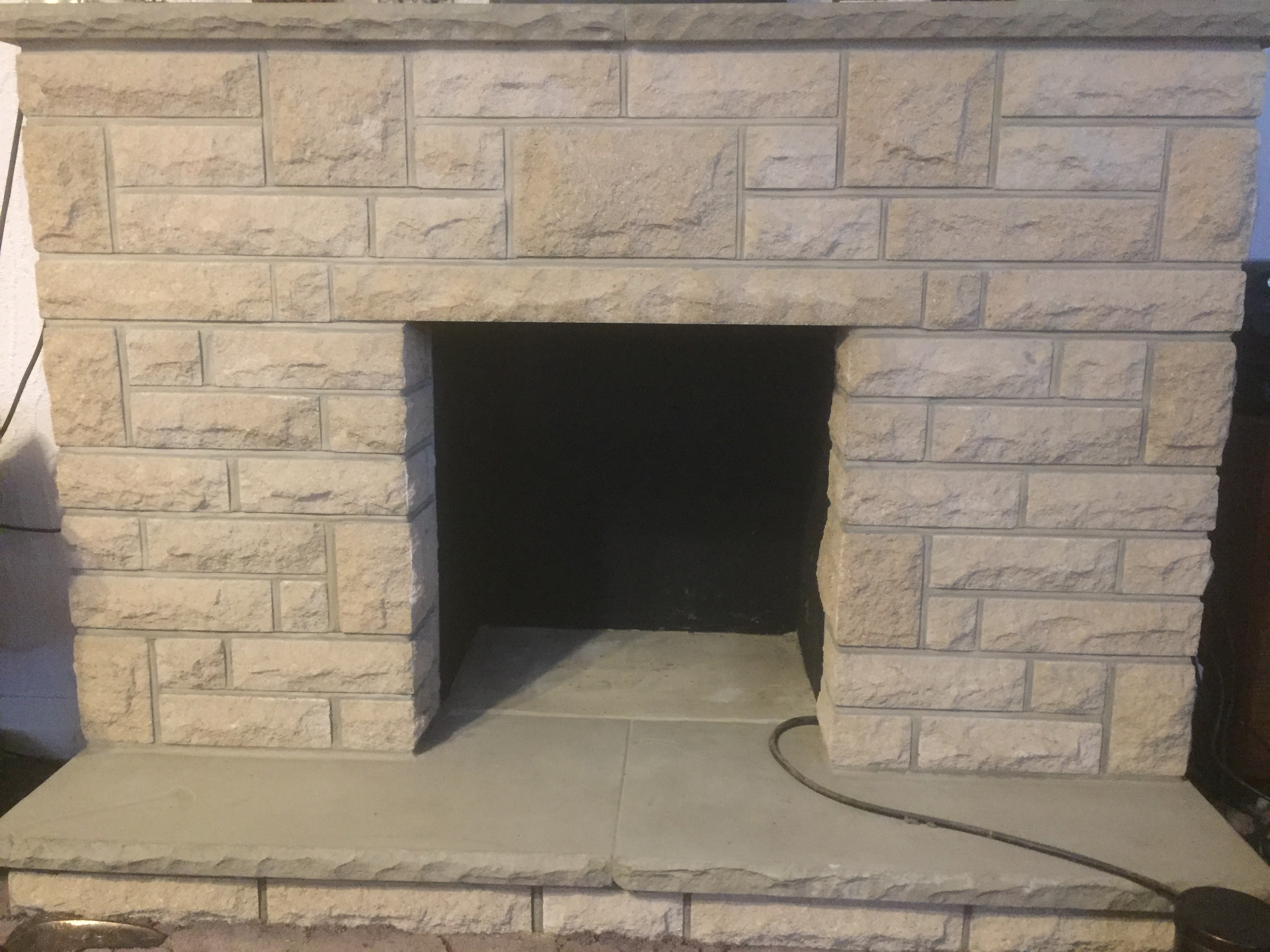


0







Confirm your email address to Create Threads and Reply

Categories
- All Categories
- 353.6K Banking & Borrowing
- 254.2K Reduce Debt & Boost Income
- 455.1K Spending & Discounts
- 246.7K Work, Benefits & Business
- 603K Mortgages, Homes & Bills
- 178.1K Life & Family
- 260.7K Travel & Transport
- 1.5M Hobbies & Leisure
- 16K Discuss & Feedback
- 37.7K Read-Only Boards