We’d like to remind Forumites to please avoid political debate on the Forum.
This is to keep it a safe and useful space for MoneySaving discussions. Threads that are – or become – political in nature may be removed in line with the Forum’s rules. Thank you for your understanding.
📨 Have you signed up to the Forum's new Email Digest yet? Get a selection of trending threads sent straight to your inbox daily, weekly or monthly!
The Forum now has a brand new text editor, adding a bunch of handy features to use when creating posts. Read more in our how-to guide
Permanently removing the chimney pipes
Comments
-
The flaunching is the mortar layer below the caps?
Is the slate layer heavy?
Some previous owner removed the chimney breasts and - I was told - replaced them with something "bracket" (I don't know the details) to bear the load of the chimney stack
I don't have any idea if the new setup (no caps, new slate) can bee too heavy for whatever is installed now.0 -
No, the slate isn't heavy, take a look at this short video - it shows removal of a pot and how the guy capped it, he did put a pot on one section but essentially 75% of it is what you describe (If i understand correctly).pieroabcd said:The flaunching is the mortar layer below the caps?
Is the slate layer heavy?
Some previous owner removed the chimney breasts and - I was told - replaced them with something "bracket" (I don't know the details) to bear the load of the chimney stack
I don't have any idea if the new setup (no caps, new slate) can bee too heavy for whatever is installed now.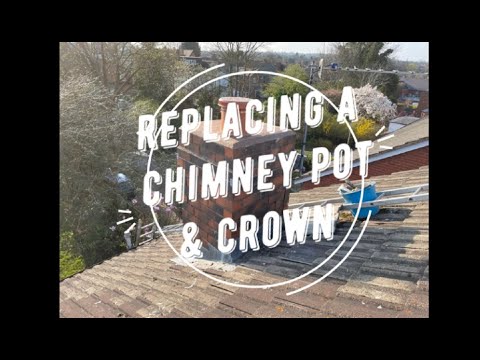 https://www.youtube.com/watch?v=BreCDv6J4DE
YNWA
Target: Mortgage free by 58.0 -
If the chimney breasts have been removed and the stack is supported with gallows brackets you might want to get the whole thing removed. I have the same here, and have been advised that they are no longer considered a suitable way of supporting chimneys and should be replaced or the chimney removed.2
-
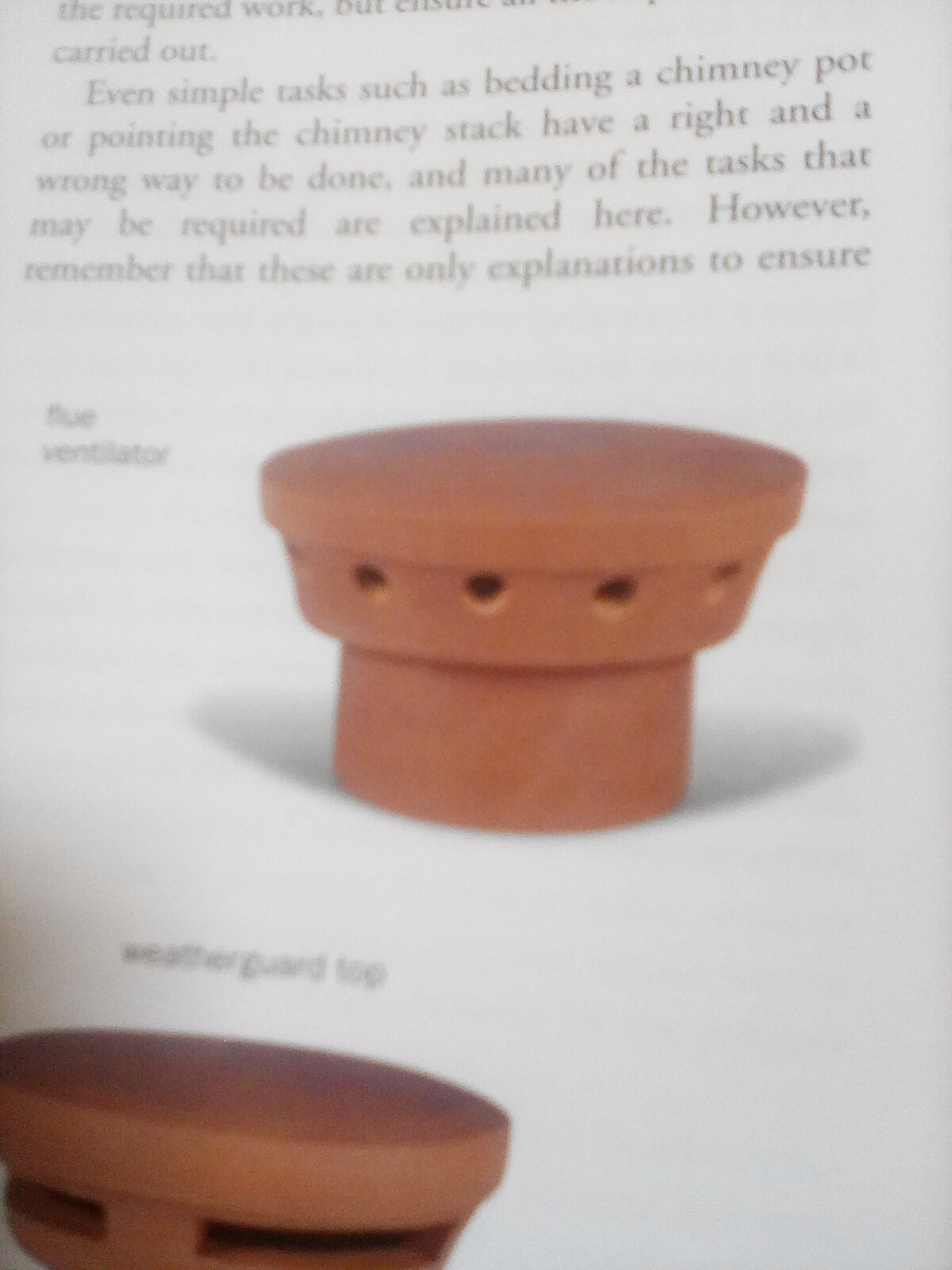
stuart45 said:You can get one of these for the pots. Unused flues are better being ventilated.
Hi,
I wanted to remove the whole chimney stack, but the neighbour doesn't want to agree.
The only option, at this point is capping.
Most roofers want to convince me to use caps like this one above with circular holes at the side, but I'm very much against them because water could still enter from the sides. I've read that "Caps" like that are actually flues for chimneys still in use designed to let the fumes out, not appropriate to close chimneys that are no more used.
I really don't understand the roofers' insistence. They are also heavy, that is even more weight to bear.
I've bought 2 of this instead, that have some space underneath to permit water present in the chimney to evaporate (how could water end there if the pots are all capped, ny the way?)
What's the advantage of the holed ceramic models above?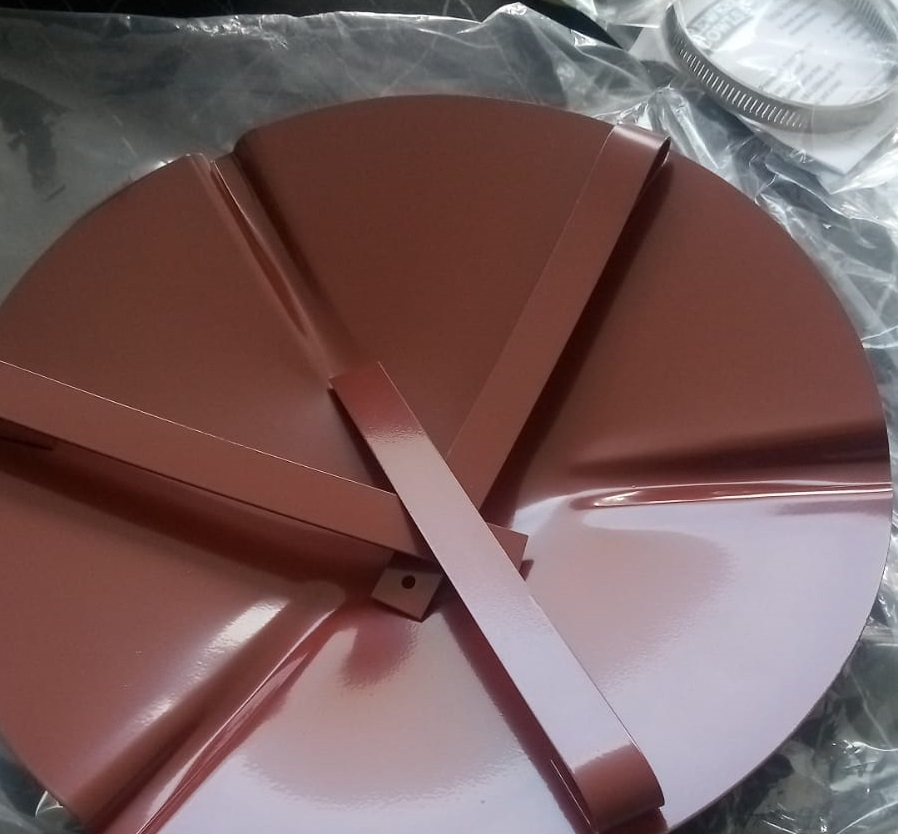
0 -
pieroabcd said:stuart45 said:You can get one of these for the pots. Unused flues are better being ventilated.
Hi,
I wanted to remove the whole chimney stack, but the neighbour doesn't want to agree.
The only option, at this point is capping.
Most roofers want to convince me to use caps like this one above with circular holes at the side, but I'm very much against them because water could still enter from the sides. I've read that "Caps" like that are actually flues for chimneys still in use designed to let the fumes out, not appropriate to close chimneys that are no more used.
I really don't understand the roofers' insistence. They are also heavy, that is even more weight to bear.
I've bought 2 of this instead, that have some space underneath to permit water present in the chimney to evaporate (how could water end there if the pots are all capped, ny the way?)
What's the advantage of the holed ceramic models above?
They can just be plonked in position and then ignored. Total installation time two minutes and maintenance zero, but it seems you know best, so be happy with your choice.
"The forest was shrinking, but the trees kept voting for the axe. The axe was clever and convinced the trees that since his handle was made of wood, he was one of them."
1 -
The terracotta ones will not rust and leak with the passage of time.pieroabcd said:stuart45 said:You can get one of these for the pots. Unused flues are better being ventilated
What's the advantage of the holed ceramic models above?Play with the expectation of winning not the fear of failure. S.Clarke0 -
Not sure where you read that, but it's completely wrong. Those 2, as well as a hood top and mushroom top can only used to ventilate a flue.I've read that ''Caps'' like that are actually flies for chimneys still in use.4 -
But it still remains that those holes will let the water in when it rains, won't they?stuart45 said:
Not sure where you read that, but it's completely wrong. Those 2, as well as a hood top and mushroom top can only used to ventilate a flue.I've read that ''Caps'' like that are actually flies for chimneys still in use.0 -
For the avoidance of doubt, the terracotta cap shown above would absolutely not be suitable for use on a 'live' flue.
Removing the chimney pot will still leave a flue inside the masonry chimney stack. It is generally a bad idea to have unventilated voids in a structure. Moisture will get in due to rain landing on the top of the chimney or being driven against the sides by the wind. It would also get in due to the masonry absorbing moisture from humid air, even if you could somehow prevent any liquid water from hitting the stack. A particular issue in old chimneys is that the inside of the flue will be covered with deposits from fumes from the fire, including hygroscopic substances which are particularly good at attracting moisture from the air.
To avoid the damp inside the flue causing issues, you need to ventilate the flue, even if it isn't going to be used. This can be done effectively and easily through the top of the pot, using a cap as linked above. You can also use a metal cap as you have pictured, but this is still meant for use on top of the chimney pot, not instead of it.
To get effective ventilation of a long, narrow void, you need to ventilate it at both ends, i.e., at the top and the bottom. If it's only ventilated at the bottom this will do very little to reduce damp at the top. Put simply, ventilating the top of the flue will have to involve holes facing either upwards or to the side. If you don't use a vented cap on the top, you'll have to somehow get an airbrick or similar in through the side of the chimney stack, as close to the top as possible. However, this will still mean "holes at the side". The sensible way to do this is using a cap on the chimney pot. It's a quick and easy way to do it, using the right product for the job. If a strong wind occasionally blows a drop of water through one of the vent holes, this isn't a problem as long as the flue is ventilated.
If I were you, I'd either get a cap on the pot or remove the chimney stack completely. If your neighbour wants the stack left in place, there in my view only one sensible course of action is left to you.2 -
They are designed not to allow water in. Even without a cap, an open chimney pot doesn't allow much water in. In the older flues, built in brickwork and sand/cement parged it would soak into the sides. As fires were being used daily it soon dried out. Nowadays with liners, even a small amount from an open pot reaches the bottom.pieroabcd said:
But it still remains that those holes will let the water in when it rains, won't they?stuart45 said:
Not sure where you read that, but it's completely wrong. Those 2, as well as a hood top and mushroom top can only used to ventilate a flue.I've read that ''Caps'' like that are actually flies for chimneys still in use.4













Confirm your email address to Create Threads and Reply

Categories
- All Categories
- 354.7K Banking & Borrowing
- 254.5K Reduce Debt & Boost Income
- 455.6K Spending & Discounts
- 247.6K Work, Benefits & Business
- 604.5K Mortgages, Homes & Bills
- 178.6K Life & Family
- 262.1K Travel & Transport
- 1.5M Hobbies & Leisure
- 16.1K Discuss & Feedback
- 37.7K Read-Only Boards