We’d like to remind Forumites to please avoid political debate on the Forum.
This is to keep it a safe and useful space for MoneySaving discussions. Threads that are – or become – political in nature may be removed in line with the Forum’s rules. Thank you for your understanding.
📨 Have you signed up to the Forum's new Email Digest yet? Get a selection of trending threads sent straight to your inbox daily, weekly or monthly!
The Forum now has a brand new text editor, adding a bunch of handy features to use when creating posts. Read more in our how-to guide
Consumer advice - please
Comments
-
This is what I wondered about, from what the OP has said it sounds as if the doors are a functioning part of the building rather than built as a display.Grumpy_chap said:
I am not sure that the doors count as fixtures and fittings in this case, even if fitted to a display wall.Alderbank said:There are property law issues here.
Fixtures and fittings installed by the tenant become the property of the landlord
tl:dr When the doors were fitted to the premises they became the landlord's property.
The doors would be F&F if installed in a functional way in the building.
However, AIUI, there is a display space with several "false" walls into which different types of doors and windows are fitted. Other than displaying the goods (doors and windows) these false walls serve no purpose.
@Alderbank would such property laws apply to a commercial contract/situation?In the game of chess you can never let your adversary see your pieces0 -
This is what I wondered about, from what the OP has said it sounds as if the doors are a functioning part of the building rather than built as a display.Grumpy_chap said:
I am not sure that the doors count as fixtures and fittings in this case, even if fitted to a display wall.Alderbank said:There are property law issues here.
Fixtures and fittings installed by the tenant become the property of the landlord
tl:dr When the doors were fitted to the premises they became the landlord's property.
The doors would be F&F if installed in a functional way in the building.
However, AIUI, there is a display space with several "false" walls into which different types of doors and windows are fitted. Other than displaying the goods (doors and windows) these false walls serve no purpose.
@Alderbank would such property laws apply to a commercial contract/situation?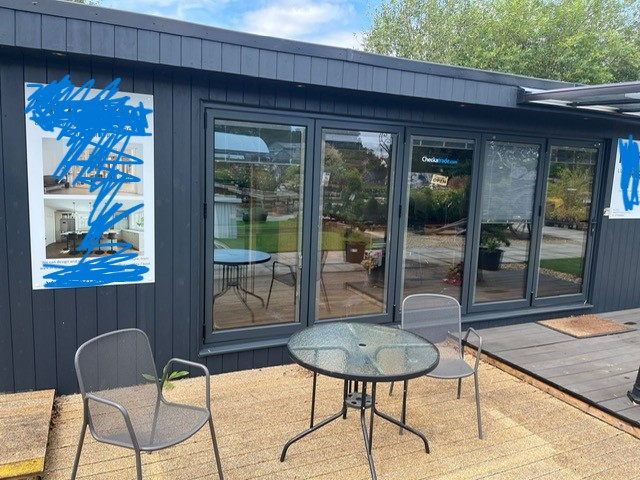
Hopefully the picture helps, it's a container type unit.0 -
I agree they are not f&f if they are display items for trade purposes.Grumpy_chap said:
I am not sure that the doors count as fixtures and fittings in this case, even if fitted to a display wall.Alderbank said:There are property law issues here.
Fixtures and fittings installed by the tenant become the property of the landlord
tl:dr When the doors were fitted to the premises they became the landlord's property.
The doors would be F&F if installed in a functional way in the building.
However, AIUI, there is a display space with several "false" walls into which different types of doors and windows are fitted. Other than displaying the goods (doors and windows) these false walls serve no purpose.
The OP said 'They are still installed within the building and in full use by the new tenant daily.' That led me to assume they are installed as functional doors.
Apologies if I've misunderstood.0 -
The OP has clarified that these aren't display doors but are in fact in usage. I can understand why the currently tenant doesn't want to remove them.0
-
Sorry - but when you say that "the original doors ... are in a container on site", doesn't the landlord have access to this container so that they can put the original doors back in place, and let you have yours? Or are you saying the landlord can't access the container? In which case... who can access it?Tea_biscuits said:My doors are still the set on the showroom that the tenant put it at some point, the original doors I am told are in a container on site and the landlord is saying the tenant should have put these back in as part of his contract to make good on exit, however he was evicted and has no opportunity to do so.
Even if the LL can access the container and put the original doors back in situ, I wouldn't expect them to do so at their own expense. Ideally the shop/former tenant should bear the cost but I suspect you may have to.
(Sorry for the possibly misleading advice in my first post in this thread - I thought the doors were ex-display and being stored for you - not that they were still part of a functioning display ) 0
) 0 -
The originals are in a container on the Landlords premises, they don't feel they should be hit with the cost of changing the doors but wont allow the previous tenant to do so and claim he's in breach of his contract, I suggested they should add these costs to the outstanding rent they are chasing him for.Okell said:
Sorry - but when you say that "the original doors ... are in a container on site", doesn't the landlord have access to this container so that they can put the original doors back in place, and let you have yours? Or are you saying the landlord can't access the container? In which case... who can access it?Tea_biscuits said:My doors are still the set on the showroom that the tenant put it at some point, the original doors I am told are in a container on site and the landlord is saying the tenant should have put these back in as part of his contract to make good on exit, however he was evicted and has no opportunity to do so.
Even if the LL can access the container and put the original doors back in situ, I wouldn't expect them to do so at their own expense. Ideally the shop/former tenant should bear the cost but I suspect you may have to.
(Sorry for the possibly misleading advice in my first post in this thread - I thought the doors were ex-display and being stored for you - not that they were still part of a functioning display )0 -
Alderbank said:
I agree they are not f&f if they are display items for trade purposes.Grumpy_chap said:
I am not sure that the doors count as fixtures and fittings in this case, even if fitted to a display wall.Alderbank said:There are property law issues here.
Fixtures and fittings installed by the tenant become the property of the landlord
tl:dr When the doors were fitted to the premises they became the landlord's property.
The doors would be F&F if installed in a functional way in the building.
However, AIUI, there is a display space with several "false" walls into which different types of doors and windows are fitted. Other than displaying the goods (doors and windows) these false walls serve no purpose.
The OP said 'They are still installed within the building and in full use by the new tenant daily.' That led me to assume they are installed as functional doors...Bradden said:The OP has clarified that these aren't display doors but are in fact in usage. I can understand why the currently tenant doesn't want to remove them.
I think it would help if the OP could clarify if "their" doors form part of some sort of demonstrative trade display inside the shop (or unit), or whether they are an intrinsic part of the shop (or unit) itself.
I'm confused by the OP's photo which suggests to me that the doors are not part of a trade display inside the unit, but are instead the functioning external entrance doors to the unit.
The answer to that question would determine whether the doors form part of the fixtures and fittings, or are simply trading stock.
(Whether that makes any difference to my post at 4:26pm I don't know...)1 -
This is the problem, assuming OP has title and has to pay to remove the doors I wonder who they have a claim against as you could argue the previous tenant should have removed them before giving the place back but could presumably argue that's not OP's problem and such things are what a deposit is for and it's the landlord's hard luck (all assuming OP has title).Okell said:
Sorry - but when you say that "the original doors ... are in a container on site", doesn't the landlord have access to this container so that they can put the original doors back in place, and let you have yours? Or are you saying the landlord can't access the container? In which case... who can access it?Tea_biscuits said:My doors are still the set on the showroom that the tenant put it at some point, the original doors I am told are in a container on site and the landlord is saying the tenant should have put these back in as part of his contract to make good on exit, however he was evicted and has no opportunity to do so.
Even if the LL can access the container and put the original doors back in situ, I wouldn't expect them to do so at their own expense. Ideally the shop/former tenant should bear the cost but I suspect you may have to.
(Sorry for the possibly misleading advice in my first post in this thread - I thought the doors were ex-display and being stored for you - not that they were still part of a functioning display )In the game of chess you can never let your adversary see your pieces0 -
As part of the original tenants contract he was to put the unit back as it was and as the landlord says in in breach of this along with not paying the agreed rent, however as he was evicted and locks were changed he hasn't had access to do so, that's not really my problem.
This is the problem, assuming OP has title and has to pay to remove the doors I wonder who they have a claim against as you could argue the previous tenant should have removed them before giving the place back but could presumably argue that's not OP's problem and such things are what a deposit is for and it's the landlord's hard luck (all assuming OP has title).Okell said:
Sorry - but when you say that "the original doors ... are in a container on site", doesn't the landlord have access to this container so that they can put the original doors back in place, and let you have yours? Or are you saying the landlord can't access the container? In which case... who can access it?Tea_biscuits said:My doors are still the set on the showroom that the tenant put it at some point, the original doors I am told are in a container on site and the landlord is saying the tenant should have put these back in as part of his contract to make good on exit, however he was evicted and has no opportunity to do so.
Even if the LL can access the container and put the original doors back in situ, I wouldn't expect them to do so at their own expense. Ideally the shop/former tenant should bear the cost but I suspect you may have to.
(Sorry for the possibly misleading advice in my first post in this thread - I thought the doors were ex-display and being stored for you - not that they were still part of a functioning display )0 -
The doors are not part of a trade display inside the unit, but are instead the functioning entrance / exit doors to the unit.Okell said:Alderbank said:
I agree they are not f&f if they are display items for trade purposes.Grumpy_chap said:
I am not sure that the doors count as fixtures and fittings in this case, even if fitted to a display wall.Alderbank said:There are property law issues here.
Fixtures and fittings installed by the tenant become the property of the landlord
tl:dr When the doors were fitted to the premises they became the landlord's property.
The doors would be F&F if installed in a functional way in the building.
However, AIUI, there is a display space with several "false" walls into which different types of doors and windows are fitted. Other than displaying the goods (doors and windows) these false walls serve no purpose.
The OP said 'They are still installed within the building and in full use by the new tenant daily.' That led me to assume they are installed as functional doors...Bradden said:The OP has clarified that these aren't display doors but are in fact in usage. I can understand why the currently tenant doesn't want to remove them.
I think it would help if the OP could clarify if "their" doors form part of some sort of demonstrative trade display inside the shop (or unit), or whether they are an intrinsic part of the shop (or unit) itself.
I'm confused by the OP's photo which suggests to me that the doors are not part of a trade display inside the unit, but are instead the functioning external entrance doors to the unit.
The answer to that question would determine whether the doors form part of the fixtures and fittings, or are simply trading stock.
(Whether that makes any difference to my post at 4:26pm I don't know...)
0









Confirm your email address to Create Threads and Reply

Categories
- All Categories
- 353.9K Banking & Borrowing
- 254.3K Reduce Debt & Boost Income
- 455.2K Spending & Discounts
- 246.9K Work, Benefits & Business
- 603.5K Mortgages, Homes & Bills
- 178.3K Life & Family
- 261K Travel & Transport
- 1.5M Hobbies & Leisure
- 16K Discuss & Feedback
- 37.7K Read-Only Boards