We’d like to remind Forumites to please avoid political debate on the Forum.
This is to keep it a safe and useful space for MoneySaving discussions. Threads that are – or become – political in nature may be removed in line with the Forum’s rules. Thank you for your understanding.
📨 Have you signed up to the Forum's new Email Digest yet? Get a selection of trending threads sent straight to your inbox daily, weekly or monthly!
The Forum now has a brand new text editor, adding a bunch of handy features to use when creating posts. Read more in our how-to guide
Insulation
Comments
-
We'll need to agree to disagree on that. All walls have a temperature gradient through the mass, this is no different.0
-
Genuinely interesting conversation, gents.I get the 'thermal mass' part, and can see that it can be very effective in stabilising indoor temps, and also helping to keep the house warm overnight from naturally stored heat. I'm pretty sure our 1930s house with cavity insulation does this, and I can now compare it directly with our extension which has been built to current standards - they are on separate zones, both on Hive.Comparing the temp graphs of both - before the house heating came on, so purely on outdoor ambient temps and solar gain - I can see that the house has far less temp variation during the days and nights. The extension temp drops more steeply right through the night, but also rises far more quickly the following day. It's very noticeable - going from one room to the other first thing in the morning - that the ext is far colder. Ditto during the day - except the temps are reversed; the house is cool, but the ext has warmed up. (In fact, during the stupidly hot spell we had this year - temps at over 30oC - going in to our house was an absolute blessing as it remained in the low-mid '20s. The extension went stupid-hot...)My conclusion is that the thermal mass is a 'good thing', but comes at a cost. You don't have heat stored in this 'mass' without providing it first. All fine and dandy during summer where it seemingly helps to keep the house cool, but in winter the CH is going to have to provide this heat for the walls to store it.In essence, it can surely only be the case that the new extension - with its minor thermal mass (concrete block outer skin, insulation batts in cavity tight against inner skin, and inner skin of thermal blocks) - is going to be far cheaper to heat as it's simply far better insulated? The house is more 'stable', but that's at the cost of the CH having warmed up the thermal mass, and needs to continue to do this.That begs the Q - wouldn't the ideal compromise be to thoroughly insulate the 'outer' skin of a new build, and have a concrete (T-M) type of inner skin? Insulation and thermal mass storage?1
-
I'm not disputing that at all. I am saying if the insulation is on the outside then the wall stores and returns heat to the room so reducing the temperature swings. If the insulation is on the inside the wall can never return the (much reduced) heat to the room. There will always be a temperature gradient. Just Google thermal mass, there are plenty of explanations there of how thermal mass is used to store and release heat.Apodemus said:We'll need to agree to disagree on that. All walls have a temperature gradient through the mass, this is no different.Living the dream in the Austrian Alps.0 -
I can add a +2 to the sample size for this. Having built new kitchen/family room extensions in 2 different houses, my experience is similar to Bendy's.Bendy_House said:Genuinely interesting conversation, gents.I get the 'thermal mass' part, and can see that it can be very effective in stabilising indoor temps, and also helping to keep the house warm overnight from naturally stored heat. I'm pretty sure our 1930s house with cavity insulation does this, and I can now compare it directly with our extension which has been built to current standards - they are on separate zones, both on Hive.Comparing the temp graphs of both - before the house heating came on, so purely on outdoor ambient temps and solar gain - I can see that the house has far less temp variation during the days and nights. The extension temp drops more steeply right through the night, but also rises far more quickly the following day. It's very noticeable - going from one room to the other first thing in the morning - that the ext is far colder. Ditto during the day - except the temps are reversed; the house is cool, but the ext has warmed up. (In fact, during the stupidly hot spell we had this year - temps at over 30oC - going in to our house was an absolute blessing as it remained in the low-mid '20s. The extension went stupid-hot...)My conclusion is that the thermal mass is a 'good thing', but comes at a cost. You don't have heat stored in this 'mass' without providing it first. All fine and dandy during summer where it seemingly helps to keep the house cool, but in winter the CH is going to have to provide this heat for the walls to store it.In essence, it can surely only be the case that the new extension - with its minor thermal mass (concrete block outer skin, insulation batts in cavity tight against inner skin, and inner skin of thermal blocks) - is going to be far cheaper to heat as it's simply far better insulated? The house is more 'stable', but that's at the cost of the CH having warmed up the thermal mass, and needs to continue to do this.That begs the Q - wouldn't the ideal compromise be to thoroughly insulate the 'outer' skin of a new build, and have a concrete (T-M) type of inner skin? Insulation and thermal mass storage?
INterestingly/obviously maybe, the current extension insulation is slightly different in that it has an insulated cavity (only 25mm celotex), with thermal block inner skin and then 75mm celotex internally and this has much less variation in night time temp than the extension in the previous house (which had no internal insulation, only the cavity).0 -
The hemp blocks advertise as being good thermal regulation.
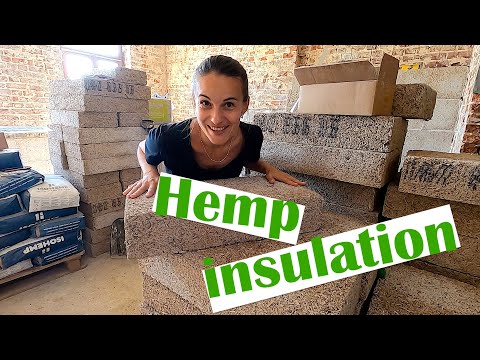 https://www.youtube.com/watch?v=TeQswrmJHPo
If your insulation is 80% air then it has to have poor mass? So its about being careful in choosing, Its Rockwool i think that you can put a blow torch on it and then your hand and it will be cold so that's no good for thermal regulation.
As long as the is some mass the insulation value will make up the difference i guess.0








Confirm your email address to Create Threads and Reply

Categories
- All Categories
- 354.2K Banking & Borrowing
- 254.4K Reduce Debt & Boost Income
- 455.3K Spending & Discounts
- 247.2K Work, Benefits & Business
- 603.9K Mortgages, Homes & Bills
- 178.4K Life & Family
- 261.4K Travel & Transport
- 1.5M Hobbies & Leisure
- 16.1K Discuss & Feedback
- 37.7K Read-Only Boards