We’d like to remind Forumites to please avoid political debate on the Forum.
This is to keep it a safe and useful space for MoneySaving discussions. Threads that are – or become – political in nature may be removed in line with the Forum’s rules. Thank you for your understanding.
📨 Have you signed up to the Forum's new Email Digest yet? Get a selection of trending threads sent straight to your inbox daily, weekly or monthly!
The Forum now has a brand new text editor, adding a bunch of handy features to use when creating posts. Read more in our how-to guide
New Energy Price Guarantee - a fair measure for all or a slightly unfair redistribution?
Comments
-
The UK does have higher inequality than some countries, less than others, we are 73rd on a list of 180 countries, hardly "one of the worst".Chrysalis said:
The UK has one of the worst inequality in the western world, our top 50%MattMattMattUK said:
It falls disproportionately on the young in general, as well as higher earners. Those who do not make a net contribution will not be repaying it at all. It appears it will be added to the national debt, which is serviced from general taxation, so again the burden falls on net contributors.lisyloo said:I’d like to question this idea that we’re all equally liable to repay.
I'm going to retire in a few years a lower my tax and NI contributions.
sweeping generalisation of course but doesn’t this burden fall disproportionately on the young or in more general terms future tax payers.
I guess the devil may be in the detail of exactly how it’s going to be collected.
It is insane that Truss is proposing tax cuts when we are still borrowing to cover day to day expenditure, that's even before she adds £150-200 billion with this scheme, even more so when the bottom two thirds of taxpayers have the lowest effective rate of income taxation in the EU (ok, I know we unfortunately left. Also the top third have the fifth highest).
The top third of earners have the fifth highest rate of income taxation in the EU, our top rate is 48.25%, in Germany it is 47.475%, France 49%, Norway 46.4% and Ireland 49%. We are slightly above average in terms of our top rate of tax compared to major economies.Chrysalis said:our top 50% are currently under taxed
The bottom 10% do not have their income taxed and because of our benefits system means that they have an effective negative rate of income taxation. Additionally because of the way that VAT works, with the exclusions we apply VAT in the UK functions in a progressive way even though it is applied at a flat rate. The bottom two thirds have the lowest rate of income taxation in the EU, the lowest of any major economy, the lowest of any advanced economy.
In the UK depending on how the question is asked 80-90% of people support raising income taxes, however less than 10% support raising their level of income taxation, they want things to be paid for by "someone else". The Wealthiest are already paying a comparable rate to the wealthiest in Germany or France, it is the bottom two thirds of earners who pay considerably less in income taxation in the UK than they to in France or Germany. France has the same rate of VAT as we have, but also apply VAT to food (at a reduced rate), Germany has a VAT rate of 19%, lower than ours, but also apply VAT at 7% to most foods. Germany and France have comparable levels of property taxation. Germany has slightly higher corporation tax, France has corporation tax quite a bit higher (30%) but actually collects less in corporation tax than the UK despite having a slightly bigger economy. It is not the wealthiest that do not pay enough tax.Chrysalis said:
I think this is a lot down to our wealthiest massively resisting tax increases more than they do in Germany, France etc.
The UK has one of the most progressive taxation and benefits system in the world, overall our tax system is more progressive than those of Germany or France.
Truss has or will take us backwards in many ways, tax cuts being one of them, she should be raising all levels of income taxation and slashing the tax free allowance.
The corporation tax rise was not really needed, it would have been somewhat helpful, but we also need to reform corporate taxes, the UK corporate tax system does little to nothing to encourage investment, compared to those of Germany or Norway which actively benefit businesses who invest in plant, equipment, R&D, training etc. Corporation tax of around 20% is probably about right, or 25% with reforms to the way investment in the business is taxed, but it is not a major issue overall.
The National Insurance changes Truss has made are regressive when taken in isolation, however our income taxation system is still highly progressive, just slightly less highly progressive than it would have been with Sunak's National Insurance rise.Chrysalis said:
and the NI changes she made are regressive.
I do not agree with passing the burden on to future generations, since 1999 the UK has lived beyond it's means, borrowing money for the benefit of those now and relying on future generations to repay that debt. Taxes in the UK need to rise for everyone, the abolition or near abolition of the tax free allowance, the merging of IC and NI so higher income pensioners to not avoid paying it (as well as a simplified tax system) and putting 4% on the base rate of income taxation 2% on the higher rate and 1.25% on the additional rate.Chrysalis said:I do agree with the decision to put it on general taxation instead of future energy bills,
It was not "horrific" it was reasonably sensible at that point in time.Chrysalis said:
putting the SOLR costs on the SC was a horrific decision.
4 -
Miser1964 said:The UK Govt. is actually taking a huge 'short' position on wholesale gas prices, which have been dropping quite rapidly on the futures market.
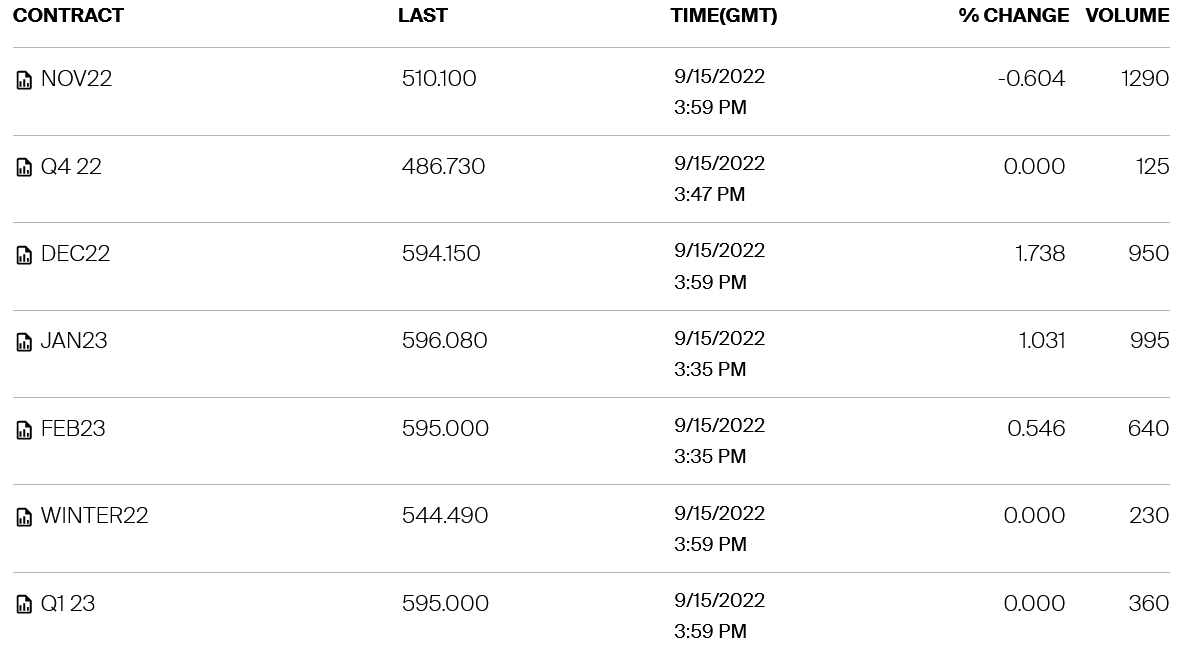
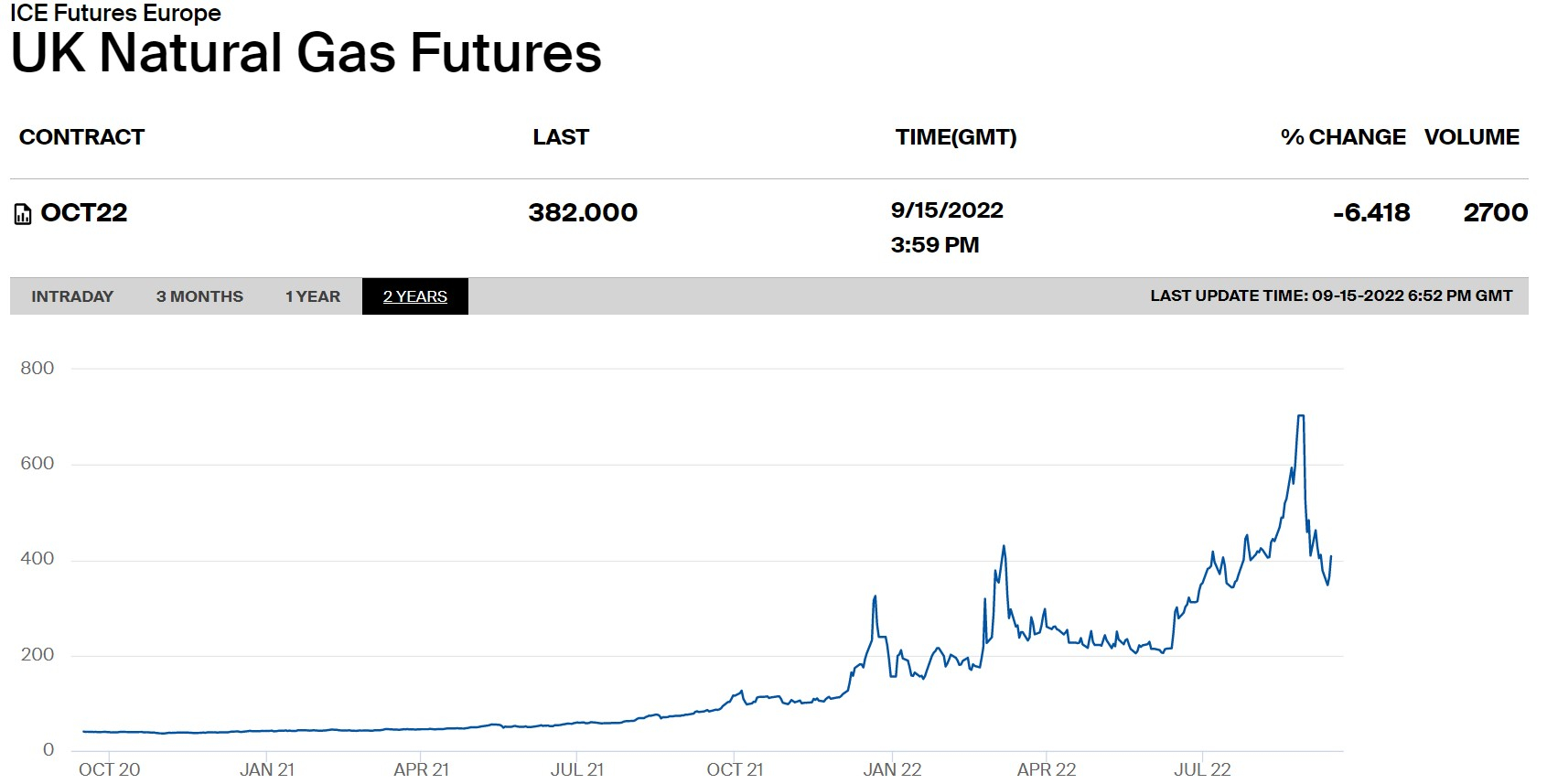 Don't get complacent because month-ahead prices are falling, they're still far higher than they were during the Ofgem cap reference period.And prices for this coming winter remain "firm".
 N. Hampshire, he/him. Octopus Intelligent Go elec & Tracker gas / Vodafone BB / iD mobile. Kirk Hill Co-op member.Ofgem cap table, Ofgem cap explainer. Economy 7 cap explainer. Gas vs E7 vs peak elec heating costs, Best kettle!
2.72kWp PV facing SSW installed Jan 2012. 11 x 247w panels, 3.6kw inverter. 35 MWh generated, long-term average 2.6 Os.1 -
Some very good points here- although your ideas around tax increases would have a similar impact to the energy crisis - it would add £3600 a year to the average tax payers’ tax bill, and £3.2k to someone on minimum wage (270 a month) - I’m not sure many could afford this. Altho I guess you would propose this for the short term?MattMattMattUK said:
The UK does have higher inequality than some countries, less than others, we are 73rd on a list of 180 countries, hardly "one of the worst".Chrysalis said:
The UK has one of the worst inequality in the western world, our top 50%MattMattMattUK said:
It falls disproportionately on the young in general, as well as higher earners. Those who do not make a net contribution will not be repaying it at all. It appears it will be added to the national debt, which is serviced from general taxation, so again the burden falls on net contributors.lisyloo said:I’d like to question this idea that we’re all equally liable to repay.
I'm going to retire in a few years a lower my tax and NI contributions.
sweeping generalisation of course but doesn’t this burden fall disproportionately on the young or in more general terms future tax payers.
I guess the devil may be in the detail of exactly how it’s going to be collected.
It is insane that Truss is proposing tax cuts when we are still borrowing to cover day to day expenditure, that's even before she adds £150-200 billion with this scheme, even more so when the bottom two thirds of taxpayers have the lowest effective rate of income taxation in the EU (ok, I know we unfortunately left. Also the top third have the fifth highest).
The top third of earners have the fifth highest rate of income taxation in the EU, our top rate is 48.25%, in Germany it is 47.475%, France 49%, Norway 46.4% and Ireland 49%. We are slightly above average in terms of our top rate of tax compared to major economies.Chrysalis said:our top 50% are currently under taxed
The bottom 10% do not have their income taxed and because of our benefits system means that they have an effective negative rate of income taxation. Additionally because of the way that VAT works, with the exclusions we apply VAT in the UK functions in a progressive way even though it is applied at a flat rate. The bottom two thirds have the lowest rate of income taxation in the EU, the lowest of any major economy, the lowest of any advanced economy.
In the UK depending on how the question is asked 80-90% of people support raising income taxes, however less than 10% support raising their level of income taxation, they want things to be paid for by "someone else". The Wealthiest are already paying a comparable rate to the wealthiest in Germany or France, it is the bottom two thirds of earners who pay considerably less in income taxation in the UK than they to in France or Germany. France has the same rate of VAT as we have, but also apply VAT to food (at a reduced rate), Germany has a VAT rate of 19%, lower than ours, but also apply VAT at 7% to most foods. Germany and France have comparable levels of property taxation. Germany has slightly higher corporation tax, France has corporation tax quite a bit higher (30%) but actually collects less in corporation tax than the UK despite having a slightly bigger economy. It is not the wealthiest that do not pay enough tax.Chrysalis said:
I think this is a lot down to our wealthiest massively resisting tax increases more than they do in Germany, France etc.
The UK has one of the most progressive taxation and benefits system in the world, overall our tax system is more progressive than those of Germany or France.
Truss has or will take us backwards in many ways, tax cuts being one of them, she should be raising all levels of income taxation and slashing the tax free allowance.
The corporation tax rise was not really needed, it would have been somewhat helpful, but we also need to reform corporate taxes, the UK corporate tax system does little to nothing to encourage investment, compared to those of Germany or Norway which actively benefit businesses who invest in plant, equipment, R&D, training etc. Corporation tax of around 20% is probably about right, or 25% with reforms to the way investment in the business is taxed, but it is not a major issue overall.
The National Insurance changes Truss has made are regressive when taken in isolation, however our income taxation system is still highly progressive, just slightly less highly progressive than it would have been with Sunak's National Insurance rise.Chrysalis said:
and the NI changes she made are regressive.
I do not agree with passing the burden on to future generations, since 1999 the UK has lived beyond it's means, borrowing money for the benefit of those now and relying on future generations to repay that debt. Taxes in the UK need to rise for everyone, the abolition or near abolition of the tax free allowance, the merging of IC and NI so higher income pensioners to not avoid paying it (as well as a simplified tax system) and putting 4% on the base rate of income taxation 2% on the higher rate and 1.25% on the additional rate.Chrysalis said:I do agree with the decision to put it on general taxation instead of future energy bills,
It was not "horrific" it was reasonably sensible at that point in time.Chrysalis said:
putting the SOLR costs on the SC was a horrific decision.0 -
MattMattMattUK said:
The UK does have higher inequality than some countries, less than others, we are 73rd on a list of 180 countries, hardly "one of the worst".Chrysalis said:
The UK has one of the worst inequality in the western world, our top 50%MattMattMattUK said:
It falls disproportionately on the young in general, as well as higher earners. Those who do not make a net contribution will not be repaying it at all. It appears it will be added to the national debt, which is serviced from general taxation, so again the burden falls on net contributors.lisyloo said:I’d like to question this idea that we’re all equally liable to repay.
I'm going to retire in a few years a lower my tax and NI contributions.
sweeping generalisation of course but doesn’t this burden fall disproportionately on the young or in more general terms future tax payers.
I guess the devil may be in the detail of exactly how it’s going to be collected.
It is insane that Truss is proposing tax cuts when we are still borrowing to cover day to day expenditure, that's even before she adds £150-200 billion with this scheme, even more so when the bottom two thirds of taxpayers have the lowest effective rate of income taxation in the EU (ok, I know we unfortunately left. Also the top third have the fifth highest).According to the OECD the UK is the 8th most unequal of the OECD's 38 nations. 2nd out of the developed nations with only the USA more unequal.2 -
That is income inequality, I was quoting wealth inequality.Deleted_User said:MattMattMattUK said:
The UK does have higher inequality than some countries, less than others, we are 73rd on a list of 180 countries, hardly "one of the worst".Chrysalis said:
The UK has one of the worst inequality in the western world, our top 50%MattMattMattUK said:
It falls disproportionately on the young in general, as well as higher earners. Those who do not make a net contribution will not be repaying it at all. It appears it will be added to the national debt, which is serviced from general taxation, so again the burden falls on net contributors.lisyloo said:I’d like to question this idea that we’re all equally liable to repay.
I'm going to retire in a few years a lower my tax and NI contributions.
sweeping generalisation of course but doesn’t this burden fall disproportionately on the young or in more general terms future tax payers.
I guess the devil may be in the detail of exactly how it’s going to be collected.
It is insane that Truss is proposing tax cuts when we are still borrowing to cover day to day expenditure, that's even before she adds £150-200 billion with this scheme, even more so when the bottom two thirds of taxpayers have the lowest effective rate of income taxation in the EU (ok, I know we unfortunately left. Also the top third have the fifth highest).According to the OECD the UK is the 8th most unequal of the OECD's 38 nations. 2nd out of the developed nations with only the USA more unequal.
https://en.m.wikipedia.org/wiki/List_of_countries_by_wealth_inequality
The UK's income GINI is skewed by being the home of many multinational companies which means people who earn a lot based on global incomes are based in the UK for tax purposes. The UK is home to more multinationals as a percentage of GBP than most other nations, the USA is the world leader, Ireland and Luxembourg are ahead of the UK in Europe due to low tax rates which means many companies are based there row tax purposes, but in many cases those companies still base their de facto headquarters in the UK. If you control to the core earning group the UK's income GINI is much closer to those in Germany, Netherlands, Norway etc. We also have a more progressive income taxation regime which counters an element of income inequality on top of the previous differences mentioned.2 -
I would not make the change in one go, it would need to be phased in over 8-10 years. That would mean there could be a ramp up in service's ahead of revenue so that the electorate could see the benefits and gain from those overall during implementation. It would be combined with providing the societal benefits that people in those higher tax nations enjoy such as free childcare for workers, better and quicker medical treatment reducing cost per outcome and keeping people in or back to work rather than off on long term sick. Improvements in re-employment outcomes due to better short and medium term out of work benefits. Better infrastructure investment adding business growth etc.Jonboy1889 said:
Some very good points here- although your ideas around tax increases would have a similar impact to the energy crisis - it would add £3600 a year to the average tax payers’ tax bill, and £3.2k to someone on minimum wage (270 a month) - I’m not sure many could afford this. Altho I guess you would propose this for the short term?MattMattMattUK said:
The UK does have higher inequality than some countries, less than others, we are 73rd on a list of 180 countries, hardly "one of the worst".Chrysalis said:
The UK has one of the worst inequality in the western world, our top 50%MattMattMattUK said:
It falls disproportionately on the young in general, as well as higher earners. Those who do not make a net contribution will not be repaying it at all. It appears it will be added to the national debt, which is serviced from general taxation, so again the burden falls on net contributors.lisyloo said:I’d like to question this idea that we’re all equally liable to repay.
I'm going to retire in a few years a lower my tax and NI contributions.
sweeping generalisation of course but doesn’t this burden fall disproportionately on the young or in more general terms future tax payers.
I guess the devil may be in the detail of exactly how it’s going to be collected.
It is insane that Truss is proposing tax cuts when we are still borrowing to cover day to day expenditure, that's even before she adds £150-200 billion with this scheme, even more so when the bottom two thirds of taxpayers have the lowest effective rate of income taxation in the EU (ok, I know we unfortunately left. Also the top third have the fifth highest).
The top third of earners have the fifth highest rate of income taxation in the EU, our top rate is 48.25%, in Germany it is 47.475%, France 49%, Norway 46.4% and Ireland 49%. We are slightly above average in terms of our top rate of tax compared to major economies.Chrysalis said:our top 50% are currently under taxed
The bottom 10% do not have their income taxed and because of our benefits system means that they have an effective negative rate of income taxation. Additionally because of the way that VAT works, with the exclusions we apply VAT in the UK functions in a progressive way even though it is applied at a flat rate. The bottom two thirds have the lowest rate of income taxation in the EU, the lowest of any major economy, the lowest of any advanced economy.
In the UK depending on how the question is asked 80-90% of people support raising income taxes, however less than 10% support raising their level of income taxation, they want things to be paid for by "someone else". The Wealthiest are already paying a comparable rate to the wealthiest in Germany or France, it is the bottom two thirds of earners who pay considerably less in income taxation in the UK than they to in France or Germany. France has the same rate of VAT as we have, but also apply VAT to food (at a reduced rate), Germany has a VAT rate of 19%, lower than ours, but also apply VAT at 7% to most foods. Germany and France have comparable levels of property taxation. Germany has slightly higher corporation tax, France has corporation tax quite a bit higher (30%) but actually collects less in corporation tax than the UK despite having a slightly bigger economy. It is not the wealthiest that do not pay enough tax.Chrysalis said:
I think this is a lot down to our wealthiest massively resisting tax increases more than they do in Germany, France etc.
The UK has one of the most progressive taxation and benefits system in the world, overall our tax system is more progressive than those of Germany or France.
Truss has or will take us backwards in many ways, tax cuts being one of them, she should be raising all levels of income taxation and slashing the tax free allowance.
The corporation tax rise was not really needed, it would have been somewhat helpful, but we also need to reform corporate taxes, the UK corporate tax system does little to nothing to encourage investment, compared to those of Germany or Norway which actively benefit businesses who invest in plant, equipment, R&D, training etc. Corporation tax of around 20% is probably about right, or 25% with reforms to the way investment in the business is taxed, but it is not a major issue overall.
The National Insurance changes Truss has made are regressive when taken in isolation, however our income taxation system is still highly progressive, just slightly less highly progressive than it would have been with Sunak's National Insurance rise.Chrysalis said:
and the NI changes she made are regressive.
I do not agree with passing the burden on to future generations, since 1999 the UK has lived beyond it's means, borrowing money for the benefit of those now and relying on future generations to repay that debt. Taxes in the UK need to rise for everyone, the abolition or near abolition of the tax free allowance, the merging of IC and NI so higher income pensioners to not avoid paying it (as well as a simplified tax system) and putting 4% on the base rate of income taxation 2% on the higher rate and 1.25% on the additional rate.Chrysalis said:I do agree with the decision to put it on general taxation instead of future energy bills,
It was not "horrific" it was reasonably sensible at that point in time.Chrysalis said:
putting the SOLR costs on the SC was a horrific decision.0 -
What is your rationale for broadening the tax base at the bottom? The proportionate impact on someone earning 12k of an extra £2400 in tax has got to be somewhat larger than the impact on someone earning £80k....MattMattMattUK said:
I would not make the change in one go, it would need to be phased in over 8-10 years. That would mean there could be a ramp up in service's ahead of revenue so that the electorate could see the benefits and gain from those overall during implementation. It would be combined with providing the societal benefits that people in those higher tax nations enjoy such as free childcare for workers, better and quicker medical treatment reducing cost per outcome and keeping people in or back to work rather than off on long term sick. Improvements in re-employment outcomes due to better short and medium term out of work benefits. Better infrastructure investment adding business growth etc.Jonboy1889 said:
Some very good points here- although your ideas around tax increases would have a similar impact to the energy crisis - it would add £3600 a year to the average tax payers’ tax bill, and £3.2k to someone on minimum wage (270 a month) - I’m not sure many could afford this. Altho I guess you would propose this for the short term?MattMattMattUK said:
The UK does have higher inequality than some countries, less than others, we are 73rd on a list of 180 countries, hardly "one of the worst".Chrysalis said:
The UK has one of the worst inequality in the western world, our top 50%MattMattMattUK said:
It falls disproportionately on the young in general, as well as higher earners. Those who do not make a net contribution will not be repaying it at all. It appears it will be added to the national debt, which is serviced from general taxation, so again the burden falls on net contributors.lisyloo said:I’d like to question this idea that we’re all equally liable to repay.
I'm going to retire in a few years a lower my tax and NI contributions.
sweeping generalisation of course but doesn’t this burden fall disproportionately on the young or in more general terms future tax payers.
I guess the devil may be in the detail of exactly how it’s going to be collected.
It is insane that Truss is proposing tax cuts when we are still borrowing to cover day to day expenditure, that's even before she adds £150-200 billion with this scheme, even more so when the bottom two thirds of taxpayers have the lowest effective rate of income taxation in the EU (ok, I know we unfortunately left. Also the top third have the fifth highest).
The top third of earners have the fifth highest rate of income taxation in the EU, our top rate is 48.25%, in Germany it is 47.475%, France 49%, Norway 46.4% and Ireland 49%. We are slightly above average in terms of our top rate of tax compared to major economies.Chrysalis said:our top 50% are currently under taxed
The bottom 10% do not have their income taxed and because of our benefits system means that they have an effective negative rate of income taxation. Additionally because of the way that VAT works, with the exclusions we apply VAT in the UK functions in a progressive way even though it is applied at a flat rate. The bottom two thirds have the lowest rate of income taxation in the EU, the lowest of any major economy, the lowest of any advanced economy.
In the UK depending on how the question is asked 80-90% of people support raising income taxes, however less than 10% support raising their level of income taxation, they want things to be paid for by "someone else". The Wealthiest are already paying a comparable rate to the wealthiest in Germany or France, it is the bottom two thirds of earners who pay considerably less in income taxation in the UK than they to in France or Germany. France has the same rate of VAT as we have, but also apply VAT to food (at a reduced rate), Germany has a VAT rate of 19%, lower than ours, but also apply VAT at 7% to most foods. Germany and France have comparable levels of property taxation. Germany has slightly higher corporation tax, France has corporation tax quite a bit higher (30%) but actually collects less in corporation tax than the UK despite having a slightly bigger economy. It is not the wealthiest that do not pay enough tax.Chrysalis said:
I think this is a lot down to our wealthiest massively resisting tax increases more than they do in Germany, France etc.
The UK has one of the most progressive taxation and benefits system in the world, overall our tax system is more progressive than those of Germany or France.
Truss has or will take us backwards in many ways, tax cuts being one of them, she should be raising all levels of income taxation and slashing the tax free allowance.
The corporation tax rise was not really needed, it would have been somewhat helpful, but we also need to reform corporate taxes, the UK corporate tax system does little to nothing to encourage investment, compared to those of Germany or Norway which actively benefit businesses who invest in plant, equipment, R&D, training etc. Corporation tax of around 20% is probably about right, or 25% with reforms to the way investment in the business is taxed, but it is not a major issue overall.
The National Insurance changes Truss has made are regressive when taken in isolation, however our income taxation system is still highly progressive, just slightly less highly progressive than it would have been with Sunak's National Insurance rise.Chrysalis said:
and the NI changes she made are regressive.
I do not agree with passing the burden on to future generations, since 1999 the UK has lived beyond it's means, borrowing money for the benefit of those now and relying on future generations to repay that debt. Taxes in the UK need to rise for everyone, the abolition or near abolition of the tax free allowance, the merging of IC and NI so higher income pensioners to not avoid paying it (as well as a simplified tax system) and putting 4% on the base rate of income taxation 2% on the higher rate and 1.25% on the additional rate.Chrysalis said:I do agree with the decision to put it on general taxation instead of future energy bills,
It was not "horrific" it was reasonably sensible at that point in time.Chrysalis said:
putting the SOLR costs on the SC was a horrific decision.
Plus we don't do infrastructure in the UK, the nimbys make sure of that.I think....0 -
It works, more importantly it works very well, see Germany, Scandinavia etc.michaels said:
What is your rationale for broadening the tax base at the bottom?MattMattMattUK said:
I would not make the change in one go, it would need to be phased in over 8-10 years. That would mean there could be a ramp up in service's ahead of revenue so that the electorate could see the benefits and gain from those overall during implementation. It would be combined with providing the societal benefits that people in those higher tax nations enjoy such as free childcare for workers, better and quicker medical treatment reducing cost per outcome and keeping people in or back to work rather than off on long term sick. Improvements in re-employment outcomes due to better short and medium term out of work benefits. Better infrastructure investment adding business growth etc.Jonboy1889 said:
Some very good points here- although your ideas around tax increases would have a similar impact to the energy crisis - it would add £3600 a year to the average tax payers’ tax bill, and £3.2k to someone on minimum wage (270 a month) - I’m not sure many could afford this. Altho I guess you would propose this for the short term?MattMattMattUK said:
The UK does have higher inequality than some countries, less than others, we are 73rd on a list of 180 countries, hardly "one of the worst".Chrysalis said:
The UK has one of the worst inequality in the western world, our top 50%MattMattMattUK said:
It falls disproportionately on the young in general, as well as higher earners. Those who do not make a net contribution will not be repaying it at all. It appears it will be added to the national debt, which is serviced from general taxation, so again the burden falls on net contributors.lisyloo said:I’d like to question this idea that we’re all equally liable to repay.
I'm going to retire in a few years a lower my tax and NI contributions.
sweeping generalisation of course but doesn’t this burden fall disproportionately on the young or in more general terms future tax payers.
I guess the devil may be in the detail of exactly how it’s going to be collected.
It is insane that Truss is proposing tax cuts when we are still borrowing to cover day to day expenditure, that's even before she adds £150-200 billion with this scheme, even more so when the bottom two thirds of taxpayers have the lowest effective rate of income taxation in the EU (ok, I know we unfortunately left. Also the top third have the fifth highest).
The top third of earners have the fifth highest rate of income taxation in the EU, our top rate is 48.25%, in Germany it is 47.475%, France 49%, Norway 46.4% and Ireland 49%. We are slightly above average in terms of our top rate of tax compared to major economies.Chrysalis said:our top 50% are currently under taxed
The bottom 10% do not have their income taxed and because of our benefits system means that they have an effective negative rate of income taxation. Additionally because of the way that VAT works, with the exclusions we apply VAT in the UK functions in a progressive way even though it is applied at a flat rate. The bottom two thirds have the lowest rate of income taxation in the EU, the lowest of any major economy, the lowest of any advanced economy.
In the UK depending on how the question is asked 80-90% of people support raising income taxes, however less than 10% support raising their level of income taxation, they want things to be paid for by "someone else". The Wealthiest are already paying a comparable rate to the wealthiest in Germany or France, it is the bottom two thirds of earners who pay considerably less in income taxation in the UK than they to in France or Germany. France has the same rate of VAT as we have, but also apply VAT to food (at a reduced rate), Germany has a VAT rate of 19%, lower than ours, but also apply VAT at 7% to most foods. Germany and France have comparable levels of property taxation. Germany has slightly higher corporation tax, France has corporation tax quite a bit higher (30%) but actually collects less in corporation tax than the UK despite having a slightly bigger economy. It is not the wealthiest that do not pay enough tax.Chrysalis said:
I think this is a lot down to our wealthiest massively resisting tax increases more than they do in Germany, France etc.
The UK has one of the most progressive taxation and benefits system in the world, overall our tax system is more progressive than those of Germany or France.
Truss has or will take us backwards in many ways, tax cuts being one of them, she should be raising all levels of income taxation and slashing the tax free allowance.
The corporation tax rise was not really needed, it would have been somewhat helpful, but we also need to reform corporate taxes, the UK corporate tax system does little to nothing to encourage investment, compared to those of Germany or Norway which actively benefit businesses who invest in plant, equipment, R&D, training etc. Corporation tax of around 20% is probably about right, or 25% with reforms to the way investment in the business is taxed, but it is not a major issue overall.
The National Insurance changes Truss has made are regressive when taken in isolation, however our income taxation system is still highly progressive, just slightly less highly progressive than it would have been with Sunak's National Insurance rise.Chrysalis said:
and the NI changes she made are regressive.
I do not agree with passing the burden on to future generations, since 1999 the UK has lived beyond it's means, borrowing money for the benefit of those now and relying on future generations to repay that debt. Taxes in the UK need to rise for everyone, the abolition or near abolition of the tax free allowance, the merging of IC and NI so higher income pensioners to not avoid paying it (as well as a simplified tax system) and putting 4% on the base rate of income taxation 2% on the higher rate and 1.25% on the additional rate.Chrysalis said:I do agree with the decision to put it on general taxation instead of future energy bills,
It was not "horrific" it was reasonably sensible at that point in time.Chrysalis said:
putting the SOLR costs on the SC was a horrific decision.
There are a lot more people the further you go down the earnings pyramid, those higher earners would also pay the increased taxation on the lower part of their earnings. Putting 1p on the base rate of income tax raises significantly more than 1p on the higher or additional rate, if one wants to generate serious revenue it needs to be from rises on everyone, not just on a few.michaels said:
The proportionate impact on someone earning 12k of an extra £2400 in tax has got to be somewhat larger than the impact on someone earning £80k....
I would change that as well with reforms to planning laws.michaels said:Plus we don't do infrastructure in the UK, the nimbys make sure of that.1 -
Back to the OP’s point. Energy price fixes can be a gamble, you may win - you may lose. But you do get certainty.
What the OP is seeking is for the risk of losing to be removed, I’m afraid that isn’t what fixing is all about.
As to the claim this government intervention is causing the ‘unfairness’ (as you see it) conveniently ignores the government intervention in Russian sanctions which has caused so much of the price spike in the first place.0 -
@MattMattMattUK - don't bother to put yourself forward for MP at the next General Election -your taxation "policy" would mean your deposit would be lost !!1









Confirm your email address to Create Threads and Reply

Categories
- All Categories
- 354.6K Banking & Borrowing
- 254.5K Reduce Debt & Boost Income
- 455.5K Spending & Discounts
- 247.5K Work, Benefits & Business
- 604.4K Mortgages, Homes & Bills
- 178.6K Life & Family
- 261.9K Travel & Transport
- 1.5M Hobbies & Leisure
- 16.1K Discuss & Feedback
- 37.7K Read-Only Boards