We’d like to remind Forumites to please avoid political debate on the Forum.
This is to keep it a safe and useful space for MoneySaving discussions. Threads that are – or become – political in nature may be removed in line with the Forum’s rules. Thank you for your understanding.
📨 Have you signed up to the Forum's new Email Digest yet? Get a selection of trending threads sent straight to your inbox daily, weekly or monthly!
The Forum now has a brand new text editor, adding a bunch of handy features to use when creating posts. Read more in our how-to guide
I don't understand the huge price increases when we are not reliant on Russia for gas
Comments
-
Do you not remember the hassle about the guaranteed price for the new nuclear stations?
1 -
Basically its robbery without violence0
-
Paying for something you've used is robbery?2
-
ProDave said:But what is "wrong" is the majority, that has fixed production costs that have not risen, ALL gets paid for at the highest price.That's not really true.
- Any energy provided under a CfD is sold at the higher price but any excess above the CfD strike price is then returned to the energy supply companies.
- Energy provided under a FIT is supplied at a fixed rate.
- Energy provide under a Power Purchase Agreement is supplied at the price set in that agreement.
Current CfD strike prices range from 4p-12p/kWh.N. Hampshire, he/him. Octopus Intelligent Go elec & Tracker gas / Vodafone BB / iD mobile. Kirk Hill Co-op member.Ofgem cap table, Ofgem cap explainer. Economy 7 cap explainer. Gas vs E7 vs peak elec heating costs, Best kettle!
2.72kWp PV facing SSW installed Jan 2012. 11 x 247w panels, 3.6kw inverter. 35 MWh generated, long-term average 2.6 Os.2 -
Or the market is working as it should do in times of crisis. Prices soar which makes 1) people reduce demand 2) it worthwhile for companies to invest in new producers and generators.ProDave said:The market is broken.
It will be interesting to see how much demand drops in France with their much lauded 4% increase cap. Are they really helping the long term situation?1 -
what you state will happen via nationalisation just isn't true. shareholder would need to be reimburse. The cost will be many billions, so far how many billions have been spend on the bailout ? £30bn and what has that achieved? not much.pochase said:Nationalisation - are you going to reimburse the shareholders or are you going to just take their property like a third world dictatorship?
If you pay them, it will cost many billions, if you just take what you want you will send a warning to other companies in all business areas. Who wants to stay in a country where the government just takes away your property and who wants to be the next?0 -
I don't think nationalisation is a practical option now - the cost of compensating the owners of the private industries would be astronomical. Whether it was right to sell off our gas reserves, and our energy generators, and our distribution network in the first place is a different question, but that happened over three decades ago so it's pointless having that debate now.
I am not opposed to the private sector running things, generally they will be more efficient than the government. But when we are talking about critical national infrastructure, there should be protection through effective regulation. The licenses we issued to extract north sea gas should have included 'levers' to allow the government to protect UK supplies - this would of course resulted in the licenses being less valuable in the first place, which would have meant less opportunities for historical tax cuts.
If we were going to nationalise anything, then I think the distribution networks would be the place to start - simply because in any region there's no competition.
Suppliers should have been properly regulated in a similar way to banks. They hold customer funds and should be required to maintain minimum capital and liquidity levels. The fact that so many small suppliers have failed, taking billions of customer funds with them, is a consequence of poor regulation. As my user name suggests, I am a banker and my sector caused great harm to this country about 15 years ago, resulting in government bail outs and banks being owned by the taxpayer. As a result, we have minimum capital and liquidity requirements, which are stress tested by the Bank of England, who can require more capital to be held. We have pre-defined triggers and actions that will be taken in the event of capital or liquidity shortfalls. We have whole departments who manage this, and the regulator has whole departments who make sure we're managing it. We have the Bank of England as a lender of last resort, and Operational Continuity In Resolution regulations and the Financial Services Compensation Scheme to protect customers if the worse happens. This is the level of regulation that the energy sector should face.
And if that regulation makes it unviable for commercial companies to operate, then maybe that's when we need to have the debate about nationalisation.1 -
If everyone used less energy then the demand would lower. The legacy of privatisation is actually a retail layer of energy resellers who don't really need to exist, National Grid could sell directly to the consumer, buying energy in bulk, at a rate that would put the energy co's out of business - no need for compensation for shareholders. But that is unlikely to happen.
Lowering demand can happen by setting the core retail price at a ratio to the wholesale rate but then lowering that ratio over time to force efficiencies on the companies as competition has failed dismally. It would be higher than currently to discourage excessive use and recover losses from the new capped rate as below.
Consumers would be protected to a limited extent by having a capped rate for the first £20 of gas and electric each month (elec 20pkwh and gas 10pkwh) and no standing charges, skewing the market in favour of low users and those with solar panels and punishing high users for helping to wreck both the planet and the economy.
Those who use more than the capped rates would be paying so much per unit that they would be radically forced to decrease consumption - although those paying around a £1000 a year would probably be no worse off because they would not be paying standing charges and benefit from the cheapness of the capped rates.
Zero cost to the govn but they still have the means to top up pensioners and disabled over the winter as now but at a more generous rate.0 -
I understand why gas rates have gone up due to worldwide demand but surely the electricity is generated locally and only a small part is gas generated so that should not be rising on the wholesale market in a way that mirrors gas - but it is, this needs to be investigated at govn level as its smacks of a big con but I am sure someone in the industry will justify their six figure salary by explaining.0
-
Just to nationalise Shell and BP you will almost 10 times the 30 billion.jj_43 said:
what you state will happen via nationalisation just isn't true. shareholder would need to be reimburse. The cost will be many billions, so far how many billions have been spend on the bailout ? £30bn and what has that achieved? not much.pochase said:Nationalisation - are you going to reimburse the shareholders or are you going to just take their property like a third world dictatorship?
If you pay them, it will cost many billions, if you just take what you want you will send a warning to other companies in all business areas. Who wants to stay in a country where the government just takes away your property and who wants to be the next?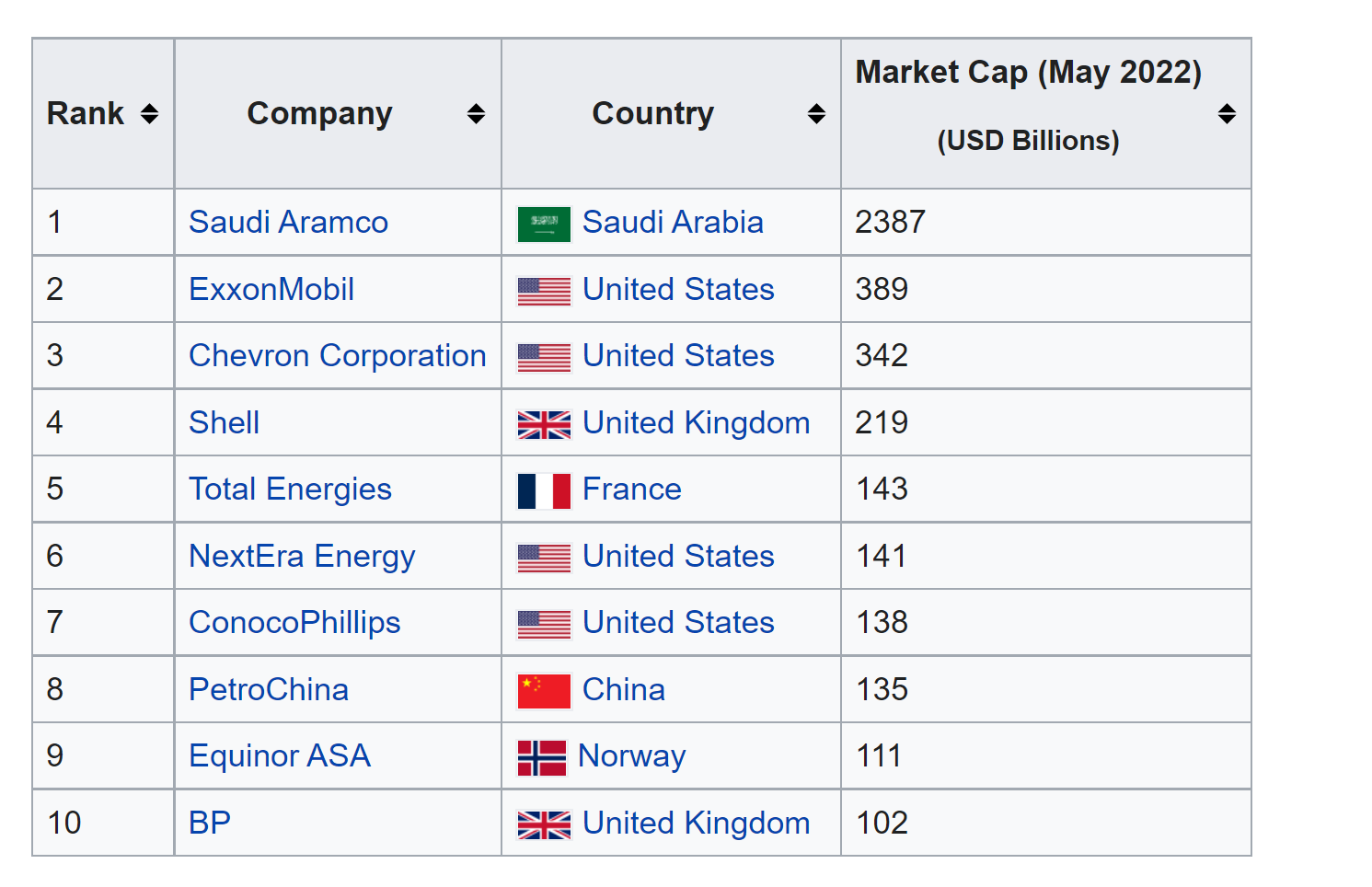
And than of course you have to pay back the money you borrowed to "buy" them.
Net profits for Shell for the last 10 years are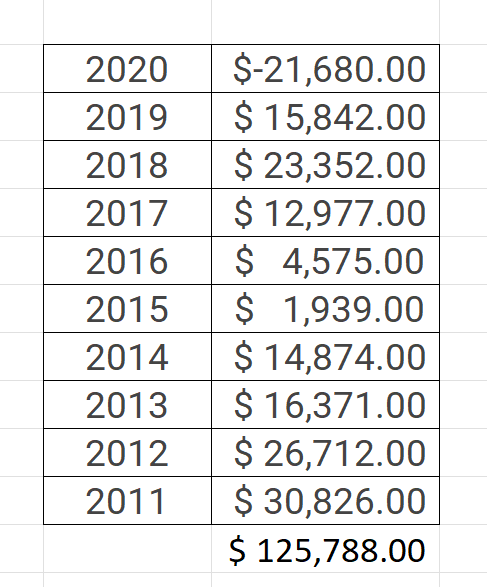
So what will happen after nationalisation? Do you start to reduce the profits by selling cheaper, to reduce energy cost?
If so, how do you cover the cost for the nationalisation? Just paying interest? What would the annual interest on $219 billion be?
The interest will need to be paid of course from the profit, and you need maybe to also start paying back the "purchase" itself.
What are you going to do in bad years like 2015/2016, or if there is suddenly a 20 billion loss like in 2020?
2
![[Deleted User]](https://us-noi.v-cdn.net/6031891/uploads/defaultavatar/nFA7H6UNOO0N5.jpg)









Confirm your email address to Create Threads and Reply

Categories
- All Categories
- 354.6K Banking & Borrowing
- 254.5K Reduce Debt & Boost Income
- 455.5K Spending & Discounts
- 247.5K Work, Benefits & Business
- 604.4K Mortgages, Homes & Bills
- 178.6K Life & Family
- 262K Travel & Transport
- 1.5M Hobbies & Leisure
- 16.1K Discuss & Feedback
- 37.7K Read-Only Boards