We’d like to remind Forumites to please avoid political debate on the Forum.
This is to keep it a safe and useful space for MoneySaving discussions. Threads that are – or become – political in nature may be removed in line with the Forum’s rules. Thank you for your understanding.
PLEASE READ BEFORE POSTING: Hello Forumites! In order to help keep the Forum a useful, safe and friendly place for our users, discussions around non-MoneySaving matters are not permitted per the Forum rules. While we understand that mentioning house prices may sometimes be relevant to a user's specific MoneySaving situation, we ask that you please avoid veering into broad, general debates about the market, the economy and politics, as these can unfortunately lead to abusive or hateful behaviour. Threads that are found to have derailed into wider discussions may be removed. Users who repeatedly disregard this may have their Forum account banned. Please also avoid posting personally identifiable information, including links to your own online property listing which may reveal your address. Thank you for your understanding.
📨 Have you signed up to the Forum's new Email Digest yet? Get a selection of trending threads sent straight to your inbox daily, weekly or monthly!
The Forum now has a brand new text editor, adding a bunch of handy features to use when creating posts. Read more in our how-to guide
Mould in Leasehold Flat
Comments
-
Hi all,
Just to update, had a damp surveyor come out to have a look at the bedroom and the communal corridor next to the flat. They immediately pointed at the external wall and said that there's rising damp.
Obviously, opened a whole new can of worms now. He showed me that there was a line of salt deposits about 2 courses above the damp course on the mortar. This was mainly on the external wall outside the bedroom, the bedroom wall was reading 16% moisture when it should have been 5%. I walked round the entire building, which consists of over 12 ground floor flats, and there's rising damp visible in various places everywhere.
The building is 4 years old, I don't understand how this is possible. I am assuming someone has got something wrong - builder, designer? I have contacted the management company who are sending their contractor out to have a look at the damp issue soon. I am going to assume, as long as the contractor comes to the same conclusion, the management company will order the works to remedy the issues with the rising damp. However, this is surely going to cost the residents thousands of pounds through service charges. Would the builder hold any responsibility at this point?
Thanks.0 -
Incredibly unlikely...123imp said:They immediately pointed at the external wall and said that there's rising damp.
https://www.heritage-house.org/damp-and-condensation/the-fraud-of-rising-damp.html
0 -
123imp said:
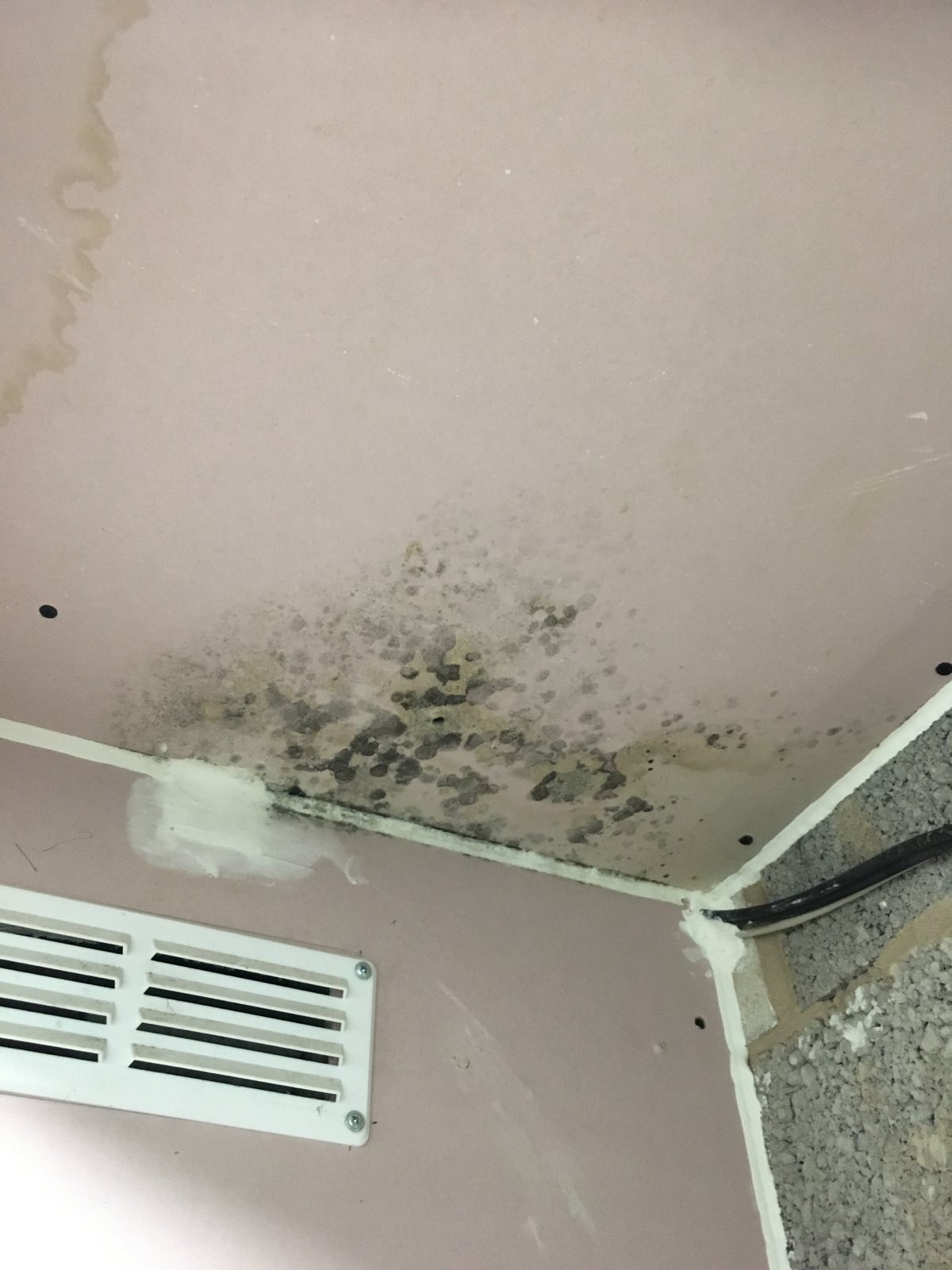
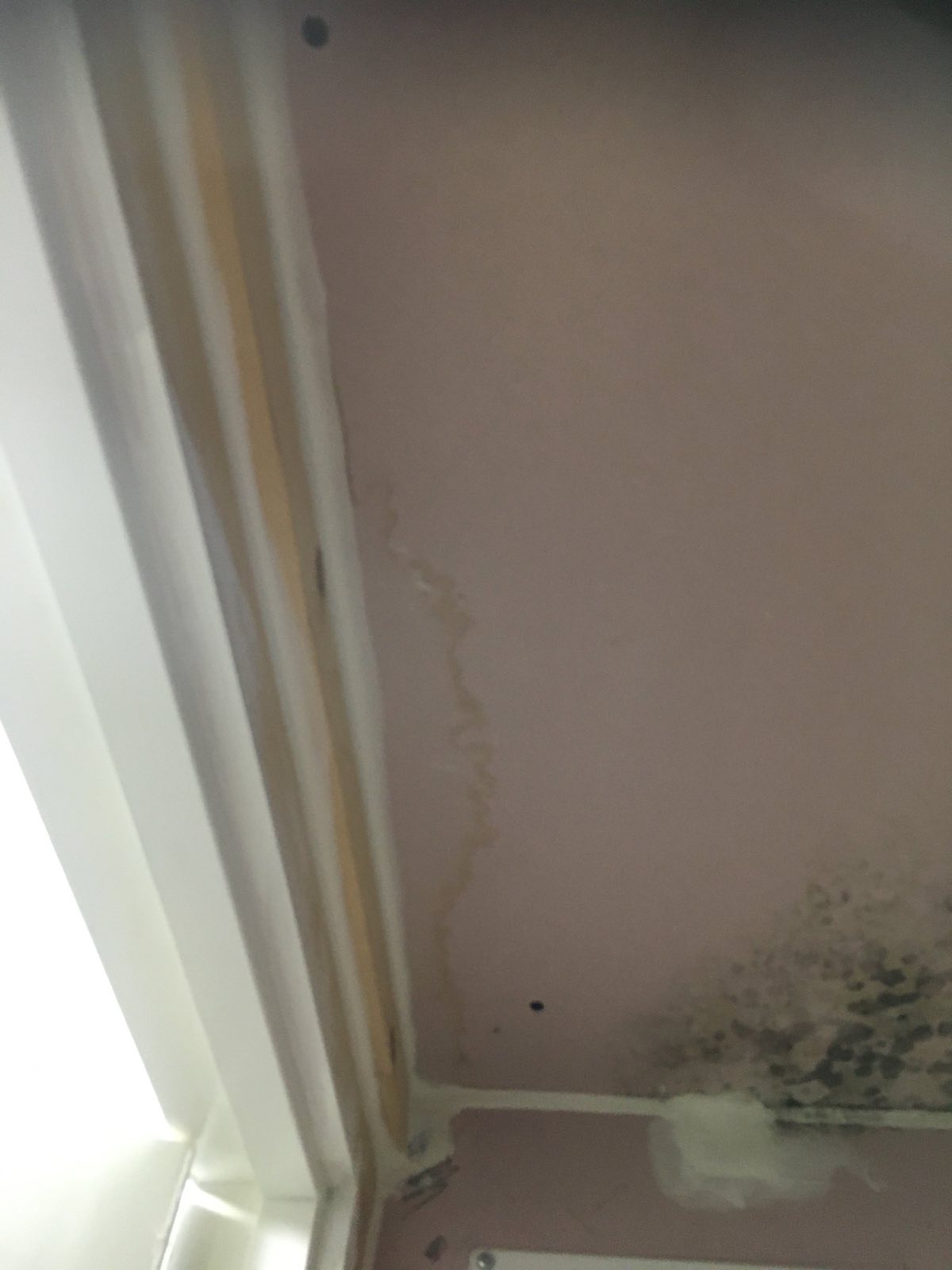
Rising damp doesn't reach ceiling height and leave a water stain on the ceiling. The white marks outside are most likely efflorescence which is salt left behind as the new brickwork dries out. Your damp surveyor found damp as there's no profit in efflorescence.
1 -
So what is the issue then (not being passive aggressive by the way, just looking for guidance)?Slithery said:
Incredibly unlikely...123imp said:They immediately pointed at the external wall and said that there's rising damp.
https://www.heritage-house.org/damp-and-condensation/the-fraud-of-rising-damp.html0 -
Sorry, the photos are really misleading. So that is an issue in the communal corridor (in the electric meter cabinet) next to the bedroom. But the surveyor says they think the water stain is historic, and the mould is unrelated to the issues in the property.Norman_Castle said:0 -
(As an investor ... Flats or houses. Let me think. Houses for me.)I'd say leak or penetrating water, no way is that rising damp. It doesn't get higher than 1mtr.Mr Generous - Landlord for more than 10 years. Generous? - Possibly but sarcastic more likely.0
-
Sorry, photos a bit misleading as that could be a separate issue relating to a historic leak above the ceiling in the communal corridor. I'm going to take a photo of the external brickwork, outside the bedroom, tomorrow to see if anyone can provide me with their thoughts. Thanks.Mr.Generous said:(As an investor ... Flats or houses. Let me think. Houses for me.)I'd say leak or penetrating water, no way is that rising damp. It doesn't get higher than 1mtr.0 -
123imp said:
I'm going to take a photo of the external brickwork, outside the bedroom, tomorrow to see if anyone can provide me with their thoughts.
When you're taking photos, see if you can see the damp proof course, and point it out on the photos. If the walls are brick, it's usually a thin black line a few cms above the ground level:
(Also, is there leaking guttering, a leaking downpipe, or an overflow pipe above/near the damp areas?)

1 -
I'll look for the damp proof course, and take multiple photos of the external area. There are a couple of downpipes, and there is also a lot of shrubbery in front of the wall, as the management company have not been maintaining. Thanks.eddddy said:123imp said:
I'm going to take a photo of the external brickwork, outside the bedroom, tomorrow to see if anyone can provide me with their thoughts.
When you're taking photos, see if you can see the damp proof course, and point it out on the photos. If the walls are brick, it's usually a thin black line a few cms above the ground level:
(Also, is there leaking guttering, a leaking downpipe, or an overflow pipe above/near the damp areas?)0 -
Here is an update on the property today. I have uploaded a number of photos here - https://imgur.com/a/tOq0O87Slithery said:
Incredibly unlikely...123imp said:They immediately pointed at the external wall and said that there's rising damp.
https://www.heritage-house.org/damp-and-condensation/the-fraud-of-rising-damp.html
After Slithery posted, above, I did quite a lot of research online. There is some really interesting material on rising damp, and I have to say that although I do believe rising damp is real, I don't believe this is the problem - and it does just seem to be a case of specialist companies misdiagnosing damp issues to sell products.
So I decided to actually sit down and have a proper think about the problem, being an Engineer myself, and these are the conclusions I came up with. Hopefully useful to someone on the forum in future.
- The external wall of the ground floor flat is pretty much East facing, away from the prevailing wind in the UK most of the time. Due to a 2 metre high wall next to the property, creating a boundary between the garden area in front of the flat and the neighbouring house, the front of the building is pretty much in a sheltered alcove. In front of the property, especially the bedroom area, is a lot of shrubbery which has been allowed to grow out of control, it comes up to the windows. The bedroom vent is positioned quite low on the wall, and so is almost covered by the shrubbery. The front of the property receives direct sunlight in the morning (East facing), but due to 3 storey building and a huge tree, opposite, it actually only receives sunlight for no more than an hour (if it is shining).
- The bedroom, in the property, is the most likely suspect for room in the house with highest humidity. It is a small room, the tenant sleeps in there and has a partner who often stays over. They may not even have had the vent open in the bedroom over the period they have lived there, and the window is on a latch allowing for it to be cracked open only slightly (see photos). This is clearly a poorly ventilated room, with high humidity in the air. If the tenant does not open the bedroom door, whilst simultaneously having a window on the opposite side of the house open, there would be zero air flow through the area.
- My conclusion is that this is a combination of poor ventilation in a room with high humidity, along with an external wall which has difficulty drying out. There is further evidence of this when looking at the vent itself - inside the bedroom - as around the side of the vent is a line of black mould (insufficient air flow). I am going to clean the mould and spores in the bedroom, cut down all the shrubbery in front of the bedroom wall, remove the safety latch from the window to allow it open fully, look into installing a mechanical vent like in a bathroom, advise the tenant to keep the bedroom door open during the day, and give the tenant a dehumidifier to run in the bedroom (ideally at night, but otherwise in the mornings).
- A few more observations I made - which can be seen in the photos via the link above - are that most of the salt deposits on the brickwork are directly below the bedroom vent, but at least one course above the damp proof course. Secondly, the weep holes don't appear to be installed very well, one appears to have mortar over it, and the one near the vent is partially blocked. Finally, there are various holes, in the mortar, in places around the brickwork.
edddy - the damp proof course can be seen in the photo taken next to the front door, at threshold level.
I'd welcome any thoughts or opinions on the above. Thanks!1









Confirm your email address to Create Threads and Reply

Categories
- All Categories
- 353.7K Banking & Borrowing
- 254.2K Reduce Debt & Boost Income
- 455.1K Spending & Discounts
- 246.8K Work, Benefits & Business
- 603.2K Mortgages, Homes & Bills
- 178.2K Life & Family
- 260.8K Travel & Transport
- 1.5M Hobbies & Leisure
- 16K Discuss & Feedback
- 37.7K Read-Only Boards