We’d like to remind Forumites to please avoid political debate on the Forum.
This is to keep it a safe and useful space for MoneySaving discussions. Threads that are – or become – political in nature may be removed in line with the Forum’s rules. Thank you for your understanding.
PLEASE READ BEFORE POSTING: Hello Forumites! In order to help keep the Forum a useful, safe and friendly place for our users, discussions around non-MoneySaving matters are not permitted per the Forum rules. While we understand that mentioning house prices may sometimes be relevant to a user's specific MoneySaving situation, we ask that you please avoid veering into broad, general debates about the market, the economy and politics, as these can unfortunately lead to abusive or hateful behaviour. Threads that are found to have derailed into wider discussions may be removed. Users who repeatedly disregard this may have their Forum account banned. Please also avoid posting personally identifiable information, including links to your own online property listing which may reveal your address. Thank you for your understanding.
📨 Have you signed up to the Forum's new Email Digest yet? Get a selection of trending threads sent straight to your inbox daily, weekly or monthly!
The Forum now has a brand new text editor, adding a bunch of handy features to use when creating posts. Read more in our how-to guide
Mould in Leasehold Flat

123imp
Posts: 144 Forumite




Looking for some advice please.
I rented out my leasehold flat last year, after I moved in with family due to personal issues. Becoming a reluctant landlord, I couldn't sell the flat at the time.
I have a letting agent that takes care of managing the rental, and collecting the rent, however I do occasional speak to the tenant via message.
I recently decided to try selling the property, whilst the market is strong. I went round to see the tenant and found all the walls and the ceiling in the bedroom were covered in mould. It seemed to be a yellowy orange kind of colour. There were darker patches more towards a black colour in the corner of the room.
I couldn't understand it as there didn't seem to be a source for the issue, and the problem appeared to be contained to the bedroom - even though it was really bad. The tenant appeared to be oblivious to how bad the situation was, but told me they had told the letting agent a few months earlier.
The letting agent had not been in contact about the issue, and when they had carried out their inspection a few months earlier they reported back that everything was fine.
As the bedroom shared one wall with a communal corridor other residents used to get to their properties upstairs, and had one external wall, I decided to check the other side of each wall (outside and in the communal area). The mould was worst in the corner where the external wall met the wall shared with the communal area. Just to add, it is a ground floor apartment, with 2 levels above.
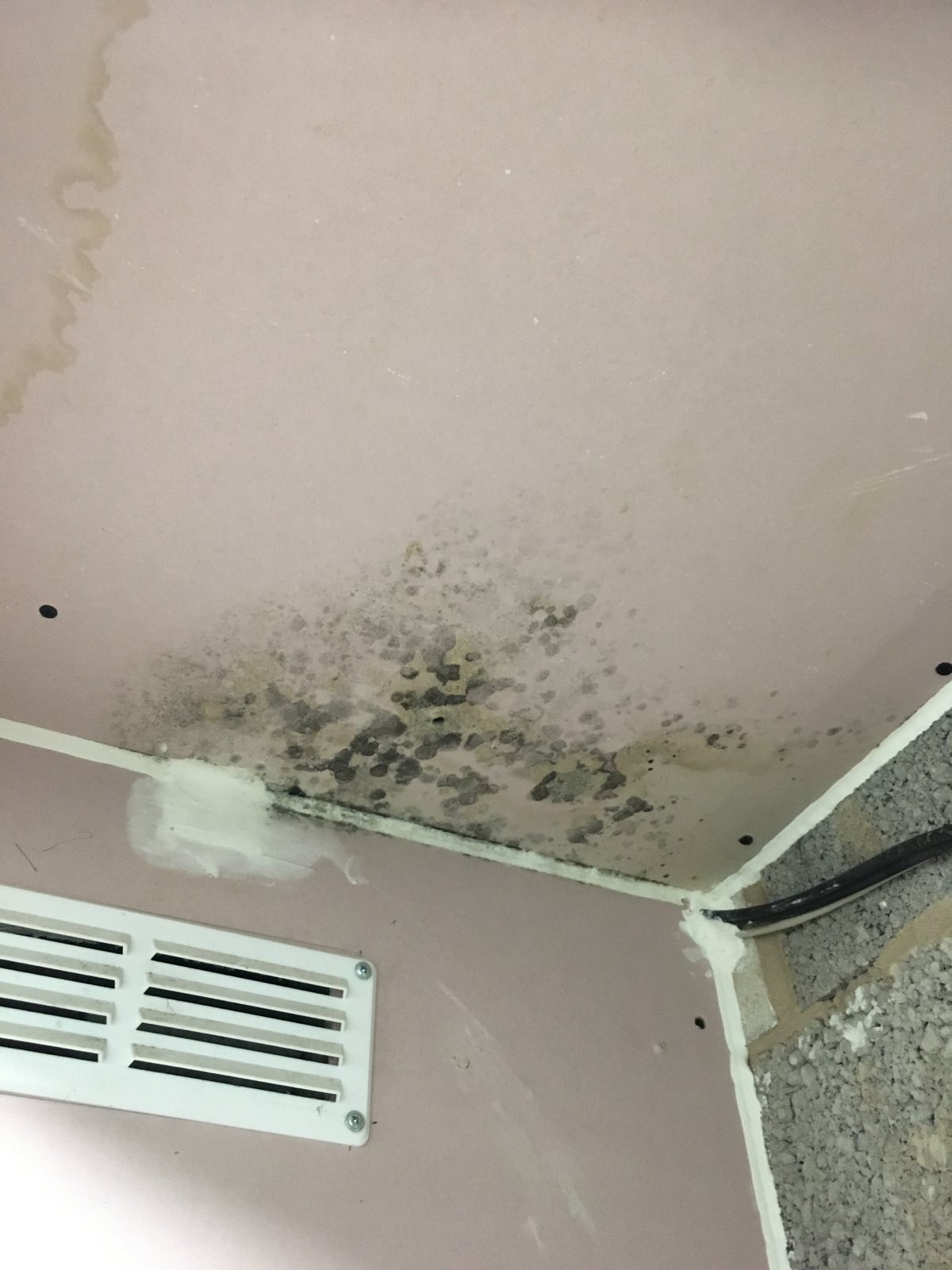
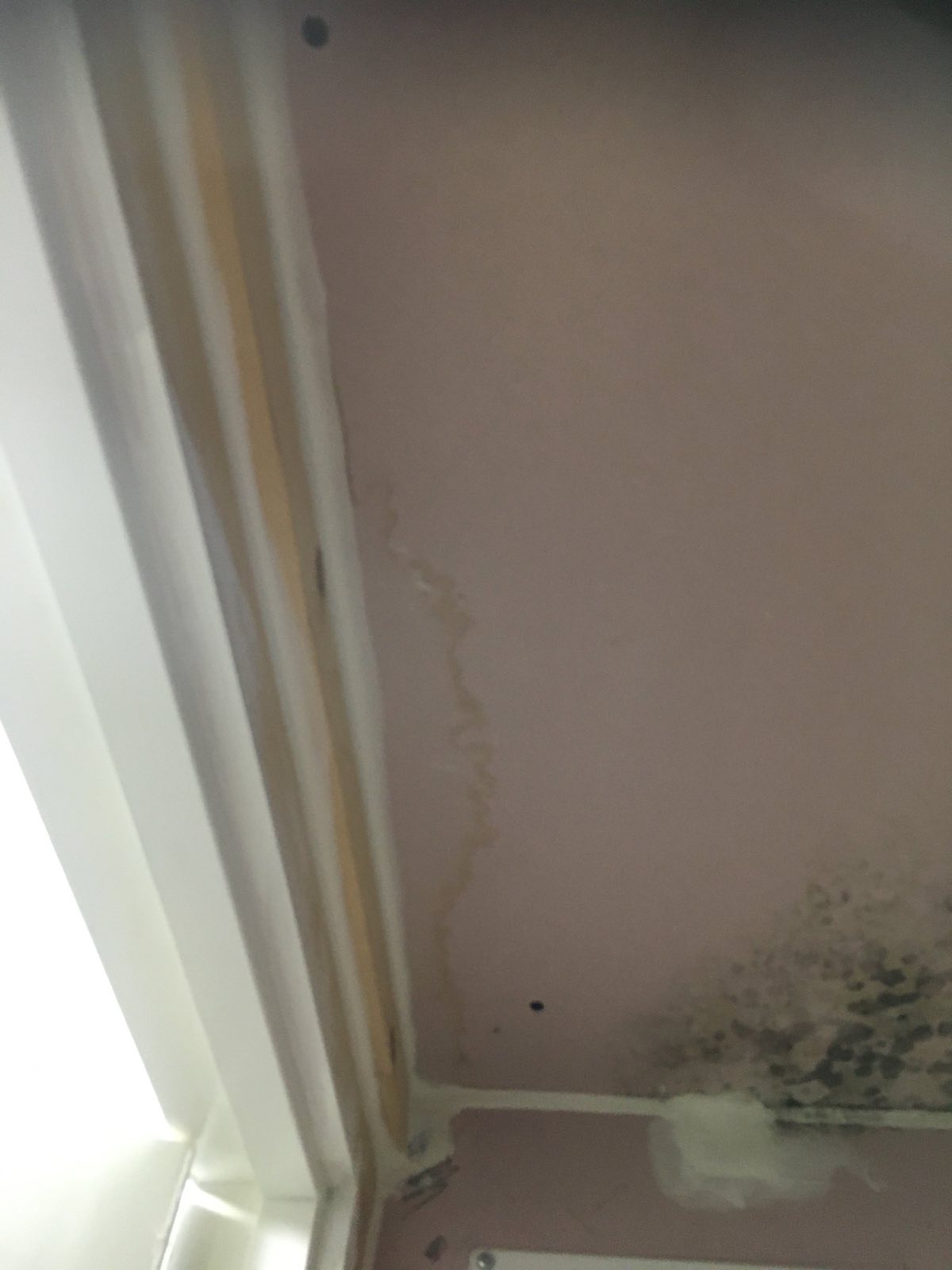
I could not see any issues externally, there was a downpipe near the corner where the mould was worst but it was in good condition, and there were no stains on the brickwork. Inside, in the communal area, the wall shared with the bedroom was within large cabinets running the length of the corridor (housing electricity metres). I managed to pry open the locked doors, and inside, in the corner of the ceiling, was a huge patch of black mould and stains from what appeared to be a leak. I've attached the photo. The black mould patch was directly the other side of the breeze block wall to where the mould was worst in the bedroom.
I am assuming this is the source of the mould in my property, but obviously cannot be certain. I have no idea where to go from here. My first thought was to have a damp surveyor carry out an inspection and provide a full report with findings. I want the issue to be fixed, and I would like my property to be restored to its original state.
Could anyone please suggest what my next steps should be, and what I should expect the likely outcome to be. In all honesty, what I really want is the property to be back in sellable condition as quickly as possible to get it on the market.
Thanks for reading, and I appreciate any thoughts/guidance.
I rented out my leasehold flat last year, after I moved in with family due to personal issues. Becoming a reluctant landlord, I couldn't sell the flat at the time.
I have a letting agent that takes care of managing the rental, and collecting the rent, however I do occasional speak to the tenant via message.
I recently decided to try selling the property, whilst the market is strong. I went round to see the tenant and found all the walls and the ceiling in the bedroom were covered in mould. It seemed to be a yellowy orange kind of colour. There were darker patches more towards a black colour in the corner of the room.
I couldn't understand it as there didn't seem to be a source for the issue, and the problem appeared to be contained to the bedroom - even though it was really bad. The tenant appeared to be oblivious to how bad the situation was, but told me they had told the letting agent a few months earlier.
The letting agent had not been in contact about the issue, and when they had carried out their inspection a few months earlier they reported back that everything was fine.
As the bedroom shared one wall with a communal corridor other residents used to get to their properties upstairs, and had one external wall, I decided to check the other side of each wall (outside and in the communal area). The mould was worst in the corner where the external wall met the wall shared with the communal area. Just to add, it is a ground floor apartment, with 2 levels above.
I could not see any issues externally, there was a downpipe near the corner where the mould was worst but it was in good condition, and there were no stains on the brickwork. Inside, in the communal area, the wall shared with the bedroom was within large cabinets running the length of the corridor (housing electricity metres). I managed to pry open the locked doors, and inside, in the corner of the ceiling, was a huge patch of black mould and stains from what appeared to be a leak. I've attached the photo. The black mould patch was directly the other side of the breeze block wall to where the mould was worst in the bedroom.
I am assuming this is the source of the mould in my property, but obviously cannot be certain. I have no idea where to go from here. My first thought was to have a damp surveyor carry out an inspection and provide a full report with findings. I want the issue to be fixed, and I would like my property to be restored to its original state.
Could anyone please suggest what my next steps should be, and what I should expect the likely outcome to be. In all honesty, what I really want is the property to be back in sellable condition as quickly as possible to get it on the market.
Thanks for reading, and I appreciate any thoughts/guidance.
0
Comments
-
Contact the freeholder about the damp in the meter cupboard which you suspect is also affecting your property. Does your tenant ventilate the bedroom? Leaving the bedroom door open should help.
2 -
Contact the freeholder and/or the managing agents for the building.
The issue might be a defective overflow pipe, from a wc cistern or water tank, in the flat above.1 -
Hi LeaseExpert,LeaseExpert said:Contact the freeholder and/or the managing agents for the building.
The issue might be a defective overflow pipe, from a wc cistern or water tank, in the flat above.
Thanks for the response. My first thought was a leaking service. I can't tell from the stains whether it's ongoing.
The other thing is that when I lived in the flat, for about a year and half before letting, there was always an issue with damp and some mould. However, I kept it under control by running a dehumidifier and having the windows open a lot. I thought the building was just drying out as it was a new build. I actually ended up throwing a bunch of clothes, some bags, and some furniture away because they had gone mouldy. Now all I can think is that there was an issue all along and all that was avoidable.
I'm guessing that the management company will fix the leak, if there is one, and maybe even sort the mould in the communal area - it will just come out of the reserve pot after all and be recovered through the residents service charge. But can I assume that I will have to sort out the damage to my apartment at my own expense?
Thank you.1 -
Looks like its coming from the window. Possibly frame or frame sealant gone - or is there a gutter above the window but even if that overflows looks like the window frame to me.
Good luck0 -
Actually, the photo angle is just poor on my behalf. The angle is actually inside the cupboard looking up at the ceiling. So what you can see on the left is the open cabinet door, and the other side of the door frame is the communal corridor for the upstairs flats.diystarter7 said:Looks like its coming from the window. Possibly frame or frame sealant gone - or is there a gutter above the window but even if that overflows looks like the window frame to me.
Good luck0 -
123imp said:
But can I assume that I will have to sort out the damage to my apartment at my own expense?
Yes - based on what you say, that'll almost certainly be the case.
The management company (or the owner of a neighbouring apartment with a leak) would only be liable for any damage to your apartment if they had been negligent in some way.
For example, if you had reported the leak to the management company 12 months ago, and they did nothing about it, that is likely to be negligence on their part, so you might have been able to claim for any further damage caused in the last 12 months. But it doesn't sound like that is the case.
1 -
Thanks - contact the management agents.123imp said:
Actually, the photo angle is just poor on my behalf. The angle is actually inside the cupboard looking up at the ceiling. So what you can see on the left is the open cabinet door, and the other side of the door frame is the communal corridor for the upstairs flats.diystarter7 said:Looks like its coming from the window. Possibly frame or frame sealant gone - or is there a gutter above the window but even if that overflows looks like the window frame to me.
Good luck
What is above the main damp area?
Often bath/shower leaks and other culprits are toilets and washing machines. This is one of the problems with a flat.
Contact management agents ASAP
Certainly some type of low level steady leak IMO
Good luck1 -
Thanks for reply.diystarter7 said:
Thanks - contact the management agents.123imp said:
Actually, the photo angle is just poor on my behalf. The angle is actually inside the cupboard looking up at the ceiling. So what you can see on the left is the open cabinet door, and the other side of the door frame is the communal corridor for the upstairs flats.diystarter7 said:Looks like its coming from the window. Possibly frame or frame sealant gone - or is there a gutter above the window but even if that overflows looks like the window frame to me.
Good luck
What is above the main damp area?
Often bath/shower leaks and other culprits are toilets and washing machines. This is one of the problems with a flat.
Contact management agents ASAP
Certainly some type of low level steady leak IMO
Good luck
Directly above the staining appears to be corridor - next to the upstairs neighbours property. I was thinking maybe incoming supply? This is at the front of the building, and all the water and waste is at the back. However, I'm certain the supply comes in from the front so must go across the void above the flat/communal corridor ceiling.
I'm going to upload photos of the actual bedroom in due course.0 -
Just as an update. I tried to contact the freeholder but there are no contact details for them. I am then referred to the agent that collects ground rent on their behalf, who happens to have basically the same name as the freeholder. Navigating the website of the agent, I am told to contact the management company if there is a leak coming from a communal area or neighbouring property. Does this seem correct (for the freeholder to absolve themselves from any involvement)?
Thanks.0 -
123imp said:Just as an update. I tried to contact the freeholder but there are no contact details for them. I am then referred to the agent that collects ground rent on their behalf, who happens to have basically the same name as the freeholder. Navigating the website of the agent, I am told to contact the management company if there is a leak coming from a communal area or neighbouring property. Does this seem correct (for the freeholder to absolve themselves from any involvement)?
Thanks.
Yes - that sounds correct.
The freeholder isn't absolving themselves of responsibility. The freeholder has hired a management company to look after the building on their behalf.
The freeholder is still has the rights and responsibilities described in the lease. But the management company is undertaking the freeholder's responsibilities.
1





Confirm your email address to Create Threads and Reply

Categories
- All Categories
- 353.7K Banking & Borrowing
- 254.2K Reduce Debt & Boost Income
- 455.1K Spending & Discounts
- 246.8K Work, Benefits & Business
- 603.2K Mortgages, Homes & Bills
- 178.2K Life & Family
- 260.8K Travel & Transport
- 1.5M Hobbies & Leisure
- 16K Discuss & Feedback
- 37.7K Read-Only Boards