We’d like to remind Forumites to please avoid political debate on the Forum.
This is to keep it a safe and useful space for MoneySaving discussions. Threads that are – or become – political in nature may be removed in line with the Forum’s rules. Thank you for your understanding.
📨 Have you signed up to the Forum's new Email Digest yet? Get a selection of trending threads sent straight to your inbox daily, weekly or monthly!
What happens if you can't afford to pay?
Comments
-
On balance though, those living in a band E or above property are likely to have more choices available to them than someone already living in a band A property.
Maybe moving is an extreme resort if high prices are temporary, but if they last for an extended period, then it maybe unavoidable.How's it going, AKA, Nutwatch? - 12 month spends to date = 3.24% of current retirement "pot" (as at end December 2025)1 -
Even more reason to downsize if you don't have disposable income and are asset rich as things are not going to get easier.Gerry1 said:Mstty said:If before the energy crisis they were still paying £300-400 each year on Council Tax above a band D property and were happy with that they can downsize if need be, pocket some cash and save £300-400 on council tax alone to help with any energy bills.That's not exactly money saving advice. Moving is likely to cost tens of thousands of pounds: stamp duty, estate agent's fees, removal costs etc. You'd never recover the costs via a slightly lower Council Tax. In fact, the council tax may even increase if the new property is in a different local authority area.Living in a Band E property doesn't necessarily mean you have a high disposable income. Many people are asset rich (on paper) but income poor, e.g. widows, those made redundant, those in regions where property values increased etc. etc.
In my opinion take the tough choices early they will pay dividends rather than waiting til it's too late.
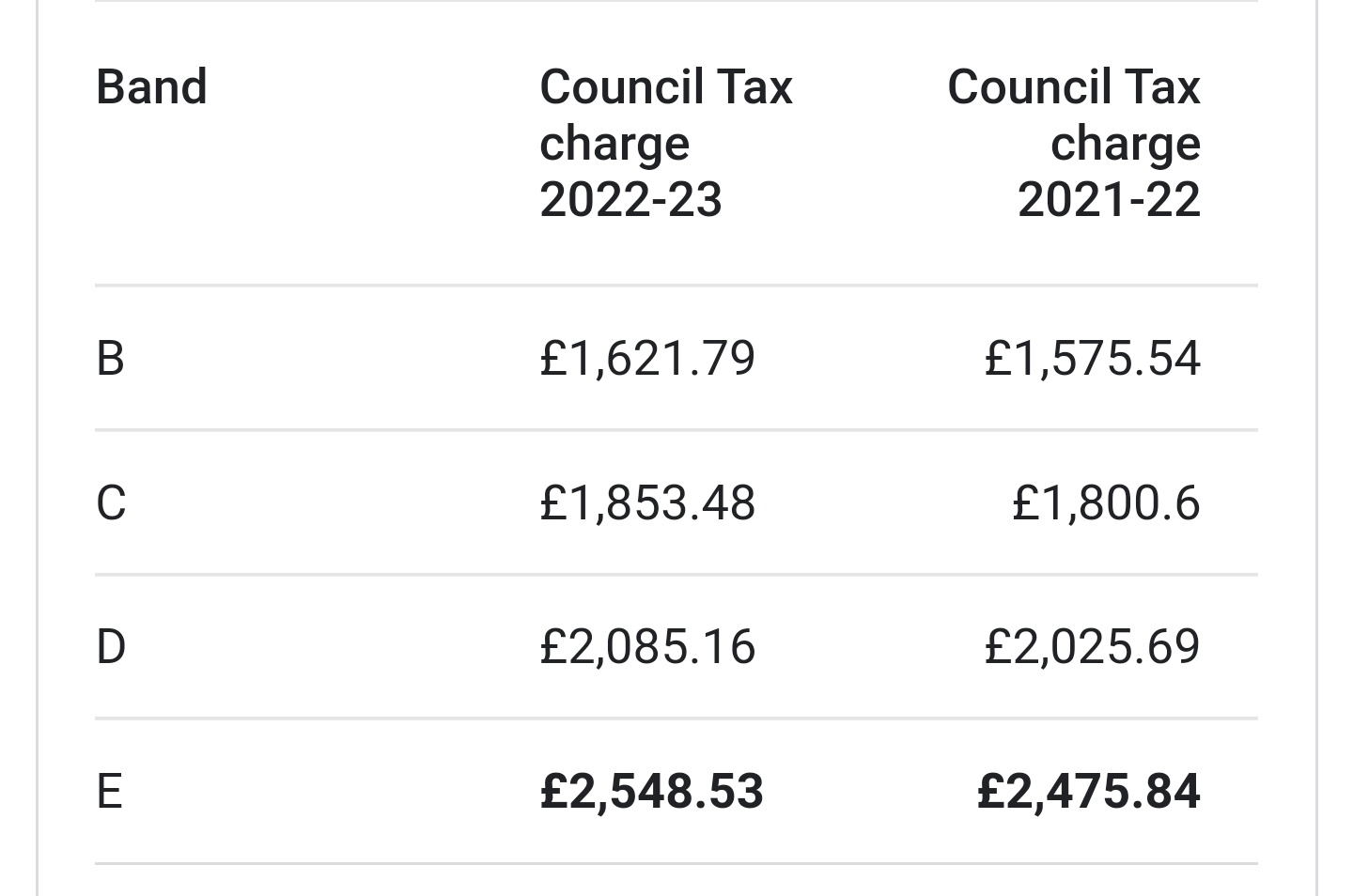
As an example the price difference where we are band E to band D (looking on Rightmove) ranges from £30,000-60,000 so you would pocket cash and save £300-400 council tax per month and reduce energy costs.
Just to let you know the last house we sold we did it ourselves through doorsteps for the £179 including package options and secured a local solicitor for buy and sell for £2350 all in. Stamp duty of £10,500. If we were to downsize in this area minimum of £17,000 but in our case £40,000 in the bank. Plus potentially £200 a month better off due to Les costlier bills and c tax etx
I think that is good money saving advice. It not a nice thing to consider but money stress will cause more harm than a downsize and less bills all round.
2 -
To highlight how bad things are becoming we have two tenants that have given notice and from talking to them it's all about energy bills and the upcoming rise this October and being able to live. They are both going back to live with parents due to the cost of living.
1 -
You could save £3600 - £4800 per year just by dropping from Band E to Band D??Mstty said:
As an example the price difference where we are band E to band D (looking on Rightmove) ranges from £30,000-60,000 so you would pocket cash and save £300-400 council tax per month and reduce energy costs.Gerry1 said:Mstty said:If before the energy crisis they were still paying £300-400 each year on Council Tax above a band D property and were happy with that they can downsize if need be, pocket some cash and save £300-400 on council tax alone to help with any energy bills.That's not exactly money saving advice. Moving is likely to cost tens of thousands of pounds: stamp duty, estate agent's fees, removal costs etc. You'd never recover the costs via a slightly lower Council Tax. In fact, the council tax may even increase if the new property is in a different local authority area.Living in a Band E property doesn't necessarily mean you have a high disposable income. Many people are asset rich (on paper) but income poor, e.g. widows, those made redundant, those in regions where property values increased etc. etc. 0
0 -
Living in a smaller property will also likely lead to smaller energy bills.
If we got to a large scale issue of people living in larger properties wanting to downsize then it wouldn't be viable though, as there likely wouldn't be enough people in smaller properties looking to upsize for it to balance out.
Whilst some absolutely will have issues, I think a lot will find there are alternative ways to cut back to save money that are more palatable than trying to sell their home.2 -
To sell your home because there are one or two hard years would be over the top, but who really believes that the energy prices will go back to where they have been?
And we are not just talking energy prices, we are also talking the rest of living expenses that are increasing.
I personally would not feel it justified that I have to pay additional money so somebody who has assets can keep them, and I think somebody who is for example renting will be very happy if he cannot get on the property ladder because he is paying additional so somebody else can keep his house.
And lets be clear about it, no matter what solution is found, most of us will have to pay for it, either through additional taxes or even higher energy bills.
So why should we pay more money so somebody can keep his house. @Mstty is not talking about selling your house and living from the money, he is talking about downsizing. But even if somebody has to sell to use the money for living expenses what is wrong with this scenario, why should society pay so that somebody gets a nice inheritance? The next person could justifiable say I don't want to touch the 50k in my bank account to pay my bills, I need it for a deposit.
0 -
Agreed.MattMattMattUK said:
I think that is something a lot of people do not realise, we are heading into a significant period of declining living standards and the reality is that for the majority there is very little that can be done.brewerdave said:
IF the increases in the October cap are anywhere near the gloomy end of predictions, I can see 100.000s of customers being in the same boat as the OP.pochase said:
What do you think how long hardship funds will last with the new expensive energy. A record number of people won't be able to afford energy at the new rates and would need the help.northernstar007 said:isnt there a hardship fund with your supplier?
At the same time the profits are down or even loss for the suppliers, so there is no funding to increase them.
We've saved a lot of money recent 2 months by changing to supermarket own band lables and though intially it tasted different and at times better, there is often less salt and sugar in them. We are saving a good 15 pounds a week on average of own brand stuff plus we look out for bargains and if we dont eat meat one week, no big deal etc.
Re eletric and gas, we turn on the lights later, made sure all bulbs are led, turned down heating or not turn up, turned down rad vlalves and drive a lot less.
There are ways to prepare for this and if bills dont rise which I doubt, you will have more money.
Another point, my OH does a few hours extra work - 30 quid a week is not a lot by itself but with our wages, it goes a long way to give s a piece of mind.
We are poss BTL soo and we have always been careful with money and try to prepare ahead.0 -
Emergency credit used to be about £5 when I was on the job .Now daily standing charge is 48 p as well to be taken into accountSea_Shell said:
What sort of timescales are we talking about here, from last top up (of any amount) to disconnection?SAC2334 said:Credit meter debtors are either switched to prepayment meter mode if you have a smart meter or if you have a none smart meter then they will fit a smart meter and load the whole debt onto the meter and agree a weekly repayment amount . If you can t afford to pay then the meter go s to emergency credit then it will switch off all electric . Occupiers will have to cut down other none essentials .
The max debt repay used to be £16 a week max £4 min ,this could have changed as its 5 years since I was on the job meter reading
.Anyone with as much as £800 arrears would be allocated £16 max weekly repay
Handing over the debts to debt repay company would be a last resort
..Depends on how many kwh s a day a person can manage to live on ? . I m economising now and use around 4 kwh s a day at 27 p a kwh so on those figure living frugally the £5 would last maybe 3 .5 days .if a person used 8 khw a day the £5 would last less than 2 days0 -
What about those of us in band E or F social housing. Are you assuming we are wealthy too? Or do you expect us to move. Where to?Mstty said:@brewerdave I am forming a different opinion. In my mind Band E properties have a decent value and therefore the owners have a few more options available to them.
If before the energy crisis they were still paying £300-400 each year on Council Tax above a band D property and were happy with that they can downsize if need be, pocket some cash and save £300-400 on council tax alone to help with any energy bills.
It's down to tough choices, tough choices millions will have to make this October.0











Confirm your email address to Create Threads and Reply

Categories
- All Categories
- 355.7K Banking & Borrowing
- 254.9K Reduce Debt & Boost Income
- 456.1K Spending & Discounts
- 248.3K Work, Benefits & Business
- 605.9K Mortgages, Homes & Bills
- 179K Life & Family
- 263.7K Travel & Transport
- 1.5M Hobbies & Leisure
- 16.2K Discuss & Feedback
- 37.7K Read-Only Boards