We’d like to remind Forumites to please avoid political debate on the Forum.
This is to keep it a safe and useful space for MoneySaving discussions. Threads that are – or become – political in nature may be removed in line with the Forum’s rules. Thank you for your understanding.
📨 Have you signed up to the Forum's new Email Digest yet? Get a selection of trending threads sent straight to your inbox daily, weekly or monthly!
The Forum now has a brand new text editor, adding a bunch of handy features to use when creating posts. Read more in our how-to guide
Advice on who is liable
Comments
-
Section62 said:Any evidence the wall wasn't in contact with the walls either end of it, or in contact with the floor at the bottom? NO.Don't fall into the trap of thinking a wall is only 'loadbearing' if the load is coming from above. I HAVEN'T.My comment was.... wondering if you were really disputing what someone with experience in the subject (DoozerGirl IIRC) had said about the possibility of a 'stud wall' being an important structural element, the removal of which could result in serious structural failure. ALWAYS A POSSIBILITY, BUT CLEARLY WAS NOT AN ISSUE IN THIS CASE AS IT WAS STEEL DESIGNED TO SUPPORT THE JOISTS ABOVE.If you accept a 'stud wall' (which could be 'timber frame construction') could possibly be providing lateral support (i.e. at either or both ends), or could be supporting the floor below (rare, but can happen) then it becomes obvious that a 'simple check' of looking at what is above the wall isn't enough to rule out the possibility of the wall being 'loadbearing'. There are other things that need checking... but the clock is ticking and SE time is expensive relative to the cost of steel. LOTS OF 'POSSIBILITIES', AND I'M TEMPTED TO TAKE THESE 'POSSIBILITIES' TO ITS LOGICAL SE CONCLUSION AND FIRE OUT STEELS EVERYWHERE, BUT I WON'T. OH, I HAVE.Ok, folks, fair do's.I am very surprised at this, tho'.
0 -
Another possibility is that the SE has worked out the joist sizes and span, and decided that the wall was needed. Older houses often have under sized joists, which are OK, but the floors might shake a bit.
When it was uncovered the builders have thought that although in theory it was needed, it wasn't really doing much, so the steel wasn't essential.
Possibly the steel would have helped steady the floor, but could get by without it.
All just guess work though.2 -
Bendy_House said:Section62 said:Don't fall into the trap of thinking a wall is only 'loadbearing' if the load is coming from above. I HAVEN'T.My comment was.... wondering if you were really disputing what someone with experience in the subject (DoozerGirl IIRC) had said about the possibility of a 'stud wall' being an important structural element, the removal of which could result in serious structural failure. ALWAYS A POSSIBILITY, BUT CLEARLY WAS NOT AN ISSUE IN THIS CASE AS IT WAS STEEL DESIGNED TO SUPPORT THE JOISTS ABOVE.I'm not sure we can draw the conclusion of the 2nd BiB from the information we have. The SE may have designed the beam to support the joists above and provide lateral restraint/support to the side walls, we don't know. If he hadn't, then it is a relatively simple site-task to convert a beam intended for loading from above to a beam which also provides sufficient lateral support/restraint.Or rather it is much easier to utilise a beam you've already got on site that way, rather than stopping the project, designing and ordering an extra steel beam, getting BC agreement, waiting for fabrication/delivery, then getting back to the job. The way things are at the moment you could be twiddling your thumbs for two months whilst the client has a massive hole in their bedroom wall.It's an example of if you don't know then it is safer to make cautious assumptions and then relax a bit when you find they aren't necessary.It is understandable you are surprised, a lot of people would be. But it reflects what DoozerGirl said about jobs like this being more art than science. Newbuild is more science than art as the designers will attempt to screw everything down to the bare minimum. Renovation means working with what you've got, and expecting surprises all the time. The 'art' of renovation is making decisions which allow you to adapt the plans if you find something surprising. Experience rather than science helps make good decisions. That - from the limited information - is what this SE in this case appears to have done, albeit this may not have been communicated to the OP in an effective way.1
-
Art?Sheesh - I don't pay no SE for 'art'... Pfffft.
 0
0 -
I agree with that Bendy, I had an artistic SE do the steel for a knock through and got this. Should work if I can get it through the door and adjust the brickwork to match it.Bendy_House said:Art?Sheesh - I don't pay no SE for 'art'... Pfffft.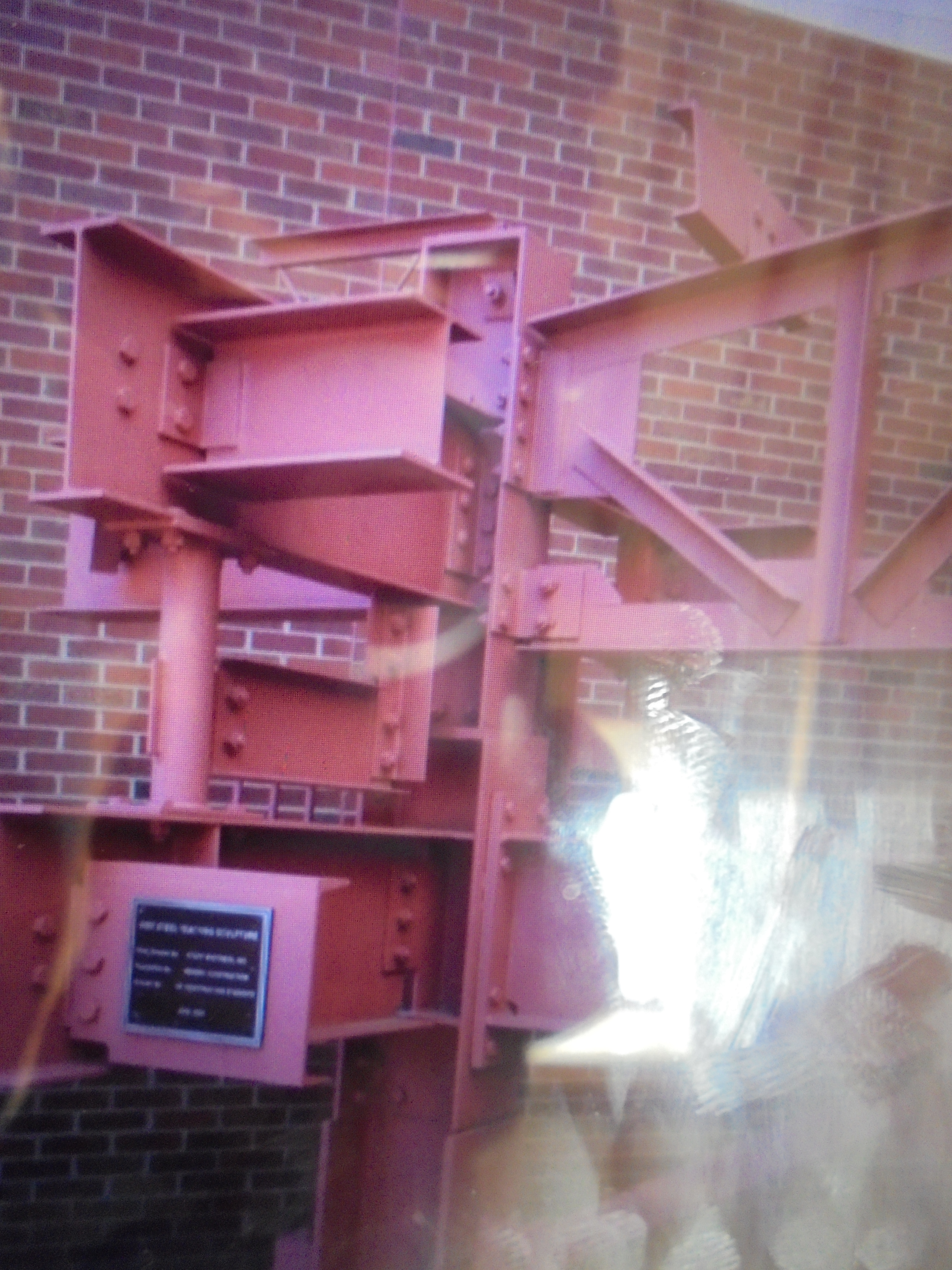
2 -
stuart45 said:
I agree with that Bendy, I had an artistic SE do the steel for a knock through and got this. Should work if I can get it through the door and adjust the brickwork to match it.Bendy_House said:Art?Sheesh - I don't pay no SE for 'art'... Pfffft.Definitely PPI... but to be fair the SE who did that was probably using nothing more technical than a slide rule. I'm guessing a 'memorial' to some kind of industrial building?1
 -
I bet they found afterwards it wasn't even needed... :-p(Nice, tho' - I'd keep that exposed.)0






Confirm your email address to Create Threads and Reply

Categories
- All Categories
- 354.3K Banking & Borrowing
- 254.4K Reduce Debt & Boost Income
- 455.4K Spending & Discounts
- 247.3K Work, Benefits & Business
- 604K Mortgages, Homes & Bills
- 178.4K Life & Family
- 261.5K Travel & Transport
- 1.5M Hobbies & Leisure
- 16K Discuss & Feedback
- 37.7K Read-Only Boards