We’d like to remind Forumites to please avoid political debate on the Forum.
This is to keep it a safe and useful space for MoneySaving discussions. Threads that are – or become – political in nature may be removed in line with the Forum’s rules. Thank you for your understanding.
A little help with popla appeal
Comments
-
That sign is prohibitive in nature. You cannot agree to do something that is not permitted, so there can be no offer, no consideration, and no acceptance, therefore no contract can have been formed.I married my cousin. I had to...I don't have a sister.
 All my screwdrivers are cordless."You're Safety Is My Primary Concern Dear" - Laks2
 -
Not going to get too excited at this point but just had a chat with a nice guy from our local council planning dept, they are opening a case regarding this site as there appears to be no record of planning permissions for this car park. It may take a few weeks to have an update.3
-
From what I’ve managed to establish, when the terms changed in this car park it looks as if it was a change in operator, was 4hours now 2hours
I've blurry pictures of the old signs to show there was a change in signage but not good enough to read them, is it worth including these photos in the appeal?
as far as I’m concerned a change in terms is a change in terms regardless, they should still make it clear to drivers0 -
Include anything that helps your case. UKPC's signs are crap, and they always seem to supply blurry images if they supply their own pics.I married my cousin. I had to...I don't have a sister.All my screwdrivers are cordless."You're Safety Is My Primary Concern Dear" - Laks2
-
popla appeal is 21 pages so far with pictures, do you want all the pictures posted up as well?, some will need redacting and it will likely be a case of posting it up bit by bit

0 -
Whatever you want to show us that might help!PRIVATE 'PCN'? DON'T PAY BUT DON'T IGNORE IT (except N.Ireland).
CLICK at the top or bottom of any page where it says:
Home»Motoring»Parking Tickets Fines & Parking - read the NEWBIES THREAD1 -
bare with me I'll do this in sections
Dear POPLA Adjudicator,
I, the registered keeper of the above-named vehicle, wish to appeal against the Parking Charge Notice xxxxxxx on the following grounds:
· Notice to keeper was late and in effect non compliant - no Keeper Liability can apply
· The operator has not conformed to paragraph 12 of POFA 2012
· The operator has not shown that the individual who it is pursuing is in fact the driver who may have been potentially liable for the charge
· No evidence of Landowner Authority - the operator is put to strict proof of full compliance with the BPA Code of Practice
· The signs in this car park are prohibitive in nature, not prominent, clear or legible from all parking spaces, there is insufficient notice of the sum of the parking charge itself and the time limit of the car park is not made obvious
· The operator has not complied with BPA code B19.10 when terms and conditions have changed
· No Proof of ANPR accuracy/synchronisation
Notice to keeper was late and in effect non compliant - no Keeper Liability can apply
As per POFA 2012 the NTK needs to be served to the keeper within 14 days of the alleged breach if the operator wishes to hold the keeper liable for the charge.
Non tracked post leaves the possibility open for the operator to abuse the postal system. Letters sent out appear to be pre paid and not date marked.
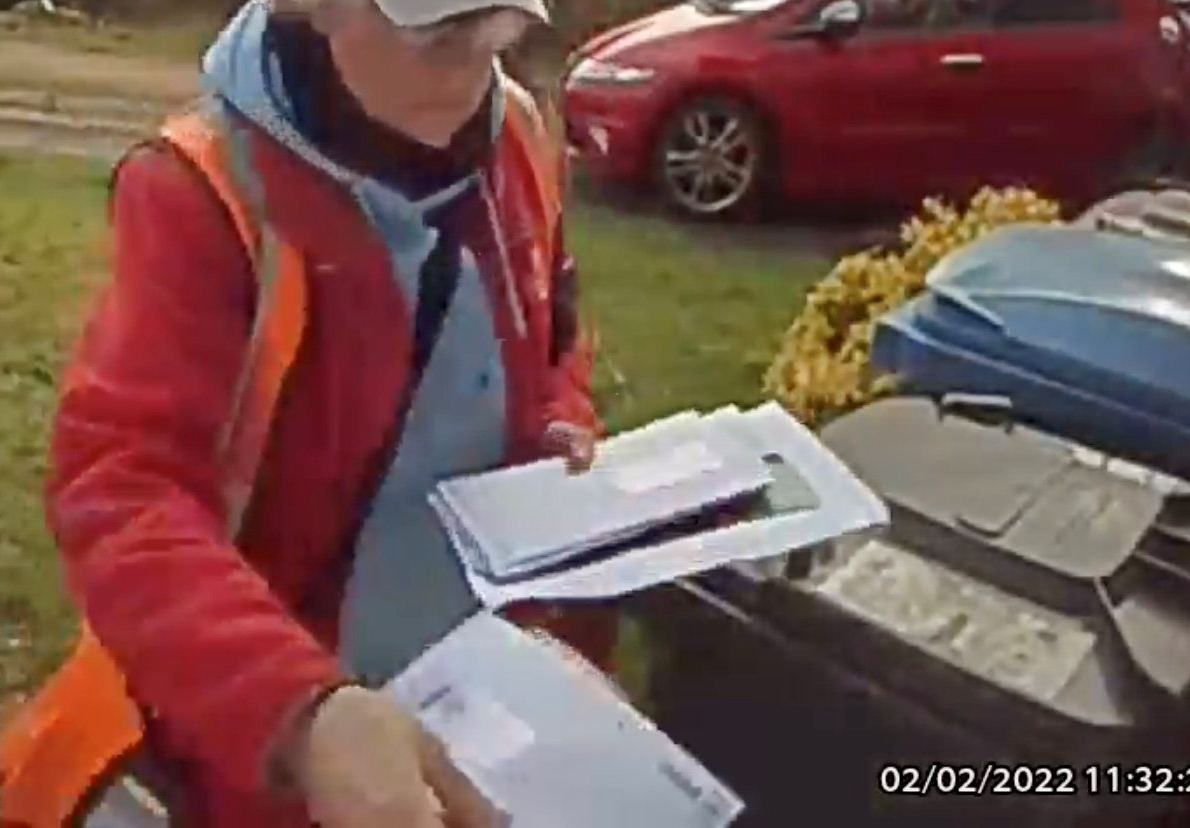
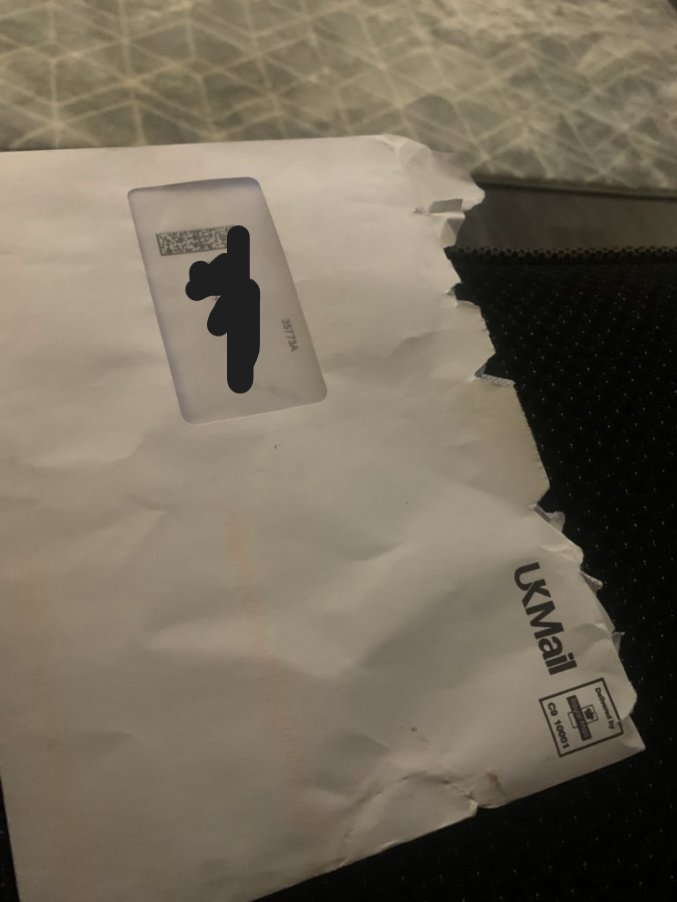
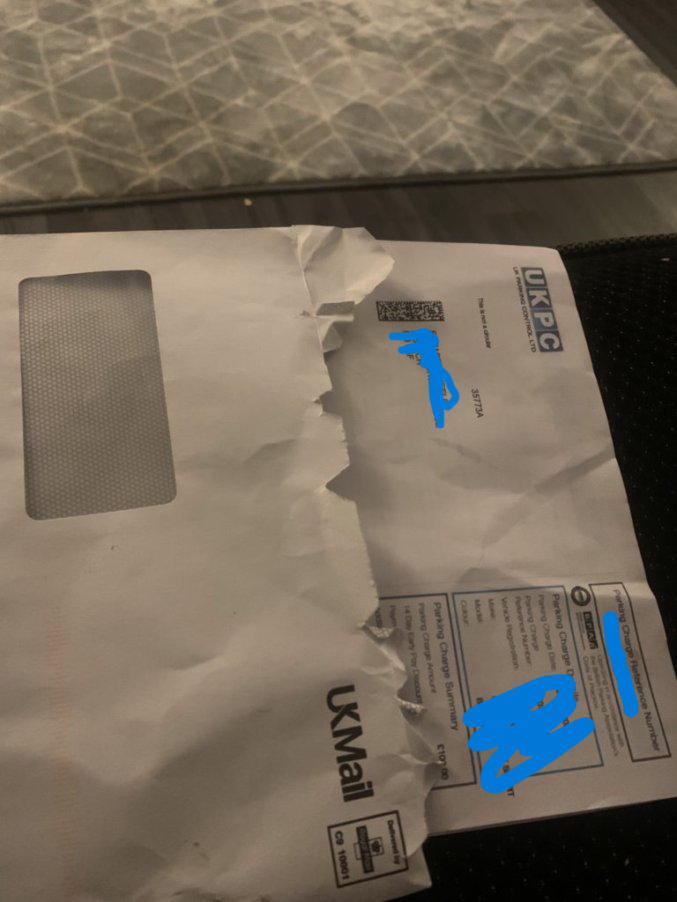
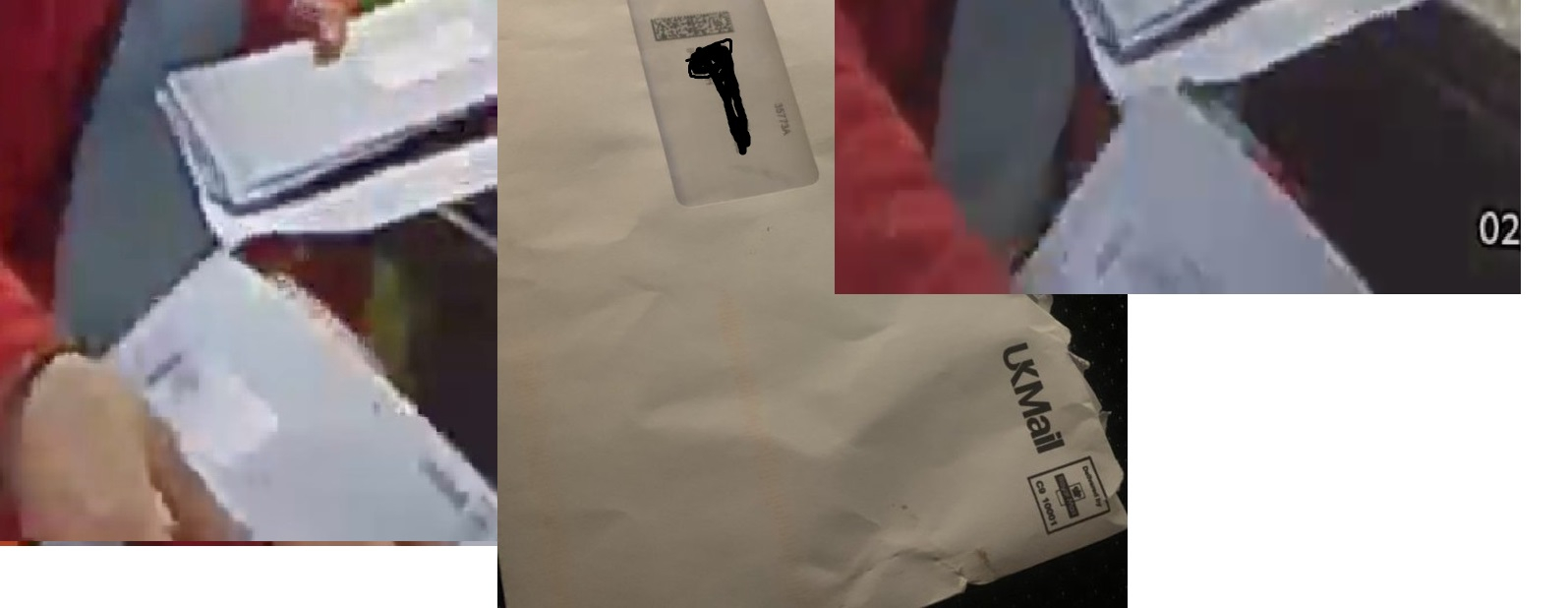
In this case the appellant has proof the NTK letter dated 20/01/22 arrived on 2/2/22 and has reason to believe it was deliberately backdated and/or sent second class, which removes any possibility of keeper liability. UKPC are put to strict proof of evidence as to when, how and using what level of postage that letter was sent. And to explain why they included POFA wording and backdated it, despite knowing when it would likely arrive, based on 2nd class post (which is not deemed delivered 2 working days later and can take a week). A non-POFA (late) NTK must never be dressed up to look as if it complied.
I attach snapshots of the video doorbell, time and date marked showing the NTK arriving and photos of the NTK with relevant envelope showing identical markings.
0 -
The operator has also failed to respond to the first appeal within the required 35 days, their response requesting driver’s details arrived on 15/03/22, 40 days after the initial appeal was made on 03/02/22 and a further 28 days passed before the operator reached a final decision. These are more unnecessary delays from the operator.
The operator has not conformed to paragraph 12 of POFA 2012
UKPC is put to strict proof that is had complied with paragraph 12 of POFA 2012. After making enquiries with the local authorities there appears to have been no planning permissions granted in relation to this car park, whether it be signage ANPR or any planning permissions for a car park where motorist are charged in this way.
The only permissions granted in relation to the parking at Futura park is for the separate car park for John Lewis/Waitrose which operates an entirely different parking system located adjacent as shown on map here in green, the car park in question is in red
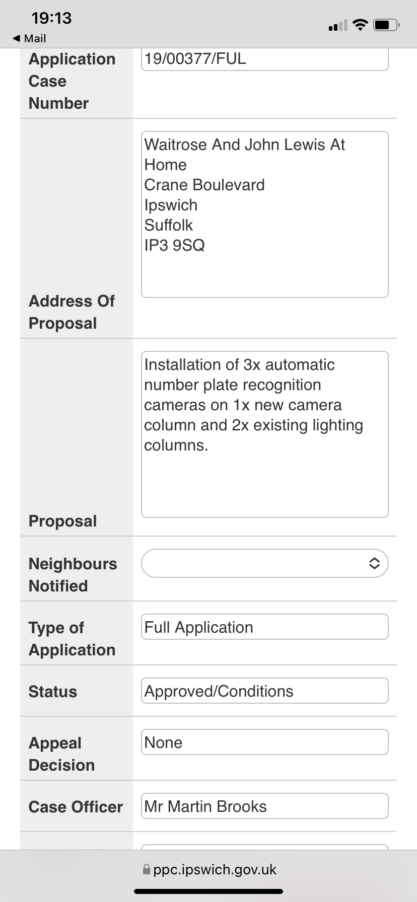
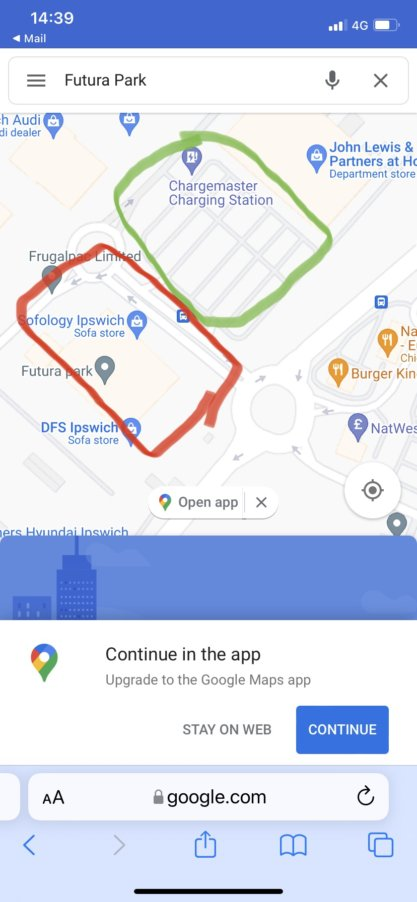
Ipswich Borough Council have currently opened a case in regards to this which is currently ongoing.
If you require further info my contact is XXXXXXXXXXXXX
The operator has not shown that the individual who it is pursuing is in fact the driver who may have been potentially liable for the charge
In cases with a keeper appellant, yet no POFA 'keeper liability' to rely upon, POPLA must first consider whether they are confident that the Assessor knows who the driver is, based on the evidence received. No presumption can be made about liability whatsoever. A vehicle can be driven by any person (with the consent of the owner) as long as the driver is insured. There is no dispute that the driver was entitled to drive the car and I can confirm that they were, but I am exercising my right not to name that person.
In this case, no other party apart from an evidenced driver can be told to pay. As there has been no admission regarding who was driving, and no evidence has been produced, it has been held by POPLA on numerous occasions, that a parking charge cannot be enforced against a keeper without a valid NTK.
As the keeper of the vehicle, it is my right to choose not to name the driver, yet still not be lawfully held liable if an operator is not using or complying with Schedule 4. This applies regardless of when the first appeal was made and regardless of whether a purported 'NTK' was served or not, because the fact remains I am only appealing as the keeper and ONLY Schedule 4 of the POFA (or evidence of who was driving) can cause a keeper appellant to be deemed to be the liable party.
The burden of proof rests with the Operator to show that (as an individual) I have personally not complied with terms in place on the land and show that I am personally liable for their parking charge. They cannot.
Furthermore, the vital matter of full compliance with the POFA was confirmed by parking law expert barrister, Henry Greenslade, the previous POPLA Lead Adjudicator, in 2015:
Understanding keeper liability
'There appears to be continuing misunderstanding about Schedule 4. Provided certain conditions are strictly complied with, it provides for recovery of unpaid parking charges from the keeper of the vehicle.
There is no 'reasonable presumption' in law that the registered keeper of a vehicle is the driver. Operators should never suggest anything of the sort. Further, a failure by the recipient of a notice issued under Schedule 4 to name the driver, does not of itself mean that the recipient has accepted that they were the driver at the material time. Unlike, for example, a Notice of Intended Prosecution where details of the driver of a vehicle must be supplied when requested by the police, pursuant to Section 172 of the Road Traffic Act 1988, a keeper sent a Schedule 4 notice has no legal obligation to name the driver. [...] If {POFA 2012 Schedule 4 is} not complied with then keeper liability does not generally pass.'
Therefore, no lawful right exists to pursue unpaid parking charges from myself as keeper of the vehicle, where an operator cannot transfer the liability for the charge using the POFA.
This exact finding was made in 6061796103 against ParkingEye in September 2016, where POPLA Assessor Carly Law found:
''I note the operator advises that it is not attempting to transfer the liability for the charge using the Protection of Freedoms Act 2012 and so in mind, the operator continues to hold the driver responsible. As such, I must first consider whether I am confident that I know who the driver is, based on the evidence received. After considering the evidence, I am unable to confirm that the appellant is in fact the driver. As such, I must allow the appeal on the basis that the operator has failed to demonstrate that the appellant is the driver and therefore liable for the charge. As I am allowing the appeal on this basis, I do not need to consider the other grounds of appeal raised by the appellant. Accordingly, I must allow this appeal.''
0 -
No Evidence of Landowner Authority - the operator is put to strict proof of full
compliance with the BPA Code of Practice.
As this operator does not have proprietary interest in the land then I require that they produce an
unredacted copy of the contract with the landowner.
The contract and any 'site agreement' or 'User Manual' setting out details - such as any 'genuine
customer' or 'genuine resident' exemptions or any site occupier's 'right of veto' charge
cancellation rights, and of course all enforcement dates/times/days, and the boundary of the site -
is key evidence to define what this operator is authorised to do, and when/where.
It cannot be assumed, just because an agent is contracted to merely put some signs up and
issue Parking Charge Notices, that the agent is authorised on the material date, to make
contracts with all or any category of visiting drivers and/or to enforce the charge in court in their
own name (legal action regarding land use disputes generally being a matter for a landowner
only).
Witness statements are not sound evidence of the above, often being pre-signed, generic
documents not even identifying the case in hand or even the site rules. A witness statement
might in some cases be accepted by POPLA but in this case I suggest it is unlikely to sufficiently
evidence the definition of the services provided by each party to the agreement.
Nor would it define vital information such as charging days/times, any exemption clauses, grace
periods (which I believe may be longer than the bare minimum times set out in the BPA CoP) and
basic but crucial information such as the site boundary and any bays where enforcement
applies/does not apply. Not forgetting evidence of the only restrictions which the landowner has
authorised can give rise to a charge, as well as the date that the parking contract began, and
when it runs to, or whether it runs in perpetuity, and of course, who the signatories are: name/job
title/employer company, and whether they are authorised by the landowner to sign a binding legal
agreement.
Paragraph 7 of the BPA CoP defines the mandatory requirements and I put this operator to strict
proof of full compliance:
7.2 If the operator wishes to take legal action on any outstanding parking charges, they must
ensure that they have the written authority of the landowner (or their appointed agent) prior to
legal action being taken.
7.3 The written authorisation must also set out:
a the definition of the land on which you may operate, so that the boundaries of the land can be
clearly defined
b any conditions or restrictions on parking control and enforcement operations, including any
restrictions on hours of operation
c any conditions or restrictions on the types of vehicles that may, or may not, be subject to
parking control and enforcement
d who has the responsibility for putting up and maintaining signs
e the definition of the services provided by each party to the agreement
4. No Planning Permission from Ipswich borough Council for Pole-Mounted ANPR Cameras
and no Advertising Consent for signage as stated above
Paragraph 7 of the BPA CoP defines the mandatory requirements and I put this operator to strict
proof of full compliance:
7.2 If the operator wishes to take legal action on any outstanding parking charges, they must
ensure that they have the written authority of the landowner (or their appointed agent) prior to
legal action being taken.
7.3 The written authorisation must also set out:
a the definition of the land on which you may operate, so that the boundaries of the land can be
clearly defined
b any conditions or restrictions on parking control and enforcement operations, including any
restrictions on hours of operation
c any conditions or restrictions on the types of vehicles that may, or may not, be subject to
parking control and enforcement
d who has the responsibility for putting up and maintaining signse the definition of the services provided by each party to the agreement.
The signs in this car park are prohibitive in nature, not prominent, clear or legible from all parking spaces, there is insufficient notice of the sum of the parking charge itself and the time limit of the car park is not made obvious
The driver could no way agree to do something that is not permitted, there is no information on the signage as to what authorisation is required to park, just ‘NO UNAUTHORISED PARKING’ the nature of this suggest that the driver should seek authorisation before parking, the driver has no idea whether that they are ‘authorised’ to park or not just adding to the confusing nature of the signage, therefore there can be no offer, no consideration and no acceptance, therefore no contract has been formed.
I note that within the Protection of Freedoms Act (POFA) 2012 it discusses the clarity that needs to be provided to make a motorist aware of the parking charge. Specifically, it requires that the driver is given 'adequate notice' of the charge. POFA 2012 defines 'adequate notice' as follows:
''(3) For the purposes of sub-paragraph (2) 'adequate notice' means notice given by: (a) the display of one or more notices in accordance with any applicable requirements prescribed in regulations under paragraph 12 for, or for purposes including, the purposes of sub-paragraph (2); or (b) where no such requirements apply, the display of one or more notices which: (i) specify the sum as the charge for unauthorised parking; and (ii) are adequate to bring the charge to the notice of drivers who park vehicles on the relevant land''.
Even in circumstances where POFA 2012 does not apply, I believe this to be a reasonable standard to use when making my own assessment, as appellant, of the signage in place at the location. Having considered the signage in place at this particular site against the requirements of Section 18 of the BPA Code of Practice and POFA 2012, I am of the view that the signage at the site - given the minuscule font size of the £100, which is illegible in most photographs and does not appear at all at the entrance - is NOT sufficient to bring the parking charge (i.e. the sum itself) to the attention of the motorist.
There was no contract nor agreement on the 'parking charge' at all. It is submitted that the driver did not have a fair opportunity to read about any terms involving this huge charge, which is out of all proportion and not saved by the dissimilar 'ParkingEye Ltd v Beavis' case.
In the Beavis case, which turned on specific facts relating only to the signs at that site and the unique interests and intentions of the landowners, the signs were unusually clear and not a typical example for this notorious industry. The Supreme Court were keen to point out the decision related to that car park and those facts only:
In the Beavis case, the £85 charge itself was in the largest font size with a contrasting colour background and the terms were legible, fairly concise and unambiguous. There were 'large lettering' signs at the entrance and all around the car park, according to the Judges.
Here is the 'Beavis case' sign as a comparison to the signs under dispute in this case:
This case, by comparison, does not demonstrate an example of the 'large lettering' and 'prominent signage' that impressed the Supreme Court Judges and swayed them into deciding that in the specific car park in the Beavis case alone, a contract and 'agreement on the charge' existed.Here is a photo of the signage at the site:
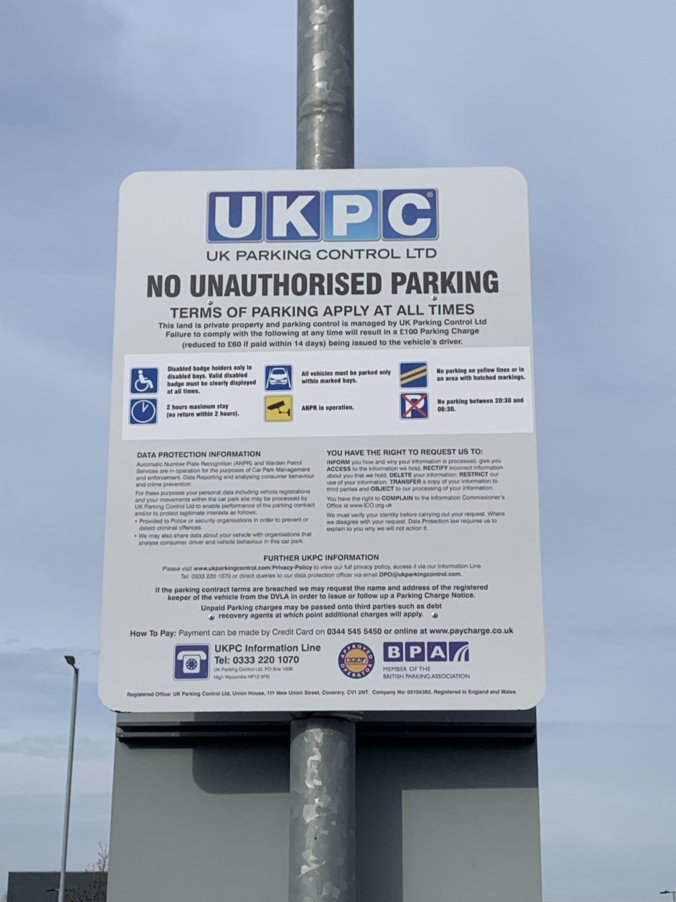
Here, the signs are sporadically placed, indeed obscured and hidden in some areas. They are unremarkable, not immediately obvious as to the parking terms and the wording is mostly illegible, there are approximately 467 words on this sign plus numbers etc all being crowded and cluttered with a lack of white space as a background. Any information that could be deemed terms and conditions are muddled with information such as ‘ANPR in operation’ not making for clear reading what the terms are.In this instance where it is a free car park the time of free parking should be made clear and obvious to the driver however the time limit is indistinguishable and hidden within any other writing on the sign. It is indisputable that placing letters too close together in order to fit more information into a smaller space can drastically reduce the legibility of a sign, especially one which must be read BEFORE the action of parking and leaving the car.
The sparseness of the signage can been seen as below. Here is an area of the car park taken from a reasonable distance back showing not a single sign is visible.
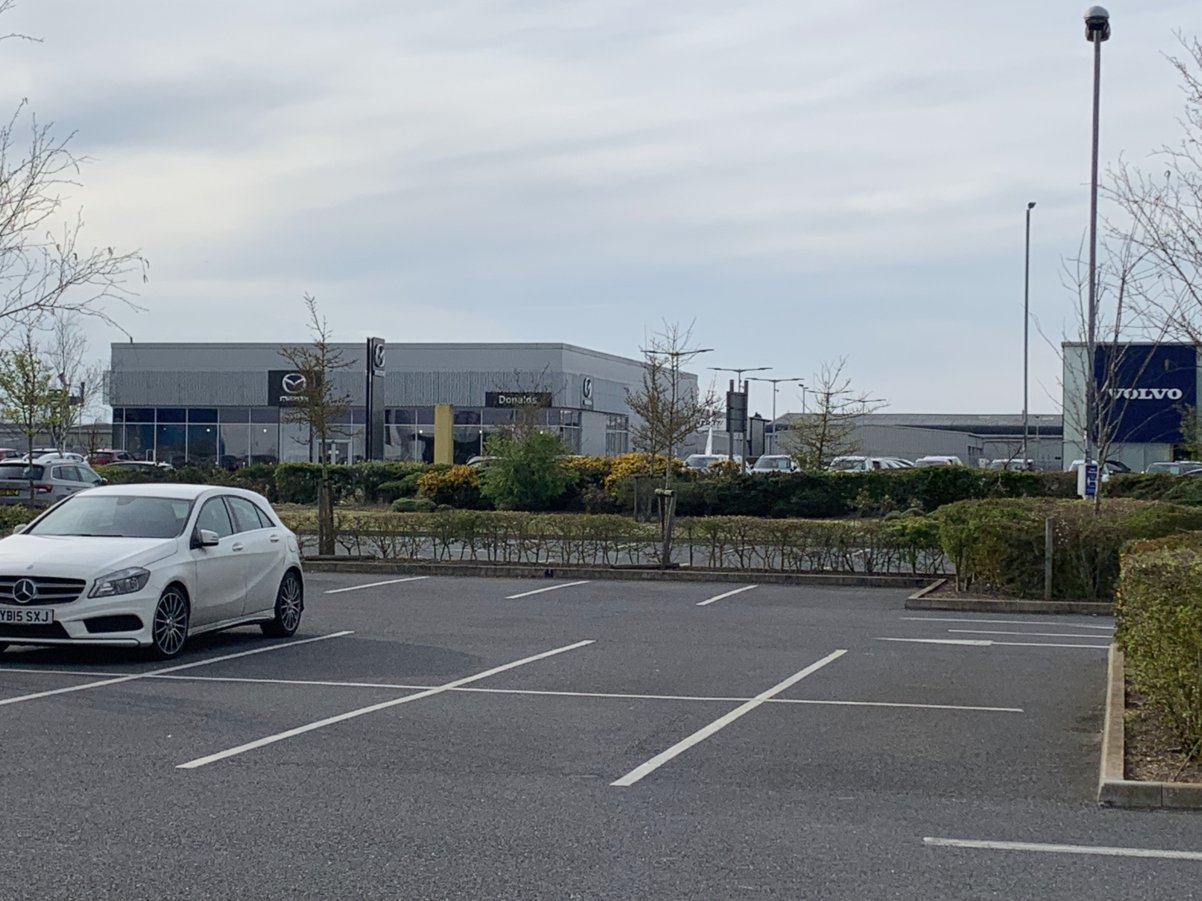
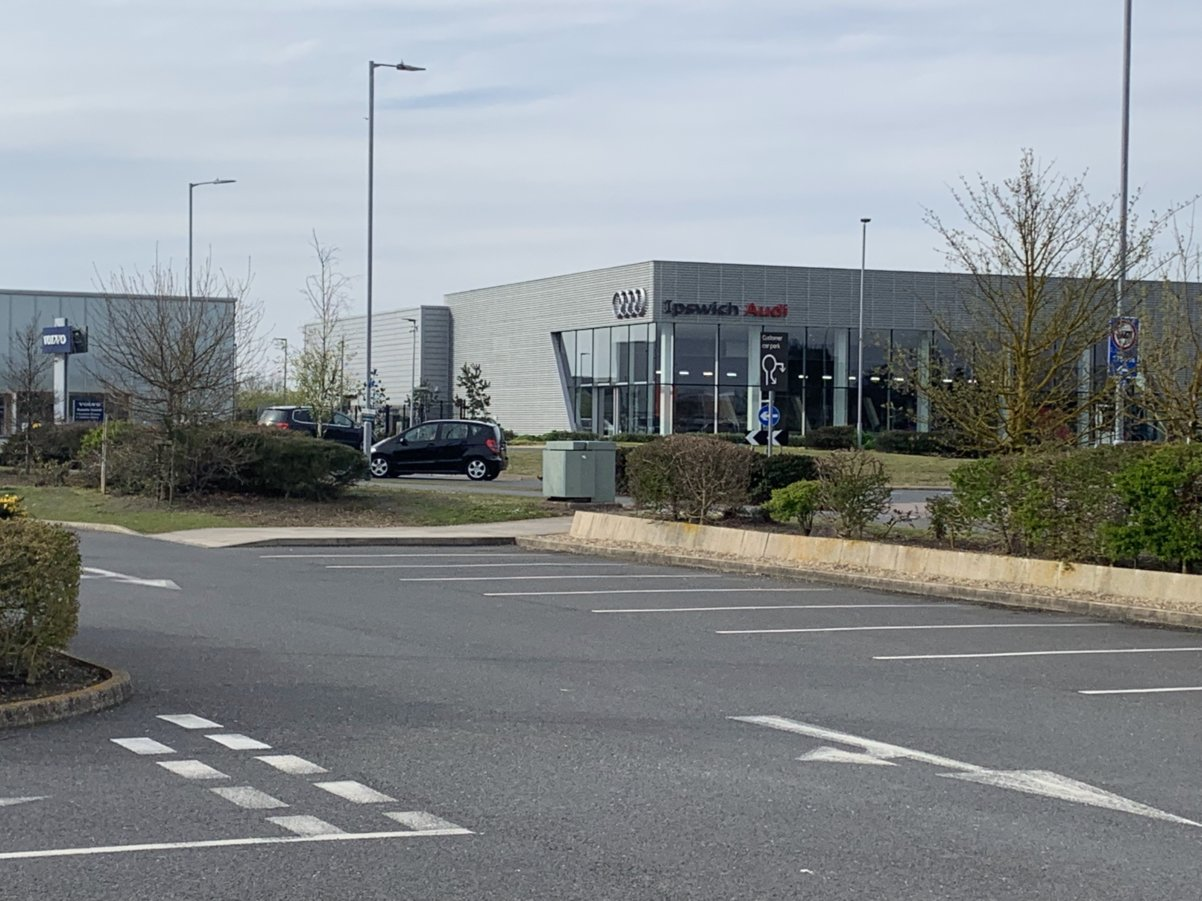
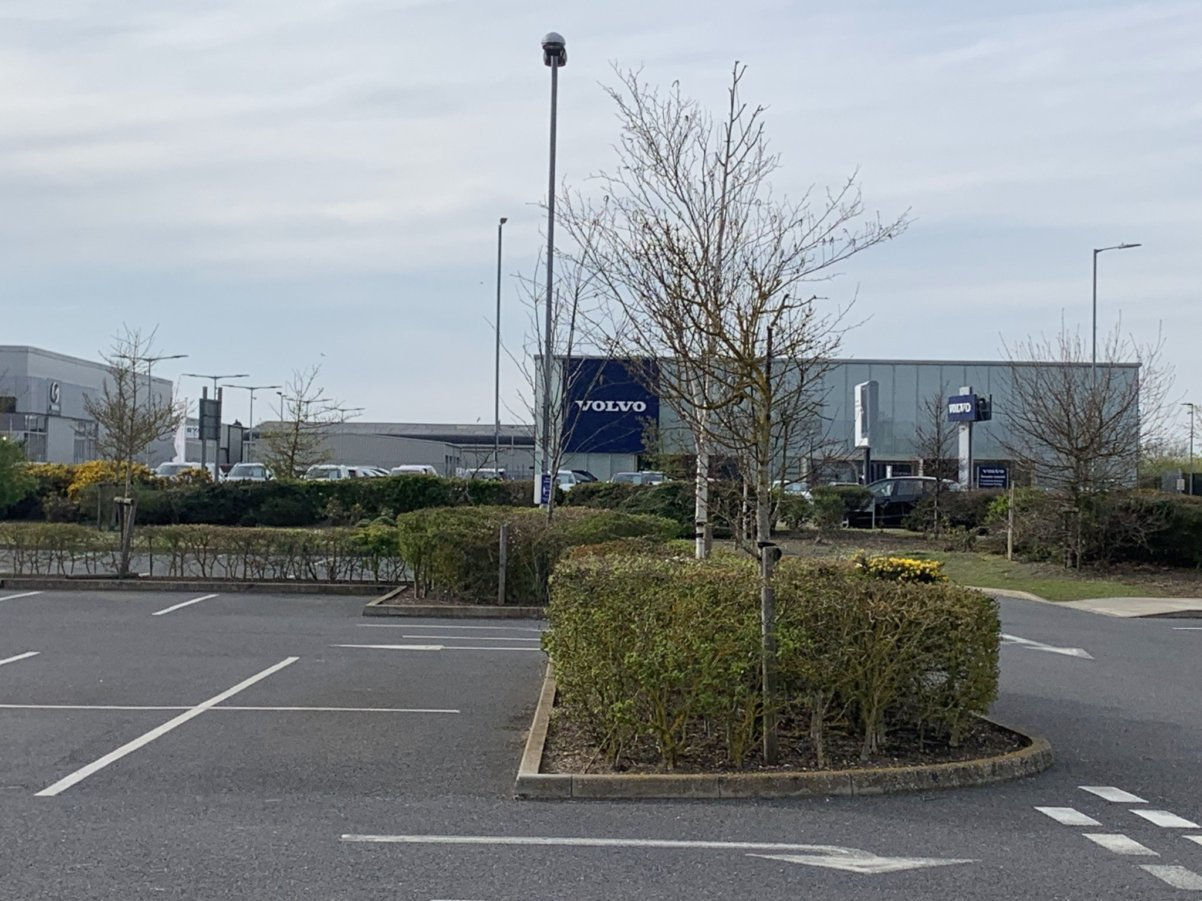
And the view which across the front of all of the shops. The costa coffee has since taken to putting their own sign in the window to warn drivers after a succession of complaints from drivers not being made aware of the restrictions.
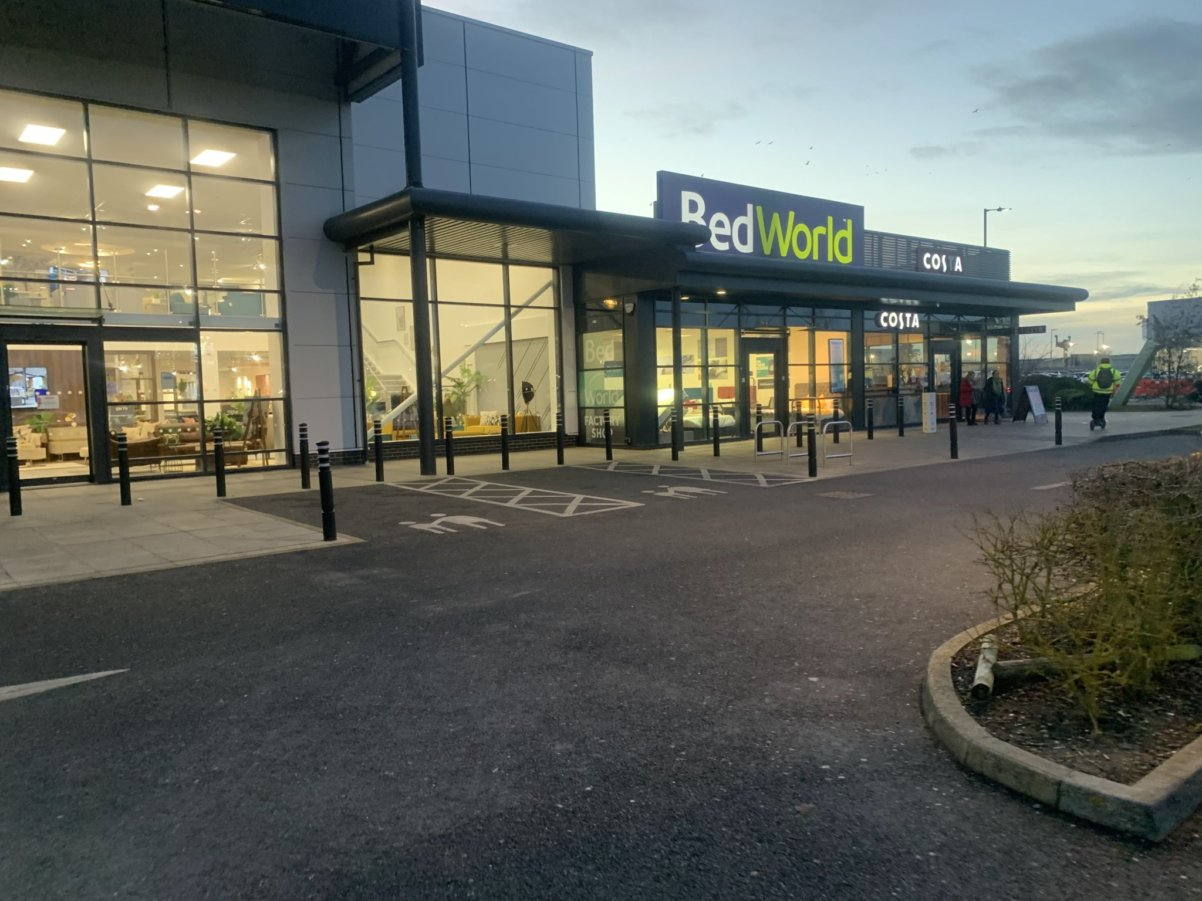
It is vital to observe, since 'adequate notice of the parking charge' is mandatory under the POFA Schedule 4 and the BPA Code of Practice, these signs do not clearly mention the parking charge which is hidden in small print (and does not feature at all on some of the signs). Areas of this site are unsigned and there are no full terms displayed - i.e. with the sum of the parking charge itself in large lettering - at the entrance either, so it cannot be assumed that a driver drove past and could read a legible sign, nor parked near one.
This case is more similar to the signage in POPLA decision 5960956830 on 2.6.16, where the Assessor Rochelle Merritt found as fact that signs in a similar size font in a busy car park where other unrelated signs were far larger, was inadequate:
''the signage is not of a good enough size to afford motorists the chance to read and understand the terms and conditions before deciding to remain in the car park. [...] In addition the operators signs would not be clearly visible from a parking space [...] The appellant has raised other grounds for appeal but I have not dealt with these as I have allowed the appeal.''
From the evidence I have seen so far, the terms appear to be displayed inadequately, in letters no more than about half an inch high, approximately. I put the operator to strict proof as to the size of the wording on their signs and the size of lettering for the most onerous term, the parking charge itself.
The letters seem to be no larger than .40 font size going by this guide:
http://www-archive.mozilla.org/newlayout/testcases/css/sec526pt2.htm
As further evidence that this is inadequate notice, Letter Height Visibility is discussed here:
http://www.signazon.com/help-center/sign-letter-height-visibility-chart.aspx
''When designing your sign, consider how you will be using it, as well as how far away the readers you want to impact will be. For example, if you are placing a sales advertisement inside your retail store, your text only needs to be visible to the people in the store. 1-2' letters (or smaller) would work just fine. However, if you are hanging banners and want drivers on a nearby highway to be able to see them, design your letters at 3' or even larger.''
...and the same chart is reproduced here:
http://www.ebay.co.uk/gds/Outdoor-Dimensional-Sign-Letter-Best-Viewing-Distance-/10000000175068392/g.html
''When designing an outdoor sign for your business keep in mind the readability of the letters. Letters always look smaller when mounted high onto an outdoor wall''.
''...a guideline for selecting sign letters. Multiply the letter height by 10 and that is the best viewing distance in feet. Multiply the best viewing distance by 4 and that is the max viewing distance.''
So, a letter height of just half an inch, showing the terms and the 'charge' and placed high on a wall or pole or buried in far too crowded small print, is woefully inadequate in an outdoor car park. Given that letters look smaller when high up on a wall or pole, as the angle renders the words less readable due to the perspective and height, you would have to stand right in front of it and still need a stepladder (and perhaps a torch and/or magnifying glass) to be able to read the terms.
Under Lord Denning's Red Hand Rule, the charge (being 'out of all proportion' with expectations of drivers in this car park and which is the most onerous of terms) should have been effectively: 'in red letters with a red hand pointing to it' - i.e. VERY clear and prominent with the terms in large lettering, as was found to be the case in the car park in 'Beavis'. A reasonable interpretation of the 'red hand rule' and the 'signage visibility distance' tables above and the BPA Code of Practice, taking all information into account, would require a parking charge and the terms to be displayed far more transparently, on a lower sign and in far larger lettering, with fewer words and more 'white space' as background contrast. Indeed in the Consumer Rights Act 2015 there is a 'Requirement for transparency':
(1) A trader must ensure that a written term of a consumer contract, or a consumer notice in writing, is transparent.
(2) A consumer notice is transparent for the purposes of subsection (1) if it is expressed in plain and intelligible language and it is legible.
The Beavis case signs not being similar to the signs in this appeal at all, I submit that the persuasive case law is in fact 'Vine v London Borough of Waltham Forest [2000] EWCA Civ 106' about a driver not seeing the terms and consequently, she was NOT deemed bound by them.
This judgment is binding case law from the Court of Appeal and supports my argument, not the operator's case:
http://www.bailii.org/ew/cases/EWCA/Civ/2000/106.html
0 -
This was a victory for the motorist and found that, where terms on a sign are not seen and the area is not clearly marked/signed with prominent terms, the driver has not consented to - and cannot have 'breached' - an unknown contract because there is no contract capable of being established. The driver in that case (who had not seen any signs/lines) had NOT entered into a contract. The recorder made a clear finding of fact that the plaintiff, Miss Vine, did not see a sign because the area was not clearly marked as 'private land' and the signs were obscured/not adjacent to the car and could not have been seen and read from a driver's seat before parking.
Here is another example from a recent POPLA appeal code 2410212396 where the assessor quotes
“I conclude the charge is not sufficiently brought to the attention of motorists on the signs and therefore it does not meet the expectations of ParkingEye v Beavis “
So, for this appeal, I put this operator to strict proof of where the car was parked and (from photos taken in the same lighting conditions) how their signs appeared on that date, at that time, from the angle of the driver's perspective. Equally, I require this operator to show how the entrance signs appear from a driver's seat, not stock examples of 'the sign' in isolation/close-up. I submit that full terms simply cannot be read from a car before parking and mere 'stock examples' of close-ups of the (alleged) signage terms will not be sufficient to disprove this.The operator has not complied with BPA code B19.10 when changing restrictions
BPA COP B 19.10 states:-
Where there is a change in the terms and conditions that materially affects the motorist then you must make these terms and conditions clear on your signage. Where such changes impose liability where none previously existed then you must consider a transition to allow regular visitors to the site to adjust and familiarise themselves with the changes. Best practice would be the installation of additional/ temporary signage at the entrance and throughout the site making it clear that new terms and conditions apply. This will ensure such that regular visitors who may be familiar with the previous terms become aware of the new ones.
As the terms of this car park had recently changed from 4 hours to 2 hours of free parking I put the operator to strict proof that they have fully complied with the code in terms of changes to terms and conditions and also that the new signage was in place at the time of the alleged breach.
Even if it was proven to be a change of operator it is still UKPC’s responsibility to make drivers aware of changes to the terms where they would otherwise be unaware.
It is highly possible that the driver on this occasion was not made aware of the changes to the parking period caused by a failure of the operator to ensure that the changes were made clear to drivers.
I’ve no exact dates of when these terms were changed but I’ve attached a photo from a newspaper article dated may ’21 which clearly shows a different set of signage as the one attached above in which case proving a change has taken place recently.

4. ANPR camera synchronisation.
The operator is put to strict proof that the entry and exit cameras are fully synchronised.
If the operator claims the cameras are accurate to within seconds, as they do, they must supply detailed evidence of the maintenance logs and detailed records about specific calibration of those two cameras at that site, on that day.
These mistakes can and do happen. Here is a recent example:
"A recent BPA complaint ref 027063 involved NCP at the Imperial War Museum, with 15 cases of incorrect PCNs issued, due to the 'out' camera being a whole hour out with the 'in' camera, caused by a 'calibration error':
http://forums.pepipoo.com/index.php?showtopic=142079
BPA responded upholding the complaint and confirming that this can happen as the timers are set individually and are not synchronised:
sara.r@britishparking.co.uk
9th February 2022
Dear xxx
BPA-027063
Thank you for your patience whilst we have approached NCP Limited.
We are advised by NCP Limited that their technology team were doing some calibration on the cameras and machines in September which caused an issue with the timings. This occurred between the 15th and 16th of September 2021.
The operator has confirmed that additional controls are now in place to ensure this does not reoccur during maintenance. They have also advised that the error was not in intentional and it was the first time they have had this occur throughout their car parks which use this equipment
15 customers were issued with a Parking Charge Notice on the affected dates. These have all been cancelled regardless of whether they were affected by the timing error. Where charges had been paid refunds will be issued.
As the operator has responded accordingly, this case is now closed. Thank you for bringing this matter to our attention and assisting us to raise standards within the private parking sector.
I hope the above is helpful.
Kind regards
Sara Roberts
Head of Approved Operator Scheme"
Also:
As there are no identifying land marks in the photograph the operator is put to strict proof that the images are taken within the enforcement boundary.0









Confirm your email address to Create Threads and Reply

Categories
- All Categories
- 354.2K Banking & Borrowing
- 254.3K Reduce Debt & Boost Income
- 455.3K Spending & Discounts
- 247.2K Work, Benefits & Business
- 603.8K Mortgages, Homes & Bills
- 178.4K Life & Family
- 261.3K Travel & Transport
- 1.5M Hobbies & Leisure
- 16.1K Discuss & Feedback
- 37.7K Read-Only Boards