We’d like to remind Forumites to please avoid political debate on the Forum.
This is to keep it a safe and useful space for MoneySaving discussions. Threads that are – or become – political in nature may be removed in line with the Forum’s rules. Thank you for your understanding.
PLEASE READ BEFORE POSTING: Hello Forumites! In order to help keep the Forum a useful, safe and friendly place for our users, discussions around non-MoneySaving matters are not permitted per the Forum rules. While we understand that mentioning house prices may sometimes be relevant to a user's specific MoneySaving situation, we ask that you please avoid veering into broad, general debates about the market, the economy and politics, as these can unfortunately lead to abusive or hateful behaviour. Threads that are found to have derailed into wider discussions may be removed. Users who repeatedly disregard this may have their Forum account banned. Please also avoid posting personally identifiable information, including links to your own online property listing which may reveal your address. Thank you for your understanding.
📨 Have you signed up to the Forum's new Email Digest yet? Get a selection of trending threads sent straight to your inbox daily, weekly or monthly!
The Forum now has a brand new text editor, adding a bunch of handy features to use when creating posts. Read more in our how-to guide
Completion certificate

No41edwardianhouse
Posts: 200 Forumite


The next saga…
The property we are trying to buy had a single story rear extension completed in 2008. Planning permission granted. However, the seller is saying they don’t have the completion certificate. We’ve had a survey done and the work is said to be sound.
The property we are trying to buy had a single story rear extension completed in 2008. Planning permission granted. However, the seller is saying they don’t have the completion certificate. We’ve had a survey done and the work is said to be sound.
According to the CML handbook, our lender (Accord) states in part 2 that they will accept indemnity insurance. Basically it’s down to our solicitor to rectify the issue. However, in one part of the lenders website it also says this issue could result in the need for a revaluation. So, it’s both a valuation and legal matter. The indemnity insurance would appear to solve the legal matter BUT would not having a completion certificate for an extension that was done years ago really have an impact on the value of the property today?!?
Help!!
0
Comments
-
No, it will have no impact on value, especially if there's indemnity insurance (not that there's really any risk after this length of time anyway).0
-
Cheers. I am wondering why the mortgage lender has the above?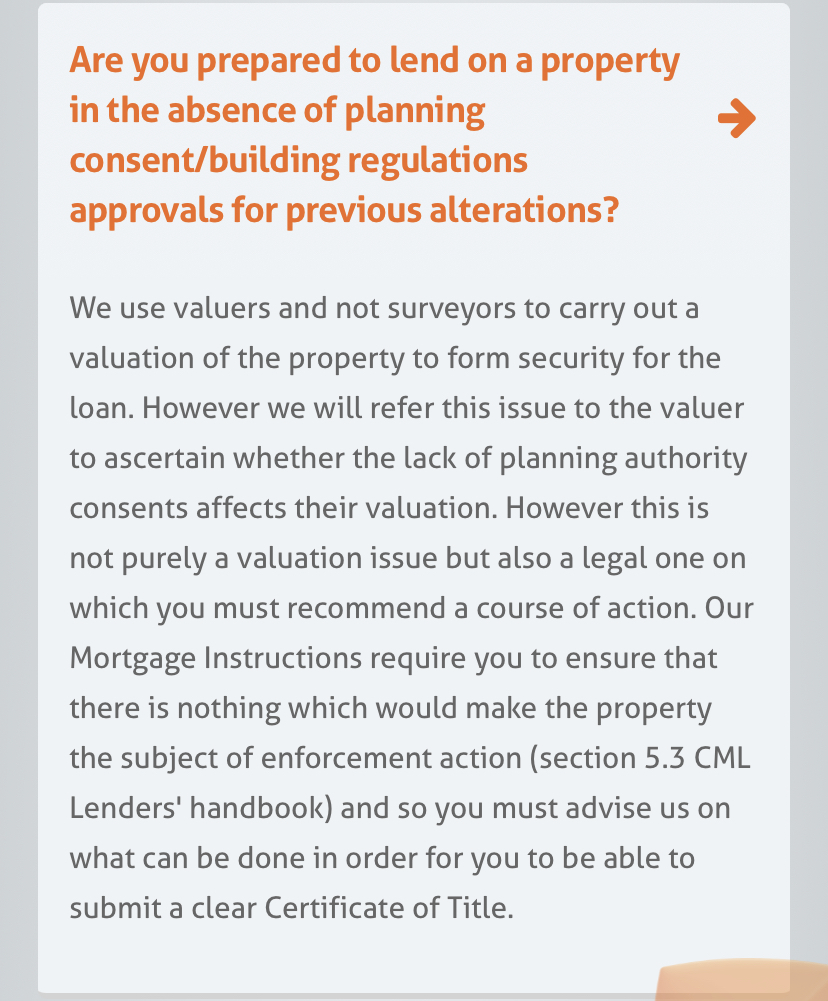 user1977 said:No, it will have no impact on value, especially if there's indemnity insurance (not that there's really any risk after this length of time anyway).0
 -
The normal advice from the solicitor to the lender would be that the indemnity insurance covers any risk. The valuer isn't going to come up with a lower valuation anyway for this sort of situation.No41edwardianhouse said:
Cheers. I am wondering why the mortgage lender has the above?user1977 said:No, it will have no impact on value, especially if there's indemnity insurance (not that there's really any risk after this length of time anyway).0 -
I suppose it’s the fact that it may get referred back to the valuer is the thing that worries me.user1977 said:
The normal advice from the solicitor to the lender would be that the indemnity insurance covers any risk. The valuer isn't going to come up with a lower valuation anyway for this sort of situation.No41edwardianhouse said:
Cheers. I am wondering why the mortgage lender has the above?user1977 said:No, it will have no impact on value, especially if there's indemnity insurance (not that there's really any risk after this length of time anyway).0 -
The valuer will just roll their eyes and say the value is the same provided the solicitor covers off the lack of completion certificate...which they do by either getting the indemnity policy, or explaining to the lender that it's too late for enforcement action to be taken.No41edwardianhouse said:
I suppose it’s the fact that it may get referred back to the valuer is the thing that worries me.user1977 said:
The normal advice from the solicitor to the lender would be that the indemnity insurance covers any risk. The valuer isn't going to come up with a lower valuation anyway for this sort of situation.No41edwardianhouse said:
Cheers. I am wondering why the mortgage lender has the above?user1977 said:No, it will have no impact on value, especially if there's indemnity insurance (not that there's really any risk after this length of time anyway).1 -
I guess you could look at it this way...
Having the correct planning consent (if required) and the correct completion certificate is an indication of professionalism and doing things properly.
In particular, having a completion certificate means that the local authority building control should have checked the plans and inspected the work being done on the extension. (Although they would be pretty cursory checks and inspections.)
If the builder and/or homeowner didn't bother with planning consent and a completion certificate, there's a risk that they might be cowboys. If they don't do the legal stuff properly, I guess there's a risk that they might not do the building stuff properly either.
In the worst case, they might even have knowingly done something 'dodgy', so they didn't involve Building Control because they knew it would not be passed and no completion certificate would be issued.
As a result, some people might consider the property to be a bit more risky - and therefore feel it's worth less than a similar property which had an extension built more 'professionally'.
(As an aside, if you have concerns about the quality of the extension, you can get it inspected by a surveyor. But the surveyor probably won't be able to see things like joists - to make sure that the correct ones were used.)
0 -
But in the real world, I've never seen a surveyor downvalue a property on that sort of basis.eddddy said:
As a result, some people might consider the property to be a bit more risky - and therefore feel it's worth less than a similar property which had an extension built more 'professionally'.0 -
As mentioned in my original post:eddddy said:
I guess you could look at it this way...
Having the correct planning consent (if required) and the correct completion certificate is an indication of professionalism and doing things properly.
In particular, having a completion certificate means that the local authority building control should have checked the plans and inspected the work being done on the extension. (Although they would be pretty cursory checks and inspections.)
If the builder and/or homeowner didn't bother with planning consent and a completion certificate, there's a risk that they might be cowboys. If they don't do the legal stuff properly, I guess there's a risk that they might not do the building stuff properly either.
In the worst case, they might even have knowingly done something 'dodgy', so they didn't involve Building Control because they knew it would not be passed and no completion certificate would be issued.
As a result, some people might consider the property to be a bit more risky - and therefore feel it's worth less than a similar property which had an extension built more 'professionally'.
(As an aside, if you have concerns about the quality of the extension, you can get it inspected by a surveyor. But the surveyor probably won't be able to see things like joists - to make sure that the correct ones were used.)
- the building had consent
- the surveyor we appointed had no issues with the quality of the work.
it appears it’s as simply as a lost certificate! They said they couldn’t find the certificate.0 -
Especially as the extension was done in 2008, right?user1977 said:
But in the real world, I've never seen a surveyor downvalue a property on that sort of basis.eddddy said:
As a result, some people might consider the property to be a bit more risky - and therefore feel it's worth less than a similar property which had an extension built more 'professionally'.0 -
Ah! And you have a search showing that the council did issue a completion certificate? You just haven't seen the certificate itself? That's not even an issue then.No41edwardianhouse said:
it appears it’s as simply as a lost certificate! They said they couldn’t find the certificate.eddddy said:
I guess you could look at it this way...
Having the correct planning consent (if required) and the correct completion certificate is an indication of professionalism and doing things properly.
In particular, having a completion certificate means that the local authority building control should have checked the plans and inspected the work being done on the extension. (Although they would be pretty cursory checks and inspections.)
If the builder and/or homeowner didn't bother with planning consent and a completion certificate, there's a risk that they might be cowboys. If they don't do the legal stuff properly, I guess there's a risk that they might not do the building stuff properly either.
In the worst case, they might even have knowingly done something 'dodgy', so they didn't involve Building Control because they knew it would not be passed and no completion certificate would be issued.
As a result, some people might consider the property to be a bit more risky - and therefore feel it's worth less than a similar property which had an extension built more 'professionally'.
(As an aside, if you have concerns about the quality of the extension, you can get it inspected by a surveyor. But the surveyor probably won't be able to see things like joists - to make sure that the correct ones were used.)0





Confirm your email address to Create Threads and Reply

Categories
- All Categories
- 354.4K Banking & Borrowing
- 254.4K Reduce Debt & Boost Income
- 455.4K Spending & Discounts
- 247.3K Work, Benefits & Business
- 604K Mortgages, Homes & Bills
- 178.4K Life & Family
- 261.5K Travel & Transport
- 1.5M Hobbies & Leisure
- 16K Discuss & Feedback
- 37.7K Read-Only Boards