We’d like to remind Forumites to please avoid political debate on the Forum.
This is to keep it a safe and useful space for MoneySaving discussions. Threads that are – or become – political in nature may be removed in line with the Forum’s rules. Thank you for your understanding.
📨 Have you signed up to the Forum's new Email Digest yet? Get a selection of trending threads sent straight to your inbox daily, weekly or monthly!
The Forum now has a brand new text editor, adding a bunch of handy features to use when creating posts. Read more in our how-to guide
How long do cars last (toyota and nissan)
Comments
-
Definitely not!
The driveshaft is a bolt-in piece that goes between gearbox and wheel hub.
At each end of that is a flexible constant velocity joint that allows movement.
Each of those joints has a rubber boot keeping dirt out.
It's no more than that.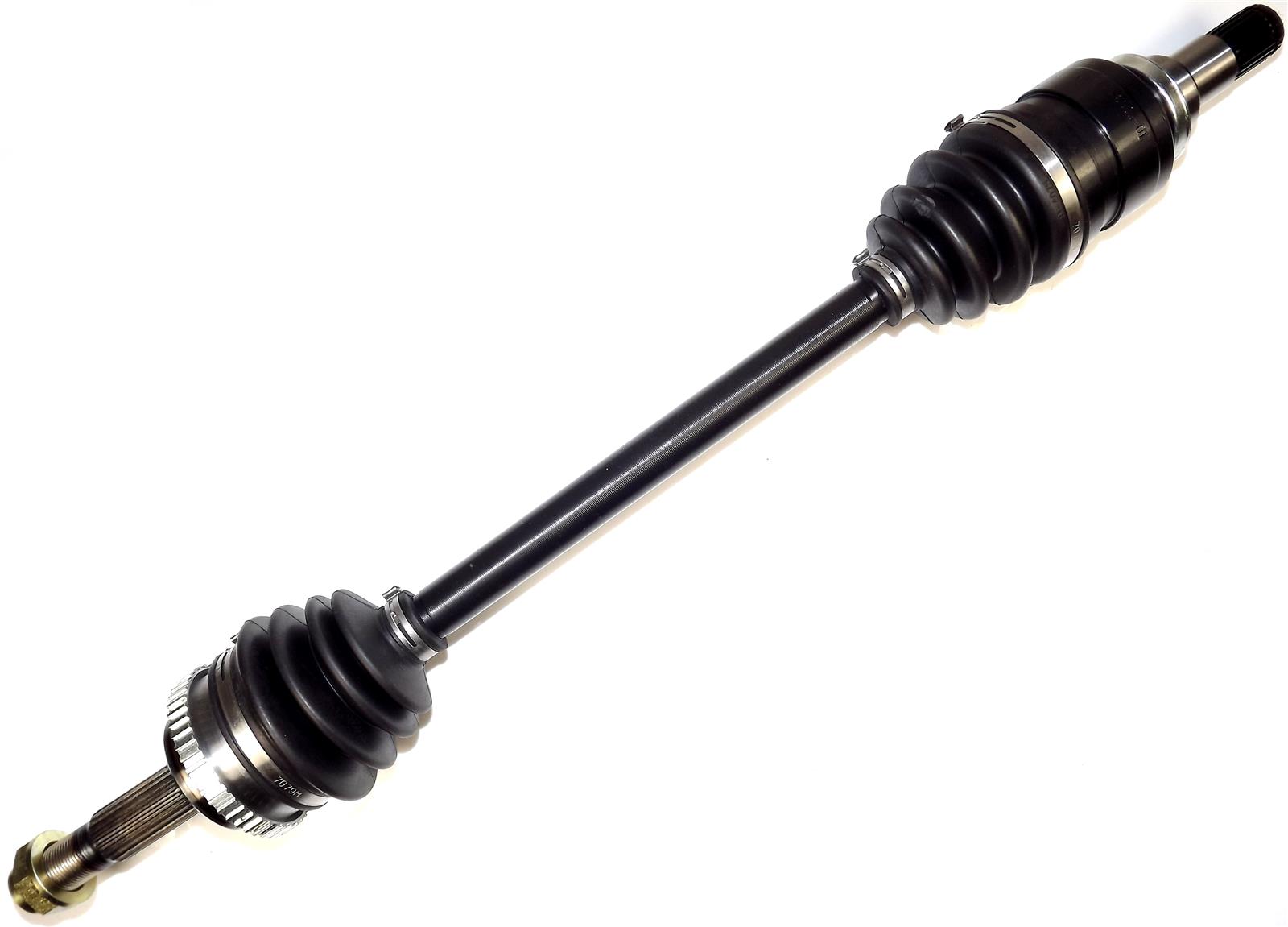
The boot itself is a tenner, and maybe an hour and a half to fit.
https://www.mister-auto.co.uk/joint-boot-with-accessories/toyota-yaris-vitz-p13-1-3-95hp_v5886_g90271.html
the CV is for the nissan. Also some people don't know a spanner from a ladle so parts are no good for them. The airbag light could just be a loose plug under one of the front seats, get yourself down there and give them a wiggle.0 -
To the OP, I suggest you read-up to better understand what each of these bits do, the post above is a good explanation re the CV boots.
Not all are made equally, i've seen Vaxuhall CV boots fail fairly young, yet I have a 18 year-old Toyota MR2 still on originals (and 115k miles) and a 2004 V70 on 271k miles on originals still.
This is an area NOT to skrimp on cheap pattern parts, as they will only fail again in a few years, get genuine original replacements. The labour will probably be more than the parts anyway.
Airbag fault likely to be electrical, like a poor connection - really need to read the fault codes with a proper Nissan reader to see what it says (a generic one is unlikely to give detailed enough info)0 -
forgotmyname wrote: »Any well looked after petrol engine should do 200,000 miles. Diesels 500,000
Both these figures are highly optimistic - especially the diesel. A modern (say post-2005) diesel is very likely to need a new dual mass flywheel, injectors, maybe injector pump well before 200,000 miles. By that time, vehicle value will be low and not many people will want to spend £500+ on a clutch and flywheel replacement.0 -
Both these figures are highly optimistic - especially the diesel. A modern (say post-2005) diesel is very likely to need a new dual mass flywheel, injectors, maybe injector pump well before 200,000 miles. By that time, vehicle value will be low and not many people will want to spend £500+ on a clutch and flywheel replacement.
naw, they would rather spend £5, £10 £15 grand on a new(ish) car see it on here all the time.0 -
I paid £16k for my car. 11 years later I paid £700 for a new clutch & flywheel. Didn't even think of not having it repaired. 4 years later still going well. I really don't get this "don't pay more than the car's value for a repair".0
-
Yep, I don't get that either - and often the £ouch replacement car is on finance that they can't really afford.naw, they would rather spend £5, £10 £15 grand on a new(ish) car see it on here all the time.
I have 2 'older' cars that could be financially written-off with 1 repair, yet I have recently put a clutch & flywheel into a 12 year old Volvo (at the time) on 250k miles - the parts alone were similar cost to the car's value, but for me it's the devil you know, and I have no issues with image etc driving an older car that is otherwise in good condition.
I have no car debt and intend to keep it that way 0
0 -
Both these figures are highly optimistic
200,000 miles for a petrol engine doesn't seem unduly optimistic. I traded my last car in with 145,000 on the clock and no significant issues (OK, the "service now" warning came up as I drove it to the garage where I was trading it in), in spite of having stuck to variable servicing, which many people will tell you is death to an engine. Nearly 4 years later someone's still got tax and MOT on it.0 -
200,000 miles for a petrol engine doesn't seem unduly optimistic. I traded my last car in with 145,000 on the clock and no significant issues (OK, the "service now" warning came up as I drove it to the garage where I was trading it in), in spite of having stuck to variable servicing, which many people will tell you is death to an engine. Nearly 4 years later someone's still got tax and MOT on it.
My 2005 astra estate with 1.8 petrol engine is still running fine at 237k miles Body work on other hand is very tatty. Will see if it goes through MOT later in year and might replace then but only paid £200 for it 2 years ago0 -
I really don't get this "don't pay more than the car's value for a repair".
To be fair to people I think it's the fear that a repair will be followed by others, one thing after another. If you don't know much about cars and have heard the horror stories it's a reasonable view to take: cut your losses, don't throw good money after bad etc.
I've never paid more than £4K for a car myself and tend to keep them a decent time: the last two at 12 years old, and only because I was moving country in each case.
I fancy an electric car but let's wait for the second hand market to develop a little more!0










This discussion has been closed.
Confirm your email address to Create Threads and Reply

Categories
- All Categories
- 354.6K Banking & Borrowing
- 254.5K Reduce Debt & Boost Income
- 455.5K Spending & Discounts
- 247.5K Work, Benefits & Business
- 604.4K Mortgages, Homes & Bills
- 178.6K Life & Family
- 261.9K Travel & Transport
- 1.5M Hobbies & Leisure
- 16.1K Discuss & Feedback
- 37.7K Read-Only Boards