We’d like to remind Forumites to please avoid political debate on the Forum.
This is to keep it a safe and useful space for MoneySaving discussions. Threads that are – or become – political in nature may be removed in line with the Forum’s rules. Thank you for your understanding.
📨 Have you signed up to the Forum's new Email Digest yet? Get a selection of trending threads sent straight to your inbox daily, weekly or monthly!
The Forum now has a brand new text editor, adding a bunch of handy features to use when creating posts. Read more in our how-to guide
Computer Half-wits
Comments
-
I asked what I thought was a simple question to the techies and so typical got treated in a patronising manner ( I was ignored) guess it was because it I didnt ask on a premium rate line number :rotfl: :rotfl:chatta wrote:????????????????? whoosh and ducks down, what did that mean :rotfl:0 -
chatta wrote:I asked what I thought was a simple question to the techies and so typical got treated in a patronising manner ( I was ignored) guess it was because it I didnt ask on a premium rate line number :rotfl: :rotfl:
Dont worry chatta, you wouldn't want to ask someone like lee as he'll answer you and then start insulting you to everybody [FONT=Arial, Helvetica, sans-serif]"The internet is a great way to get on the net."
- Bob Dole, Republican presidential candidate[/FONT]0 -
Actually lee, i think we're ganging up now...
Oh come on MercilessKiller, you know how it works. Techie's are the biggest bunch of mickey takers going. Genuinely, please accept my apologies, I'm not getting at you.
Sorry.0 -
chatta wrote:I asked what I thought was a simple question to the techies and so typical got treated in a patronising manner ( I was ignored) guess it was because it I didnt ask on a premium rate line number :rotfl: :rotfl:
what was the question?ts_aly2000 wrote:Actually lee, i think we're ganging up now...
Maybe, I think I should get back to my knitting.0 -
So please go to all the trouble without the benefit of a premium rate number, answer my question (in english). I promise not to read the answer :rotfl: :rotfl:ts_aly2000 wrote:Actually lee, i think we're ganging up now...
Oh come on MercilessKiller, you know how it works. Techie's are the biggest bunch of mickey takers going. Genuinely, please accept my apologies, I'm not getting at you.
Sorry.0 -
chatta wrote:So please go to all the trouble without the benefit of a premium rate number, answer my question (in english). I promise not to read the answer :rotfl: :rotfl:
Hi Chatta, sorry slipped through the net,
The old modem standards, in the days when having a modem was a really big thing were identified as (down below).
In honesty, quite of a few us have already been through the tech boom that everyone is going through today. We'd spent money on daft useless things, bought the wrong stuff, blown kit up, and caused no end of problems. People today think it's all new, but it isn't by any means, it's just an industry churning out goods so they can rake in your money.
In those days though it was truly technically minded people who did the buying and understood what was in front of them and how to get it to work. Where as today, computers are aimed at everyone. Today's computers I merely view as consumer junk, nothing more than enabling people to print out a pretty picture and then to proclaim that they're an expert. You can stick a computer in front of the thickest most inept twerp on the face of this earth and suddenly overnight they're an expert and then speak with a voice of authority on the subject.
What we have now is nothing more than a bunch of people who are good at just using what other people have built to fulfil a task.
The true techies, the old techie, who can convert binary in their heads and alike are a dying breed. But quite often those old 'standards' pop up in some of today's systems, in that the user is exposed to the hardcore inner workings of the system. Network adapters used to have an 8-bit DIL switch where you configured the address, ie. 00101010 is decimal 42, or hexadecimal 2A. There are methods for doing all of this without a calculator at all.
And possibly the thing that most shocks me about today's gee-whizz web developers is that they run into core problems that they just can't solve because they don't have the knowledge. They can proudly spurt out line after line of sentences which sound nice to the Directors, but when doing it, that's where the trouble starts. It's surprising how many big corporate websites produce strange errors, and expensive hardware which does strange things. This is all as a result of the original techies being unapproachable and unprofessional in the corporate eye, they can more than do the work, but what they can't do is take things seriously in everyday life.
"Techies" are absolutely hated by corporate company Directors, such that said Directors try to employ people who market themselves as techies and appear to be able to jump through the hoops.
Or something like that.. I don't really care to be perfectly honest, I'm an embedded developer as I refused to go through this boom allover again. I now work with tiny RISC computers on a single chip, with like 1K of RAM, and which run at 40Mhz. The thing that they are, is mission critical. No outside third-party can mess up my code, it's all written in low level assembly language. If I don't get it right, it don't work! Simple as that.
V.8—Outlines procedures for starting sessions of data transmission over the public switched telephone network. This standard is the method used by modems to negotiate connection features and options.
V.21—The standard for full-duplex transmission at a speed of 300bps (bits per second). It is used with dial-up lines (regular telephone lines, making the connection by placing a telephone call). Although V.21 is popular in Japan and Europe, the Bell 103 standard is used in the United States.
V.22—The standard for full-duplex transmission at 1200bps over dial-up lines or leased lines (telephone lines leased for private use). Lines that are leased provide wider bandwidth than dial-up lines and are faster and quieter, but they are more expensive. As with V.21, V.22 is widely used in Europe and Japan, but the United States tends to use the Bell 212A standard.
V.22bis—The first true world standard, allowing 1200bps or 2400bps for dial-up or leased lines.
V.23—The worldwide standard for half-duplex transmission at speeds up to 1200bps on dial-up or leased lines.
V.26—The standard for transmission at speeds of 2400bps over 4-wire leased telephone-type circuits.
V.26bis—The second version of V.26, which enables full-duplex transmission at speeds of 1200bps or 2400bps over the general switched telephone network.
V.27—The worldwide standard for full-duplex transmission at 4800bps over leased lines. Modems that conform to the V.27 standard use manual equalizers, which let them compensate for distortion and delay so that the signal maintains its original form when it reaches the receiving device.
V.27bis—The second version of V.27 enables full-duplex transmission at speeds of 2400bps to 4800bps over leased lines with automatic instead of manual equalization.
V.27ter—The worldwide standard that provides for full-duplex transmission at speeds of 2400bps to 4800bps over dial-up lines in the general switched telephone network.
V.29—The worldwide standard used by fax modems for half- or full-duplex transmission at speeds up to 9600bps over point-to-point leased circuits.
V.32—V.32 is the standard for full-duplex modems transmitting data at speeds of 4800bps or 9600bps. With this standard, modems have the ability to adjust transmission speed automatically, depending upon the line quality. They also have echo cancellation to remove the phone line echo.
V.32bis—This modem standard improves upon V.32 by providing transmission at speeds of 14.4Kbps (kilobits per second) over leased or dial-up lines.
V.34—The worldwide communications standard for modem transmissions at 28.8Kbps. Modems using the V.34 standard automatically adjust their speed during the phone call if there is interference on the line or if the line conditions improve. This lets users maintain their connections under nearly any condition. V.34 modems can operate as fast as 28.8Kbps and as slow as 2400bps, and they are backward-compatible with V.32 and V.32bis.
V.34bis—Improves upon the V.34 standard to provide transmissions of up to 33.6Kbps.
V.35—The trunk interface between a network access device and a packet network at data rates greater than 19.2Kbps. V.35 may use the bandwidths of several telephone circuits as a group for data transmission at 48Kbps using 60KHz to 108KHz group band circuits.
V.42—The worldwide standard for regulating error-detection for high-speed modems. V.42 modems may be used over digital telephone networks rather than the standard analog telephone networks. V.42 has the same transfer rate as V.32, V.32bis, and other standards, but it offers better error correction and is, therefore, more reliable.
V.42bis—The international standard for data compression that accompanies V.42 error control in order to achieve data transfer speeds of up to 34Kbps. When modems send data to each other, they look for redundant data that can be replaced with abbreviations to shrink the size of the file. The receiving modem then retranslates the abbreviations into full words. By compressing the data, the modem is able to speed transmissions.
V.44—Provides better compression of incoming data, enabling the faster downloading of information. And because V.42 was approved before use of the Internet was very common, V.44 became the compression standard specifically tailored for the Internet. It may reduce Internet page loading time by at least 50%.
V.90—V.90 theoretically enables transmission speeds of 56Kbps, but in practice, actual speeds are slower depending upon the phone line and various other conditions. The V.90 standard derived from intense competition between two incompatible standards and the need for unification. Until 1998, there was never an overall industry standard established for 56Kbps modems, so the two incompatible standards that were available at that time constantly struggled for control: x2 from0 -
ts_aly2000 wrote:Actually lee, i think we're ganging up now...
Oh come on MercilessKiller, you know how it works. Techie's are the biggest bunch of mickey takers going. Genuinely, please accept my apologies, I'm not getting at you.
Sorry.
Ok accepted no worries
Sorry for being such a hard-!!! too Couldnt understant the point of lee insulting general users seeing as they're why we make money! [FONT=Arial, Helvetica, sans-serif]"The internet is a great way to get on the net."
- Bob Dole, Republican presidential candidate[/FONT]0 -
ts_aly2000 wrote:The true techies, the old techie, who can convert binary in their heads and alike are a dying breed.
For the CISCO CCNA courses its the first thing taught.. how to convert binary and hex in the head So there must be a gap.. the oldies can do it no problem.. the young ones learning can do it no problem but the ones in the middle cant? hehe!
I bought a binary watch (the cool looking one) for funnies only to realise it has numbers above the led's.. what a waste of time that is! May as well buy a digital watch !!!!!!!
are Hex watches available? maybe even Oct ones? [FONT=Arial, Helvetica, sans-serif]"The internet is a great way to get on the net."
- Bob Dole, Republican presidential candidate[/FONT]0 -
Dunno, but I can build you one... You really want one??0
-
Excellent, I remember my V.92 modem, was chucked last week as I could not find a museum for it. Rockwell was her name. Best dial-up modem I used.
You're one smart Woman.
Unlike my mother below: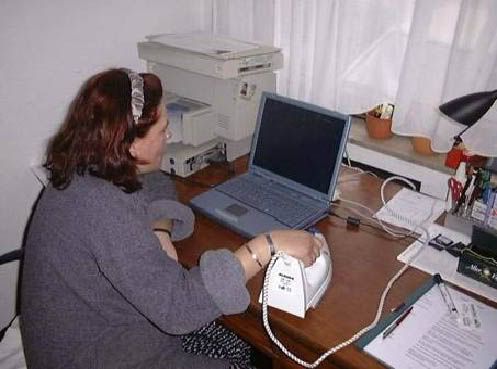
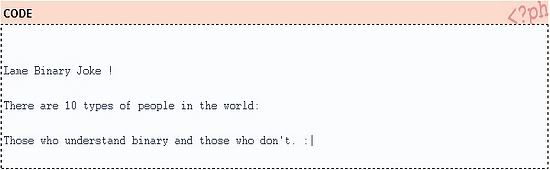 0
0




This discussion has been closed.
Confirm your email address to Create Threads and Reply

Categories
- All Categories
- 353.5K Banking & Borrowing
- 254.1K Reduce Debt & Boost Income
- 455K Spending & Discounts
- 246.6K Work, Benefits & Business
- 602.9K Mortgages, Homes & Bills
- 178.1K Life & Family
- 260.6K Travel & Transport
- 1.5M Hobbies & Leisure
- 16K Discuss & Feedback
- 37.7K Read-Only Boards