We’d like to remind Forumites to please avoid political debate on the Forum.
This is to keep it a safe and useful space for MoneySaving discussions. Threads that are – or become – political in nature may be removed in line with the Forum’s rules. Thank you for your understanding.
New Patio has caused a crack in house wall



I bought a house last summer and the existing patio was a bit of a mess, so I decided to redo it myself, to save money.
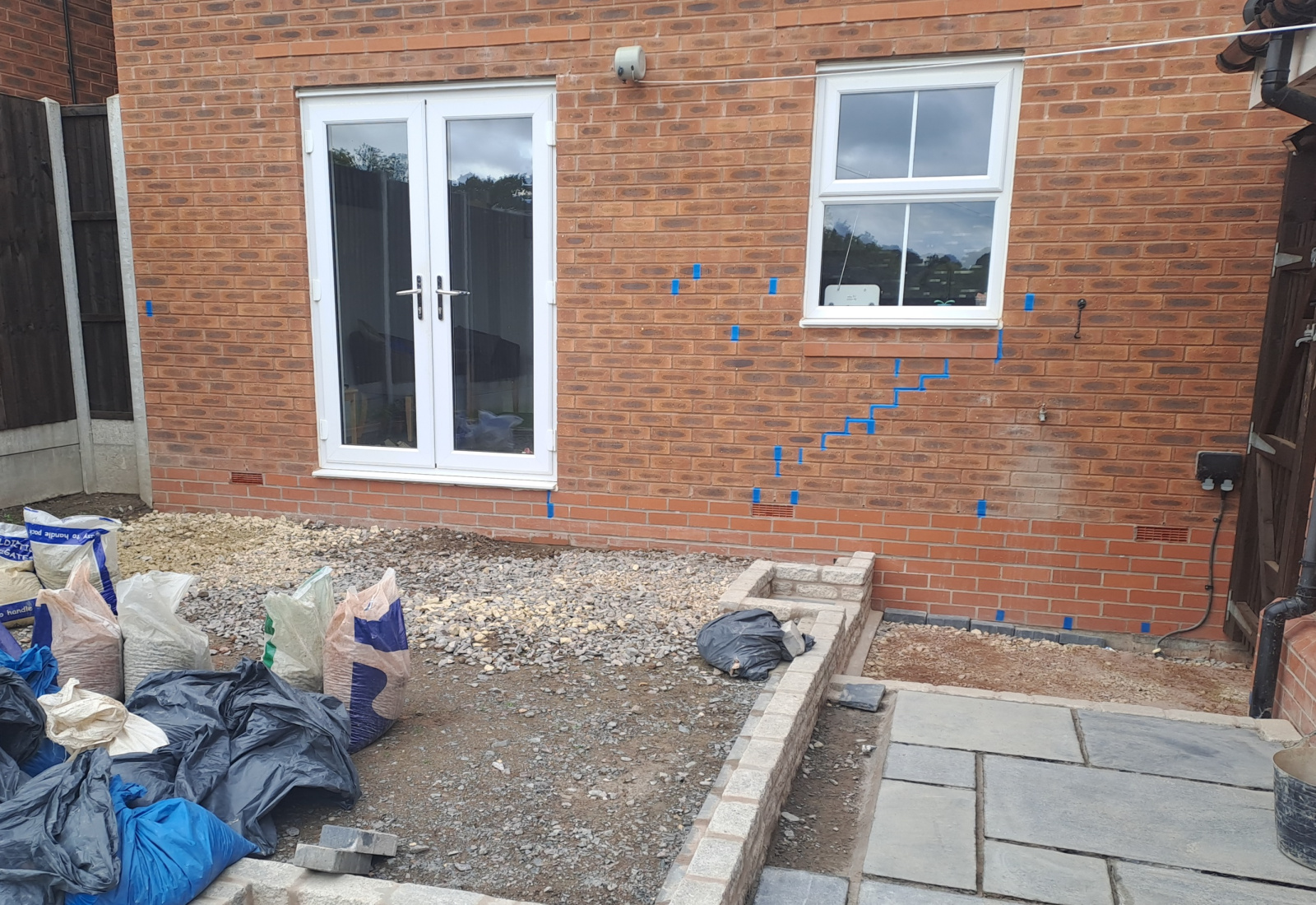
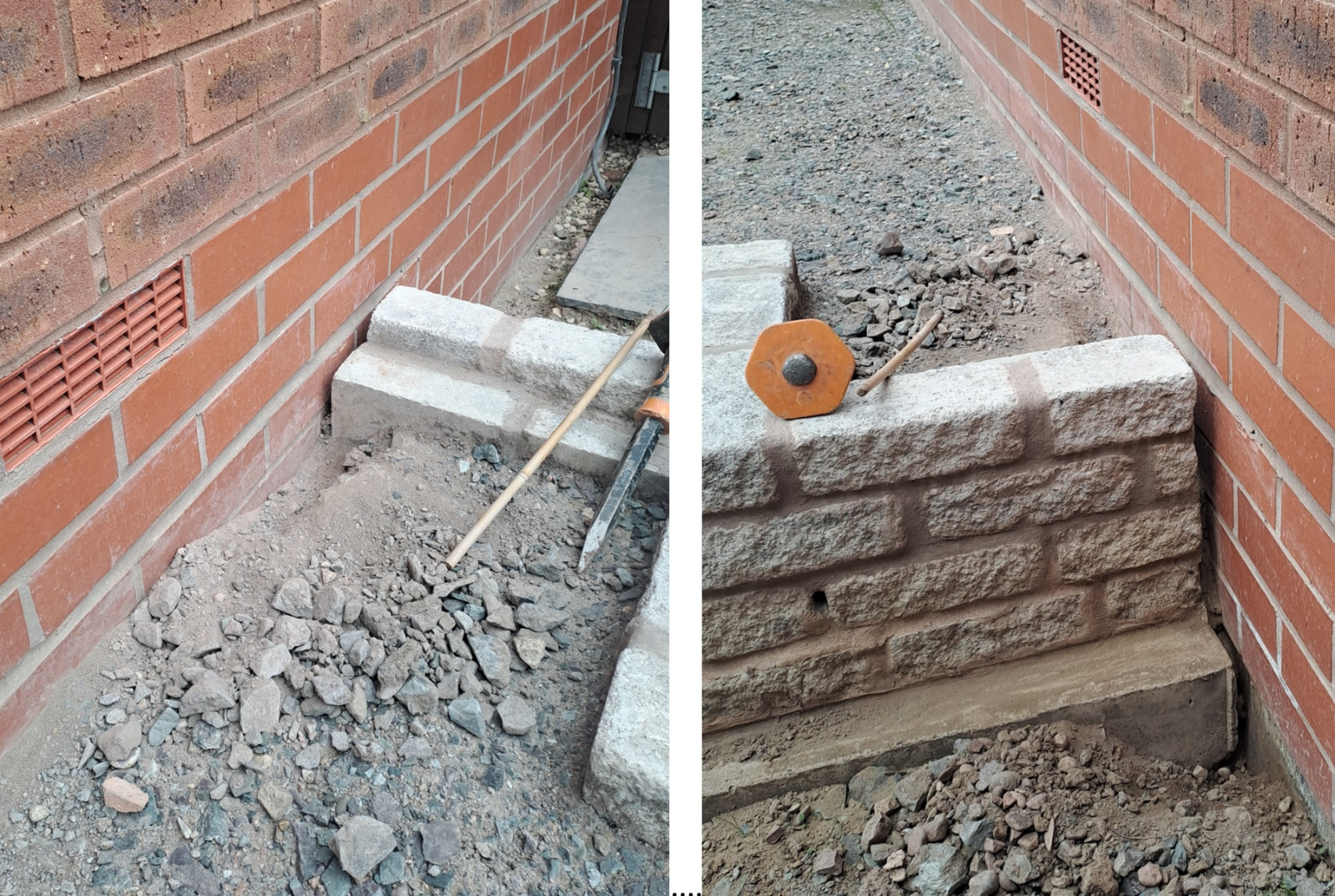
I built brick retaining walls on a concrete footing, including one perpendicular from the house where the patio drops down two bricks height. See photo attached.
However, I noticed that a crack has appeared in the back wall above the retaining wall perpendicular to the house (just below the window, indicated by blue lines in photo).
I am confused how the retaining walls have caused this crack. I am posting to gather some suggestions or advice.
What mistake have I made here? Has anyone experienced a similar situation? Should I contact a builder or a structural engineer?
Comments
-
Your assumption the patio has caused the crack is probably wrong.
Cracks are in general 90 degrees to the movement which points to the corner of the property near the external power outlets. The very dry summer may well have contributed to some thermal movement.3 -
You just came on here to show off your impressive DIYing skills, didn't you? 😁
Almost certainly no connection, and the cracks seem minor, probably coming under the umbrella of 'settlement', very possibly due to the prolonged dry spell, and probably nothing to worry about. Probably.
How old is the actual house?
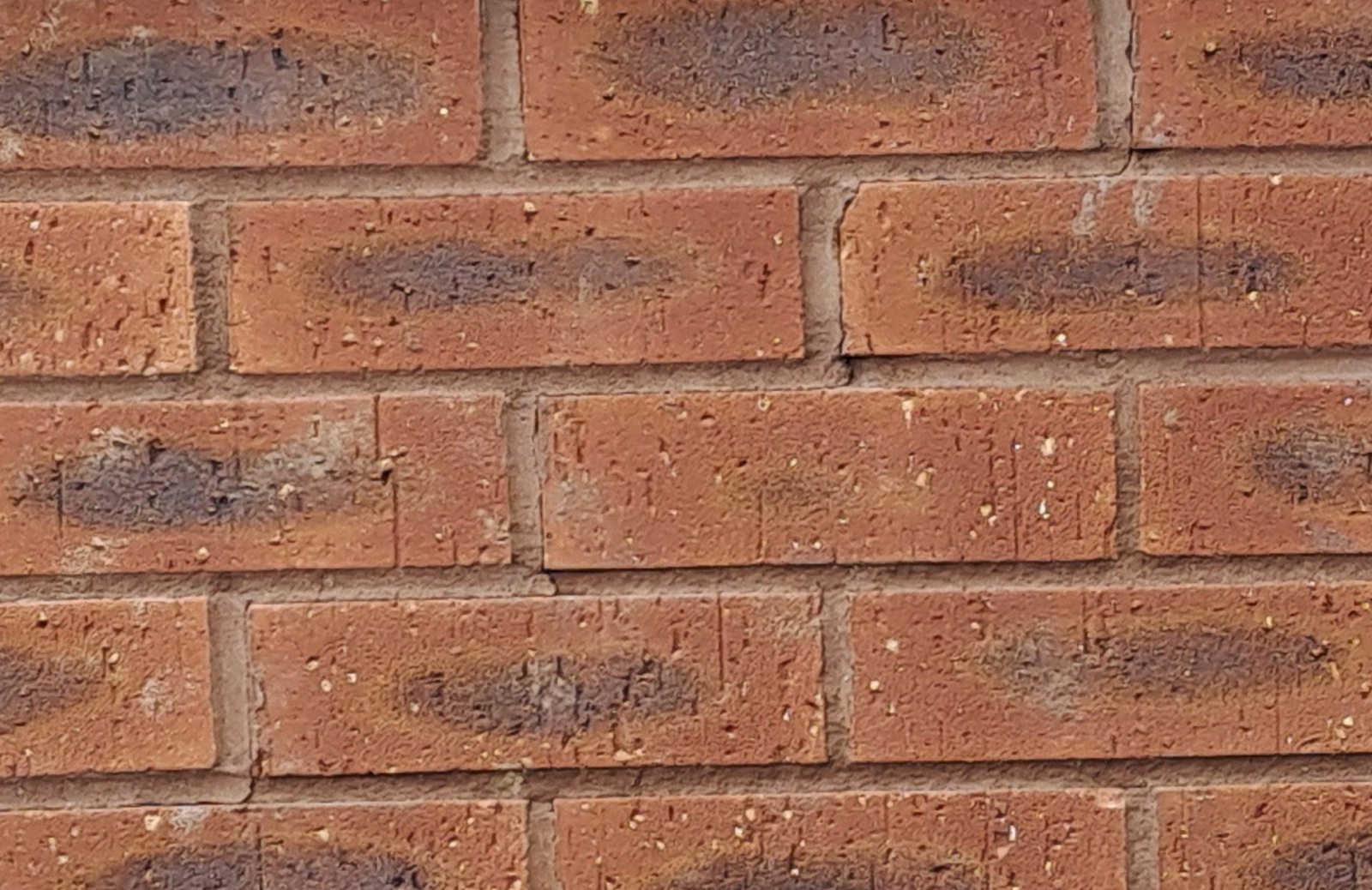
Are they visible indoors? And could we have a close-up pic of the worst.
2 -
thanks. I assumed it was too much of a coincidence, so I must have caused it somehow. I thought perhaps I was trapping water against the foundations…
should i pack soil against the wall of the house where the patio is? or should I put gravel/small stones against the house wall?
0 -
Thanks WIAWSNB, I can't say I have many skills, that's why I assumed I had made some amateurish error (not enough drainage?).
The house is 5 years old, a 3/4 bed detached house built by David Wilson.
Yes, there are visible hairline cracks inside, around window and along the ceiling of the back room (the kitchen).
The cracks are fine but only started a month or two ago, but I have noticed them spread and more bricks crack…
 1
-
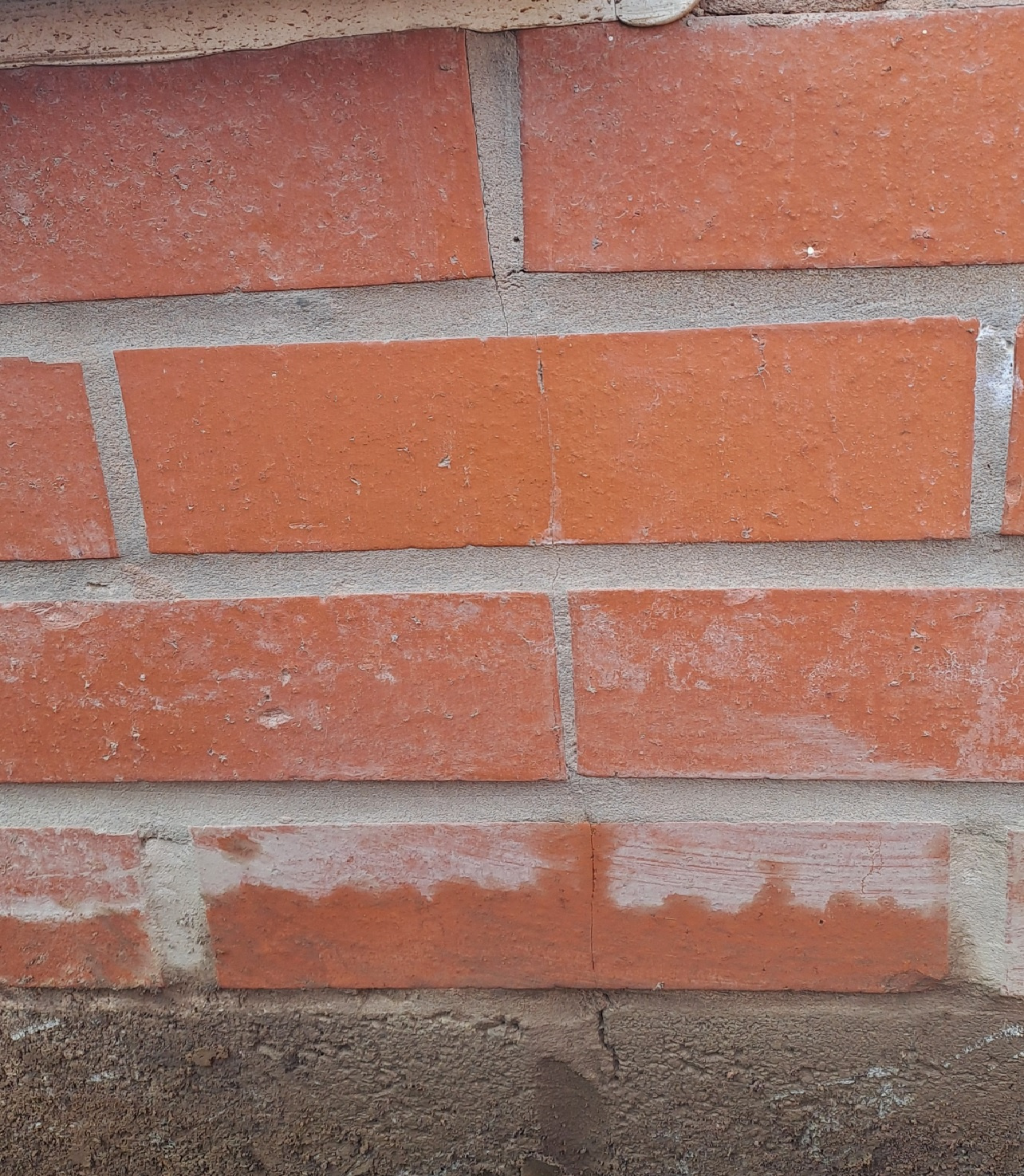
The picture of the bricks under the door maybe a concern.
They appear to go through the bricks and not follow the joints.
May need investigating and observation for a while to see if it gets worse.
Are the inside walls ok?
Why was the gate hung so low down as it covers the DPC?
Is your home built a slope?
1 -
Looks to me like it could be a foundation issue.
1 -
Subsidence at a corner would cause cracks rather at the top of the house than at the bottom. Here cracks are more likely be caused by subsidence (if any) in the middle.
And, to be pedantic, hot and dry are different things. Hot can cause thermal cracks. Dry can cause subsidence, especially on clay soil.
That said, I agree that cracks are minor and common for newbuilds.
1 -
Yes, it is on a slope. I would say about 60 cm lower on the right side and also about 40 cm from front to back. So, where the gate is, is the lowest corner of the house. Could it have a 'stepped' foundation?
0 -
Houses built on a slope are often built with a stepped foundation. When a house is first built the weight of it compresses the ground below it and it sinks down a bit. It's known as settlement, and some subsoils compress more than others. Ideally, the house should sink evenly over the footprint. However, sometimes one area of the house sinks more than another part, which is known as differential settlement, and often causes minor cracking. It's different to subsidence.
5 -
Subsidence at a corner would cause cracks rather at the top of the house than at the bottom. Here cracks are more likely be caused by subsidence (if any) in the middle.
Depends on a lot of things. At first sight I'd tend to agree with daveyjp's view that the corner on the right is possibly subsiding as indicated by the red arrows.
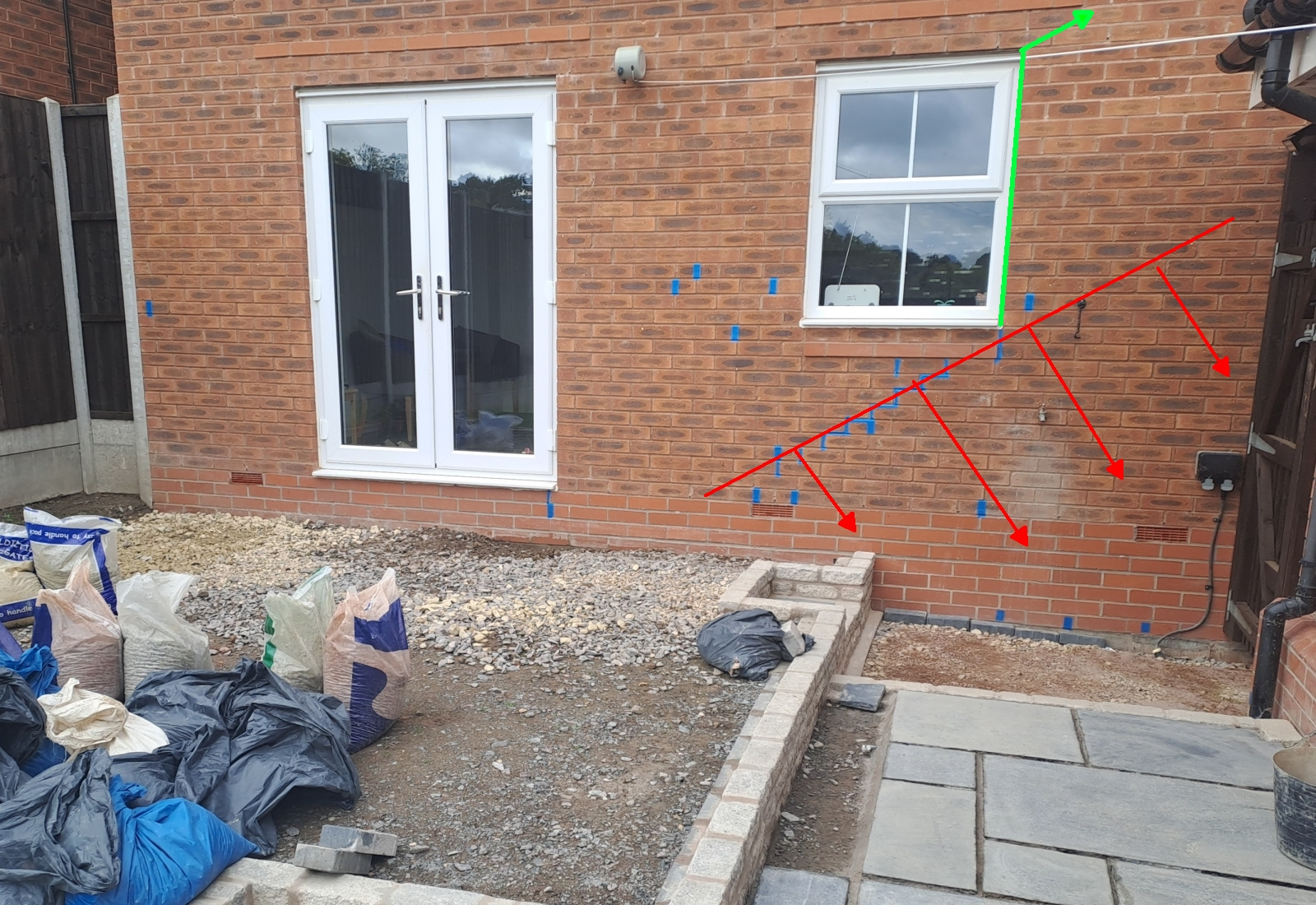
What I'd look for next is signs of movement/cracking following the green line - up the side of the window and then stepped through the brickwork above and further to the right. If the window was fitted using flexible silicone it might take some time before there are visible signs of movement.
5





Confirm your email address to Create Threads and Reply

Categories
- All Categories
- 355.7K Banking & Borrowing
- 254.9K Reduce Debt & Boost Income
- 456.1K Spending & Discounts
- 248.3K Work, Benefits & Business
- 605.9K Mortgages, Homes & Bills
- 179K Life & Family
- 263.7K Travel & Transport
- 1.5M Hobbies & Leisure
- 16.2K Discuss & Feedback
- 37.7K Read-Only Boards