We’d like to remind Forumites to please avoid political debate on the Forum.
This is to keep it a safe and useful space for MoneySaving discussions. Threads that are – or become – political in nature may be removed in line with the Forum’s rules. Thank you for your understanding.
where do I drill holes for curtain holders?
Comments
-
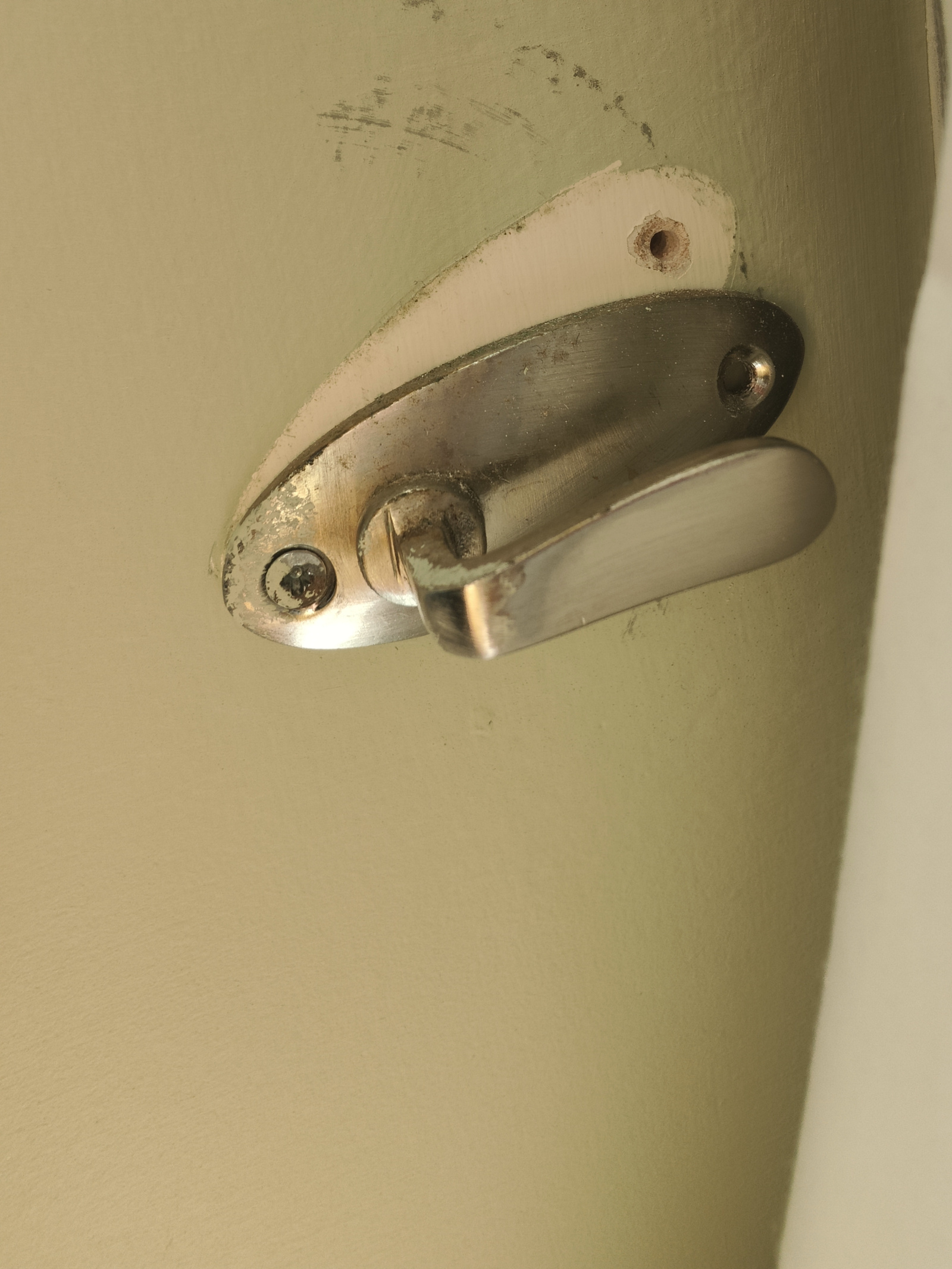
The hook moves a bit, it's messed up the wall, but the screw itself is firmly sitting there 😭
Oh that's interesting, all I really want is to remove the hook, if the screw stays there, I wouldn't care, it's 2mm thick hardly visible.
I threw the screws away, they were covered in plaster, probably screwed in manually 🤔 very thin 2mm diameter max, probably 20/25mm length.
the photos I'm attaching are directly from my phone, not resized sorry about that. The holes are tiny. That hook holds the curtain tiebacks.
when I don't ask I cause more mess. This forum is saving the house 😆
I had another post showing the curtains, they start from the two corners, and then maybe 25/30cm (didn't measure) on both sides of the door. That 25/30cm is already occupied by the thick curtains, so I don't have enough space.
I'm FTB, not an expert, all my comments are from personal experience and not a professional advice.Mortgage debt start date 11/2024 = 175k (5.19%)... Q1/2026 = PAID (3.94%)1 -
Even easier to fill any holes then.
And they shouldn't be as big.
They'll be just small screws because they aren't taking any weight. That's probably why there's no raw plugs.
I can rise and shine - just not at the same time!
viral kindness .....kindness is contageous pass it on
The only normal people you know are the ones you don’t know very well
0 -
If you've got an old flat blade screwdriver that you don't care about too much (because it may get damaged), you can try gently hammering the screw round by putting the screwdriver head in one of the remaining slots, pointing down towards the floor, if it's the slot on the left of your picture,, hitting the screwdriver handle, and seeing if the screw rotates anti-clockwise a bit. If it does, keep tapping the screw round until it comes loose and you can pull or twist it out with pliers. I've done that with the odd destroyed screw and it's a bit quicker than drilling it.
I’m a Forum Ambassador and I support the Forum Team on the In My Home MoneySaving, Energy and Techie Stuff boards. If you need any help on these boards, do let me know. Please note that Ambassadors are not moderators. Any posts you spot in breach of the Forum Rules should be reported via the report button, or by emailing forumteam@moneysavingexpert.com.
All views are my own and not the official line of MoneySavingExpert.
1 -
Does the tieback have any 'play' in it at all? Ie, can you pull the unattached end away from the wall even by a mm?
If so (and, if not, then just force it away a touch), slip summat - say a toothpick - behind it, and wobble and rotate the hook as you slip it further in. Once half wayish, tap the raised end inwards to as to pry the screwed end out - ie, the 'toothpick' is the pivot. Repeated gentle taps. Move the 'pick further in towards the screw as you can to increase leverage on it.
Or, use a 5mm drill bit and drill in the centre of the screw head. Once it goes in the depth of the head - 4mm or so - the head will hopefully fall off, or try levering the hook away again to force it.
Remove the 5mm but, and close the chuck to near the protruding screw's shaft size. Place the jaws over the screw end, and tighten it up. Low gear, low speed, reverse, and gentle unscrewing.
Skim of 'fine' filler.
For new fixing, try and avoid the metal edge beading, use a masonry bit with hammer, hold the drill firmly to keep it steady, and a fairly fast speed coupled with gentle forward pressure - it's soft plaster and thermo brick, it should be easy.
Vacuum out debris (hold the nozzle half over the hole), and a snug plastic plug inserted deeper - beyond - the the plaster layer - you may need longer screws than supplied?
0 -
In addition to Victor's worth-trying idea, you could try a suitably-sized flat blade screwdriver directly on the screw head. Sometimes a flattie will catch the two best slots in a damaged crosshead.
You could also cut a couple of small pieces from a plastic milk bottle side, and try slipping them under the end of the hook base that's nearest the screw, if it'll go in there.
Then, as you try unscrewing the screw using the flat-blade screwdriver, also turn the whole fitting anti-clock at the same time. Hopefully the plastic will make it slip round easier, and not dig in.
0








Confirm your email address to Create Threads and Reply

Categories
- All Categories
- 355.8K Banking & Borrowing
- 254.9K Reduce Debt & Boost Income
- 456.2K Spending & Discounts
- 248.3K Work, Benefits & Business
- 605.9K Mortgages, Homes & Bills
- 179K Life & Family
- 263.7K Travel & Transport
- 1.5M Hobbies & Leisure
- 16.2K Discuss & Feedback
- 37.7K Read-Only Boards