We’d like to remind Forumites to please avoid political debate on the Forum.
This is to keep it a safe and useful space for MoneySaving discussions. Threads that are – or become – political in nature may be removed in line with the Forum’s rules. Thank you for your understanding.
Horizon Parking Pcn County Court Hearing date Help !!!!!
Comments
-
-
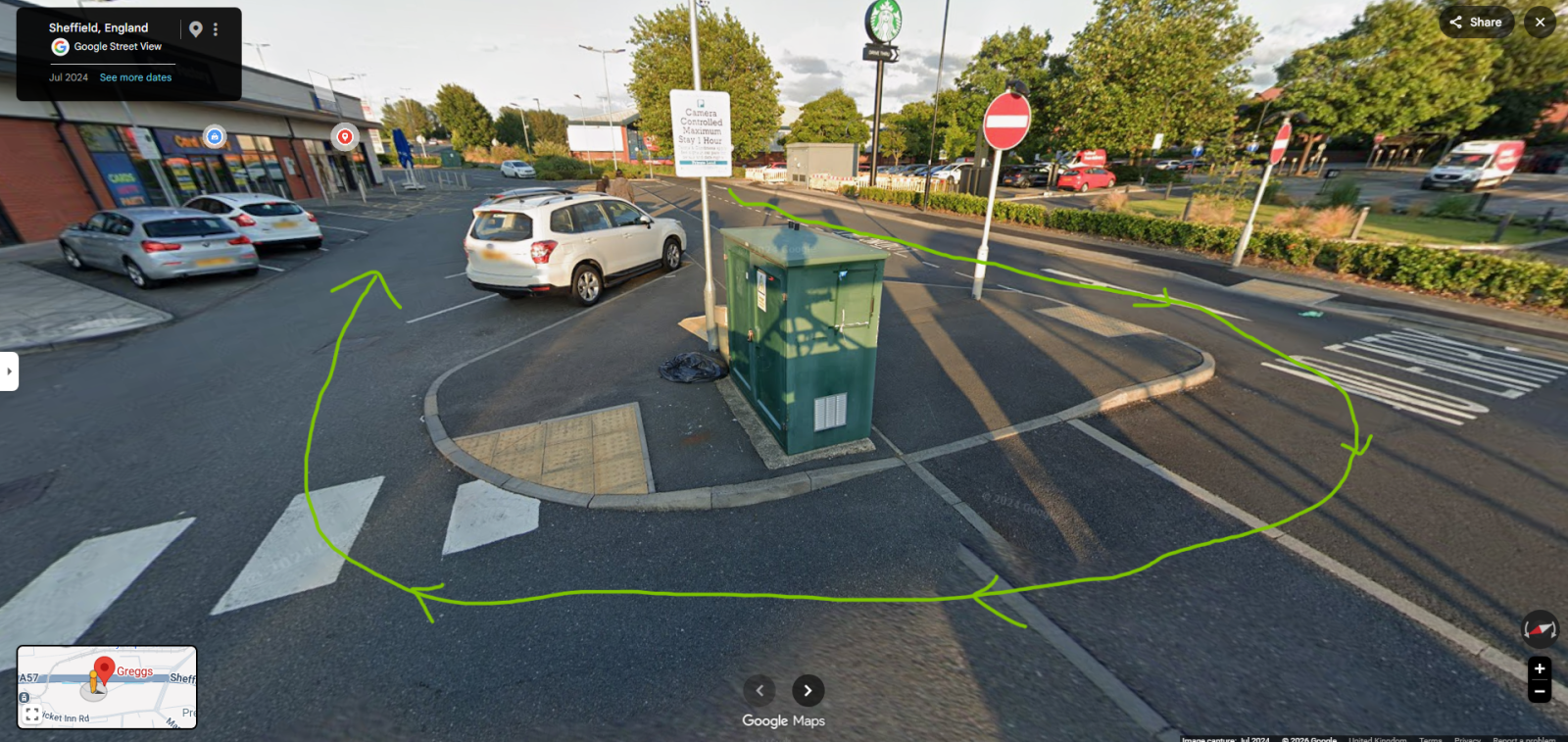
this the second board on the entrance not idealy located and size when you come of sheffield parkway
0 -
Perfect.
Add these in as Exhibits.
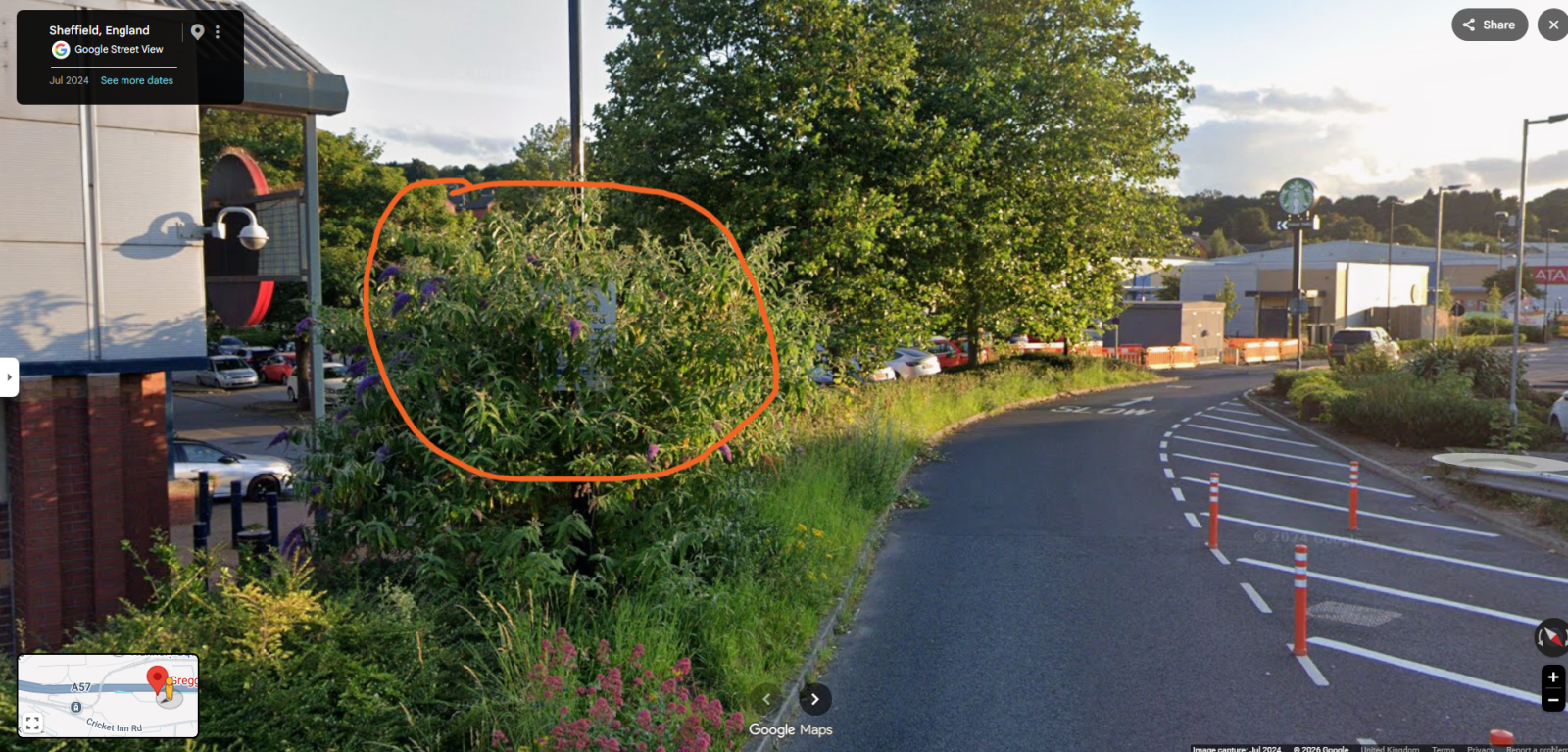
Bottom photo show entrance signage perpendicular to the road and invisible on entry.
Quote requirements for entrance signage from here: https://www.britishparking.co.uk/write/Documents/AOS/NEW%20Redesigned%20Documents/sectorsingleCodeofPractice.pdf
Also state that it is likely a requirement with the landowner in their agreement (should one exist) that the claimant will adhere to the Single Code of Practice at all times/
2 -
-
IN THE COUNTY COURT AT
SHEFFIELDClaim No: ———-
BETWEEN:
HORIZON PARKING LIMITEDClaimant
-and-
Defendant
WITNESS STATEMENT OF ——————————
I, ———————————————————————————-, am the Defendant in these proceedings.
I make this Witness Statement in support of my Defence to the claim brought by Horizon Parking Limited ("the Claimant").
The facts and matters set out in this statement are within my own knowledge unless otherwise stated. Where I refer to matters of law or documents, I do so based upon the documents available to me.
I am a litigant in person and have no formal legal training. I have nevertheless made every effort to present the facts and evidence accurately and fairly.
I respectfully ask the Court to consider the whole of the circumstances rather than treating the ANPR entry and exit times as automatically establishing that the Claimant is entitled to the parking charge.
1. THE PARKING EVENT
- The alleged parking event occurred on 26 February 2025 at the car park serving Greggs, Sheffield Park Way.
- The Claimant's ANPR evidence records the vehicle entering the site at approximately 10:55:49 and leaving at approximately 12:10:53.
- The total ANPR period is therefore approximately 1 hour, 15 minutes and 4 seconds.
- I understand the Claimant's case to be that the permitted maximum stay was one hour, and that the vehicle therefore remained on site for approximately 15 minutes and 4 seconds beyond that period.
- I do not accept that the ANPR period, by itself, establishes a contractual breach giving rise to the sum claimed.
- In particular, the Claimant must prove:
a. the precise contractual terms relied upon;
b. that those terms were sufficiently prominent and clearly communicated;
c. that those terms applied to this particular car park and vehicle;
d. that the alleged one-hour restriction was properly communicated to the driver before or at the time the contract was formed;
e. that the Claimant had authority from the landowner to offer parking contracts and pursue charges;
f. that the applicable consideration and grace periods were properly applied; and
g. that the amount now claimed is contractually and legally recoverable.
2. THE EQUALITY ACT 2010 – DISABILITY AND REASONABLE ADJUSTMENTS
- On the date in question I was travelling with my 11-year-old disabled child.
- I rely upon this circumstance as a central part of my defence, rather than merely asking the Court to treat it as a matter of sympathy or general mitigation.
- The Equality Act 2010 provides statutory protection for disabled people and places duties upon service providers concerning reasonable adjustments.
- In particular, section 20 of the Equality Act 2010 contains the duty to make reasonable adjustments where a provision, criterion or practice places a disabled person at a substantial disadvantage in comparison with persons who are not disabled.
- Section 21 provides that a failure to comply with the applicable reasonable-adjustment duty amounts to discrimination.
- Section 29 of the Equality Act 2010 concerns discrimination in the provision of services to the public. I rely upon the Claimant's provision and management of parking facilities as a service available to members of the public.
- The reasonable-adjustment duty applicable to service providers is anticipatory. In other words, a service provider is expected to consider the needs of disabled people generally and not simply wait until an individual disabled person makes a formal request for an adjustment. The Government's explanatory notes to the Equality Act describe the service-provider duty as anticipatory.
- The Government has specifically confirmed that private parking operators providing parking facilities are required under the Equality Act 2010 to make reasonable adjustments for disabled people and provide them equal opportunities to access services.
- The Government has more recently confirmed that private parking operators are required to make reasonable adjustments under the Equality Act 2010, although the particular form of adjustment will depend upon the circumstances.
- I do not contend that the disability of my child automatically cancelled the parking terms or created an unlimited right to remain on the site.
- My case is more specific.
- The Claimant imposed, or seeks to enforce, a one-hour maximum parking period. I contend that this constitutes a provision, criterion or practice which must be considered in the context of its effect upon disabled customers and the people accompanying them.
- In my circumstances, I was travelling with my 11-year-old disabled child and the practical process of safely managing the child's needs, entering and leaving the vehicle, accompanying the child and completing the visit could take longer than it ordinarily would for a person without those additional needs.
- I therefore contend that the rigid application of a one-hour maximum, without appropriate consideration of disability-related additional time, had the potential to place my child at a substantial disadvantage compared with a non-disabled child or customer.
- A reasonable adjustment could, depending upon the circumstances, include allowing additional time, providing discretion to cancel a charge arising from disability-related delay, or having an appropriate procedure for identifying and dealing with disability-related circumstances.
- I respectfully submit that an adjustment of this nature would not necessarily require the Claimant to abandon its legitimate management of the car park. It could instead have permitted a reasonable amount of additional time where disability-related circumstances caused the delay.
- The alleged overstay was approximately 15 minutes and 4 seconds.
- This was not a case where I deliberately remained in the car park for a substantial additional period in disregard of the terms.
- The circumstances were also materially different from those of an ordinary motorist travelling alone because I was responsible for an 11-year-old disabled child.
- I respectfully ask the Court to consider whether the Claimant had an appropriate reasonable-adjustment policy or procedure in operation at the material time and, if so, whether it was properly applied in my circumstances.
- I further ask the Claimant to explain:
a. what reasonable-adjustment arrangements it had in place on 26 February 2025 for disabled customers and children accompanying disabled customers;
b. whether its parking enforcement policy contained any provision for disability-related additional time;
c. whether its ANPR enforcement system allowed disability-related circumstances to be considered;
d. whether its staff or agents had discretion to cancel or refrain from pursuing a charge where disability-related circumstances had caused additional time;
e. what arrangements existed between the Claimant and the landowner concerning Equality Act compliance; and
f. whether the Claimant considered the Equality Act 2010 before pursuing this particular charge.
- I respectfully submit that it is not sufficient for the Claimant simply to rely upon an automated ANPR calculation without addressing the statutory Equality Act considerations arising from the circumstances of this case.
- I therefore invite the Court to consider the Equality Act 2010 as an important part of the circumstances in determining whether the Claimant should be permitted to enforce the alleged contractual charge.
- I emphasise that I am not asking the Court to create a general exemption from parking restrictions for disabled people. I am asking the Court to consider whether the Claimant properly discharged its legal obligations concerning reasonable adjustments in the particular circumstances before seeking to enforce the charge.
3. THE PARTICULARS OF CLAIM
- I respectfully invite the Court to examine the Claimant's Particulars of Claim carefully.
- If, as appears from the Claimant's pleading, the Particulars merely state that the vehicle was parked in breach of the terms displayed on signage, without identifying the actual contractual term, the precise breach and the contractual basis upon which the sum is claimed, I submit that the pleading is insufficiently particularised.
- This is important because I cannot reasonably be expected to answer an allegation that was not properly set out in the Particulars of Claim.
- In Civil Enforcement Limited v Chan, Ref. E7GM9W44, HHJ Murch, on 15 August 2023, considered the adequacy of private parking Particulars of Claim and held that the Particulars did not set out the conduct said to amount to the breach relied upon.
- Similarly, in Car Park Management Services Ltd v Akande, Ref. K0DP5J30, HHJ Evans, on 10 May 2024, emphasised the importance of Particulars setting out the basic facts upon which a claimant relies to establish its claim.
- I rely upon those authorities as persuasive authorities. I do not suggest that they are binding upon this Court.
- If the Claimant's Witness Statement attempts to introduce a materially different allegation from that actually pleaded, I respectfully submit that the Court should be cautious about allowing the Claimant to substantially change or expand its pleaded case through witness evidence.
- I therefore invite the Court, where appropriate, to consider its powers under CPR 3.4 and/or to attach appropriate weight to any inadequately pleaded allegation.
4. THE 2025 SINGLE CODE OF PRACTICE AND THE GRACE PERIOD
- The alleged parking event occurred on 26 February 2025, after Version 1.1 of the Private Parking Sector Single Code of Practice came into effect on 17 February 2025.
- The Code was jointly produced by the British Parking Association and International Parking Community and applies to members of those organisations.
- I therefore put the Claimant to strict proof of its membership of the relevant Accredited Trade Association at the material time and of the version of the Code applicable to this site.
- The Code distinguishes between a consideration period and a grace period.
- The consideration period gives a motorist an opportunity to read and understand the applicable terms and decide whether to accept them and remain or reject them and leave.
- Annex B of Version 1.1 provides mandatory minimum consideration and grace periods.
- For open-to-the-public land offering one hour or more of free parking, where the premises have fewer than 500 spaces, the table provides a minimum 5-minute consideration period and 10-minute grace period.
- I therefore put the Claimant to strict proof of:
a. the consideration period registered for this particular site;
b. the grace period applied by the Claimant;
c. how those periods were calculated in this case;
d. whether the Claimant actually applied the required grace period before issuing the charge; and
e. the evidence demonstrating how the alleged breach was calculated.
- On the Claimant's own ANPR figures, the alleged excess is 15 minutes and 4 seconds.
- If a 10-minute grace period is applicable and properly deducted, the alleged excess would be reduced to approximately 5 minutes and 4 seconds.
- That remaining period must then be considered alongside the circumstances of the visit, including my disabled child, the practical circumstances of leaving the site and the adequacy of the signage.
- I respectfully submit that it would be inappropriate to treat the entire 15 minutes and 4 seconds as though no consideration or grace period existed.
5. ANPR DOES NOT BY ITSELF PROVE A CONTRACTUAL BREACH
- I accept that ANPR technology can record when a vehicle enters and leaves a site.
- However, the ANPR timestamps do not by themselves prove what contractual terms were communicated to the driver, whether those terms were sufficiently prominent, whether the consideration period was properly applied, whether the grace period was applied, or whether the sum demanded is contractually recoverable.
- The Claimant therefore needs to establish the contractual chain from:
signage → offer → acceptance → applicable terms → alleged breach → contractual charge.
- It is not sufficient simply to produce two photographs showing the registration number and timestamps.
6. SIGNAGE AND FORMATION OF CONTRACT
- The Claimant must prove the signs that were actually present at this site on 26 February 2025, rather than relying upon generic, stock or subsequently produced photographs.
- I respectfully ask the Court to consider whether the one-hour maximum stay was:
a. displayed at the entrance;
b. sufficiently prominent;
c. readable by a driver approaching the site;
d. positioned so that the driver could understand the restriction before accepting the alleged contract; and
e. consistent throughout the car park.
- Version 1.1 of the Single Code requires signs to be visible, legible and unambiguous. It also provides specific requirements concerning entrance signs and the information which should be displayed to drivers.
- I therefore put the Claimant to strict proof of the precise signage relied upon, including:
a. photographs of the entrance as it existed on 26 February 2025;
b. photographs of all relevant signs;
c. the location of those signs;
d. the height, position and orientation of the signs;
e. the wording appearing on the signs;
f. evidence establishing that those signs were in place on the date of the alleged event; and
g. evidence establishing that the one-hour restriction was sufficiently prominent.
- If the Claimant relies upon photographs taken after the event, those photographs do not necessarily establish what a driver saw on 26 February 2025.
7. THE WIDER RETAIL PARK AND POTENTIAL CONFUSION
- The location forms part of a wider retail environment.
- I understand that other businesses within the wider retail park provide customers with substantially longer free parking periods, including periods of up to approximately three hours.
- I do not suggest that the parking terms of another business automatically apply to the Claimant's car park.
- Rather, I rely upon the wider layout and use of the retail area as relevant to the question of whether the Claimant's own one-hour restriction was sufficiently clear and prominent to a motorist entering the relevant area.
- The Claimant must prove that the terms applying to the specific area in which the vehicle was parked were clearly distinguishable from the arrangements applying elsewhere.
8. THE CLAIMANT'S AUTHORITY
- The Claimant is put to strict proof that it had sufficient authority from the landowner to:
a. manage the land;
b. enter into parking contracts with motorists;
c. issue parking charges;
d. retain the charges; and
e. commence proceedings in its own name.
- I request that the Claimant produce the contemporaneous landowner agreement applicable to the site and date in question, including any relevant schedules, site plans, amendments and extensions.
- A generic witness statement asserting that the Claimant has authority is not necessarily equivalent to producing the underlying agreement.
- The Court is respectfully invited to require the Claimant to prove its standing rather than assume it.
9. CONSUMER RIGHTS ACT 2015
- I also rely upon the Consumer Rights Act 2015 insofar as the alleged parking terms constitute consumer contract terms or consumer notices.
- Section 62 provides protection against unfair consumer contract terms and section 68 requires relevant terms and notices to be transparent.
- The issue is particularly important where a motorist is allegedly bound by a substantial charge following a relatively short overstay.
- I respectfully submit that a term imposing a parking charge must be sufficiently prominent and transparent for the motorist to understand the consequence of remaining beyond the permitted period.
- If the Claimant relies upon a term which is difficult to see, hidden amongst other information, or insufficiently prominent, I ask the Court to consider that when determining whether the term was fairly incorporated into the alleged contract.
10. PARKINGEYE LTD v BEAVIS
- I recognise the authority of ParkingEye Ltd v Beavis [2015] UKSC 67.
- I do not dispute that a properly formed parking contract can, in appropriate circumstances, support a parking charge which is not calculated simply by reference to the landowner's actual financial loss.
- However, I respectfully submit that Beavis does not mean that every private parking charge, or every maximum-stay restriction, is automatically enforceable. The Supreme Court's decision depended upon the particular facts and circumstances of that case, including the nature of the car park, the prominent signage, the two-hour free parking period and the legitimate interest in managing the turnover of parking spaces.
- A particularly important distinction is that Mr Beavis was permitted to park free of charge for up to two hours. The Supreme Court considered the two-hour period in the context of the legitimate interest in ensuring an efficient turnover of spaces for customers of the retail park.
- The present case is materially different. The Claimant alleges that the maximum permitted stay at this site was only one hour.
- I respectfully submit that the Court should therefore consider whether the reasoning in Beavis can properly be applied to a materially shorter one-hour restriction without examining the particular circumstances of this site and the justification for that restriction.
- I accept that the management of parking spaces and the turnover of vehicles can constitute a legitimate interest. Indeed, the Supreme Court recognised that the purpose of the restriction in Beavis was to prevent motorists from occupying spaces for excessive periods and thereby allow other customers to use the retail facilities.
- However, the existence of a legitimate interest in achieving parking turnover does not necessarily establish that one hour was a necessary or proportionate period for achieving that objective at this particular location.
- In Beavis, the two-hour period was itself considered sufficient to provide customers with a meaningful opportunity to use the retail facilities while still ensuring that spaces turned over for other customers.
- I respectfully submit that two hours is a reasonable period for an ordinary customer visiting a retail environment to park, obtain food, sit down for a meal and potentially visit one or more shops afterwards.
- A reasonable customer would not necessarily expect that the entire visit to a substantial retail environment must be completed within only one hour, particularly where the purpose of the parking facility is to encourage members of the public to visit and use the businesses located there.
- I understand the wider retail area to comprise approximately 100,000 square feet of retail space. I rely upon the size and nature of the retail environment as relevant to the question of what period is reasonably required for genuine customers to use the facilities.
- I do not suggest that the size of the retail area gives motorists an unlimited right to remain on the land.
- Rather, my submission is that the Claimant should be required to explain why one hour, rather than a longer period such as two hours, was considered necessary to achieve the legitimate objective of parking-space turnover.
- If the purpose of the restriction is to ensure that new customers can obtain parking spaces, a two-hour limit can still achieve that purpose. The fact that two hours was considered sufficient in Beavis is relevant to the question of whether a one-hour limit at this site is reasonably necessary.
- I therefore respectfully put the Claimant to strict proof of the commercial and operational justification for the one-hour restriction, including:
a. why one hour was selected;
b. what evidence of parking demand or capacity supported that period;
c. whether the landowner specifically required a one-hour maximum;
d. whether the Claimant or landowner considered a two-hour maximum;
e. whether a two-hour maximum would have provided sufficient turnover of spaces; and
f. whether the needs of disabled customers were considered when determining the permitted parking period.
- This issue is particularly important in the circumstances of my case because the alleged overstay was only 15 minutes and 4 seconds.
- Furthermore, I was visiting the site with my 11-year-old disabled child, who has Type 1 diabetes and whose blood glucose levels can fluctuate as a result of his condition and the manual insulin therapy required to manage it.
- Where my child's blood glucose level becomes unstable or there is a risk of hypoglycaemia, I have a responsibility to monitor him and, where necessary, wait until he is sufficiently stable before leaving and travelling.
- I could not reasonably prioritise an arbitrary parking deadline over the immediate health and safety of my child.
- The combination of a relatively short one-hour permitted period and the disability-related circumstances is therefore important when considering whether the Claimant's restriction was reasonable and proportionate in the circumstances.
- I respectfully submit that the present case should not be treated as though it were factually identical to Beavis. The permitted period is different, the circumstances of the customer are different, the alleged overstay is different, and the Claimant must establish the justification for its particular parking regime.
- I therefore respectfully invite the Court to distinguish ParkingEye Ltd v Beavis on its facts and to consider whether the Claimant has demonstrated a sufficient legitimate and proportionate interest in imposing and enforcing a one-hour maximum stay at this particular retail location.
- I further submit that the Court should consider this issue alongside the Claimant's obligations under the Equality Act 2010, the applicable consideration and grace periods, the signage and the particular circumstances surrounding my child's disability.
- I do not contend that Beavis is irrelevant. On the contrary, I rely upon it because the Supreme Court's reasoning demonstrates the importance of examining the actual parking period, the legitimate interest being protected and the particular circumstances of the car park.
- My submission is simply that Beavis does not establish that a one-hour restriction is automatically justified merely because a two-hour restriction was upheld in that case.
- The Claimant should therefore be required to demonstrate why its one-hour restriction, in this particular retail environment and in the circumstances of this case, was necessary to achieve the legitimate objective of parking-space turnover and why reasonable adjustments could not accommodate disability-related additional time without defeating that objective.
11. THE AMOUNT CLAIMED
- I deny liability for any sum which has not been properly established as being due under the alleged contract.
- If the Claimant seeks to recover an additional sum above the original parking charge, I put the Claimant to strict proof of the contractual or statutory basis for that additional sum.
- Any purported debt recovery charge or similar additional amount must not simply be assumed to be recoverable because it appears in the Claimant's Particulars of Claim.
- The Court is invited to examine separately:
a. the original parking charge;
b. any interest;
c. court fees; and
d. every additional sum claimed.
- I respectfully submit that the Claimant should not obtain double recovery or recover sums which are not supported by the contractual terms, applicable legislation or a proper legal basis.
12. THE CLAIMANT'S EVIDENCE MUST BE TESTED AGAINST THE MATERIAL DATE
- The relevant date is 26 February 2025.
- The Court is respectfully invited to distinguish between:
a. evidence showing what was actually displayed on that date; and
b. photographs or documents subsequently created or obtained by the Claimant.
- A sign installed, replaced, altered or photographed after the alleged event cannot automatically establish what the driver saw on 26 February 2025.
- I therefore ask the Court to attach appropriate weight to contemporaneous evidence and to require the Claimant to establish the position as it existed on the material date.
13. OVERALL CIRCUMSTANCES
- This is not a case where I deliberately ignored a clearly displayed restriction for a substantial period.
- The allegation concerns an ANPR stay of approximately 1 hour, 15 minutes and 4 seconds against an alleged one-hour maximum.
- The alleged overstay is therefore approximately 15 minutes and 4 seconds, before consideration of the applicable grace period.
- The visit also involved my 11-year-old disabled child, which created circumstances requiring additional care and time.
- The disability-related circumstances are relevant not merely as mitigation, but to the Claimant's statutory obligations under the Equality Act 2010 concerning reasonable adjustments.
- I respectfully submit that these circumstances are materially different from a case involving deliberate misuse of a car park or a substantial period of unauthorised parking.
- The Claimant should not be permitted simply to rely upon an automated timestamp while disregarding the contractual, Equality Act, Code and factual circumstances surrounding the alleged breach.
14. CONCLUSION
- For the reasons set out above, I respectfully submit that the Claimant has failed to establish its claim.
- In particular, the Claimant is required to prove:
a. the precise contractual term relied upon;
b. that the term was clearly and prominently communicated;
c. that the signage relied upon existed at the relevant site on 26 February 2025;
d. that the Claimant had authority to issue and pursue the charge;
e. that the applicable consideration and grace periods were properly applied;
f. that the Claimant complied with its obligations under the Equality Act 2010 concerning reasonable adjustments in the circumstances of my disabled child; and
g. that every part of the sum claimed is legally recoverable.
- I respectfully invite the Court to dismiss the claim.
- In the alternative, if the Court finds that some contractual breach occurred, I respectfully invite the Court to consider the applicable grace period, the circumstances of the visit, the disability-related circumstances, the Claimant's Equality Act obligations, the quality of the signage and the actual amount properly recoverable.
15. UNREASONABLE CONDUCT – CPR 27.14(2)(g)
- If the Court considers it appropriate, I respectfully reserve my position concerning costs under CPR 27.14(2)(g).
- I recognise that the small claims costs regime is restrictive and that an award under CPR 27.14(2)(g) requires unreasonable behaviour.
- If the Claimant has pursued a claim despite being unable to establish the contractual terms, its authority, the applicable signage, the correct basis for the amount claimed, or having failed properly to consider the disability-related circumstances and reasonable-adjustment obligations arising under the Equality Act 2010, I respectfully invite the Court to consider whether the conduct goes beyond ordinary conduct in litigation.
- I will rely upon the Claimant's actual evidence and conduct in the proceedings rather than making allegations which cannot be supported.
- If the Court considers the threshold for unreasonable conduct satisfied, I seek such costs as are permitted under CPR 27.14(2)(g), including my reasonable litigant-in-person costs.
STATEMENT OF TRUTH
I believe that the facts stated in this witness statement are true.
I understand that proceedings for contempt of court may be brought against anyone who makes, or causes to be made, a false statement in a document verified by a statement of truth without an honest belief in its truth.
Signed:
Date:
0 -
can someone kindly have a look please and if can advise me what format it needs to be for submission , and best practice to add Exhibits and claim for losses.
Regards
0 -
Study the advice by coupon mad in the newbies sticky thread in announcements at the top of the forum, second post
Also study the WS by JackR1 too
2 -
It's not a 'claim' for losses. Don't call your costs a 'claim' (you are defending their claim).
Have a look at:
- the NEWBIES thread post 2 section on WS and evidence;
- the WS on JackR1's thread
- the WS and costs schedule by
@Hondawonda
PRIVATE 'PCN'? DON'T PAY BUT DON'T IGNORE IT (except N.Ireland).
CLICK at the top or bottom of any page where it says:
Home»Motoring»Parking Tickets Fines & Parking - read the NEWBIES THREAD1










Confirm your email address to Create Threads and Reply

Categories
- All Categories
- 355.6K Banking & Borrowing
- 254.8K Reduce Debt & Boost Income
- 456.1K Spending & Discounts
- 248.2K Work, Benefits & Business
- 605.7K Mortgages, Homes & Bills
- 179K Life & Family
- 263.5K Travel & Transport
- 1.5M Hobbies & Leisure
- 16.1K Discuss & Feedback
- 37.7K Read-Only Boards