We’d like to remind Forumites to please avoid political debate on the Forum.
This is to keep it a safe and useful space for MoneySaving discussions. Threads that are – or become – political in nature may be removed in line with the Forum’s rules. Thank you for your understanding.
Flexible Life Interest Trust and IHT
Comments
-
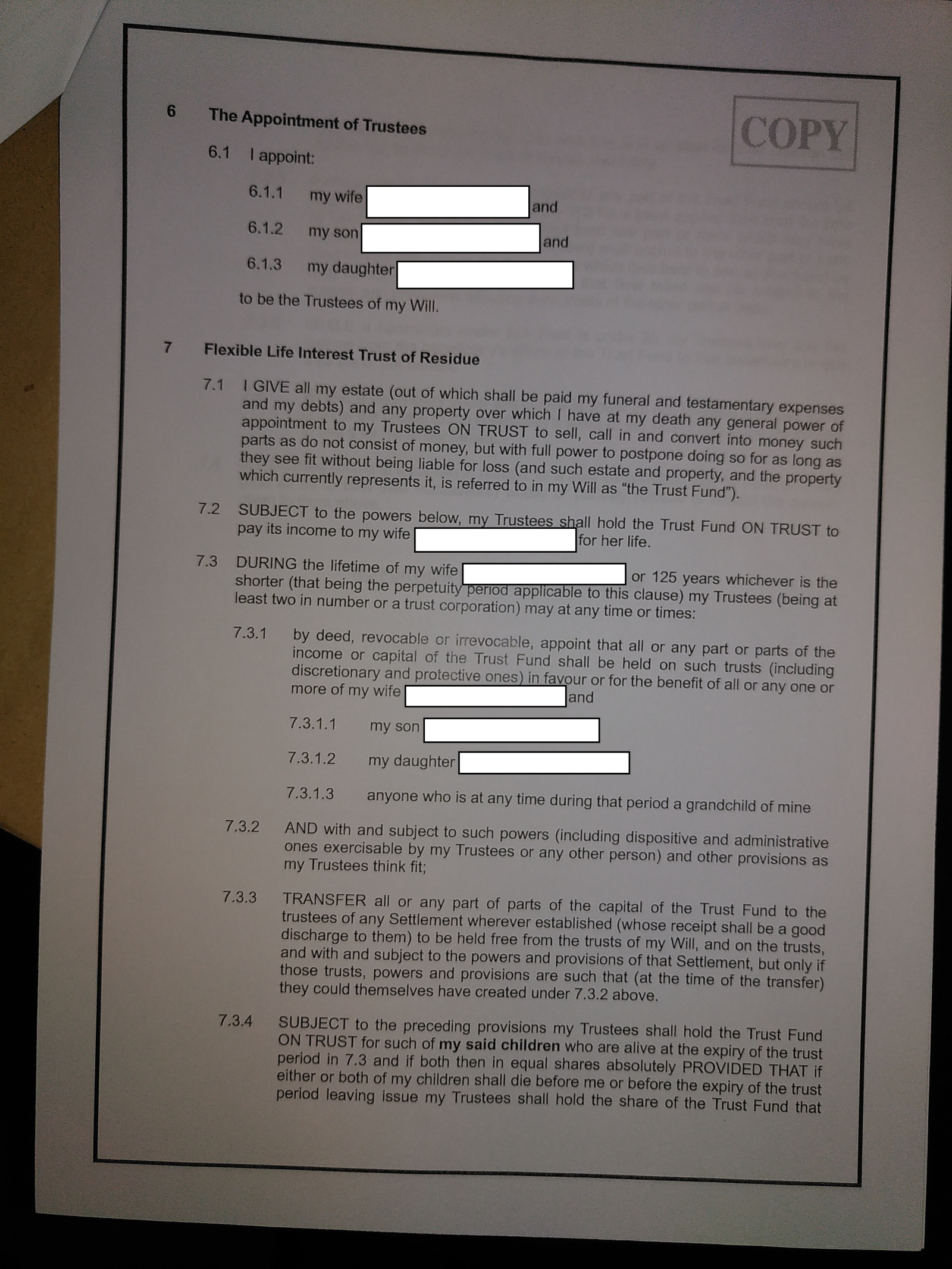
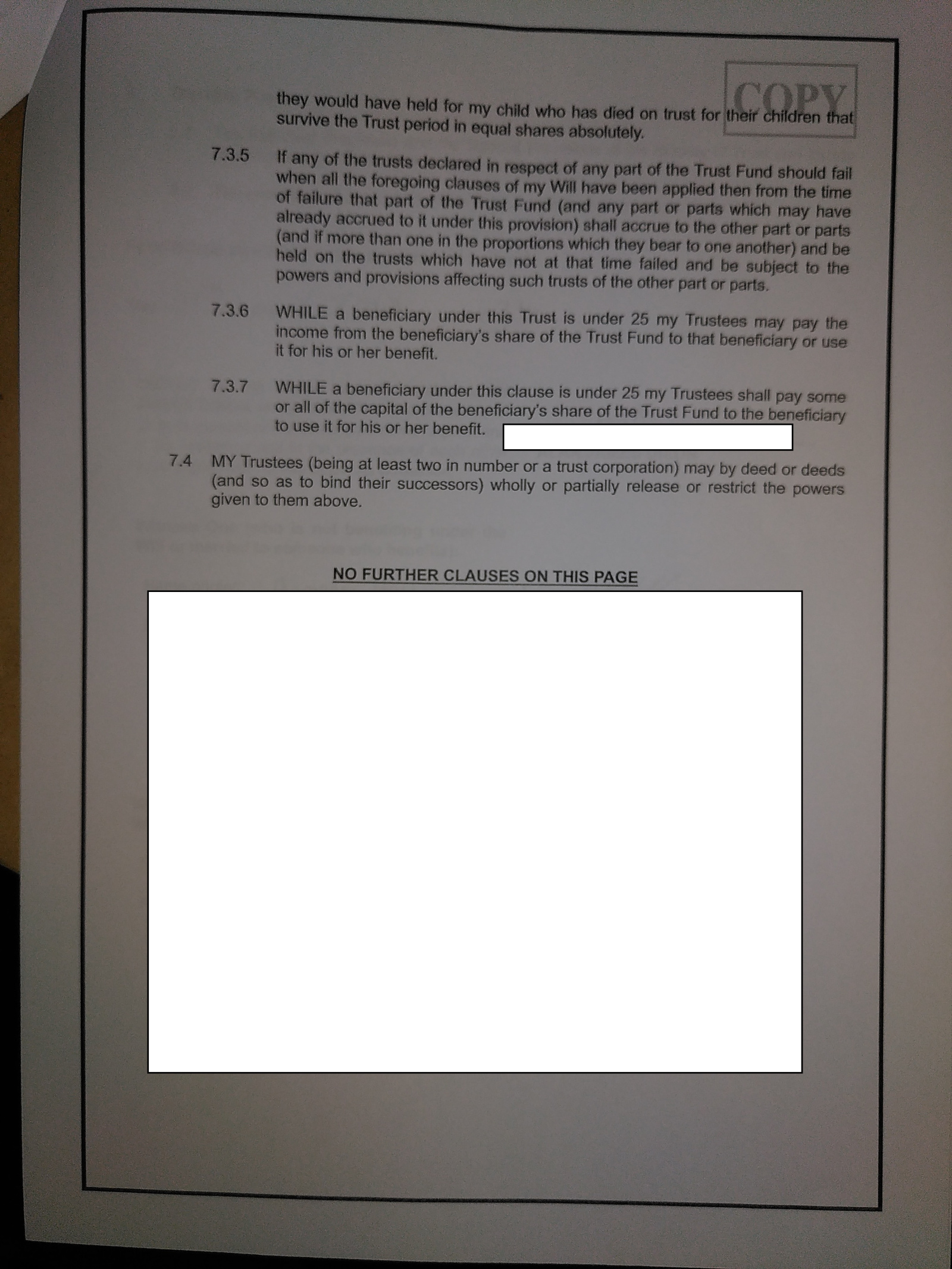
Would you mind providing the redacted wording of this trust.
If I can see precisely how it has been constructed I can perhaps confirm whether the estate comprised in the trust, meets the conditions for an Excepted estate which would eliminate any need for completion of IHT 400 and allow you to truthfully confirm in the affirmative that all assets have been left to a surviving spouse/civil partner, thereby avoiding any IHT charge.
Incidentally, I am somewhat concerned that the discretionary trust 'rider' clauses on your mother's death will lose the family access to your father's transferable residence nil rate band (RNRB) of £175k.
The size of the estate could increase in future years, so loss of that RNRB would be unfortunate, especially as the discretionary trust clauses are not required to protect the trust assets from potential nursing home fees assessment. The life interest on your mother's behalf is protection enough.
3 -
Hi Poseidon1, thank you for your response. I have attached the redacted wording of the trust.
0 -
Thank you OP.
I am pleased to confirm that since clause 7.2 provides your mother with an immediate right of present enjoyment of the entire trust fund it meets the criteria of a qualifying IPDI trust. The following article explains -
Assuming none of the clauses that precede clause 7 made legacy gifts to anyone other than your mother then this permits you to state your mother 'inherited' all assets from your father inclusive of the trust. No IHT therefore arising or any need for IHT 400.
However It is disappointing the solicitor failed to explain this when instructing you to handle probate yourself, since this is not something an inexperienced lay-person can be expected to understand.
As for clause 7.3.1 which provides powers to revoke the life interest in favour of a discretionary arrangement, this is a passive provision and would require specific and deliberate action by the trustees to come into effect. Accordingly, if it is ignored throughout the duration of the trust until your mother's death, the default provision via clause 7.3.4 is that the entire trust fund reverts to surviving children.
This means the trust fund is amalgamated with your mother's personal estate for IHT purposes but importantly preserves your father's transferable RNRB thereby providing total NRBs of £1 million (based on current reliefs) on her eventual death.
Finally, you mentioned other assets apart from property is comprised in the trust. Is this cash, stocks and shares and/or funds derived from ISAs? If so is the reason for this is because your mother is perceived to be incapable of managing these funds herself?
Investing trust monies to produce income for life interest beneficiaries attracts unfamiliar annual trust tax compliance , administration and accounting obligations on lay trustees. There are also limitations by way of banking and investment services on behalf of trustees as many OPs to this forum have found. If your mother is perfectly capable of managing her own funds, then I would be inclined to limit the trust fund to the property only, and appoint all the cash assets for her to hold personally. You would then be able to register the trust as 'non taxable' on HMRC's trust register - see link below
4 -
Thank you so much for this, this is interesting and reassuring. And thank you for clarifying the clause 7.3.1.
In fairness to the solicitor, she did say that IHT wouldn't be due because of the trust, it was just that the wording of the questions on the probate site weren't clear to me, and I didn't know exactly how to answer them and whether IHT400 was necessary now because IHT would be due eventually (on the second death) and so needed to be recorded now. I was probably overthinking it! The meeting with the solicitor was some time ago and not fresh in my mind even though I took notes.
The other assets are ISAs. Mum is not perceived to be incapable of managing these herself, she has her own ISAs of the same value. It was more about protecting dad's share (as he passed first) for me and my brother.
We have looked into setting up a trust fund and I am prepared to do the admin and accounting for it. I have to do Dad's tax return anyway and will have to do mum's going forwards so hopefully whatever is involved with the trust tax will be OK once I get to grips with it.
Mum's will mirrored Dad's so presumably we'll have to get a new will drawn up for her now that her circumstances have changed, but I guess that's a problem for another day.
Thanks so much again. I really appreciate your help.
0 -
I hear your rationale for encashing your father's ISA in favour of holding the cash proceeds as additional trust investment. However I really must reiterate the inherent complexities of doing so as regards tax reporting, investing, banking and accounting.
See below the trust tax return and the reccomended template for a trustee investment policy statement if you intend to invest in equity dividend yielding investments.
https://library.standardlife.co.uk/iht18.pdf
I would also point out that this course of action also means your mother losing access to your father's tax free ISA pot she would be entitled to inherit intact, which would be important in enhancing her tax free income returns as well as avoiding basic rate tax at 20% on trust income, rising to 22% next year. Incidentally the trustees' annual CGT allowance on realised investment gains is only 50% of £3,000.
Depending on her other income sources and pensions, taxable trust income could potentially push her into 40%/42% tax by reason of invested trust cash.
Unless the trust cash is to be a very high 6 figure amount ( to justify the cost/complexity of administration), I cannot reccomend this diversion to the trust rather than your mother holding personally. It is not income tax efficient.
3 -
There's no rush to redo Mum's will UNLESS the provisions on her death are no longer what she wants, or no longer appropriate.
But a reasonably competent solicitor would normally have covered the What If questions: what if all the next generation dies before the second of a couple?
Signature removed for peace of mind2







Confirm your email address to Create Threads and Reply

Categories
- All Categories
- 355.8K Banking & Borrowing
- 254.9K Reduce Debt & Boost Income
- 456.1K Spending & Discounts
- 248.3K Work, Benefits & Business
- 605.9K Mortgages, Homes & Bills
- 179K Life & Family
- 263.7K Travel & Transport
- 1.5M Hobbies & Leisure
- 16.2K Discuss & Feedback
- 37.7K Read-Only Boards