We’d like to remind Forumites to please avoid political debate on the Forum.
This is to keep it a safe and useful space for MoneySaving discussions. Threads that are – or become – political in nature may be removed in line with the Forum’s rules. Thank you for your understanding.
Why is this paint/plaster failing on INTERNAL walls?




Hi all
I have a house that I rent out. It has just come back to me and I am repainting it. However, I have discovered 2 patches of paint/plaster that have flaked away. The patches are on either side of a wall.
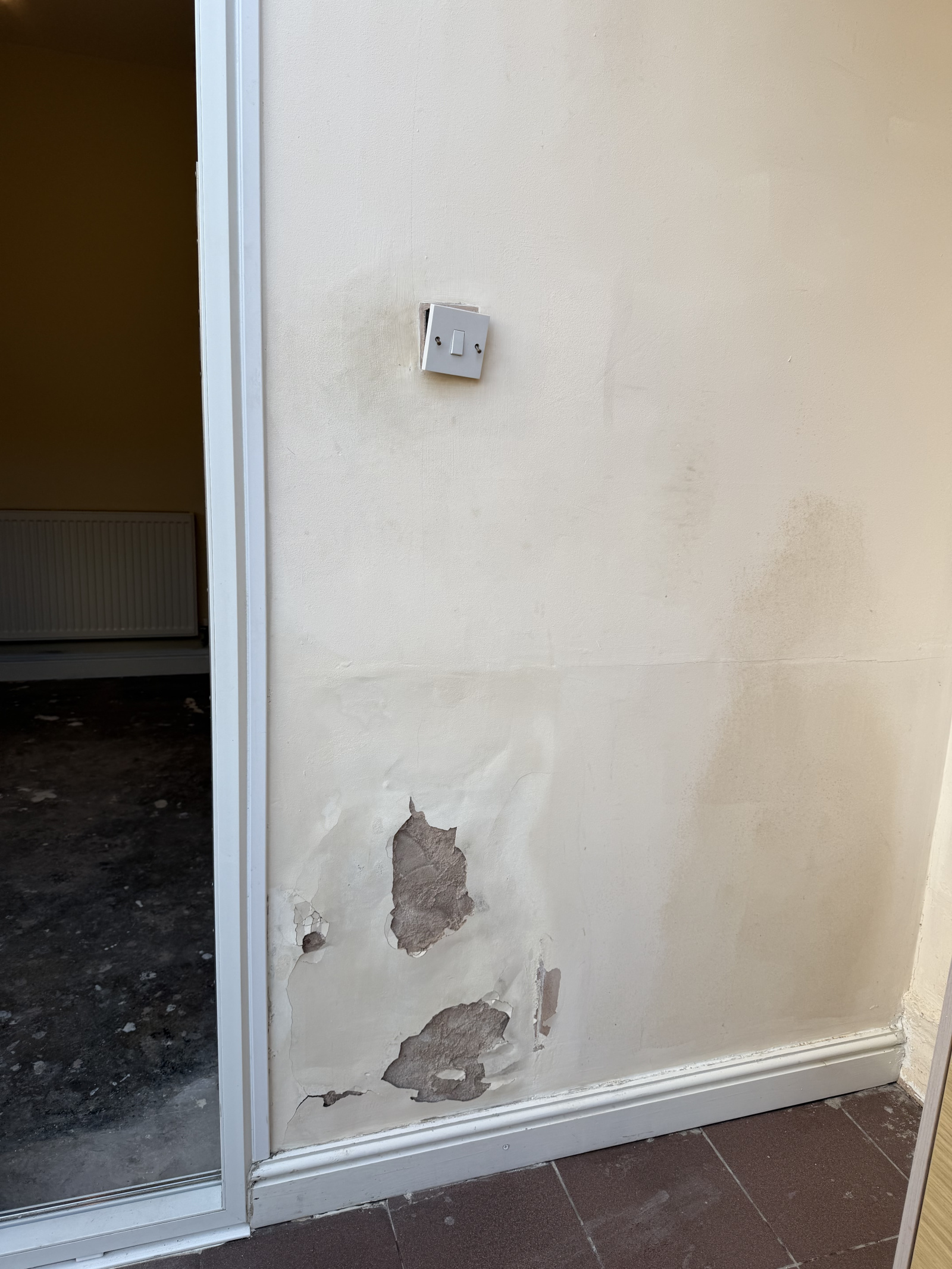
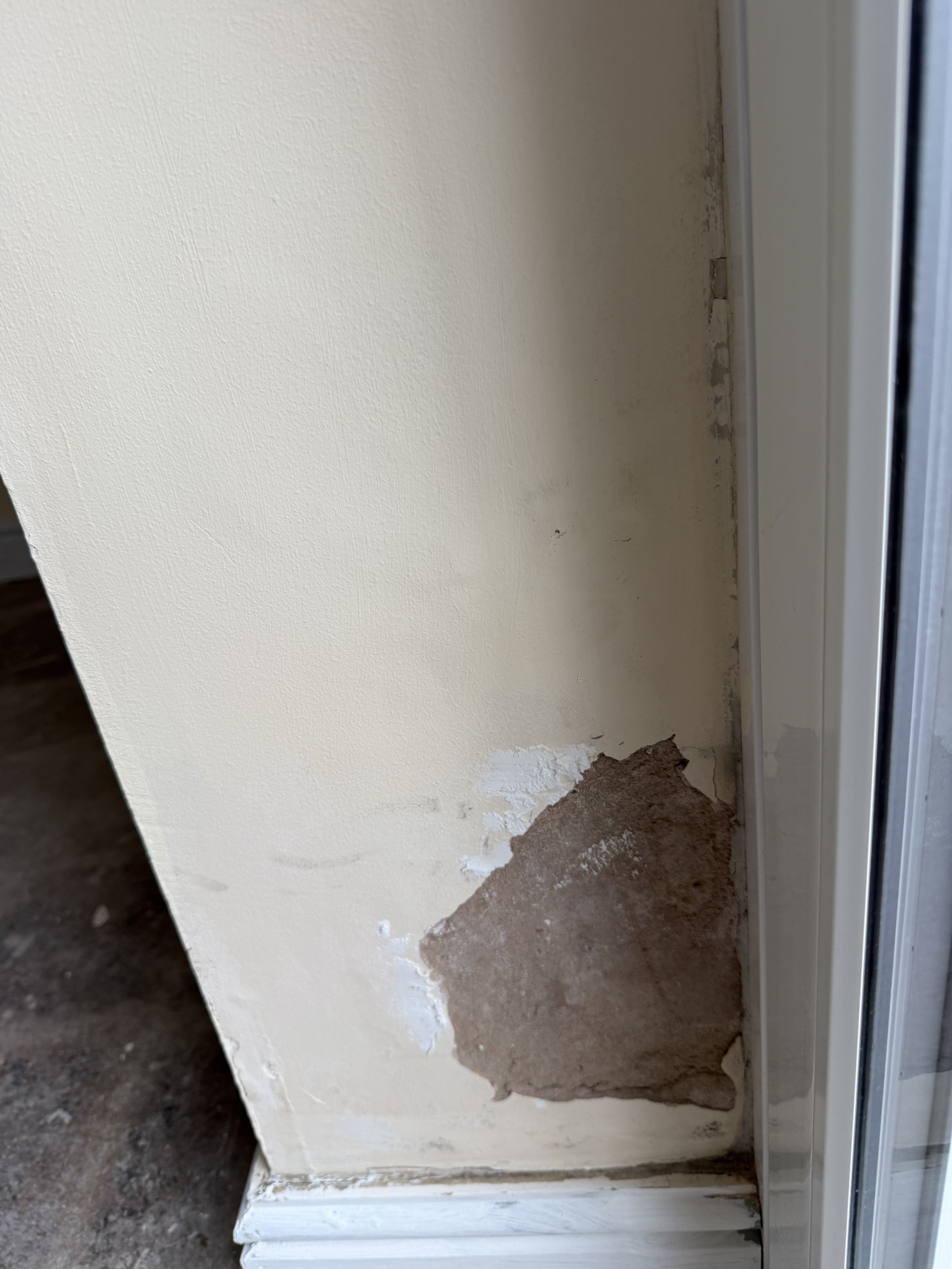
basically, it’s a terraced house and it has flaked away in a small patch on the inside of the wall that was once external before a PVC conservatory was installed. It has also flaked away inside the PVC conservatory on the same wall.
So, to recap. The house is a terraced house. Imagine there was no conservatory… then the flaking is INSIDE THE ROOM on the external wall. However? There is a PVC conservatory installed (being used as a kitchen) and the same flaking is on the same wall opposite (now inside conservatory). It is not the whole wall. Just isolated sections as shown. Any ideas guys on causes and remedies?
Comments
-
-
Is that wall cold compared to other walls?
What is that very definitive horizontal line above the flaking in the first picture?
0 -
What is that very definitive horizontal line above the flaking in the first picture?
Smacks of previous damp treatments where they inject chemicals in to the wall and then slap waterproof render on to a height of around 1.2m.
Looks as if there is another damp area to the right in the same image. Short term fix - Scrape all the paint off up to the line along with any gypsum plaster underneath. Apply a grip coat of DG27 (or Febond Bluegrit), build up the surface with a lime plaster, and then use a clay paint to finish it off.
Just slapping on another coat of gypsum plaster and emulsion will see it all bubbling off again is six months or less. A long term fix would be to hack the cement & plaster off to bare brick and using a two or even three coat of lime plaster. Just don't ever use a modern vinyl or acrylic paint again.
Any language construct that forces such insanity in this case should be abandoned without regrets. –
Erik Aronesty, 2014
Treasure the moments that you have. Savour them for as long as you can for they will never come back again.0 -
I can't align these two pics in ma heed - any chance of a quick plan to show their relative locations, Frank?
I think what can be said is that it isn't due to condensation. The damp is far too severe, far too localised, and far too low.
So, unless something really strange was happening there - something permanently damp was placed against these areas (obviously highly unlikely) then I guess it's down to; a) a leak from a buried pipe or broken waste near or under that wall (doesn't look like it), b) rising damp (some suggestion of this as Grumpy points out), or c) a water leak where the conservatory meets the house, which is travelling down the cavity before pooling and coming through.
A sketch to show room layout, locations of damp patches, positions of rads and all other plumbing would help. I'm guessing the tiled floor, at least, is solid concrete? What about the rest? A physical leak landing on this could well travel along under skirting boards before appearing elsewhere.
How suddenly did they appear, do you know? They just look a touch severe for 'rising', tho' possible.
0 -
Have you got a few external photos of the walls where they meet the conservatory roof?
1 -
The house is a terraced house. Imagine there was no conservatory… then the flaking is INSIDE THE ROOM on the external wall. However? There is a PVC conservatory installed (being used as a kitchen) and the same flaking is on the same wall opposite (now inside conservatory). It is not the whole wall. Just isolated sections as shown. Any ideas guys on causes and remedies?
Although the wall is now inside a conservatory, it is still part of an external wall and can be subject to the same kind of damp issues as any other external wall.
Is the wall a cavity one?
I would start by examining the area above the conservatory - is there somewhere water can enter the wall, or are the gutters overflowing making the wall damp? Once in the wall any water or damp can work its way down, and it is possible it will only show on the wall at a lower level, and quite commonly where it encounters the DPC.
If the conservatory had been built as an 'extension' when the house was originally built then there would have been a horizontal DPC at the level of the roof junction, and there would be a cavity tray so moisture inside the cavity is directed to the outside. But as retrofit work it is unlikely you'll have either of these.
Is the only damage on the 'inside' wall that shown in the picture? That patch points to a lack of a vertical DPC so dampness in the outer leaf (or outer course) is able to cross through into the inside part of the wall. If the wall is a cavity one the cavity closer should incorporate a vertical DPC to stop this happening. Although it is on the lowest part of the wall - which might otherwise suggest the much-feared 'rising damp' - it is probably more likely the result of water/damp coming from above and just finding its way out of the wall at that point.
2 -
Although it is on the lowest part of the wall - which might otherwise suggest the much-feared 'rising damp' - it is probably more likely the result of water/damp coming from above and just finding its way out of the wall at that point.
Rising damp is not as common as the PCA and damp treatment companies would have you believe (and why is it always to a height of ~1.2m regardless of brick/stone type…). More likely a breached DPC, or in the case of a conservatory, poor detailing of the damp proof membrane or as Section62 suggests, a vertical DPC or other source of ingress.
Water likes to travel both horizontally, and downwards from the source of a leak before popping out - For a number of years, I had an issue with an occasional leak in a kitchen extension. Spent quite a bit of time patching the flat roof and adding flashing. It wasn't until a roofer pointed out a crack* in render some 2 metres away (which got repaired) that the leak was finally cured.
*) Crack in render turned out to be a much more serious problem that went right through the wall and needed stitching. A defect that could be traced back to when the extension was added back in the 1970s.
Any language construct that forces such insanity in this case should be abandoned without regrets. –
Erik Aronesty, 2014
Treasure the moments that you have. Savour them for as long as you can for they will never come back again.0 -
Is the wall damp in the chase behind the light switch?
0 -
Hi all
Thank you for so many excellent responses. A couple of you have asked me to try to make the location clearer. Hope this helps.
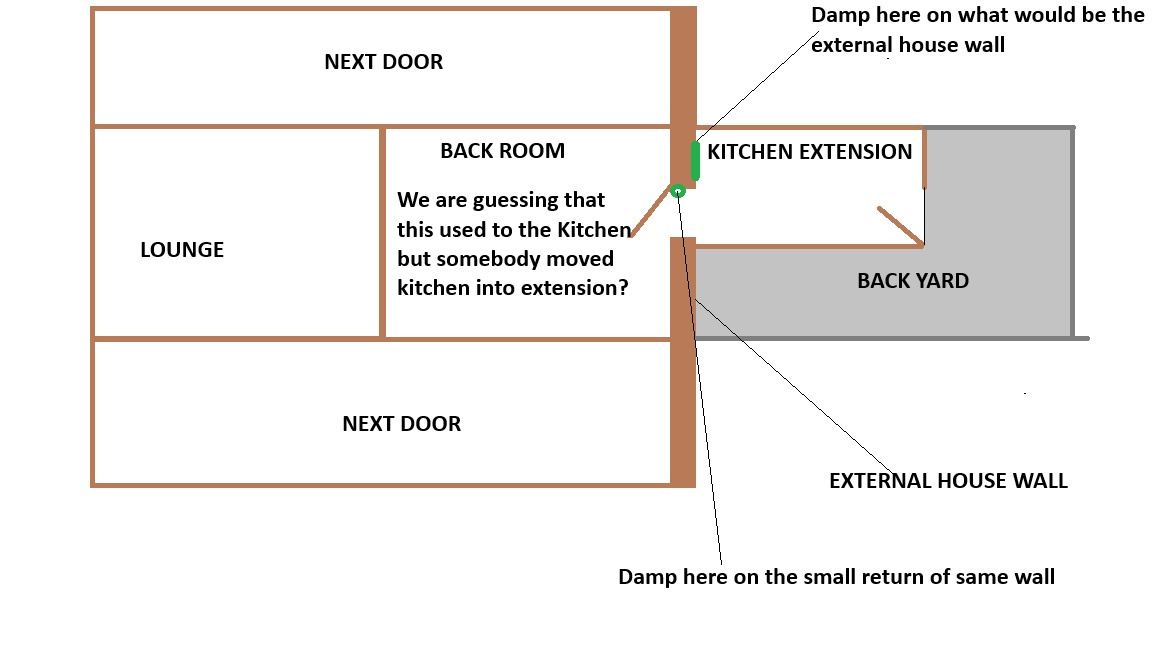
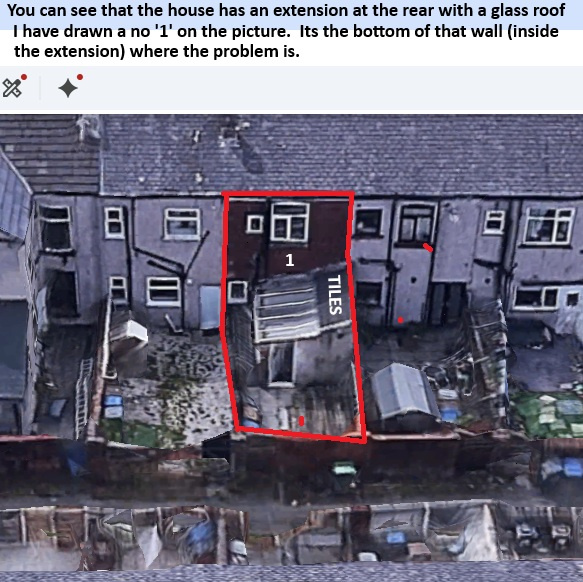 1
-
I would start by looking at the roof of the conservatory as it meets the external wall. And the junction between the tiled and glazed sections.
Do you have extract ventilation and heating in the conservatory? That is literally the worst place to put a kitchen, the moisture created by cooking will always be extremely difficult to deal with.
If previous tenants had a low level unit against that wall, it could be caused by condensation rather than a water leak. Those walls were probably constantly running with condensation.
0









Confirm your email address to Create Threads and Reply

Categories
- All Categories
- 355.8K Banking & Borrowing
- 254.9K Reduce Debt & Boost Income
- 456.2K Spending & Discounts
- 248.3K Work, Benefits & Business
- 605.9K Mortgages, Homes & Bills
- 179K Life & Family
- 263.7K Travel & Transport
- 1.5M Hobbies & Leisure
- 16.2K Discuss & Feedback
- 37.7K Read-Only Boards