We’d like to remind Forumites to please avoid political debate on the Forum.
This is to keep it a safe and useful space for MoneySaving discussions. Threads that are – or become – political in nature may be removed in line with the Forum’s rules. Thank you for your understanding.
📨 Have you signed up to the Forum's new Email Digest yet? Get a selection of trending threads sent straight to your inbox daily, weekly or monthly!
Slow water leak
Comments
-
If it is lead then that's a very good idea to change to copper.
1 -
If your mains pipe is lead, it's a no-brainer. If cast iron, then it's likely heavily corroded.
That would at least make the change to MDPE worthwhile in any event. Ask about moling the new pipe.
1 -
The pipe coming up in the corner of the kitchen, behind floor units, is at least an inch diameter and dead straight. Looks like steel or cast iron, not copper. I could be wrong of course I can see only the bottom 7" or so of it. Looks original.
I was thinking of MDPE too and will ask about moling.
1 -
Your normal buildings insurance does not cover replacing pipes etc as that is seen as maintenance/wear and tear.
However could be worthwhile replacing a 100 year old pipe ( if it is the original) if the pipe is exposed anyway.
2 -
Although copper is still used internally, a new incoming mains water pipe would normally be plastic ( MDPE) .
1 -
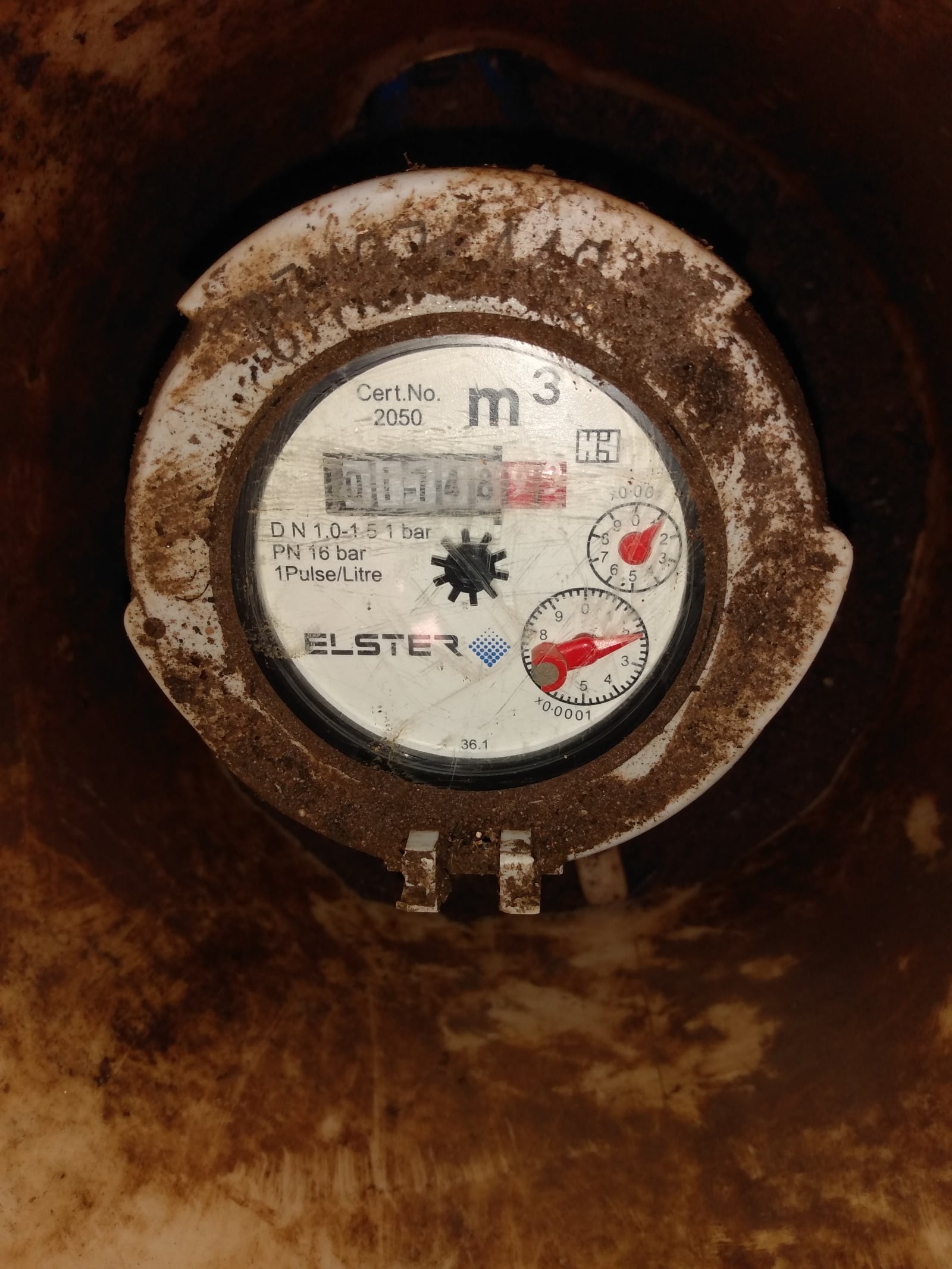
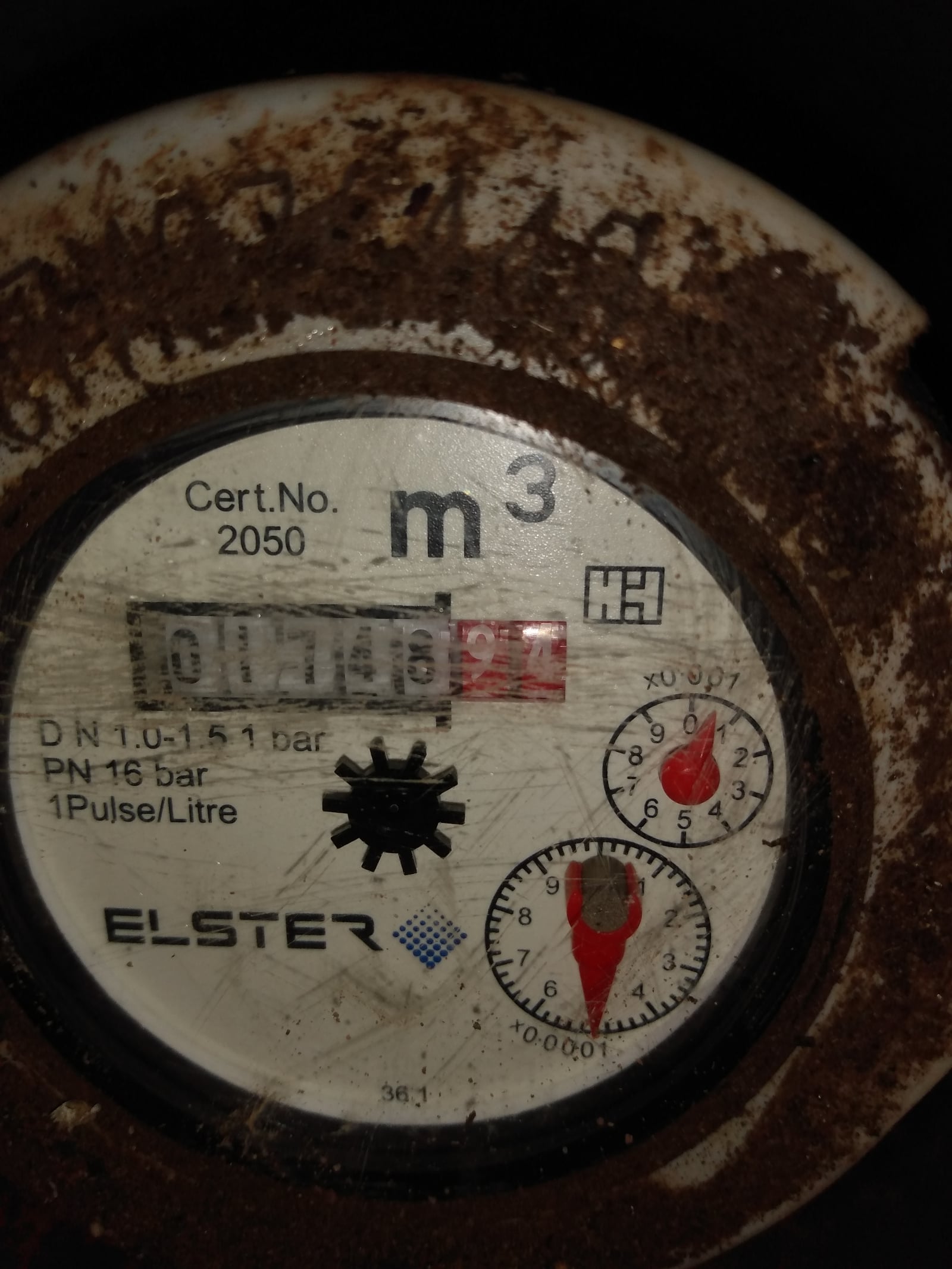
Sorry, I forgot to reply to this one. Thanks. Yes, that's what I had calculated but I had taken readings a day earlier, over an hour period and they suggested a much higher loss. See the attached - I posted one of these earlier. The red digits are 93 and 94.
 1
1 -
Yes, that seems to be around 9.3 litres per hour, as opposed to the overnight loss of less than 4lph?
I suspect it'll be down to change in water pressure - perhaps they reduce it overnight at times of low demand (they know this reduces water loss due to their own leaks…)?
An inch-diam, solid, straight pipe suggests cast iron or galvanised steel. It's given the house 100 years of service, so must be pretty tired… :-)
1 -
OK an update for those interested.
The guy I mentioned came last Wed. He checked over the house, turned the stop valve off etc and did a rudimentary check with that cup-on-a-pole type listening device right at the meter - couldn't detect anything.
But then he said it was unlikely to do so for such a small leak - I've now done enough readings and calculations to know that it's around 13 litres per hour (although one set of overnight readings showed a much less wastage).
The remainder of the conversation was all about replacing the pipe - he said better to do that rather than expensive chasing of leaks in a pipe likely to be almost 100 years old. He's going to give a quote for that.
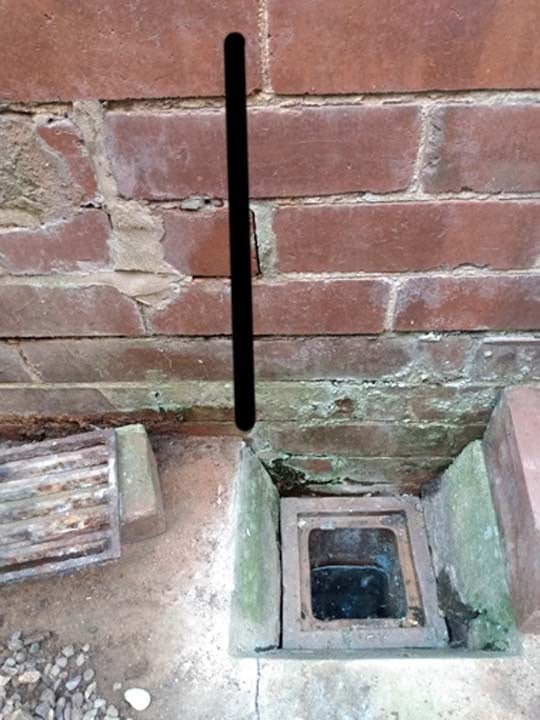
Then, just today, I was mooching around the side path looking for 'evidence' of where all that water is going and I was looking down at a gully, right outside of where the mains pipe comes into the kitchen. I can see water in the gully (I remember I had cleaned around the top of it a few days ago and poured some water down it). And no, I didn't splash loads around there. Since then it's been mainly dry. I'm not actually sure if the gully is connected anymore. I'll check that.
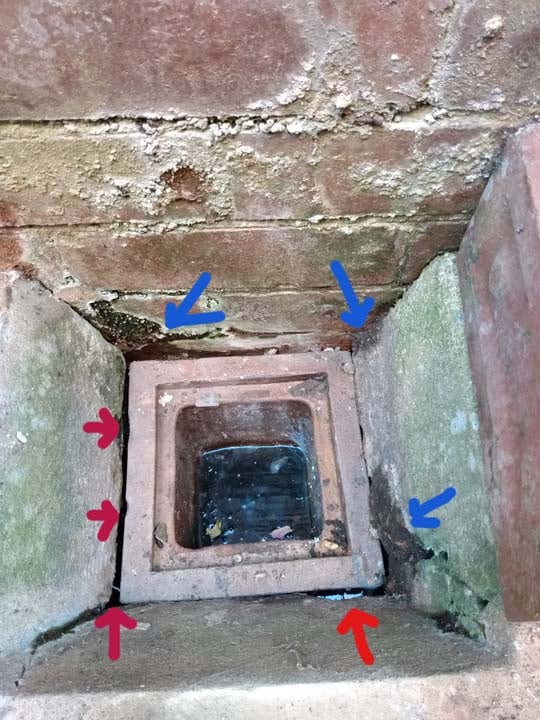
Anyway, my eye caught a reflection off water, around and about 4cm below the top lip of the gully, at a higher level than the water in the gully (it's 16cm down from the top lip). It's standing water and doesn't appear to be moving. So I'm wondering - where is that coming from?
The pictures attached (with gully grid off) show where the mains pipe comes into the kitchen (inboard of the black line) and the red arrows show the area of standing water all around the gully. I managed to take the 'arrows' photo with light reflecting off one part of standing water (bottom right). The areas indicated by blue arrows are damp.
That's odd isn't it? There is a manhole just where I was kneeling to take the images but I know that the level of sewer pipe in that is much lower than the water in and around the gully. BTW, the area of damp on the wall at the bottom and just to the left of the bottom of the black line is where I dragged back a layer of stones and sandy stuff. That may be just 'normal' dampness seeping up.
Anyway, I'm planning to start digging tomorrow 'cos that doesn't seem right to me. It should be just normally damp soil around that gully surely? I'll start digging just to the left of the gully. I'll have a look in that manhole first, just in case there's a blockage and the level in there is really high and seeping out through the brickwork (unlikely).
Any thoughts?
Edit: Actually, I've just though that perhaps I'll turn off the water at the street meter overnight. If that standing water around the gully is caused by the leak, perhaps it would soak away a bit and I'll see it not pooling in the morning? I've just used a piece of stout wire and poked it into that area around the gully - it just goes down into wet soil, so it's sodden in there.
 1
1 -
If the water pipe is 100 years old what material will it be?
Lead ?
If so should have been changed for health reasons long ago.
1 -
Don't the water companies replace the old lead pipes for free?
1








Confirm your email address to Create Threads and Reply

Categories
- All Categories
- 355.8K Banking & Borrowing
- 254.9K Reduce Debt & Boost Income
- 456.2K Spending & Discounts
- 248.3K Work, Benefits & Business
- 605.9K Mortgages, Homes & Bills
- 179K Life & Family
- 263.8K Travel & Transport
- 1.5M Hobbies & Leisure
- 16.2K Discuss & Feedback
- 37.7K Read-Only Boards