We’d like to remind Forumites to please avoid political debate on the Forum.
This is to keep it a safe and useful space for MoneySaving discussions. Threads that are – or become – political in nature may be removed in line with the Forum’s rules. Thank you for your understanding.
Defence Letter_Please advise



Hi, thanks for help in advance. @Coupon-mad and others
I am at the stage of building my defence after completing acknowledgement of service via MCOL.
Here is the POC…
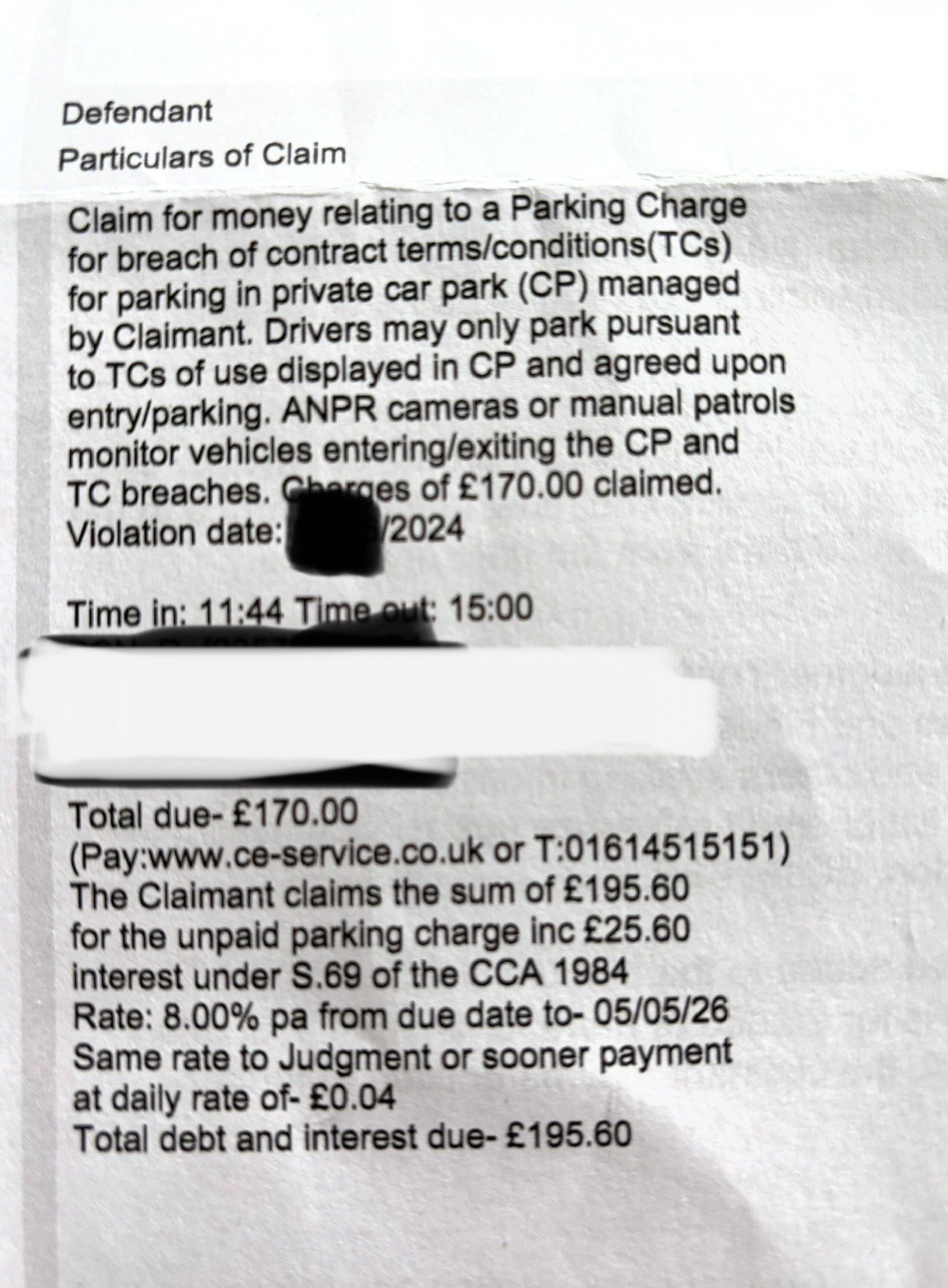
Correct me if I'm wrong. I understand I'm to use paragraph 3 from the CEL v Chan due to no mention of breach, and then everything else from the main thread.
I was thinking of adding a second point to 3, to mention the grace period to strengthen my case.
Please see below what I was planning to submit (if word count allows).
Please see 3.2 which is the only section I have added…
1. The Claimant’s sparse case lacks specificity and does not comply with CPR 16.4, 16PD3 or 16PD7, failing to 'state all facts necessary for the purpose of formulating a complete cause of action'. Further, the Claimant has improperly added a false 'fee' or damages to the original Parking Charge (PC). This sum is not legally recoverable and constitutes an attempt at double recovery, which is unreasonable conduct under CPR 27.14(2)(g). The binding Supreme Court judgment in ParkingEye Ltd v Beavis [2015] UKSC 67 held that an £85 parking charge more than covered all the 'costs of enforcement' which HHJ Moloney had listed as the pre-action work of a DVLA look-up and a simple automated letter chain, including a LBC. The same heads of cost cannot lawfully be counted twice and interest should also be disallowed. Exaggerated claims for impermissible sums are good reason for judges to intervene and the court is invited to strike out the claim using its powers under CPR 3.4.
2. The allegation(s) are vague and liability is denied for the sum claimed, or at all. The delay in bringing proceedings lies with the Claimant, making retrieving material evidence difficult, which is highly prejudicial. The Defendant has little knowledge of events, save as set out below and to admit that they were the registered keeper.
3.1 With regards to the POC in question, two recent persuasive appeal judgments in Civil Enforcement Limited v Chan (Ref. E7GM9W44) and Car Park Management Service Ltd v Akande (Ref. K0DP5J30) would indicate the POC fails to comply with Civil Procedure Rule 16.4(1)(e) and Practice Direction Part 16.7.5. On the 15th August 2023, in the Chan case, HHJ Murch held: 'the particulars of the claim as filed and served did not set out the conduct which amounted to the breach in reliance upon which the claimant would be able to bring a claim for breach of contract'. The same is true in this case and the Defendant trusts that the Court should strike out the extant claim, using its powers pursuant to CPR 3.4. The second recent persuasive appeal judgment also held that typical private parking case POC (like this) fail to comply with Part 16. On the 10 May 2024, in CPMS v Akande, HHJ Evans held: 'Particulars of Claim have to set out the basic facts upon which a party relies in order to prove his or her claim'.
3.2 The Defendant submits the following facts:
•The vehicle was recorded on site for 196 minutes (11:44 to 15:00).
•As a BPA member, the Claimant must provide a Consideration Period (5 minutes) and a mandatory 10-minute Grace Period.
•Adjusting for these, the stay was within a reasonable margin. The 60-second delta between the grace period expiration (14:59) and the ANPR exit (15:00) is de minimis.
•This minor delay was necessitated by the safety requirements of securing a one-year-old child in a car seat and exiting the leisure centre site.
•The Defendant was a genuine patron of the facilities and has since ensured compliance via registration machines, proving no intent to avoid terms.
4. It is neither admitted nor denied that a term was breached but to form a contract, there must be an offer, acceptance, and valuable consideration (absent in this case). The Consumer Rights Act 2015 (s71) mandates a 'test of fairness' duty on Courts and sets a high bar for prominence of terms and 'consumer notices'. Paying regard to Sch2 (examples 6, 10, 14 & 18), also s62 and the duties of fair, open dealing/good faith, the Defendant notes that this Claimant reportedly uses unclear (unfair) terms/notices. On the limited information given, this case looks no different. The Claimant is put to strict proof with contemporaneous photographs.
5. DVLA keeper data is only supplied on the basis of prior written landowner authority. The Claimant (an agent) is put to strict proof of their standing to sue and the terms, scope and dates of the landowner agreement, including the contract, updates, schedules and a map of the site boundary set by the landowner (not an unverified Google Maps aerial view).
6. To impose a PC, as well as a breach, there must be: (i) a strong 'legitimate interest' extending beyond compensation for loss, and (ii) 'adequate notice' (prominence) of the PC and any relevant obligation(s). None of which have been demonstrated. This PC is a penalty arising as a result of a 'concealed pitfall or trap', poor signs and covert surveillance, thus it is fully distinguished from Beavis.
7. Attention is drawn to:
(i) paras 98, 100, 193, 198 of Beavis (an £85 PC covered all costs and generated a huge profit shared with the landowner); the court should also read paragraph 3.4 of the original judgment by HHJ Moloney in Beavis, confirming what that authority means by 'costs of the operation', and
(ii) the binding judgment in ParkingEye v Somerfield Stores ChD [2011] EWHC 4023(QB) which remains unaffected by Beavis and stands as the only parking case law that references costs abuse. HHJ Hegarty held in paras 419-428 (his judgment later ratified by the CoA) that 'costs' inflating a £75 PC (already increased from £37.50) to £135 were disproportionate to the very minor cost of a letter-chain and 'would appear to be penal'. The court should note that HHJ Moloney referenced this case in Beavis.
8. The Parking (Code of Practice) Act will curb rogue conduct by operators and debt recovery agents (DRAs). The Government launched a Public Consultation likely to herald a ban on double recovery 'fees', which the relevant 2022 Minister called ‘extorting money from motorists’. Both the previous and present Governments found that the high profits may be indicative of firms having too much control 'indicating that there is a market failure'.
9. Pursuant to Sch4 of the Protection of Freedoms Act 2012 ('POFA') the claim exceeds the maximum sum and is unrecoverable: see Explanatory Note 221: 'The creditor may not make a claim against the keeper ... for more than the amount of the unpaid parking related charges as they stood when the notice to the driver was issued (para 4(5))'. There is no keeper liability for added false fees and the POFA specifically states that 'double recovery' is not allowed if a creditor uses any other remedy.
10. The Defendant seeks fixed costs (CPR 27.14) and a finding of unreasonable conduct and further costs (CPR 46.5). Parking cases now make up a third of all small claims which has overburdened HMCTS, causing the most CCJs of all sectors yet almost invariably discontinuing defended cases before hearings, which indicates a deliberate business model of systemic abuse and makes Claimants liable for costs (r.38.6(1)). Whilst this does not 'normally' apply to the small claims track (r.38.6(3)) the White Book has this annotation: 'Note that the normal rule as to costs does not apply if a claimant in a case allocated to the small claims track serves a notice of discontinuance although it might be contended that costs should be awarded if a party has behaved unreasonably (r.27.14(2)(dg))'.
—-
Apologies for the long post, appreciate any feedback.
Comments
-
Remove the additional paragraph
The BPA Code of Practice in force at the time doesn't allow consideration + grace period, so you are incorrect
Stick to refuting the inadequate POC, Stick to the template, no changes
Post the Issue date, and I assume that its an in-house CEL money claim ?
2 -
As above and a heads-up - the Chan and Akande cases you are quoting state:-
"…. 'the particulars of the claim as filed and served did not set out the conduct which amounted to the breach in reliance upon which the claimant would be able to bring a claim for breach of contract'.
so why are you considering defending a particular breach?
4 -
Thanks both for responses.
I got the grace period info from the official british parking website so assumed it would strengthened my case.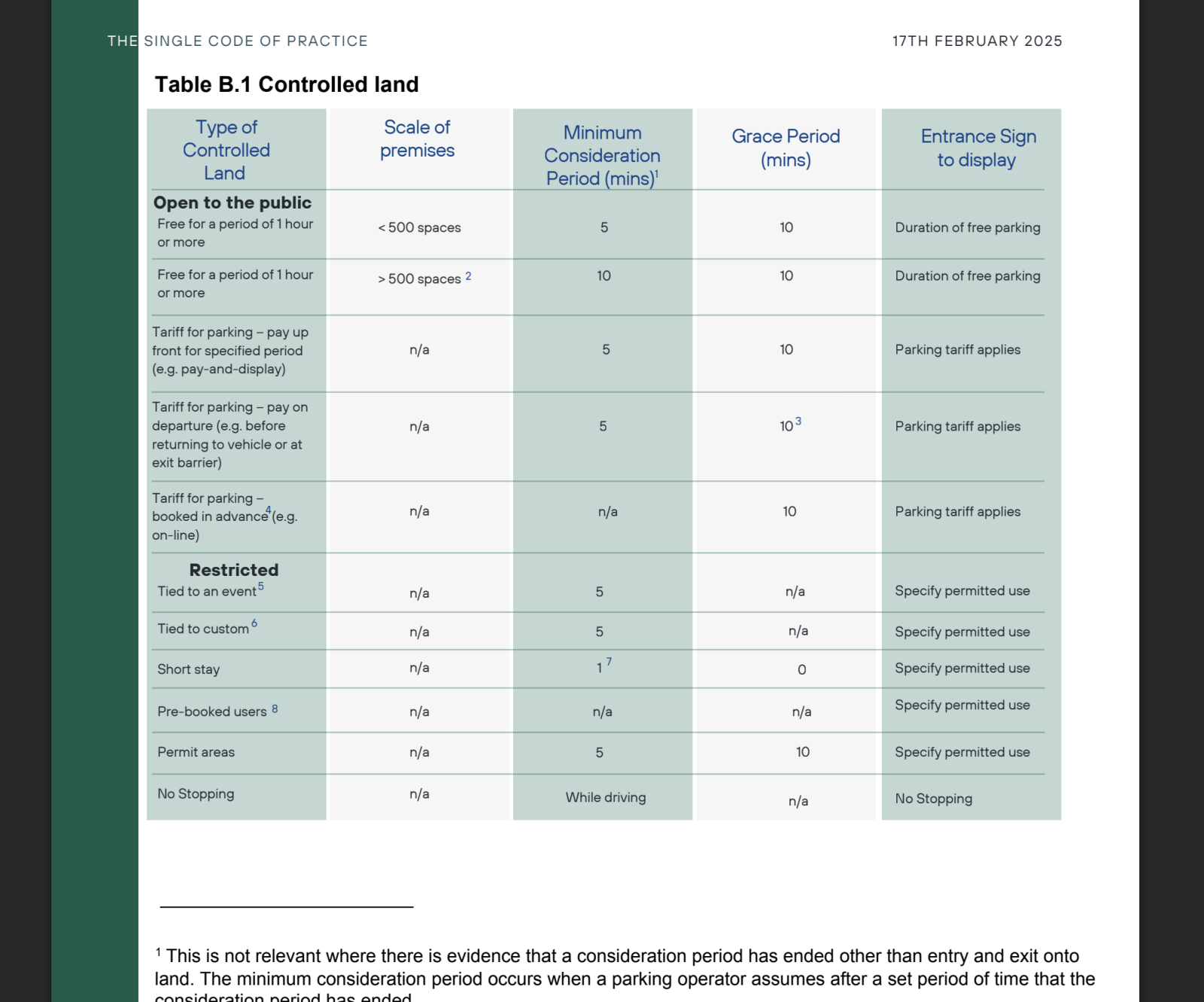
@1505grandad I see what you are saying. I am contradicting myself by mentioning the breech where the breech in question isn't stated on the POC? Do I have that correct?
@Gr1pr
Issue Date : 6th May.
Violation: June 2024
Claimant is CEL (not sure what you mean by in-house)
Okay so I should remove section 3.2 then? If it does get rejected, could I bring the grace period up in court if I don't include it in the defence?
Does everything else look ok? Do I need to amend anything within the other sections ?
Again, Thank you for both your help.0 -
In-house is a typical expression in legal cases, dealt with internally, not farmed out to solicitors like DCB Legal
Your Witness Statement can deal with the grace period aspect etc , as well as other issues arising
If the court requires CEL to amend the POC, then you get to alter the defence accordingly
You must use the relevant BPA CoP in force on the incident date, plus you need to read the sections relating to the chart, whereby accepting the terms and conditions of parking removes the consideration period aspect and the clock starts from entry to exit
June 2024 was the previous CoP, not the Joint CoP, I think that you looked at the current CoP
You cannot look at the chart on its own, your interpretation disappeared over 6 years ago !
You were definitely contradicting yourself so remove 3.2, change 3.1 to 3 and don't overthink this
3 -
BPA Code of Practice v9. Feb 2024
Section 13
13,1. The driver must have the chance to consider the Terms and Conditions before entering into the ‘parking contract’ with you. If, having had that opportunity, the driver decides not to park but chooses to leave the car park, you must provide them with a reasonable consideration period to leave, before the driver can be bound by your parking contract.The amount of time in these instances will vary dependant on site size and type but it must be a minimum of 5 minutes.
13.2 The reference to a consideration period in 13.1 shall not apply where a parking event takes place
3 -
Thanks for this info @Grp1.
Also..
13.3 Where a parking location is one where a limited period of parking is permitted, or where drivers contract to park for a defined period and pay for that service in advance (Pay &Display), this would be considered as a parking event and a Grace Period of at least 10 minutes must be added to the end of a parking event before you issue a PCN.
So i dont receive the 5 min consideration time but allowed a 10 minute grace period at end? so essentially leaves a 6 minute overstay which I would need to try and defend later on.?
To your earlier question yes it was sent in-house.
I will remove 3.2 and make 3.1 just (3) as you mentioned for this defence stage - and see how it goes.
Thanks again1 -
You could add this (thanks to my solicitor friend) under the Chan & Akande paragraph:
3.1. The binding authority which underpinned the Chan and the Akande decisions is Liberty Homes (Kent) Ltd v Rajakanthan & Ors [2022] EWHC 2201 (TCC) where the High Court found the Particulars to be deficient and struck them out due to a lack of required detail.3.2. The POC here are from the same Claimant who lost the Chan case, and state that the unnamed driver of a specified vehicle is liable for unspecified breaches of unspecified contract terms/conditions. No facts are averred that tell the Court or the Defendant why the Claimant is pursuing the Defendant for payment.
3.2.1 The POC are liable to be struck out under:
a. CPR 3.4.(2) (a) because they disclose no reasonable grounds for bringing the claim;
b. CPR 3.4.(2) (b) because they constitute an abuse of the court’s process; and
c. CPR 3.4.(2) (c) because they breach CPR 16.4(1)(a).
3.2.2 It is impossible for the Defendant to respond to such woefully deficient POC except to deny liability. Accordingly, liability is denied.3.2.3. The fact that this serial litigant continues to churn tens of thousands of parking claims out per annum (using the same inadequate POC as struck out by HHJ Murch in Chan) should give rise to sanctions to signal the court's displeasure. If the Claimant fails to seek the Defendant’s consent or the Court’s permission to amend the POC, pursuant to CPR 17, by 4pm on 29th May 2026, the Defendant respectfully asks the allocating judge to strike out the claim without further warning, given that this Claimant has known since 2023 (from the above appeal held against them) that these boilerplate POC are wholly inadequate.
PRIVATE 'PCN'? DON'T PAY BUT DON'T IGNORE IT (except N.Ireland).
CLICK at the top or bottom of any page where it says:
Home»Motoring»Parking Tickets Fines & Parking - read the NEWBIES THREAD2 -
To fit that in on MCOL, you could remove para 10 from the Template and if necessary, the para about the MHCLG and statutory Code which isn't enacted yet.
PRIVATE 'PCN'? DON'T PAY BUT DON'T IGNORE IT (except N.Ireland).
CLICK at the top or bottom of any page where it says:
Home»Motoring»Parking Tickets Fines & Parking - read the NEWBIES THREAD1 -
Thanks @Coupon-mad appreciate it
Would this be in addition to 3. (like below). or remove the first paragraph and start at 3.1?
Also, which paragraph mentions the MHCLG and statuary code that you mention? Can't seem to locate that within the first post above I wrote.3. With regards to the POC in question, two recent persuasive appeal judgments in Civil Enforcement Limited v Chan (Ref. E7GM9W44) and Car Park Management Service Ltd v Akande (Ref. K0DP5J30) would indicate the POC fails to comply with Civil Procedure Rule 16.4(1)(e) and Practice Direction Part 16.7.5. On the 15th August 2023, in the Chan case, HHJ Murch held: 'the particulars of the claim as filed and served did not set out the conduct which amounted to the breach in reliance upon which the claimant would be able to bring a claim for breach of contract'. The same is true in this case and the Defendant trusts that the Court should strike out the extant claim, using its powers pursuant to CPR 3.4. The second recent persuasive appeal judgment also held that typical private parking case POC (like this) fail to comply with Part 16. On the 10 May 2024, in CPMS v Akande, HHJ Evans held: 'Particulars of Claim have to set out the basic facts upon which a party relies in order to prove his or her claim'.
3.1. The binding authority which underpinned the Chan and the Akande decisions is
Liberty Homes (Kent) Ltd v Rajakanthan & Ors[2022] EWHC 2201 (TCC)where the High Court found the Particulars to be deficient and struck them out due to a lack of required detail.3.2. The POC here are from the same Claimant who lost the
Chancase, and state that the unnamed driver of a specified vehicle is liable for unspecified breaches of unspecified contract terms/conditions. No facts are averred that tell the Court or the Defendant why the Claimant is pursuing the Defendant for payment.3.2.1 The POC are liable to be struck out under:
a. CPR 3.4.(2) (a) because they disclose no reasonable grounds for bringing the claim;
b. CPR 3.4.(2) (b) because they constitute an abuse of the court’s process; and
c. CPR 3.4.(2) (c) because they breach CPR 16.4(1)(a).
3.2.2 It is impossible for the Defendant to respond to such woefully deficient POC except to deny liability. Accordingly, liability is denied.3.2.3. The fact that this serial litigant continues to churn tens of thousands of parking claims out per annum (using the same inadequate POC as struck out by HHJ Murch in
Chan) should give rise to sanctions to signal the court's displeasure. If the Claimant fails to seek the Defendant’s consent or the Court’s permission to amend the POC, pursuant to CPR 17, by 4pm on 29th May 2026, the Defendant respectfully asks the allocating judge to strike out the claim without further warning, given that this Claimant has known since 2023 (from the above appeal held against them) that these boilerplate POC are wholly inadequate.0 -
Yes, then remove the two paras I said that you can drop from the template defence and renumber the paragraphs. It should fit!
PRIVATE 'PCN'? DON'T PAY BUT DON'T IGNORE IT (except N.Ireland).
CLICK at the top or bottom of any page where it says:
Home»Motoring»Parking Tickets Fines & Parking - read the NEWBIES THREAD1






Confirm your email address to Create Threads and Reply

Categories
- All Categories
- 354.6K Banking & Borrowing
- 254.5K Reduce Debt & Boost Income
- 455.5K Spending & Discounts
- 247.5K Work, Benefits & Business
- 604.3K Mortgages, Homes & Bills
- 178.5K Life & Family
- 261.8K Travel & Transport
- 1.5M Hobbies & Leisure
- 16.1K Discuss & Feedback
- 37.7K Read-Only Boards