We’d like to remind Forumites to please avoid political debate on the Forum.
This is to keep it a safe and useful space for MoneySaving discussions. Threads that are – or become – political in nature may be removed in line with the Forum’s rules. Thank you for your understanding.
RICS Survey Question





Hi all.
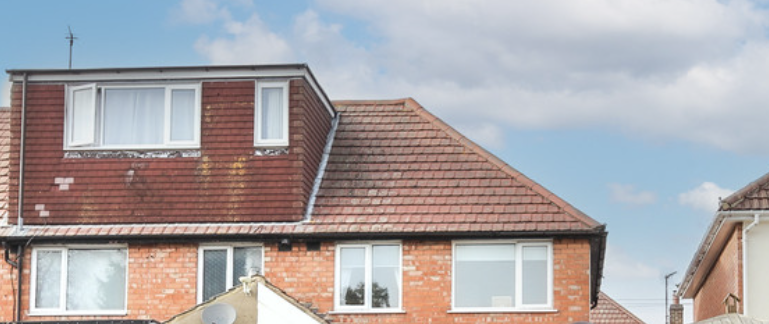
House we are in process of buying we are looking to get a survey done. I have done quotes with a couple of somewhat local firms with good reviews. One has come back with a price for what I asked for (L2 survey), the other has come back to me recommending a level 3. For context its a 1950 2bed end of terrace. They have put these notes on the quote result back to me - "A two storey end of terrace house with a single storey extension to the rear (the adjoining neighbours have undertaken a loft conversion). We would only recommend a Level 3 Survey and report for this property due to its age and alterations."Is that generally recommended or would a Level 2 suffice?
Had a couple of viewings and there was nothing obvious, but I am of course not a surveyor
Pic below of said neighbours loft conversion on left
Comments
-
Lots of people will have differing views on how useful a Level 2 or Level 3 survey is. For some, with lots of experience, as well as building knowledge, they would probably suggest that a survey won't tell them anything they didn't already know.
Surveys are undertaken by surveyors who are not qualified electricians or roofing experts so there will be lots of advice to get further tests/reports done on areas where they don't have expert knowledge.
However, personally, I would always get a Level 3 survey done on a property that is older, or had works done or where there could be potential for subsidence - typically older properties do not always have deep foundations and if there are any established trees nearby, that could be a potential risk to drains and foundations.
If the property was a recent new build or built within the last 15 years, I might consider a Level 2 survey to be adequate. Level 2 surveys are pretty basic. The surveyor doesn't spend very long at the property and will cast a general eye over its condition. In my mind, that's not good enough on a property of that age. But I'm not a builder and don't have the knowledge required to make my own assessment.
The survey report does, at least, give you a general idea what maintenance is needed in the next few years, what might be more urgent and give a heads up on anything that could be worrying. Anything very urgent could potentially give you some leeway to negotiate the purchase price due to any unforeseen problems.
2 -
I wouldn't say it was standard to get a level 3 survey for such a property or for the surveyors to push you towards getting one. It will in theory be more in-depth, though often they will come with similar caveats to a level 2 survey about areas they couldn't access etc or a list of recommended further investigations by specialists.
1 -
I have seen general advice that if the house is built from the 1950's onwards, there tends to be less potential issues. Other advice is to get a L3 if it is more than 50 years old, or has had major structural work.
So no black and white answer, and as said above there is not that big a difference between them anyway.
1 -
Agree with above. I was advised anything built before the first building regs in 1964, or that was built after and has been structurally altered was worth getting a level 3 survey done. Otherwise a L2 survey was fine. Lots of people will disagree with that rule of thumb I'm sure.
The mid 60's house we bought had 2 different extensions and an internal garage conversion so we went L3.
1 -
if I think a property was worth more than a level 2 survey, I would go with a full structural survey and a separate mortgage valuation (L1).
I'm a Forum Ambassador on the housing, mortgages & student money saving boards. I volunteer to help get your forum questions answered and keep the forum running smoothly. Forum Ambassadors are not moderators and don't read every post. If you spot an illegal or inappropriate post then please report it to forumteam@moneysavingexpert.com (it's not part of my role to deal with this). Any views are mine and not the official line of MoneySavingExpert.com.1 -
Building regs were in place a long time before 1964. The main difference was that individual councils had their own. The first comprehensive national set were introduced in the mid 60's for the country apart from London.
A lot of the regs were already in place for most councils. U values were introduced for the first time. DPM's and flue liners as well. Most of the things put into the regs were being used by builders by then. For example, the U value of 1.7 was met by a standard cavity wall, which the majority of houses had by then.
.
0









Confirm your email address to Create Threads and Reply

Categories
- All Categories
- 355.7K Banking & Borrowing
- 254.9K Reduce Debt & Boost Income
- 456.1K Spending & Discounts
- 248.3K Work, Benefits & Business
- 605.8K Mortgages, Homes & Bills
- 179K Life & Family
- 263.6K Travel & Transport
- 1.5M Hobbies & Leisure
- 16.2K Discuss & Feedback
- 37.7K Read-Only Boards