We’d like to remind Forumites to please avoid political debate on the Forum.
This is to keep it a safe and useful space for MoneySaving discussions. Threads that are – or become – political in nature may be removed in line with the Forum’s rules. Thank you for your understanding.
📨 Have you signed up to the Forum's new Email Digest yet? Get a selection of trending threads sent straight to your inbox daily, weekly or monthly!
Missing plaster




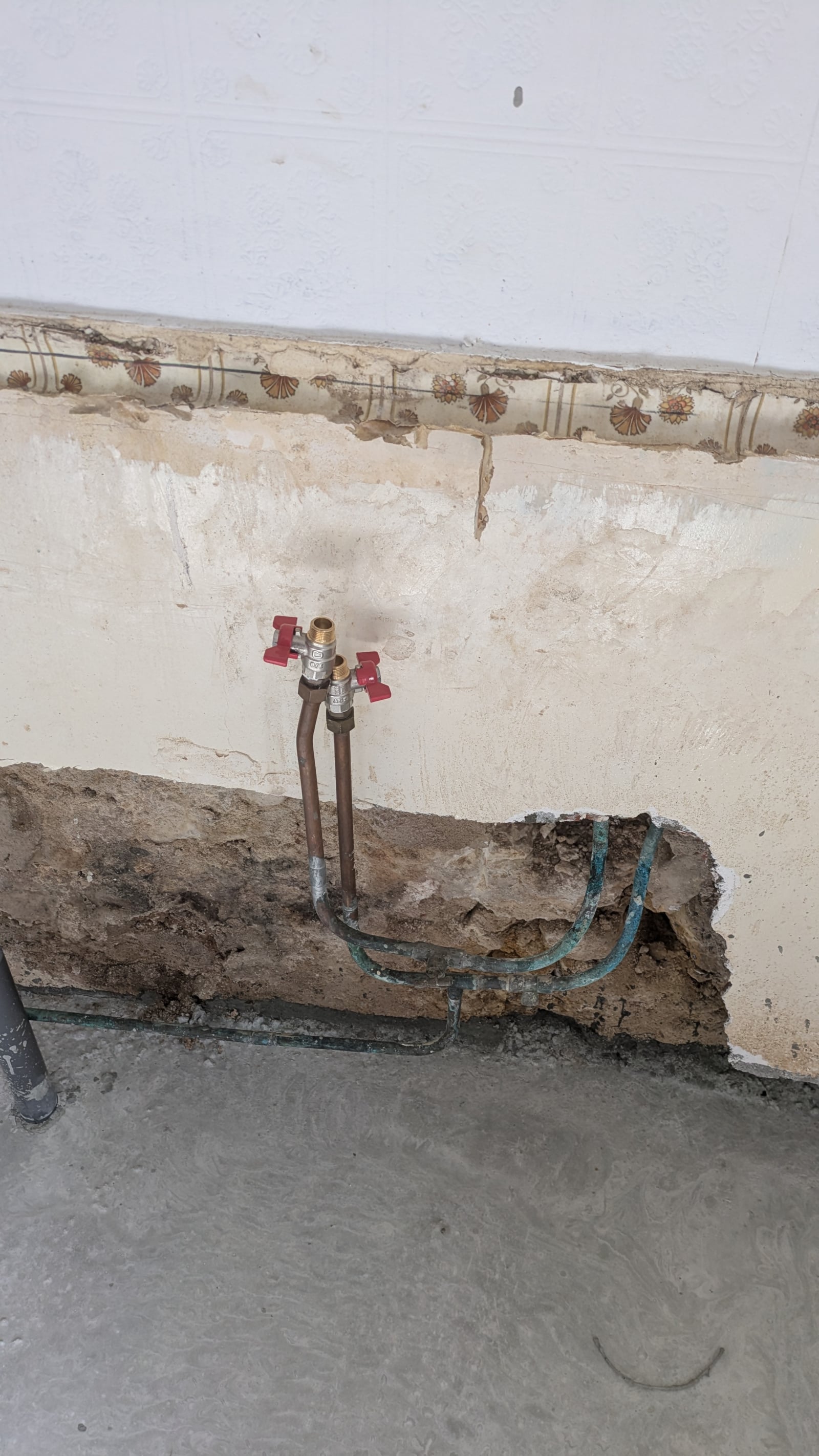
I'm in the process of doing up this room and the bottom of the walls have crumbled and fallen off almost the whole way round the room, maybe around 30 - 40cm tall.
Any suggestions for making good?
I'm thinking it might be easier to just put new plasterboard over the top and lose an inch or two but there's plenty of space.
Comments
-
The first question is not "how do I make good?"
The first question needs to be "what is the root cause of this occurring?"
0 -
There was a wooden floor which was rotten so the bottom of the plaster was crumbling and has been removed along with the rotten floor. We now have a concrete floor with tiles.
0 -
If the wall is still damp then find the cause before you do anything.
0 -
The wall is no longer damp.
0 -
So what was the root cause of the issue?
Yes, I get it was the rotten wooden floor, but why was the floor rotting? How did the floor get damp?
0 -
If you are sure the damp is gone as you have cured that issues then yes fill as required and plaster if you want but skirting board could surely cover that whatever you do behind it?
0 -
Those two copper pipes have a heavy buildup of verdigris. Quite possible that pinhole leaks will occur unseen under the plaster. I would strongly recommend pulling those pipes out and either replace with plastic or sleeve new copper with 20mm conduit. Just make sure there are no buried joints.
Yes, it is extra work and will create a fair bit of mess. But if you are plastering, it makes sense to knock any problems on the head now. If you don't, it will all need to be done in a few years time.
Any language construct that forces such insanity in this case should be abandoned without regrets. –
Erik Aronesty, 2014
Treasure the moments that you have. Savour them for as long as you can for they will never come back again.2 -
Hi Pramsay.
Are these pipes being kept?
Is this an outside wall? If so, then do consider overboarding with insulated plasterboard. Yes, you'll lose some space, but will almost certainly gain comfort and economy.
But, to answer your Q, you can tackle that by brushing on a diluted coat of PVA, wiping away with a damp cloth any that goes on the top surface of the wall, and filling it with a suitable filler.
This filler could be the 'lightweight' type that doesn't slump, or conventional 'bonding' plaster. I'd cut 4" wide strips of thickish plastic sheet and lay it on the floor, pushed tightly in against the damaged wall, and this will keep dirt away from your plaster, and also separate the wall from the floor. Fill the space with the bonding, and use a straight edge, or trowel, run along the wall as your guide, to level it off.
Try and remove any filler that has gone on to the actual wall surface.
The finish doesn't have to be any better than this, provided you fit tall enough skirting over it.
If any will be exposed, then the bonding should be kept slightly under wall surface level - a few mm - and then a finishing skim applied on top, again using the wall above as your sliding guide.
Once dry, sand using 180 grit and a flat block, check, and touch up if needed.
0






Confirm your email address to Create Threads and Reply

Categories
- All Categories
- 355.8K Banking & Borrowing
- 254.9K Reduce Debt & Boost Income
- 456.2K Spending & Discounts
- 248.3K Work, Benefits & Business
- 606K Mortgages, Homes & Bills
- 179K Life & Family
- 263.8K Travel & Transport
- 1.5M Hobbies & Leisure
- 16.2K Discuss & Feedback
- 37.7K Read-Only Boards