We’d like to remind Forumites to please avoid political debate on the Forum.
This is to keep it a safe and useful space for MoneySaving discussions. Threads that are – or become – political in nature may be removed in line with the Forum’s rules. Thank you for your understanding.
📨 Have you signed up to the Forum's new Email Digest yet? Get a selection of trending threads sent straight to your inbox daily, weekly or monthly!
Water ingress on bay
Comments
-
-
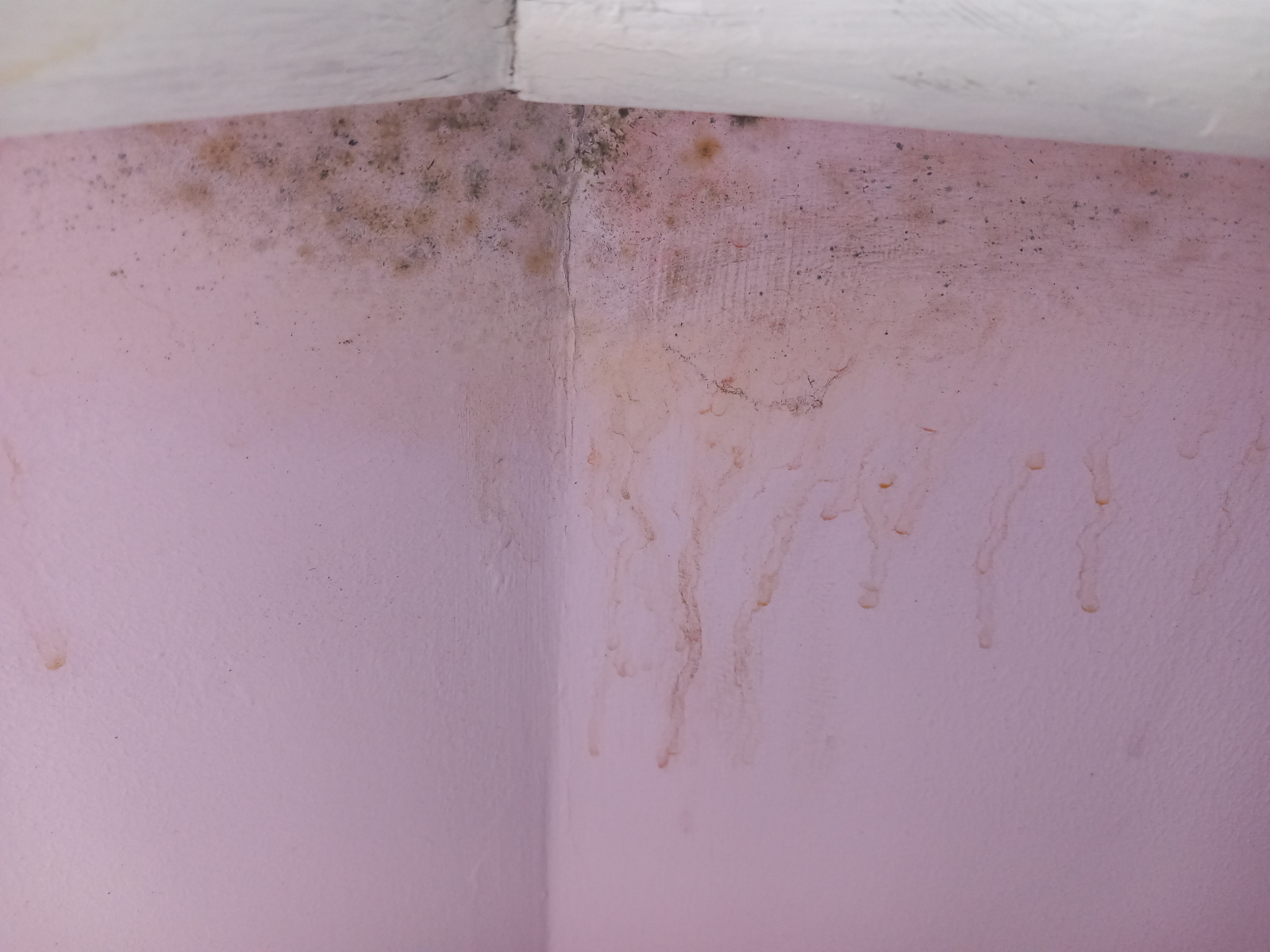
The flaked paint is very old, we have been here over 20 years and haven't touched it. It hasn't visibly changed in many years. It's one of those jobs that gets overlooked as it's rarely seen
0 -
It does look condensation is a good possibility, as it often makes those runs in the paintwork. You can check with a couple of simple tools. A thermometer to check the rooms temperature and relative humidity, and a surface thermometer.
If the surface is below the dew point condensation will be forming there. It is possible however, that it's a combination of penetrating damp and condensation.
2 -
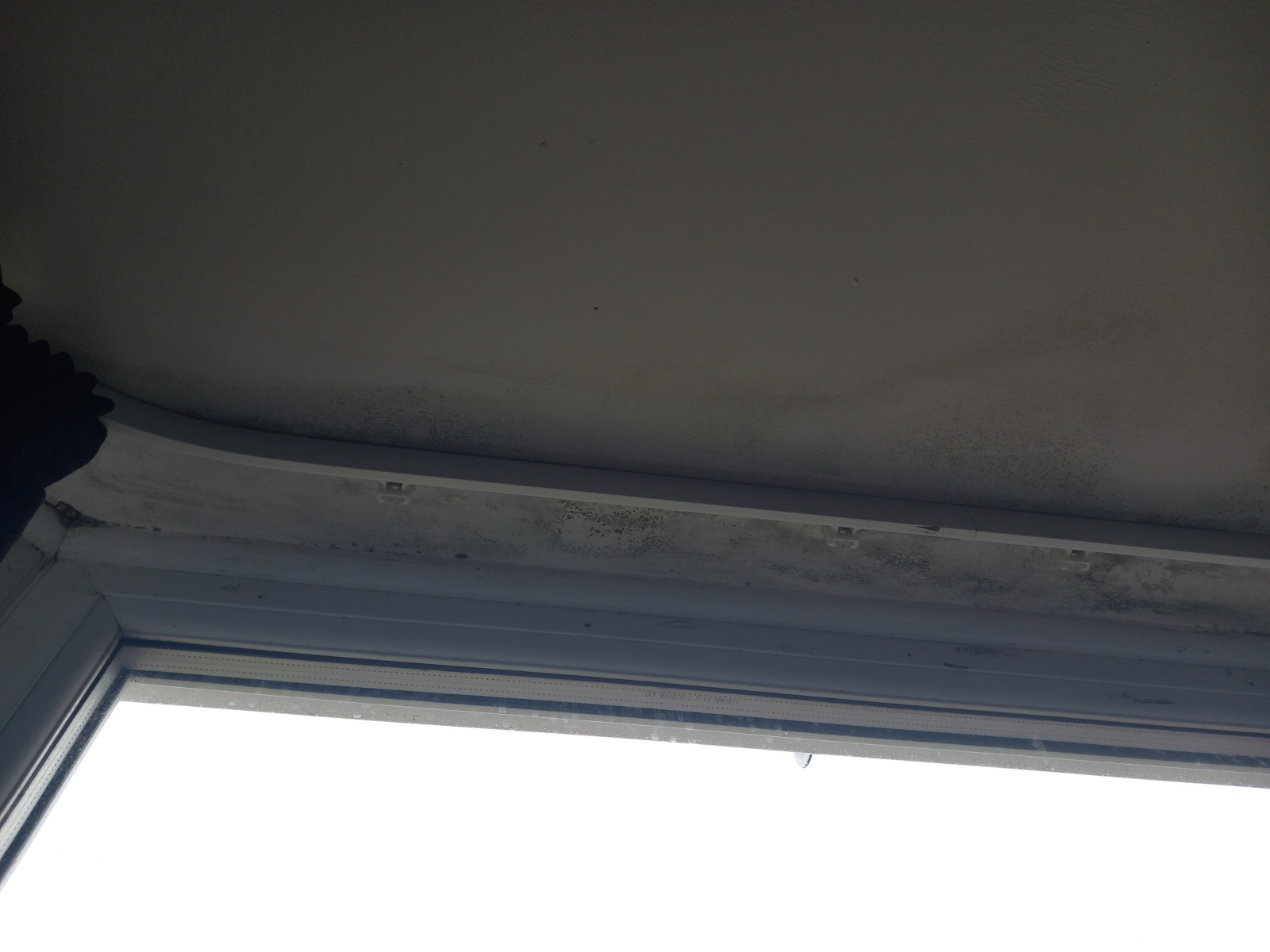
Thanks for that extra pic, JuzaM.
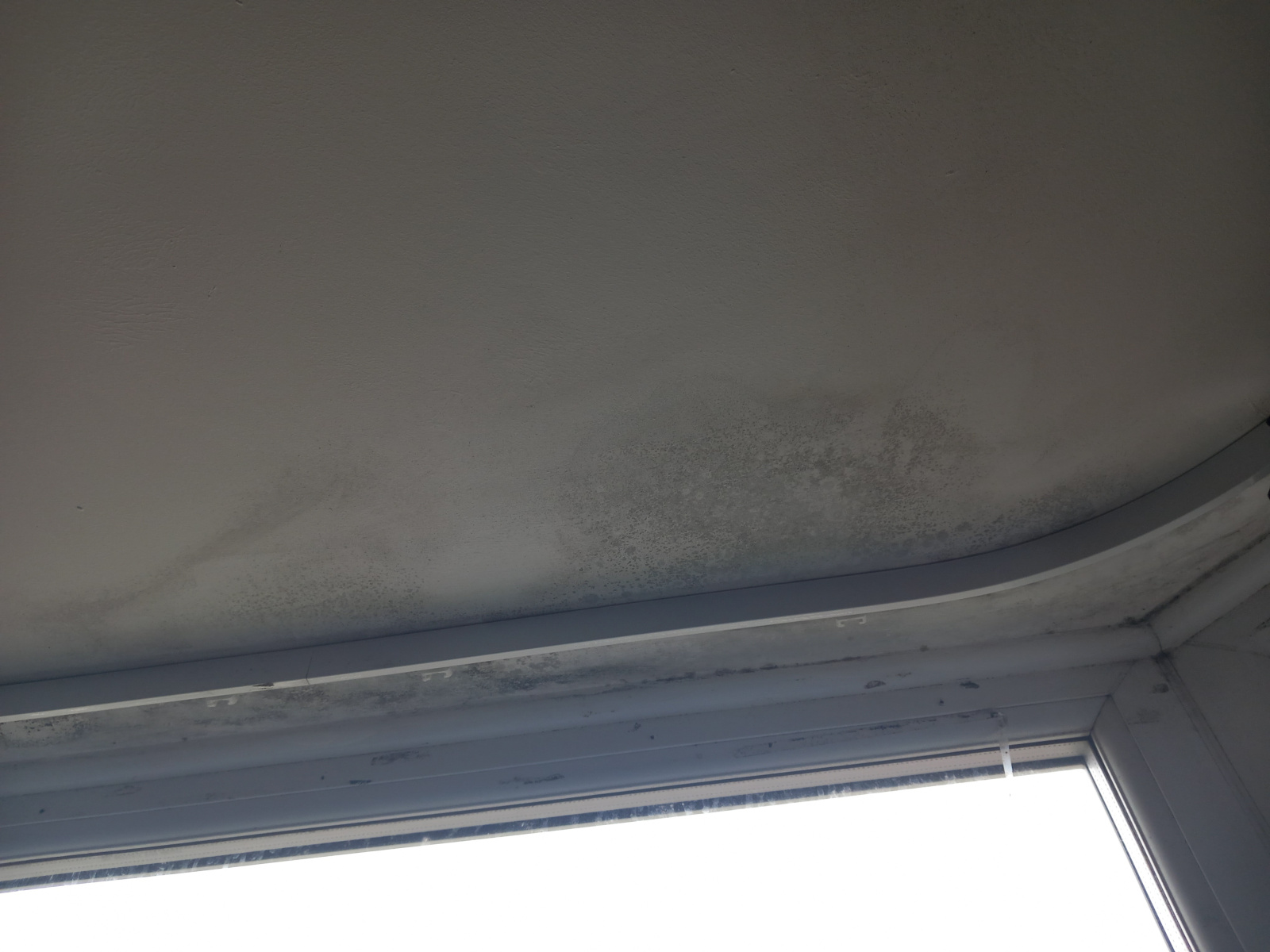
If it's condensation, then it is exceptionally bad. Considering the mould everywhere else, and the running windows, then there's a fair chance it is. It's worth finding out, as the cures will be completely different.
What room is this? Who uses it? What is the heating cycle? Can it be left unused for a week or more?
And, are the windows ever opened…?
1 -
I think you have to assume there is some ingress initially, especially as there is mould on the ceiling, and stain on the rendering outside, it could be condensation especially on a north wall but I think you need to rule anything more serious out. The guttering, flashings above the windows, window ledges, external sealant are things to consider. It might be sensible to get an old fashioned local builder to have a look.
Did you have the mould issue before the bay was repaired, windows replaced, and what sort of insulation was used ? Window fitters tend to get things done fast, and corners get cut.
Condensation on the windows isn't necessarily a bad thing, its passive dehumidifying, you want it on the window in preference to anywhere else. But you need to remove it daily (either with a sponge or a windowvac).
The trouble is our houses dont get enough air flow these days, its a modern problem. If you are drying on racks inside, then you really need a dehumidifier. Condenser and heat pump dryers return a percentage of moisture back to the room, the vilified vented dryers blew it all outside.
Add a whole family showering every day and it gets worse. Most dont realise that bathroom extractors work far more efficiently if you just pull the door to, or open the bottom of the window a fraction. They need to draw air through from somewhere.
I follow the scandinavian habit of opening windows daily, if only for 5 minutes. Amazingly it doesn't actually drop the room temperature noticably, It refreshes the air in the room and does help towards mould prevention, mould likes static conditions to thrive. I leave the bathroom window open for at least an hour, all day if I'm at home in better weather.
1 -
It is my youngest (14) child's bedroom. We have central heating which is on daily during cold weather. The radiator is on the wall opposite the window. My child does have a habit of leaving wet towels and clothes in there. I have not opened the windows enough (hard to get to in a messy room) but have recently made been opening them for a while each morning, as well as removing wet items from the room. We do not have a spare room to move them into.
1 -
We have not had a mould problem before (been here 20+ years) and the problem has only appeared this winter. The roof, guttering, render and window replacement were all done maybe five years ago. The insulation in the bay was some kind of rockwool? I think. A roll of thick fluffy stuff.
I have recently started the daily window opening.
1 -
This winter has been more humid than previous ones. Even with open windows the air coming in is still holding more moisture than previous years. Damp parts of the wall will also be slightly colder than the dry parts.
1 -
Ok.
How thick is your child's duvet 😊
May I suggest your new regime is;
Heating off in that room at all times, except a half-hour before bed, and ditto in the morn. (If your CH is timed to turn off overnight - surely to gawd it is - then you shut that rad off once child is dressed, and on again a half-hour before bed.)
Once the room is evacuated, open the windows in there a good half open, and leave them like that all day and eve, until it's time to turn the rad back on.
Keep the door to that room shut! Let that room vent it's bottom off.
Overnight, windows left on 'vent'. If yer precious is cold, then add another duvet, or - worst case - use an overnight leccy blanket, tho' tell yer child Winter has goooorn.
Oh, and if your child leaves wet clothes or towels in there, dock them their pocket money - that HAS to stop. Point to the towels, and point to the mould, and go, "D'uh?"
Almost certainly this will cure it, it will be at zero cost, and your child will be healthier.
If it doesn't sort it, you have a leak…
0 -
I'm not sure about that method. Surely if it is condensation the moist air from the rest of the house will find its way in there and condense on the colder walls?
1










Confirm your email address to Create Threads and Reply

Categories
- All Categories
- 355.8K Banking & Borrowing
- 254.9K Reduce Debt & Boost Income
- 456.2K Spending & Discounts
- 248.3K Work, Benefits & Business
- 606K Mortgages, Homes & Bills
- 179K Life & Family
- 263.8K Travel & Transport
- 1.5M Hobbies & Leisure
- 16.2K Discuss & Feedback
- 37.7K Read-Only Boards