We’d like to remind Forumites to please avoid political debate on the Forum.
This is to keep it a safe and useful space for MoneySaving discussions. Threads that are – or become – political in nature may be removed in line with the Forum’s rules. Thank you for your understanding.
📨 Have you signed up to the Forum's new Email Digest yet? Get a selection of trending threads sent straight to your inbox daily, weekly or monthly!
I Used ChatGPT to Predict the Inflation Rate




I saw the government's prediction for future inflation rates today:
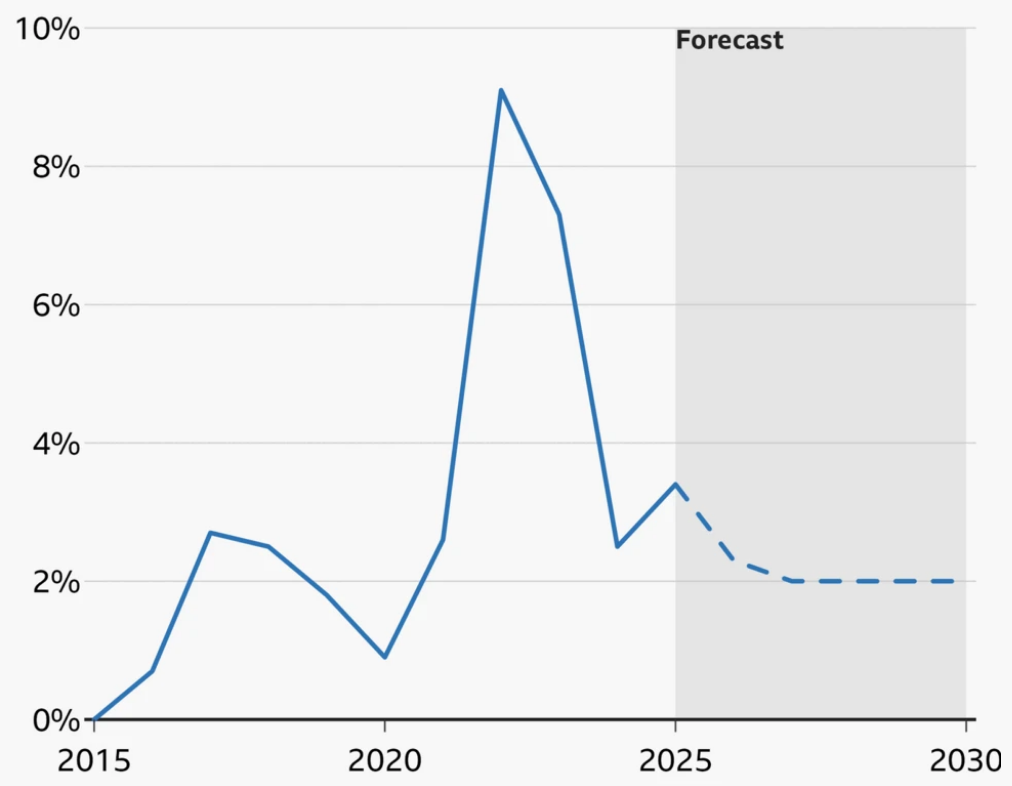
which I found to be laughable. It seems that wherever it is now, they think it will head rapidly to 2% then stay there.
I asked ChatGPT to take the same graph and make a prediction. Here is the result:
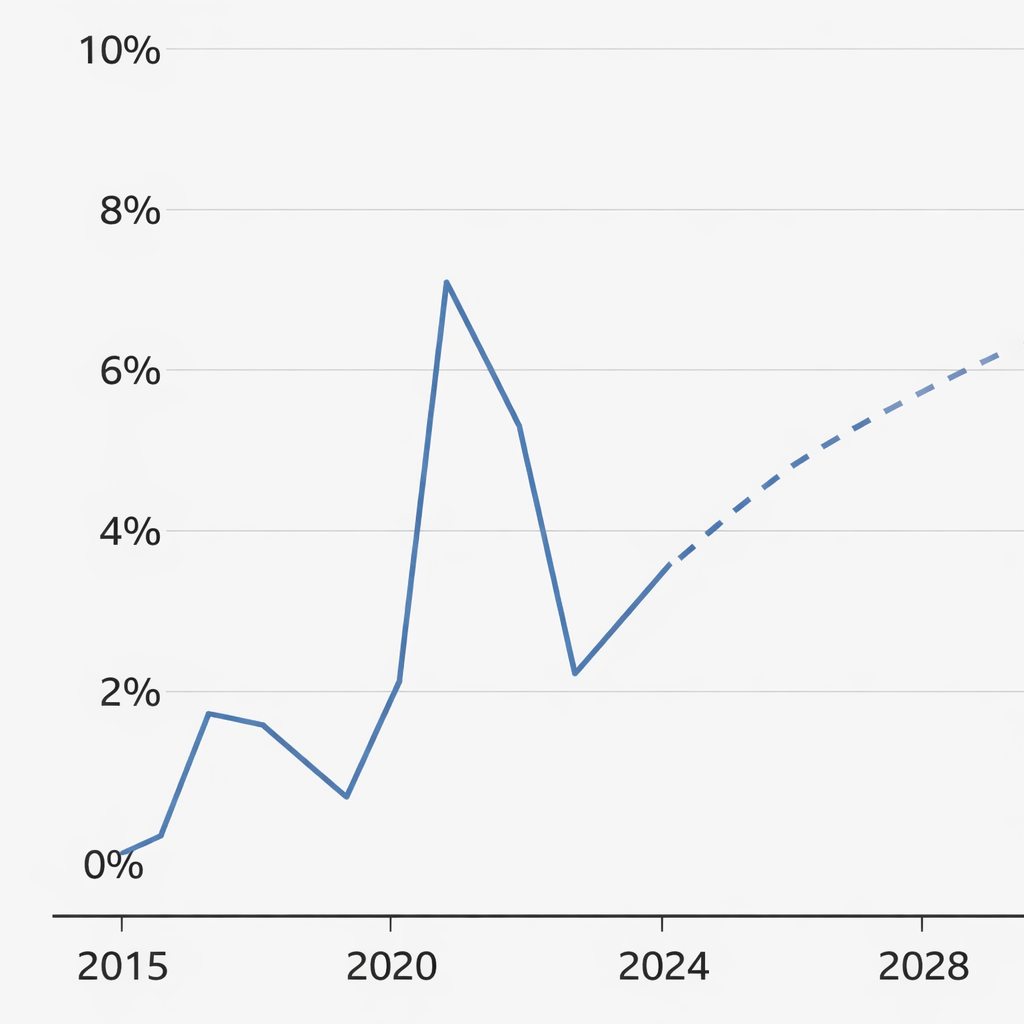
Slightly different… Though perhaps even more unlikely IMO
Gemini was more interesting. It found the data to be cyclical and produced this:
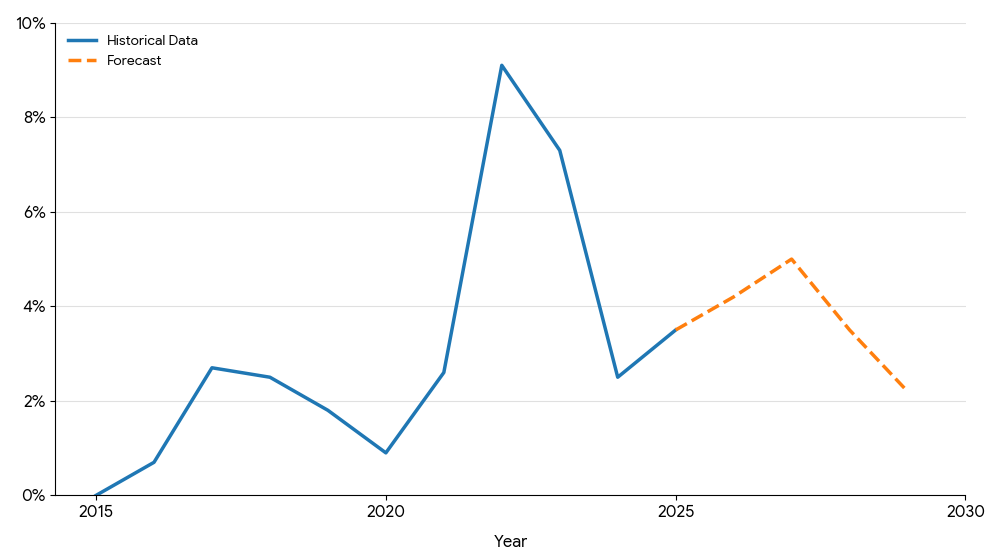
If I had to pick one, this would be my favourite, though my complete guess doesn't really align with any of these three complete guesses.
AON
Comments
-
The government forecast is as much political as it is economical. They're never going to forecast runaway inflation as that would just invite criticism of their current economic policies.
1 -
What you have as the difference between the Chat GPT graph and the ONS graph is that Chat GPT has provided a projection for the future while the ONS graph has provided a forecast for the future.
The difference between "projection" and "forecast" is significant in financial / management terms even though in many other cases the terms might be used somewhat interchangeably.
I will try to explain the difference:
Consider that I have £100 on 1st January and an income of £5 per month and expenditure of £10 per month.
On 1st February, I have £95 and an income of £5 per month and expenditure of £10 per month.
On 1st March, I have £90 and an income of £5 per month and expenditure of £10 per month.
Now, the "projection" would simply project that the same pattern (overall reduction of £5 per month) will continue and run out of money in 18 months' time.
A "forecast", however will consider actions that I might, or might state, I will take so that the current pattern (reduction of £5 per month) does not just continue in the same way. Let's consider that, on 1st March, I declared that I would take some action (maybe applying for an extra job) and that action will result in an increase of income after three months of £5 per month on top of current income. I also declared that I would cut expenditure on chocolate once the summer is over so there will be a reduction of expenditure by £1 per month from 1st October.
The forecast would then run like this:
On 1st April, I have £85 and an income of £5 and expenditure of £10
On 1st May, I have £80 and income £5 and expenditure £10
On 1st June, I have £75 and income of £5 and expenditure of £10 - this is my three months but will now have the higher income from now on.
On 1st July, I have £70 and income of £10 and expenditure of £10
On 1st August, I have £70 and income of £10 and expenditure of £10
On 1st September, I have £70 and income of £10 and expenditure of £10 - this is the end of summer so from next month I will reduce expenditure by not buying chocolate.
On 1st October, I have £70 and income of £10 and expenditure of £9
On 1st November, I have £71 and income of £10 and expenditure of £9
On 1st December, I have £72 and income of £10 and expenditure of £9
And so on.
The "projection" is very simple whereas the "forecast" assumes that there will be interventions to change the projection to a more amenable outcome.
7 -
Actually I know that 🙂 The point of my post, if there is one, is to illustrate how woefully poor the OBR forecast is. The BofE's job is to pull the levers to get inflation to 2% then keep it there, so the forecast takes inflation in a straight line to 2% then holds it there. 30+ years of history tells us that inflation never remains stable, and seldom resides near 2%. Therefore the OBR's method must be failing to consider so many factors that its output is no more useful than the first order line fit provided by ChatGPT.
Must do better…
0 -
The "projection" is very simple whereas the "forecast" assumes that there will be interventions to change the projection to a more amenable outcome.
And which one should we assume will be presented to us "sheeples"? 🙄
0 -
In that case, did you actually have a question?
0 -
If you assume that monetary (and to a lesser extent fiscal) levers will be pulled in order achieve a 2% inflation rate then your best central estimate for inflation will be 2% - of course as the time frame extends the confidence interval /uncertainty bands will widen quickly but these are not shown on the OBR projection above.
I think....0 -
Do all the different models make allowances for the increasing number of nutjob leaders around the world. They are becoming as common as a rainy day.
1 -
You can ask LLMs to model for a shift to isolationist or fascist economic policies, and they will provide an output, but I wouldn't trust a decorated political economist to give me something useful, let alone a statistical model based on their aggregated opinions.
0 -
err, no. Current value of CPI is 3.0% (despite BofE pulling levers) Average of the last 20 years is 3.0% (despite BofE pulling levers). So my baseline guess for the next 5 years is 3.0%. To come up with a forecast that rapidly heads to 2.0 and then stays there is to be out of touch with reality.
2 -
Notice how the ChatGPT graph looks superficially correct and optimistic, when on closer examination it is factually incorrect about historical data.
🐻 A little FIRE lights the cigar1










Confirm your email address to Create Threads and Reply

Categories
- All Categories
- 355.8K Banking & Borrowing
- 254.9K Reduce Debt & Boost Income
- 456.2K Spending & Discounts
- 248.3K Work, Benefits & Business
- 605.9K Mortgages, Homes & Bills
- 179K Life & Family
- 263.8K Travel & Transport
- 1.5M Hobbies & Leisure
- 16.2K Discuss & Feedback
- 37.7K Read-Only Boards