We’d like to remind Forumites to please avoid political debate on the Forum.
This is to keep it a safe and useful space for MoneySaving discussions. Threads that are – or become – political in nature may be removed in line with the Forum’s rules. Thank you for your understanding.
📨 Have you signed up to the Forum's new Email Digest yet? Get a selection of trending threads sent straight to your inbox daily, weekly or monthly!
Proposed soundbar - check
Comments
-
Yes, forgot you need two though can still see it at under £100 even getting someone else to do the terminations, lower if you DIY the terminals.JSmithy45AD said:
It was you who brought up bell wire as a comparison. The QED cable is £100+ for a 3m terminated pair BTW, but if you're spending say £30,000 on a pair of speakers then you will pay for better cable, regardless of how "little" the difference may be.MyRealNameToo said:
Vs bell wire? Absolutely. Will the £2,520 Chord Signature -v- the £30 QED XT40i make much difference (both 3m terminated) I personally think is much more questionable. The law of diminishing returns does get so close to 0 improvement fairly quickly.JSmithy45AD said:That's not just a theory though, analogue without doubt benefits from better cables. My previous comment applied purely to connecting a cheap TV and soundbar together via digital optical cable.
As to spending more for £30k speakers, unfortunately the most I know of someone spending on speakers was more like £20k (B&W 801D3), they are still using £10/m cable having trialled some much more expensive and found absolutely no difference. The sales guy obviously claimed the more expensive cable "opened up the speakers" but the chaps a bit of tech nerd and has high end sound analysis software which showed absolutely no difference1 -
A decent single run of cable will give you more benefit than bi-wiring at the same price point. Unless you're talking fairly high level audio just use decent single cable. I've no idea why bi-wiring was brought up in the first place.Grumpy_chap said:Our speaker only has one pair of terminals on each speaker.
I could run parallel wires to the same terminals but I assume that would not add much. Might even detract if the lengths of the two pairs of cables were not exactly the same?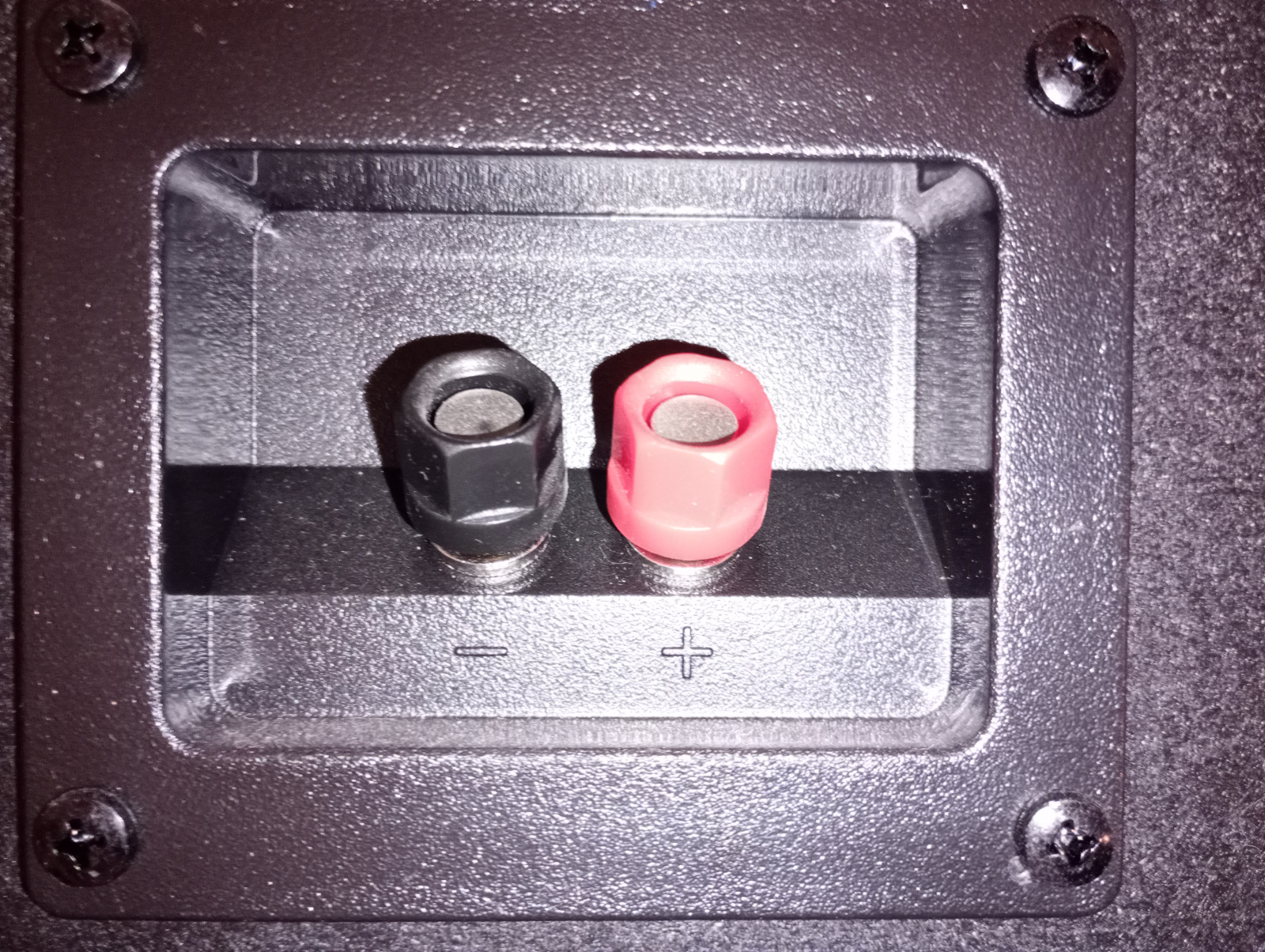
(With sincere apologies to the OP - I did not intend to hijack the thread or take it off topic, at least no more than it was already veering with all the chatter about billion-pound-per-metre wires.)1 -
- Unless you're talking fairly high level audio just use decent single cable -
That's just your opinion, of course.0 -
Just like yours then? Of course mine is backed up by multiple online tests and reviews but I'll leave you to search them all out yourself.Vitor said:- Unless you're talking fairly high level audio just use decent single cable -
That's just your opinion, of course.0 -
Of course everyone is forgetting their ears……
Drinking Rum before 10am makes you
A PIRATE
Not an Alcoholic...!0 -
What's all this about phase issues and interference on speaker cables in a domestic environment?
A non issue.
0 -
I think the thread has meandered far away from the original question….😂
Drinking Rum before 10am makes you
A PIRATE
Not an Alcoholic...!0 -
In principle having the two cables a different length would cause the speakers be out of time with each other similarly the resistance of each cable would be different as its a function of length. If it's going to make a noticeable difference is another matter.
Interference can certainly impact speakers in a domestic setting so certainly not a "non-issue" but in my case simply moving the speaker cable from the coiled power cord resolved the issue without spending more on speaker cable.
1 -
That's OK, I got the answer to my questions earlier upthread 😁
1 -
With The OP permission...
@RumRat I post this for others clarification.
yes phase could be ever so slightly difference but given the speed of light ( nearly) signal over the cable it would not be heard. Between cone phasing on individual speakers and the audio path lengths from speakers to ears ( at sound speeds!) OS a different matter but nothing to do with cables.
True cable resistance, if sufficiently unequal and high enough, can affect cone damping. One reason to use low resistance cables ( but they can still be cheap!!)
As to your interference, INHO @RumRat that is likely due to induced interference on the earthy cable wire caused by a hum loop on the higher impedance circuits rather than being attributed to speaker cabling signal interference being very low impedance at that point...but obviously that speaker wire can the earthy side of the system where it is being induced. But a simple fix non the less.
Perhaps an added note that here we are discussing passive speakers and not active ones with their own internal power amps!
3






Confirm your email address to Create Threads and Reply

Categories
- All Categories
- 355.8K Banking & Borrowing
- 254.9K Reduce Debt & Boost Income
- 456.2K Spending & Discounts
- 248.3K Work, Benefits & Business
- 605.9K Mortgages, Homes & Bills
- 179K Life & Family
- 263.8K Travel & Transport
- 1.5M Hobbies & Leisure
- 16.2K Discuss & Feedback
- 37.7K Read-Only Boards