We’d like to remind Forumites to please avoid political debate on the Forum.
This is to keep it a safe and useful space for MoneySaving discussions. Threads that are – or become – political in nature may be removed in line with the Forum’s rules. Thank you for your understanding.
LCWRA changes.
Comments
-
Then that is a limitation of your imagination based on a lack of understanding of the tremendous variety of disabilities there are and how LCWRA is assessed. Many people with fairly straightforward partial quadriplegia, for instance, meet the mobility criterion for LCWRA but can work more than that *with sufficient support*.itsthelittlethings said:
If you genuinely have LRCWRA I struggle to see how you could really sustain more than around 8 hours a week long term.
However it is true that someone who meets (a) descriptor(s) for LCWRA and is capable of working, will likely to struggle to find employment - or sustainable self-employment/freelance work - for a multitude of reasons, and even if they can they will need to have sufficient support for daily living in the first place to also be able to work.
Although to be clear, many people qualify for LCWRA due to such debilitating illness that they cannot work even with all the support in the world - and particularly with Long Covid still increasing, there are ever more people finding themselves in that position.1 -
Why? Those with LCWRA are quite a large varied group. It includes many with non functional descriptor qualification. But the world of work is also highly varied and in many cases a job may not particularly conflict with disablement... and in some cases may even find their disability assists. The Work Capability Assessment doesn't look at whether you are capable of a particular job or any work. Take someone who has severe limitations in ability to mobilise... that may not stop them working from a desktop... someone with severe incontinence may find working from home essentially unaffected...someone with severe problems coping with social engagement or interacting with people could work for themselves ensuring this is handled by someone else or not particularly required (or an employer could make adaptations to avoid).. someone with severe problems eating or drinking may be unaffected if they continue to receive the support they do to overcome this problem while working...etc etc.itsthelittlethings said:Altior said:Are all those earnings net? So in theory, someone on UC LCWRA could earn a lot more than that, gross, and contribute to a pension within the same AP (staying within pension legislation).
If you genuinely have LRCWRA I struggle to see how you could really sustain more than around 8 hours a week long term.
Imagination is key and disabled people out there will commonly be used to trying to change their circumstances so that their disabilities are less obvious or less impacting or better managed! Many people who qualify with LCWRA have been in work...potentially for years full time... some of them will have had some change in health etc that leaves them changing direction to benefits but some will not have had a change and made some decision about no longer working. I would be reluctant to make any blanket assumptions about the working potential of 2 million plus people."Do not attribute to conspiracy what can adequately be explained by incompetence" - rogerblack1 -
Is Long Covid still increasing?Spoonie_Turtle said:
Then that is a limitation of your imagination based on a lack of understanding of the tremendous variety of disabilities there are and how LCWRA is assessed. Many people with fairly straightforward partial quadriplegia, for instance, meet the mobility criterion for LCWRA but can work more than that *with sufficient support*.itsthelittlethings said:
If you genuinely have LRCWRA I struggle to see how you could really sustain more than around 8 hours a week long term.
However it is true that someone who meets (a) descriptor(s) for LCWRA and is capable of working, will likely to struggle to find employment - or sustainable self-employment/freelance work - for a multitude of reasons, and even if they can they will need to have sufficient support for daily living in the first place to also be able to work.
Although to be clear, many people qualify for LCWRA due to such debilitating illness that they cannot work even with all the support in the world - and particularly with Long Covid still increasing, there are ever more people finding themselves in that position.Hastings Direct 4775.99
La Redoute 676.21
Barclaycard 295.20
0 -
Yes, otherwise I wouldn't have said it, would I.itsthelittlethings said:
Is Long Covid still increasing?Spoonie_Turtle said:
Then that is a limitation of your imagination based on a lack of understanding of the tremendous variety of disabilities there are and how LCWRA is assessed. Many people with fairly straightforward partial quadriplegia, for instance, meet the mobility criterion for LCWRA but can work more than that *with sufficient support*.itsthelittlethings said:
If you genuinely have LRCWRA I struggle to see how you could really sustain more than around 8 hours a week long term.
However it is true that someone who meets (a) descriptor(s) for LCWRA and is capable of working, will likely to struggle to find employment - or sustainable self-employment/freelance work - for a multitude of reasons, and even if they can they will need to have sufficient support for daily living in the first place to also be able to work.
Although to be clear, many people qualify for LCWRA due to such debilitating illness that they cannot work even with all the support in the world - and particularly with Long Covid still increasing, there are ever more people finding themselves in that position.0 -
Do you have facts and figures? I’m just interested as I thought the onset of Long Covid tended to be relatively quickly after initial infection. The major waves of Covid are past.Spoonie_Turtle said:
Yes, otherwise I wouldn't have said it, would I.itsthelittlethings said:
Is Long Covid still increasing?Spoonie_Turtle said:
Then that is a limitation of your imagination based on a lack of understanding of the tremendous variety of disabilities there are and how LCWRA is assessed. Many people with fairly straightforward partial quadriplegia, for instance, meet the mobility criterion for LCWRA but can work more than that *with sufficient support*.itsthelittlethings said:
If you genuinely have LRCWRA I struggle to see how you could really sustain more than around 8 hours a week long term.
However it is true that someone who meets (a) descriptor(s) for LCWRA and is capable of working, will likely to struggle to find employment - or sustainable self-employment/freelance work - for a multitude of reasons, and even if they can they will need to have sufficient support for daily living in the first place to also be able to work.
Although to be clear, many people qualify for LCWRA due to such debilitating illness that they cannot work even with all the support in the world - and particularly with Long Covid still increasing, there are ever more people finding themselves in that position.Hastings Direct 4775.99
La Redoute 676.21
Barclaycard 295.20
0 -
I guess we’re at cross purposes. Rates of new cases of Long Covid would not be increasing but cumulative numbers may be.
Hastings Direct 4775.99
La Redoute 676.21
Barclaycard 295.20
0 -
A fair question. Unfortunately I can't find any up-to-date stats for Long Covid in the UK (that would be far too simple and useful!) but people are still being infected every week* whether we're considered to be in a wave or not, and I don't think anyone's disputing that a % of those infections cause LC? In the patient community we're constantly seeing new people with debilitating symptoms after having covid, looking for help - it's frustrating that there don't seem to be official stats to back up what we're seeing in real life.itsthelittlethings said:
Do you have facts and figures? I’m just interested as I thought the onset of Long Covid tended to be relatively quickly after initial infection. The major waves of Covid are past.Spoonie_Turtle said:
Yes, otherwise I wouldn't have said it, would I.itsthelittlethings said:
Is Long Covid still increasing?Spoonie_Turtle said:
Then that is a limitation of your imagination based on a lack of understanding of the tremendous variety of disabilities there are and how LCWRA is assessed. Many people with fairly straightforward partial quadriplegia, for instance, meet the mobility criterion for LCWRA but can work more than that *with sufficient support*.itsthelittlethings said:
If you genuinely have LRCWRA I struggle to see how you could really sustain more than around 8 hours a week long term.
However it is true that someone who meets (a) descriptor(s) for LCWRA and is capable of working, will likely to struggle to find employment - or sustainable self-employment/freelance work - for a multitude of reasons, and even if they can they will need to have sufficient support for daily living in the first place to also be able to work.
Although to be clear, many people qualify for LCWRA due to such debilitating illness that they cannot work even with all the support in the world - and particularly with Long Covid still increasing, there are ever more people finding themselves in that position.
*Bare minimum here, those that test +ve on a PCR test, to my knowledge it doesn't include LFTs (not that there's any mechanism to report +ve LFTs any more) and they no longer monitor wastewater to get a true picture: https://ukhsa-dashboard.data.gov.uk/respiratory-viruses/covid-19
Yes indeed, that is what I meant.itsthelittlethings said:I guess we’re at cross purposes. Rates of new cases of Long Covid would not be increasing but cumulative numbers may be.0 -
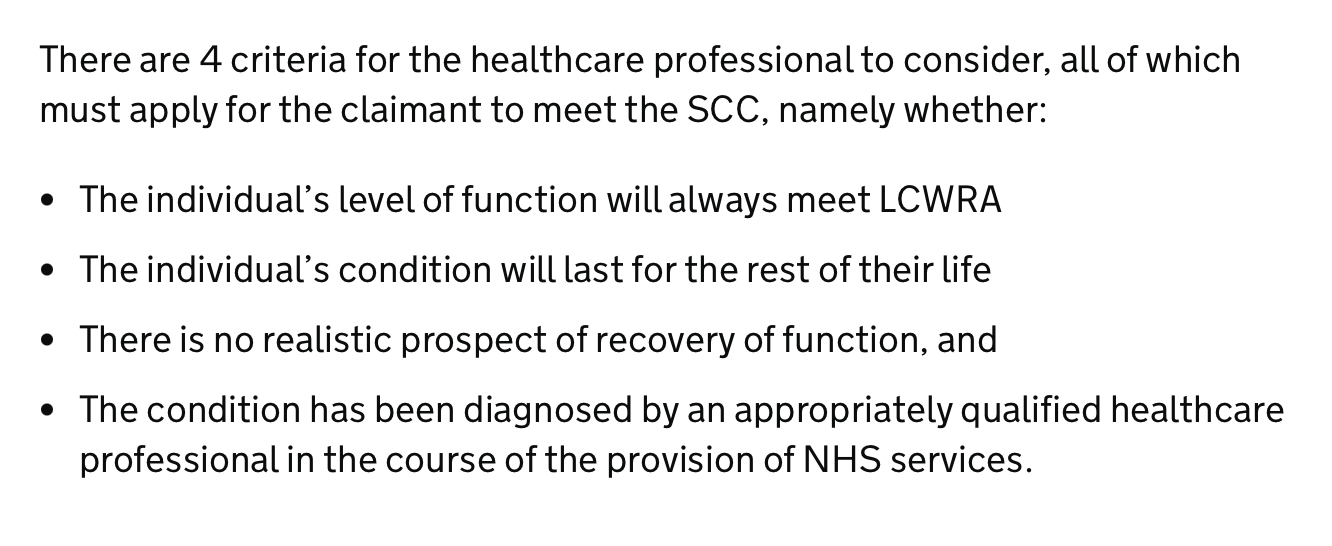
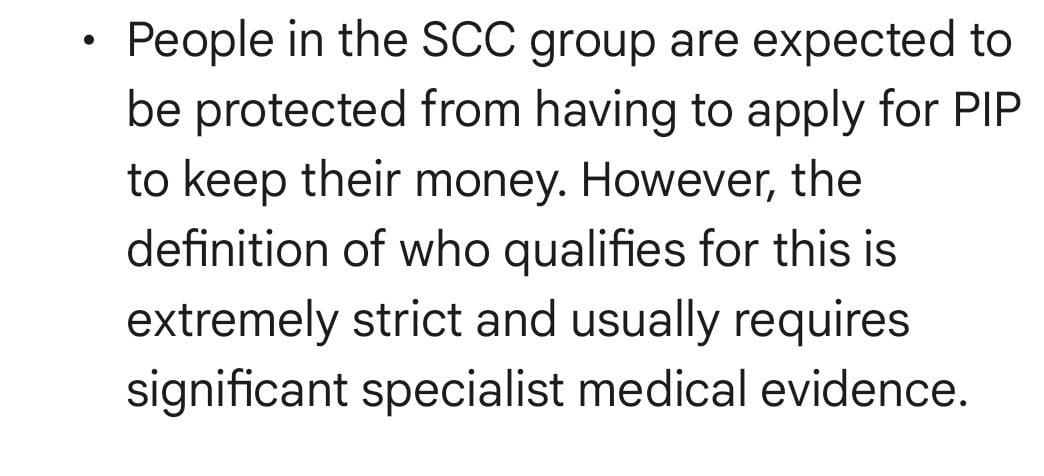
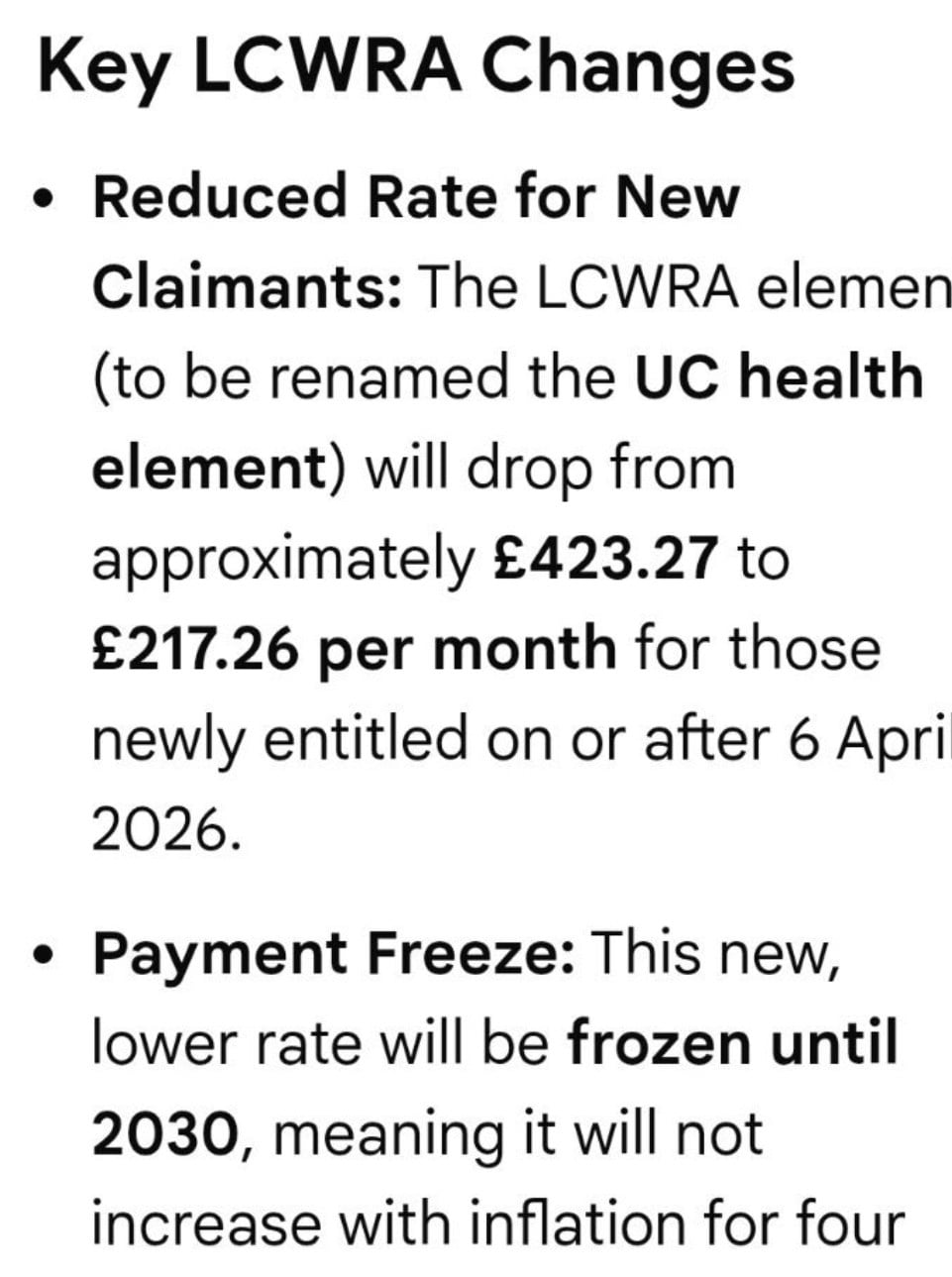
There's plenty now appearing about 2028-29, and still nothingng solid about the support group or LCWRA supposed to be replaced with SCC if you meet the conditions. But seems it will be dragged out again as to what is eventually decided to qualify for the health element. We shall see around two years time, if the current legislation becomes law the DWP have a habit of leaving people without any solution or update.
Also remember if you decide to try the Right To Try. If you were on the "higher rate" of the health element before the 2026 changes, you can get that same higher rate back immediately if you return to benefits within 90 days of your claim closing. If you start a job and find that your health condition prevents you from continuing, or if your earnings drop to zero because the job didn't work out, you have a three-month window to reclaim Universal Credit without losing your Transitional Protection.
0










Confirm your email address to Create Threads and Reply

Categories
- All Categories
- 355.7K Banking & Borrowing
- 254.9K Reduce Debt & Boost Income
- 456.1K Spending & Discounts
- 248.3K Work, Benefits & Business
- 605.9K Mortgages, Homes & Bills
- 179K Life & Family
- 263.7K Travel & Transport
- 1.5M Hobbies & Leisure
- 16.2K Discuss & Feedback
- 37.7K Read-Only Boards