We’d like to remind Forumites to please avoid political debate on the Forum.
This is to keep it a safe and useful space for MoneySaving discussions. Threads that are – or become – political in nature may be removed in line with the Forum’s rules. Thank you for your understanding.
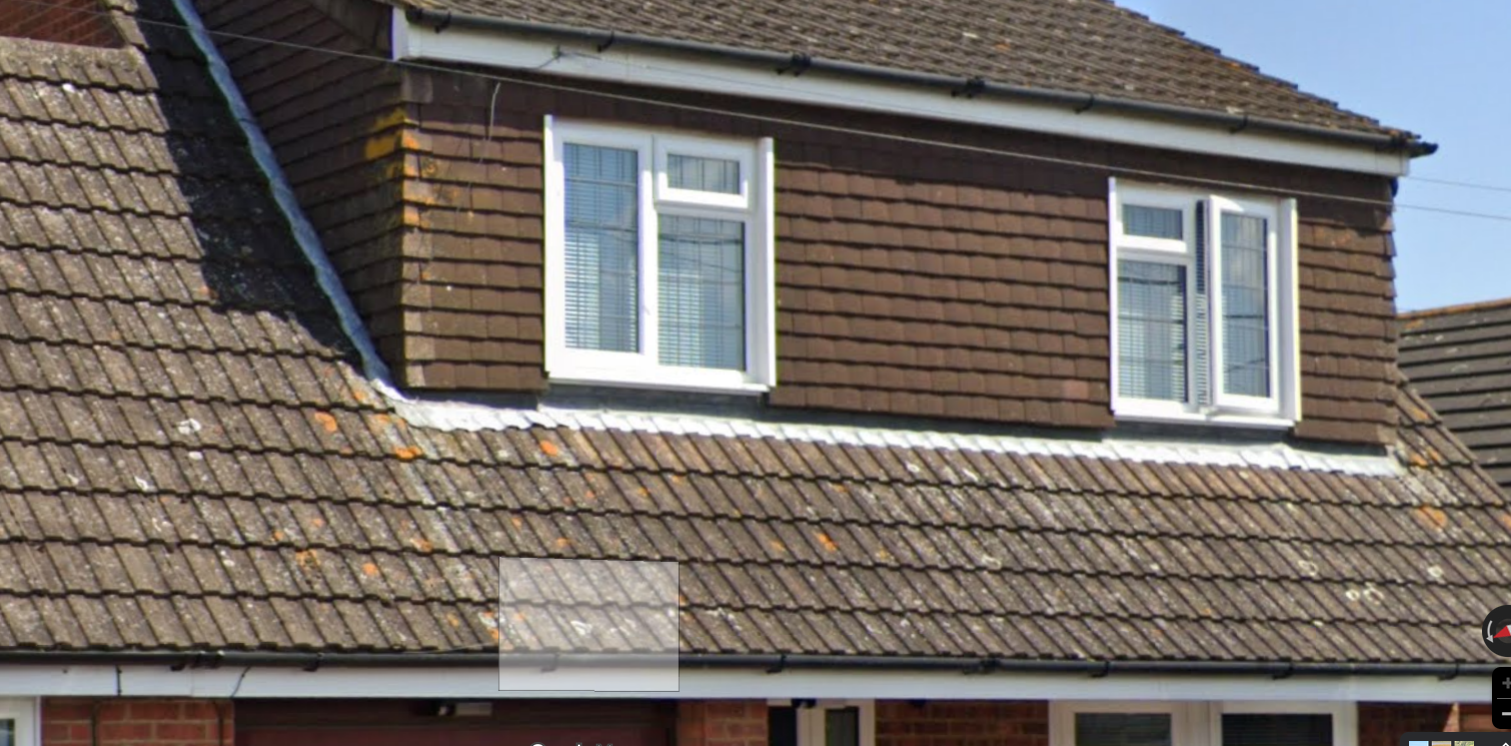
Cladding instead of hanging tiles




My property is a "chalet-bungalow". The downstairs is traditional
brick construction. The upstairs is partially wooden frame with hanging
tiles (see picture) and is much colder than downstairs.
I recently had to get up on the roof and found that behind the tiles is a black membrane (torn in places), then some very thin and wispy fibreglass insulation (fallen down in places) and finally the plasterboard that forms the bedroom walls.
I'm thinking of having all this removed and replaced by fibre cement cladding.
Has anyone had this done and did it improve the heat retention upstairs and if so, by how much?
Comments
-
Replacing the tiles with cladding will - should - make no perceptible difference. So only do so if you like the look. (And I suspect the tiles look more 'right' than cladding.)Otherwise, I'd suggest tacklling this issue from within.Below these windows will be an eaves void - presumably. You can either remove sections of plasterboard to allow access to these voids, or simply ignore them and add a layer of insulated plasterboard to the inner wall on that side. 2" insulation should transform the insulation value.Best, tho', would be to strip away all the existing p'board on that external wall, see what you have, and redo using insulated p'board. This would allow you to, for example, fit 2" of rigid insulation snugly in between the uprights, and then a further overboarding of 2" insulated p'board would make this very snug indeed.At the same time, you'd block any draughts that could come in via the floor or skirtings.0
-
Normal cladding whether bricks or tiles is not considered when assessing insulation. Something like Kingspan/Celotex are used to insulate these types of areas.0
-
One has to be mindful of any fire risk that added insulation might introduce following the Grenfell Tower disaster and changes to building regs etc.0
-
Our neighbours replaced something very similar by insulating behind with board insulation like celotex and cladding over the top. It looks fine and I’m sure it’s much warmer, but you could insulate with the celotex then batten and refix your tiles to keep the same look.
As above, take advice on whether it would meet building regs. You may also need a vapour barrier I guess.0 -
As others have mentioned find out about building regulations and also contact your local council to see if any sort of planning permission is required and if any others local planning laws need adhering too.GrahamLM52 said:My property is a "chalet-bungalow". The downstairs is traditional brick construction. The upstairs is partially wooden frame with hanging tiles (see picture) and is much colder than downstairs.
I recently had to get up on the roof and found that behind the tiles is a black membrane (torn in places), then some very thin and wispy fibreglass insulation (fallen down in places) and finally the plasterboard that forms the bedroom walls.
I'm thinking of having all this removed and replaced by fibre cement cladding.
Has anyone had this done and did it improve the heat retention upstairs and if so, by how much?
0 -
These hanging tiles are just a waterproof skin. 'Cladding' would just be an alternative waterproof skin.
Insulation is placed behind it, in the eaves void. And you get to this either by stripping away the tiles - a big job, and pointless unless required in any case - or by removing the p'board layer from inside the room, which is highly DIYable if messy.
Or, even easier, by simply adding 2" insulated p'board to the existing walls inside.
The reason it's better to first remove the old p'board is that you can increase the overall insulation layer without losing more internal space - eg, 2" 'in' the wall, and 2" insulboard over the wall - 4" tots.
The new board should be sealed against the floor to prevent draughts, and the rest of the floor also draught-proofed if needed. That would then be an awesome level of insulation.
Removing the old board would also allow examination of the eaves void.
That is my understanding.
I suspect there is currently zero insulation in that wall - the p'board layer has nothing but cold eaves space behind it.0 -
If the room is really cold you'll need to look at the insulation for all the walls and ceiling. Doing just the dormer walls won't make a lot of difference.
0 -
Thanks for the advice, everyone. Plenty to think about.1
-
Also with regard to a future EPC certificate that you might require........I'd suggest taking some photographs of the work in progress so you can prove wall etc insulation has been installed.
3 -
I'd be wanting a look in that eaves void first to see what in the way of insulation in there as someone already said. You could drill a hole and push a cheap borescope camera through for a look without disturbing much1






Confirm your email address to Create Threads and Reply

Categories
- All Categories
- 354.8K Banking & Borrowing
- 254.5K Reduce Debt & Boost Income
- 455.6K Spending & Discounts
- 247.6K Work, Benefits & Business
- 604.6K Mortgages, Homes & Bills
- 178.6K Life & Family
- 262.2K Travel & Transport
- 1.5M Hobbies & Leisure
- 16.1K Discuss & Feedback
- 37.7K Read-Only Boards