We’d like to remind Forumites to please avoid political debate on the Forum.
This is to keep it a safe and useful space for MoneySaving discussions. Threads that are – or become – political in nature may be removed in line with the Forum’s rules. Thank you for your understanding.
PLEASE READ BEFORE POSTING: Hello Forumites! In order to help keep the Forum a useful, safe and friendly place for our users, discussions around non-MoneySaving matters are not permitted per the Forum rules. While we understand that mentioning house prices may sometimes be relevant to a user's specific MoneySaving situation, we ask that you please avoid veering into broad, general debates about the market, the economy and politics, as these can unfortunately lead to abusive or hateful behaviour. Threads that are found to have derailed into wider discussions may be removed. Users who repeatedly disregard this may have their Forum account banned. Please also avoid posting personally identifiable information, including links to your own online property listing which may reveal your address. Thank you for your understanding.
📨 Have you signed up to the Forum's new Email Digest yet? Get a selection of trending threads sent straight to your inbox daily, weekly or monthly!
Landlord mould advice...
Comments
-
That's potentially significant info.mmunro2013 said:
Property is watertight, mould/damp appearing in the bedroom upstairs. Open plan downstairs (lounge and kitchen) and open stairwell to the upstairsNearlyold said:Where is the mould/damp appearing? Have you established if the property is watertight?
Do you know where this mould is forming? Have you seen it? Do you have pics? Are the window panes also wet with condensation? If so, when - just mornings, or evenings too?
Most of the moisture being produced in the home will typically come from the kitchen and lounge; cooking and breathing, exacerbated by these rooms being kept at a higher temp which will 'hold' more of that moisture in suspension. (Yes, and bath/shower rooms, but one assumes these are extracted.)
The obvious route for this warm moist air is upwards, since warm air rises. The open stairwell provides the ideal path, acting effectively as a 'chimney'.
I presume they keep their bedroom door shut? Even so, there will likely be a steady trickle of this moisture-laden air getting in around the door, and will condense out in the coldest spots in that room.
How to sort? Superheat the bedroom to the point it keeps that moisture in suspension, so probably a constant 25oC+. Clearly not practical. Or, ventilate that room thoroughly.
That means, at all the times the bedroom isn't being used, the windows should be kept at least on 'vent' setting, and ideally opened a couple of inches. The radiators should be off, as it would simply waste heat. And the door kept firmly shut.
Yes, the room will be cold, but it should also be dry. And mould should stop forming.
If they do this - first cleaning away the existing mould - then they should expect a cure. They may need some persuading to do this - it's counter-intuitive to most folk - "cold=damp" - but if they try it, it has a very high chance of succeeding.
Ok, so they are now chilly in the bedroom... If they want a warm bedroom late evening, then they can close the windows and turn the rad on a half-hour before bedtime. Once under the sheets, the rad should be off, and the windows set to 'vent' again. There is no reason to be cold overnight - use a suitable duvet, and even an all-night blanket if really needed - pennies to run.
In the morning, jump out of bed, close the windows, turn on the rad, and jump back into bed for a half-hour.
Once the bedroom is vacated, rad off, windows cracked open, door closed.
Jobbie jobbed.
I currently have a Hive Smart TRV on the bedroom radiator. It is set to come on a half-hour before wake up time. In colder spells, it's supplemented with a small oil-filled radiator on a digital timer. All automatic, and it works - we wake to a cosy room. Other than this ~40min of use, the bedroom is completely unheated. And is dry.(Yes, an edge of condie on the glass panes on colder mornings, wiped up with a damp cloth. Absolutely no mould.)
The simplest heating arrangement for bedrooms - other than costly Smart TRVs - is as above; an oil-filled on a timer. (I just bought a second O-F for a downstairs bedroom for visiting family - £10 on Marketplace, and a digital timer £9 on eBay. This will be 10-odd p per day to use?)
Any room that suffers from excessive mould must be thoroughly ventilated. The more the better. And, try and prevent the moisture getting in there in the first place - good extractors on bathrooms, doors kept closed, etc.
1 -
Additional loft insulation? Yes, if it isn't to standard. This is cheap and should help. (Make sure you don't block the eaves)
Cavity wall? Hmm, proceed with caution.
The bottom line is, if you ventilate a room adequately, you will not have mould (unless there's a leak...)
0 -
Just to add, is the mould on the outside wall and/or on the most exposed corner of the house? This is the most common place. The above advice is good but I would not necessarily expect a tenant to conform to such a vigourous routine of opening/shutting windows and having heating on/off.Get rid of existing mould with a proper cleaner, ensure area is thoroughly dry, paint with mould resistant paint. Ensure there are no beds or furniture in close to the wall which will block air flow. Perhaps an easier way would be, keep window cracked/vented day and night, only close and heat if it's had enough time to demist1
-
Absolutely.ButterCheese said:Get rid of existing mould with a proper cleaner, ensure area is thoroughly dry, paint with mould resistant paint. Ensure there are no beds or furniture in close to the wall which will block air flow. Perhaps an easier way would be, keep window cracked/vented day and night, only close and heat if it's had enough time to demist
0 -
Thanks! some great advise here, I will read/digest and potentially share with the tenant... I have been chatting to my builder/tradesman and thinking about blocking of the stairwell and putting a door at bottom of the stairs for access. This should help stop letting the hot air gravitating to the upstairs. The tenant sent me a video, however I can't upload this here, so I have taken a snap of the video here...WIAWSNB said:
That's potentially significant info.mmunro2013 said:
Property is watertight, mould/damp appearing in the bedroom upstairs. Open plan downstairs (lounge and kitchen) and open stairwell to the upstairsNearlyold said:Where is the mould/damp appearing? Have you established if the property is watertight?
Do you know where this mould is forming? Have you seen it? Do you have pics? Are the window panes also wet with condensation? If so, when - just mornings, or evenings too?
Most of the moisture being produced in the home will typically come from the kitchen and lounge; cooking and breathing, exacerbated by these rooms being kept at a higher temp which will 'hold' more of that moisture in suspension. (Yes, and bath/shower rooms, but one assumes these are extracted.)
The obvious route for this warm moist air is upwards, since warm air rises. The open stairwell provides the ideal path, acting effectively as a 'chimney'.
I presume they keep their bedroom door shut? Even so, there will likely be a steady trickle of this moisture-laden air getting in around the door, and will condense out in the coldest spots in that room.
How to sort? Superheat the bedroom to the point it keeps that moisture in suspension, so probably a constant 25oC+. Clearly not practical. Or, ventilate that room thoroughly.
That means, at all the times the bedroom isn't being used, the windows should be kept at least on 'vent' setting, and ideally opened a couple of inches. The radiators should be off, as it would simply waste heat. And the door kept firmly shut.
Yes, the room will be cold, but it should also be dry. And mould should stop forming.
If they do this - first cleaning away the existing mould - then they should expect a cure. They may need some persuading to do this - it's counter-intuitive to most folk - "cold=damp" - but if they try it, it has a very high chance of succeeding.
Ok, so they are now chilly in the bedroom... If they want a warm bedroom late evening, then they can close the windows and turn the rad on a half-hour before bedtime. Once under the sheets, the rad should be off, and the windows set to 'vent' again. There is no reason to be cold overnight - use a suitable duvet, and even an all-night blanket if really needed - pennies to run.
In the morning, jump out of bed, close the windows, turn on the rad, and jump back into bed for a half-hour.
Once the bedroom is vacated, rad off, windows cracked open, door closed.
Jobbie jobbed.
I currently have a Hive Smart TRV on the bedroom radiator. It is set to come on a half-hour before wake up time. In colder spells, it's supplemented with a small oil-filled radiator on a digital timer. All automatic, and it works - we wake to a cosy room. Other than this ~40min of use, the bedroom is completely unheated. And is dry.(Yes, an edge of condie on the glass panes on colder mornings, wiped up with a damp cloth. Absolutely no mould.)
The simplest heating arrangement for bedrooms - other than costly Smart TRVs - is as above; an oil-filled on a timer. (I just bought a second O-F for a downstairs bedroom for visiting family - £10 on Marketplace, and a digital timer £9 on eBay. This will be 10-odd p per day to use?)
Any room that suffers from excessive mould must be thoroughly ventilated. The more the better. And, try and prevent the moisture getting in there in the first place - good extractors on bathrooms, doors kept closed, etc.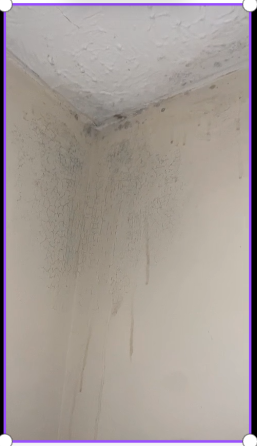
1 -
The mould is on the most exposed corner of the house (end of terrace), upstairs.I am getting my tradesman to clean, treat and repaint the wallsButterCheese said:Just to add, is the mould on the outside wall and/or on the most exposed corner of the house? This is the most common place. The above advice is good but I would not necessarily expect a tenant to conform to such a vigourous routine of opening/shutting windows and having heating on/off.Get rid of existing mould with a proper cleaner, ensure area is thoroughly dry, paint with mould resistant paint. Ensure there are no beds or furniture in close to the wall which will block air flow. Perhaps an easier way would be, keep window cracked/vented day and night, only close and heat if it's had enough time to demist0 -
Working extractor fan in the bathroom and above the electric oven/hob. The tenant is a single mum with a young baby (under 12 months), so there will be a lot of laundry drying in all parts of the property, including upstairs on or close to electric rads. I am sureMr.Generous said:Is there a fan in the bathroom? Does it work? Do they use it? Same for kitchen cooker hood. If tenant dries laundry in the home (and everyone does) then the De-humidifier needs to be used, and not - like one of my tenants - "Yeah I have it on for an hour every day" it needs to be on at least 12 hours a day but far better if 24 hr.1 -
Could you provide her with a tumble dryer or a washer dryer? A bit more expensive on the electric but not much. We have a washer dryer, which most people say are rubbish but they're not, so long as you know how to use them properly. I'm sure that the vast majority of baby clothes could go in the dryer ie vests, sleepsuits, bibs, muslins, socks etc.0
-
I bought this bungalow in the March and in the autumn had a big problem with condensation and mould on the inside of the windows/window sills, and on the rafters in the loft.
Most unfortunately I also found out the weyroc floors were all sopping wet and mouldy due to the condensation. The chest of drawers the seller had 'gifted' me stunk of mould, and my clothes on the bottom of the wardrobe were also covered in mould.
I did some research on here and realised I needed ventilation inside the property. The front bay windows have cavity wall insulation, I checked all the airbricks were clear. Two chimney breasts have been capped off - only one has a ventilation grid. Two tiny windows in two of the five rooms have trickle vents.
I now open the windows a little in every room every day.
I found an electrician to install a positive input ventilation unit in my loft - I got one without a heater.
It has worked. I've not had any condensation or mould forming anywhere since. I always use a dehumidifier on 'laundry' mode to dry my washing, and use the extractor fan in the kitchen when cooking. The fan in the bathroom comes on with the light switch.
£216 saved 24 October 20140 -
Previous tenant had a condensing dryer with the appropriate floor covering under it (to avoid water seeping into wooden flooring etc.). The property is not right for vented dryer (no position for it). Will note this for conversation with tenant, thanks.thegreenone said:Could you provide her with a tumble dryer or a washer dryer? A bit more expensive on the electric but not much. We have a washer dryer, which most people say are rubbish but they're not, so long as you know how to use them properly. I'm sure that the vast majority of baby clothes could go in the dryer ie vests, sleepsuits, bibs, muslins, socks etc.0









Confirm your email address to Create Threads and Reply

Categories
- All Categories
- 355.7K Banking & Borrowing
- 254.9K Reduce Debt & Boost Income
- 456.1K Spending & Discounts
- 248.3K Work, Benefits & Business
- 605.9K Mortgages, Homes & Bills
- 179K Life & Family
- 263.7K Travel & Transport
- 1.5M Hobbies & Leisure
- 16.2K Discuss & Feedback
- 37.7K Read-Only Boards