We’d like to remind Forumites to please avoid political debate on the Forum.
This is to keep it a safe and useful space for MoneySaving discussions. Threads that are – or become – political in nature may be removed in line with the Forum’s rules. Thank you for your understanding.
📨 Have you signed up to the Forum's new Email Digest yet? Get a selection of trending threads sent straight to your inbox daily, weekly or monthly!
Chipboard holes won't take a screw

UncleZen
Posts: 887 Forumite




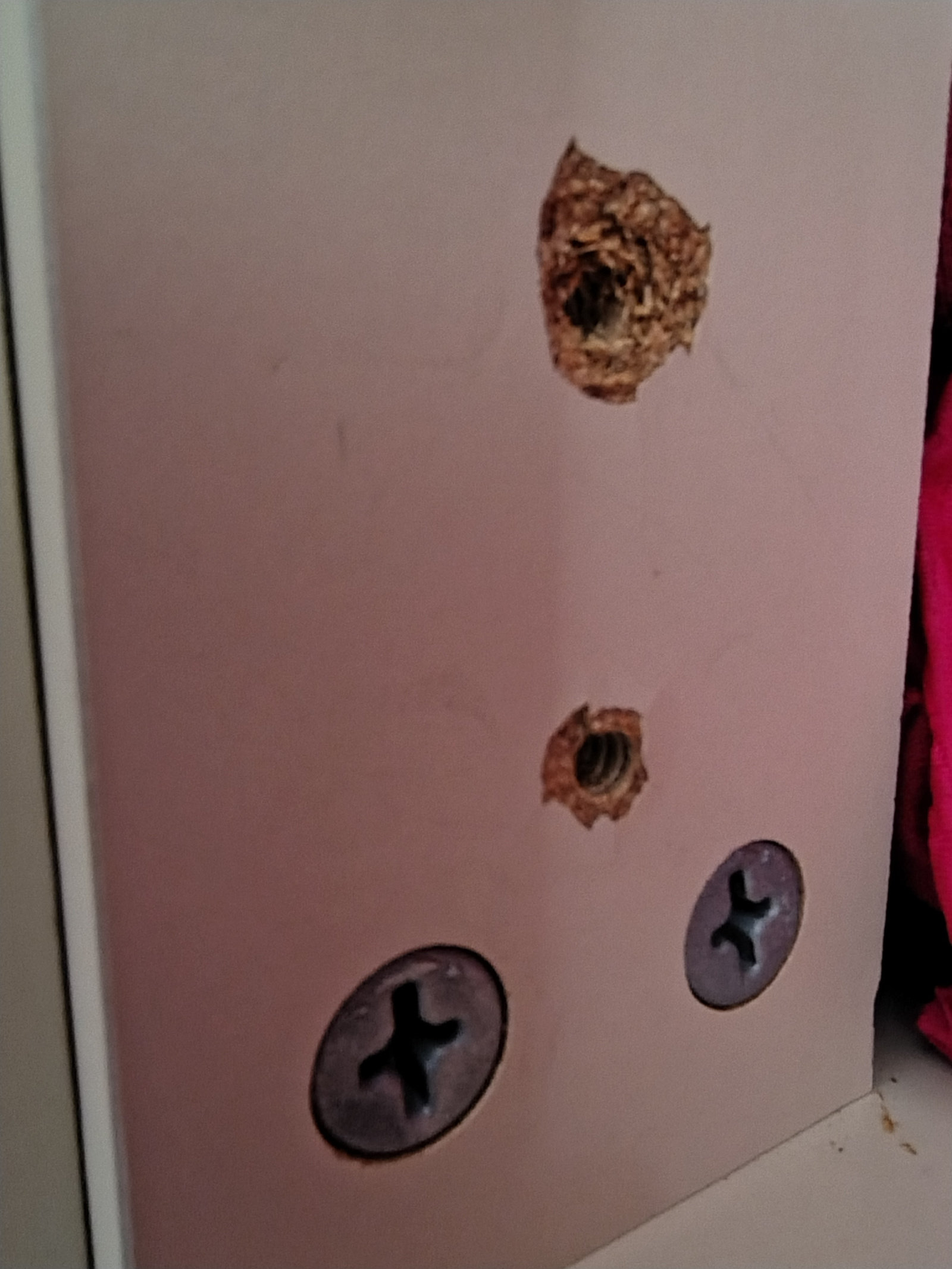
So, im replacing some hinges on some bedroom cupboards. The old hinges are knackered and I have new blum hinges and mounting plates. Upon removing the old mounting plates it appears that some of the holes will no longer take a new screw. So, my question is, what's the best way to make these holes good so that they can take the screws from the mounting plate. There are 4 bad in total. Picture below shows a good hole and a bad hole.
0
Comments
-
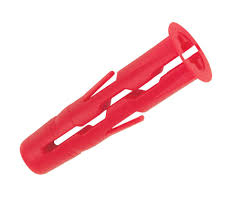
Fill the hole with slivers of wood, broken matches or cocktail sticks, or use rawl plugs.
0 -
I'd go for FG's first option, but coat the hole and wood pieces in PVA adhesive. Trim them flush with the surface when dry - slide/saw a long-bladed craft knife flush with the surface - and mind yer fingers.Q - are the 'screws' the large parallel-sided ones, or are they wood screws? I suspect, from the hole size - the former. If so, you'd really need to drill new 'pilot' holes of the right size first - 4 or 5mm? Or, replace these screws with normal wood screws.Tbh, you'll probably get away with adding just a few 'packing' slivvers of timber - shaved-down matchsticks - against the hole sides, again coated with PVA, and leaving a central hole for the large screw to go in. In this case, I'd screw in whilst the PVA is still wet.So, test-fit the screw in the hole. Figure out what thickness of match slices is needed - eg four of a quarter thickness, cut the required length (ie, bottom out in the hole, and end up flush with the top), add a dollop of PVA in the hole, and position the four slivvers against the hole sides. Screw.A completely different approach would be to use a wood filler to completely fill these holes, and then new receiving holes are drilled to take the screws. For this, the filler would need to be a good quality type that doesn't crumble - so likely a two-part product - and the pilot hole drilled correctly. Then the screw would need 'tapping' into place so it cuts a new thread. So firm and straight pressure, screw clockwise a turn or so, release most pressure and go anti-clock a half turn, reapply pressure and clockwise a turn or so (needs judging), back off etc etc etc. until the screw is fully in. Remove, blow out hole, fit hinge.0
-
You can get small worm type metal plugs the screw into the hole, and then will take a screw.
if you search for repairing kitchen cupboard doors they should pop up.You can also but metal repair plates that will take a machine screw.
these are the plate type, so you can cut them down if you want screwfix 6418J
also these type from SF 181GX , other makes and sellersA thankyou is payment enough .2 -
Use two-part wood filler, then drill a pilot hole after it sets.
Or, instead of wood filler, mix wood dust/chips with epoxy resin.1 -
That's idea can very good with the door taken off and laid flat it can be filled with the runny epoxy resin 2 part to just about level so need no trimming. Just dril pilot hole when set.0
-
You could also try filling the holes with sodium bicarbonate and thin superglue - lots of videos on YouTube I suspect0
-
Most likely the holes are in the cabinet wall that can't be taken off.Heedtheadvice said:That's idea can very good with the door taken off and laid flat it can be filled with the runny epoxy resin 2 part to just about level so need no trimming. Just dril pilot hole when set.
With added wood dust or sawdust it will be less runny and can be held in place with masking tape or cellotape.1 -
I’m not sure whether this would help but I’ve used a product called Wetnfix to get rawlplugs to hold where they’ve pulled out of plaster walls.1
-
Can this be trimmed into thin strips as required? If so, sounds promising.bjorn_toby_wilde said:I’m not sure whether this would help but I’ve used a product called Wetnfix to get rawlplugs to hold where they’ve pulled out of plaster walls.
0






Confirm your email address to Create Threads and Reply

Categories
- All Categories
- 355.6K Banking & Borrowing
- 254.8K Reduce Debt & Boost Income
- 456.1K Spending & Discounts
- 248.2K Work, Benefits & Business
- 605.7K Mortgages, Homes & Bills
- 179K Life & Family
- 263.5K Travel & Transport
- 1.5M Hobbies & Leisure
- 16.1K Discuss & Feedback
- 37.7K Read-Only Boards