We’d like to remind Forumites to please avoid political debate on the Forum.
This is to keep it a safe and useful space for MoneySaving discussions. Threads that are – or become – political in nature may be removed in line with the Forum’s rules. Thank you for your understanding.
Testing and reconnecting Kinetico 2020C Water Softener After 3+ Years Unused -DIY??




I’ve just realised that after living in my new place for more than three years, I still haven’t installed my water softener, which I brought over from my old house. I’m still in a hard-water area, and my partner has been reminding me about this for years—so I’ve finally decided to get it reconnected.
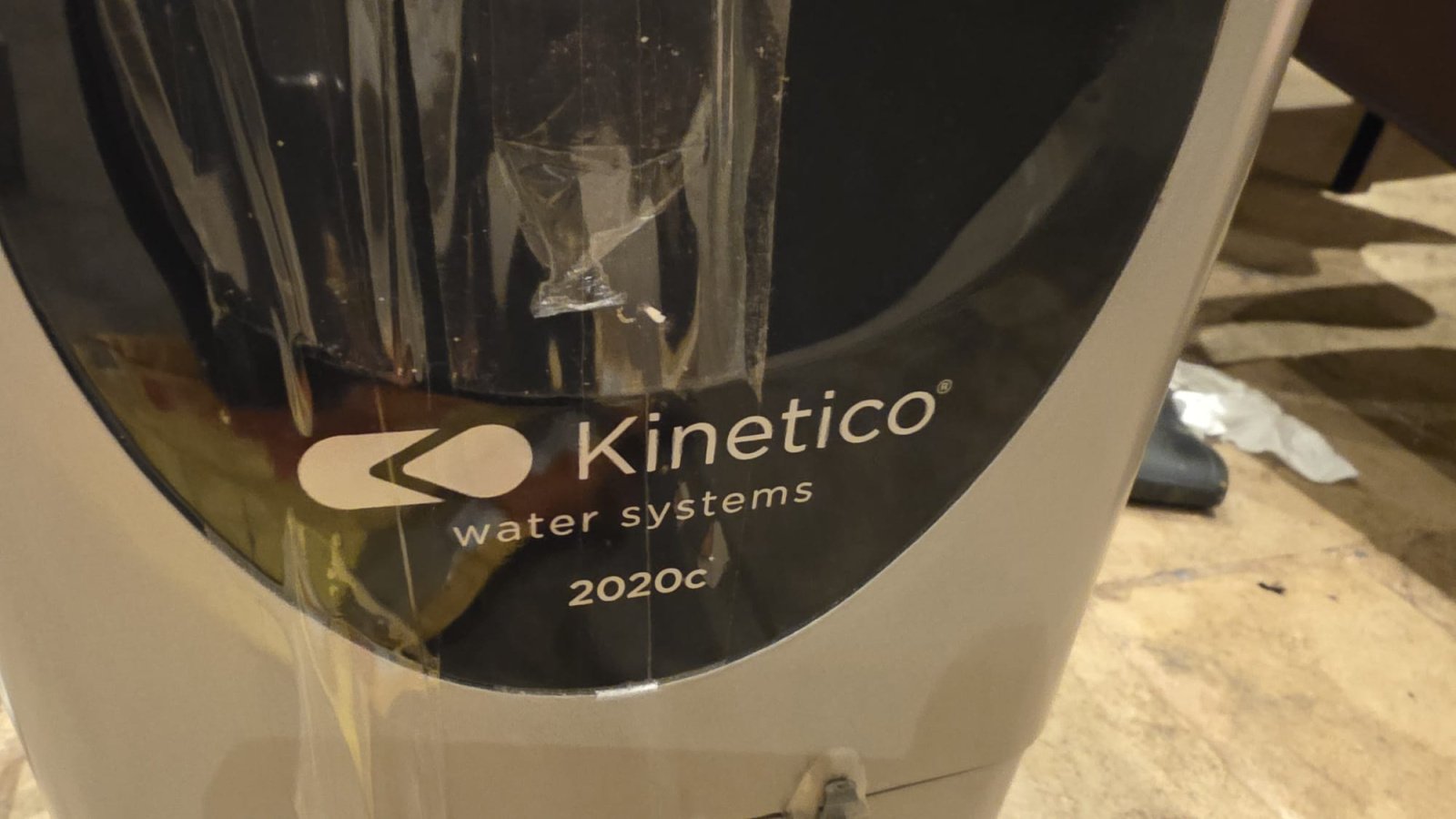
It’s a Kinetico 2020C model (photos attached).
Before installing it, I want to test whether it still works properly, since it hasn’t been used for over three years. I’ve found instructions on how to test it, and I plan to do that over the weekend.
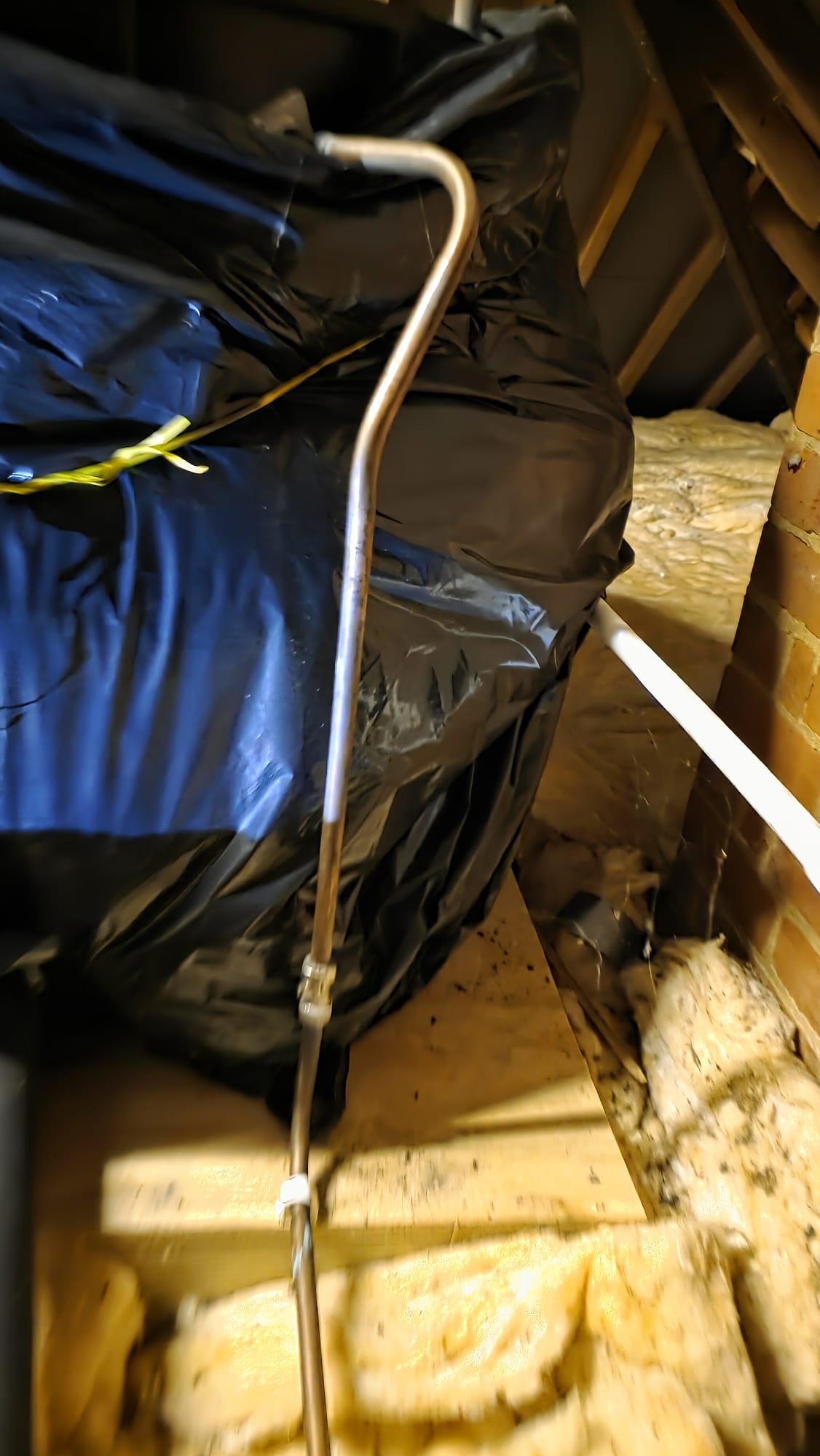
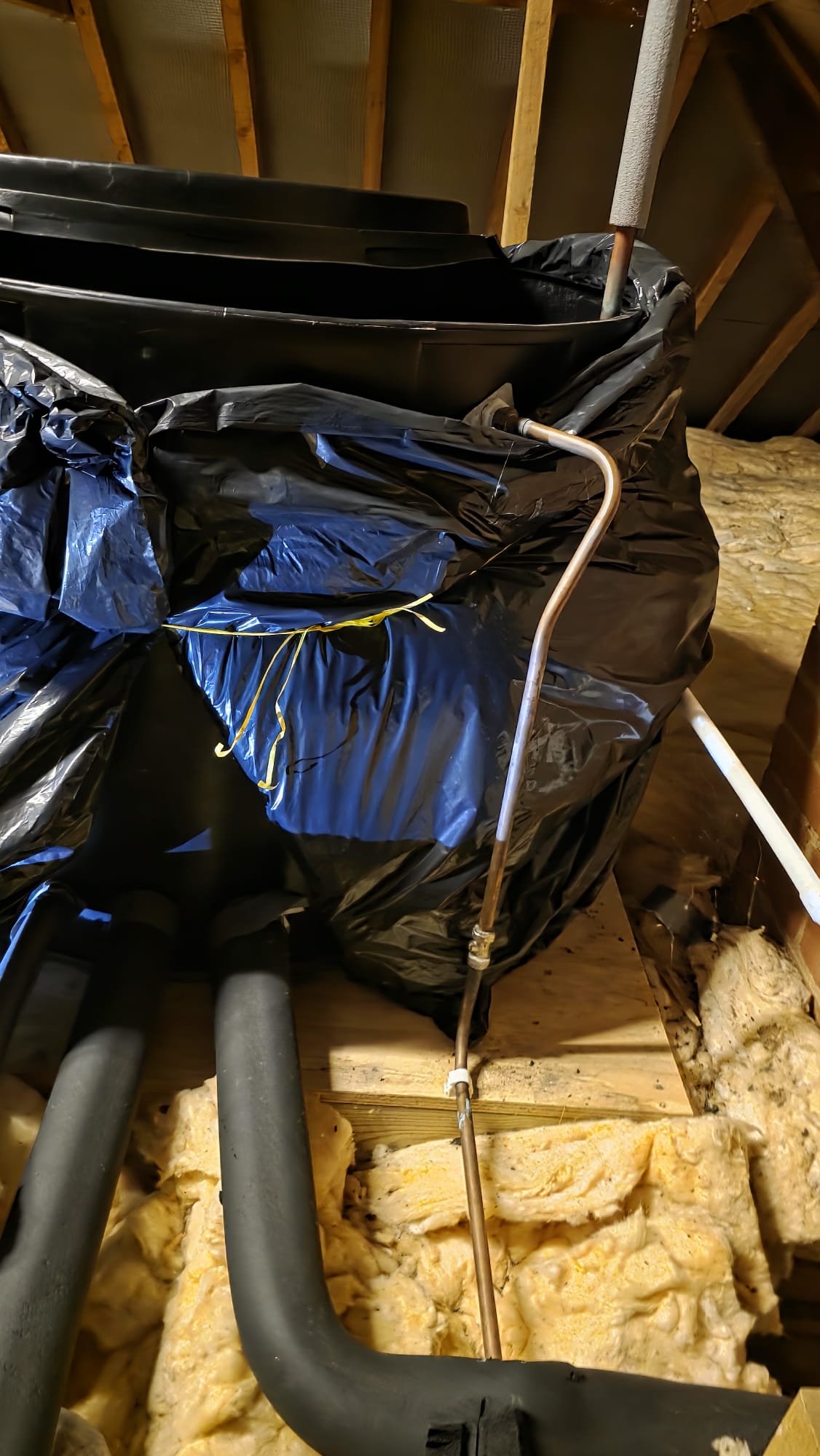
Now I’m trying to work out the best location for the installation. The only practical place seems to be the loft, next to the cold-water storage tank. The kitchen layout in this house changed over the last 40+ years—the original kitchen is now a drawing room, and the pipework there still feeds the tank.Because of that, I can’t install the softener under the current kitchen sink, as that pipework no longer connects to the tank.
I’ve added photos of the area around the tank.
Where would be the best place to position the softener in the loft once I’ve tested it?
Do I need to install it on an elevated platform, or can it simply sit on platform next to the tank?
Also, looking at the existing copper pipework, how would I create a bypass loop and take a feed to the softener? And how do I reconnect the softened water back into the copper line so that it supplies the tank and all downstream systems (e.g., hot-water cylinder, etc.)?
My other option is to leave the installation to an experienced plumber after I’ve finished testing the unit, instead of attempting the plumbing work myself.
Any advice would be greatly appreciated. Thanks very much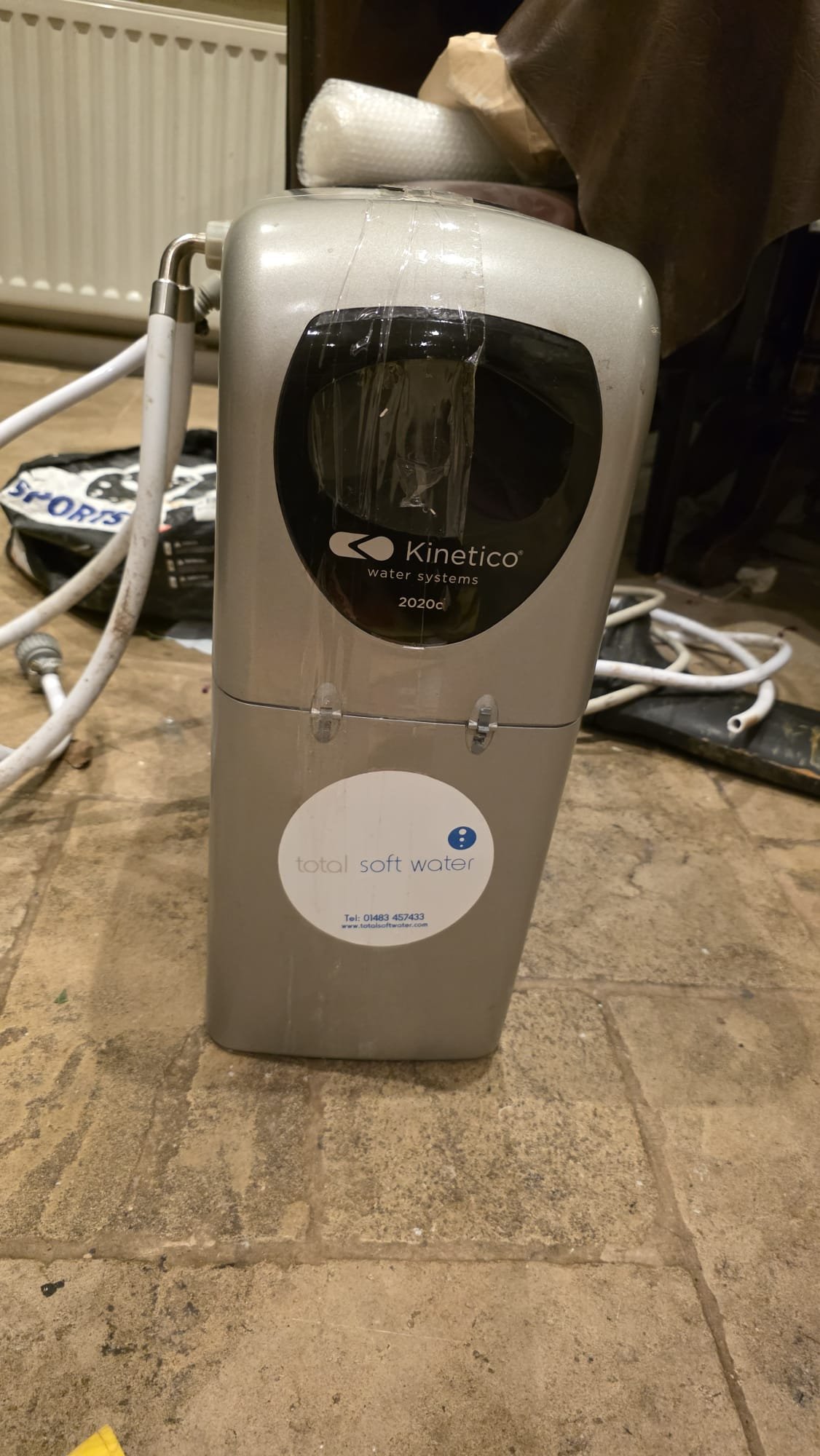
Comments
-
Any units in the drawing room where it could be located? Could there be?
I'm guessing these devices have - one cold mains inlet, one softened water outlet - which will supply the CWS, one drain, and one power supply?
Installation in the loft should be very doable, but you'd need to allow for the drain - I wonder if the 22mm overflow pipe will double as this?
Other than that, no, it doesn't need to be raised, as it's water mains-driven. But, you will need to protect it against frost, so ideally installed inside an insulated box - could be simple lift-off made from Celotex.
Bear in mind the potential consequences should you make a plumbing error, of course.
How often does it need resulting? And is lift access very good - safe platform, and bright lights?
The above is all assumption.1 -
WIAWSNB said:...I'm guessing these devices have - one cold mains inlet, one softened water outlet - which will supply the CWS, one drain, and one power supply?Installation in the loft should be very doable, but you'd need to allow for the drain - I wonder if the 22mm overflow pipe will double as this?
...Also an overflow connection, which needs to run downwards from the connection point on the side of the body of the softener and exit somewhere the overflowing water will be seen.The drain needs to be larger than 22mm - there has to be an 'air gap' between the exit of the drain pipe attached to the softener and any water contained in the installed drain run - to prevent backflow into the softener. I wouldn't use anything less than 40mm for this, and wouldn't have it shared with anything else before getting to the stack or underground drainage.If the unit develops a fault then the drain and overflow are the two things which prevent mains pressure/volume water escaping into the loft.... with obvious consequences for anything below.The other issue is weight - I couldn't find a weight in the specs, but softeners tend to be heavy when empty, and considerably more heavy when the ion exchange tank(s) and brine reservior fill up with water. Personally I wouldn't put one in a loft, but if there were no choice then I'd put it on a platform with a load-spreading structure underneath so the weight is over at least three rafters (and remembering the rafters already supporting the water tank may not have been designed for that purpose).1 -
Is there an electric shower in the house?1
-
sujsuj said:
....
Before installing it, I want to test whether it still works properly, since it hasn’t been used for over three years. I’ve found instructions on how to test it, and I plan to do that over the weekend.
...A good idea to test it before installation, but after standing unused for a long time you'll also want to flush it through with lots of clean water. So not just a functional test, but flushing for say an hour, leave to stand for 24 hours, then flush for a further hour. You'll want to do the flushing shortly before putting the unit back into use... don't flush it and then leave it 6 months before you get round to doing the install.The ion exchanger has a vast surface area for bacteria and other nasties to potentially grow on, so you'll want to make sure they have all gone.Also, under no circumstances whatsover, put anything other than clean mains water into the unit to clean/flush it. E.g. no bleach, disinfectant or washing up liquid should be going anywhere near the inside of the machine.2 -
If you do plan to install the softener in your loft, bear in mind that you will need to top up the salt regularly.
Can you access the loft easily while carrying salt blocks or tablet salt?A man walked into a car showroom.
He said to the salesman, “My wife would like to talk to you about the Volkswagen Golf in the showroom window.”
Salesman said, “We haven't got a Volkswagen Golf in the showroom window.”
The man replied, “You have now mate".1 -
WIAWSNB said:Any units in the drawing room where it could be located? Could there be?
I'm guessing these devices have - one cold mains inlet, one softened water outlet - which will supply the CWS, one drain, and one power supply?
Installation in the loft should be very doable, but you'd need to allow for the drain - I wonder if the 22mm overflow pipe will double as this?
Other than that, no, it doesn't need to be raised, as it's water mains-driven. But, you will need to protect it against frost, so ideally installed inside an insulated box - could be simple lift-off made from Celotex.
Bear in mind the potential consequences should you make a plumbing error, of course.
How often does it need resulting? And is lift access very good - safe platform, and bright lights?
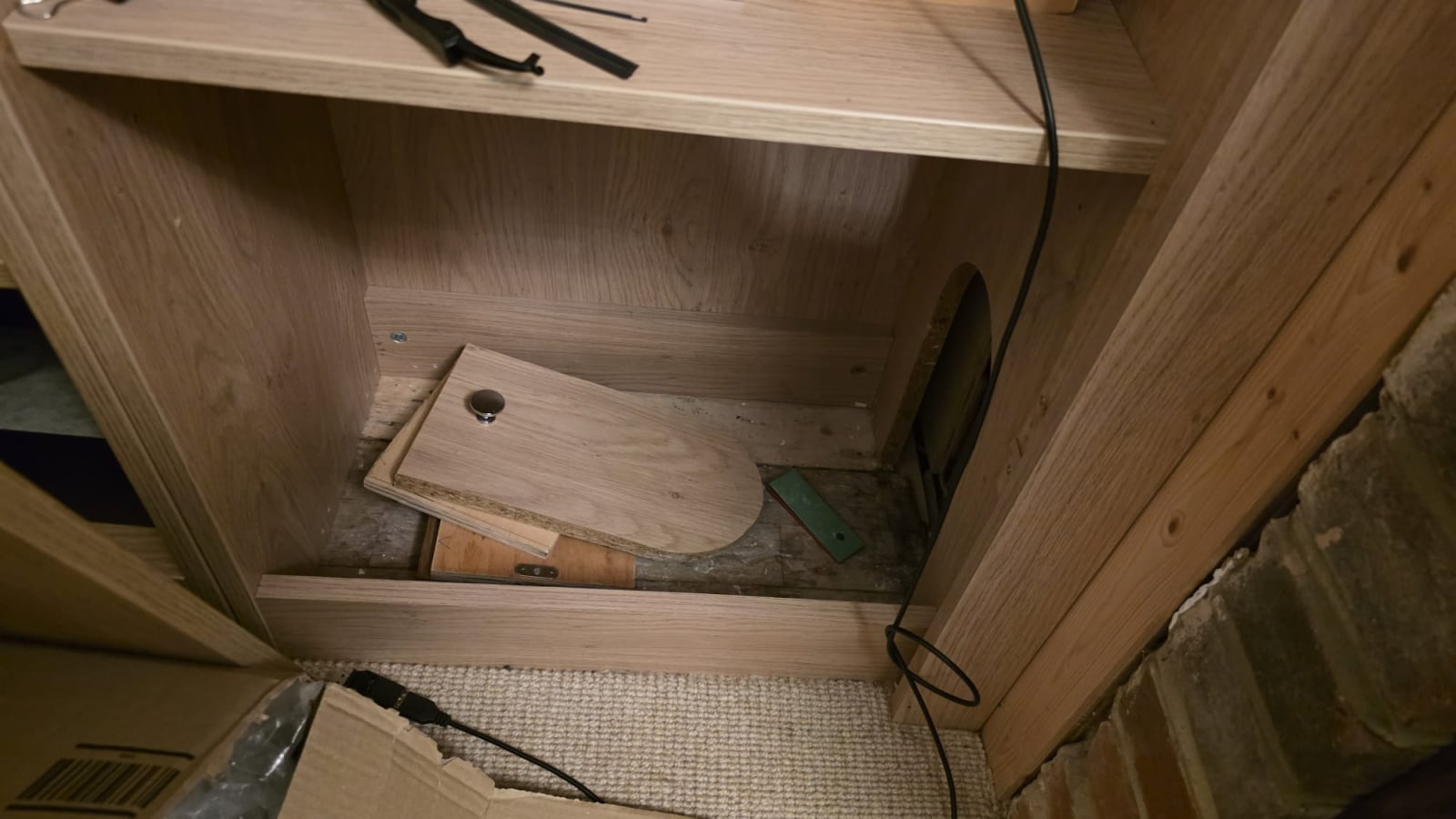
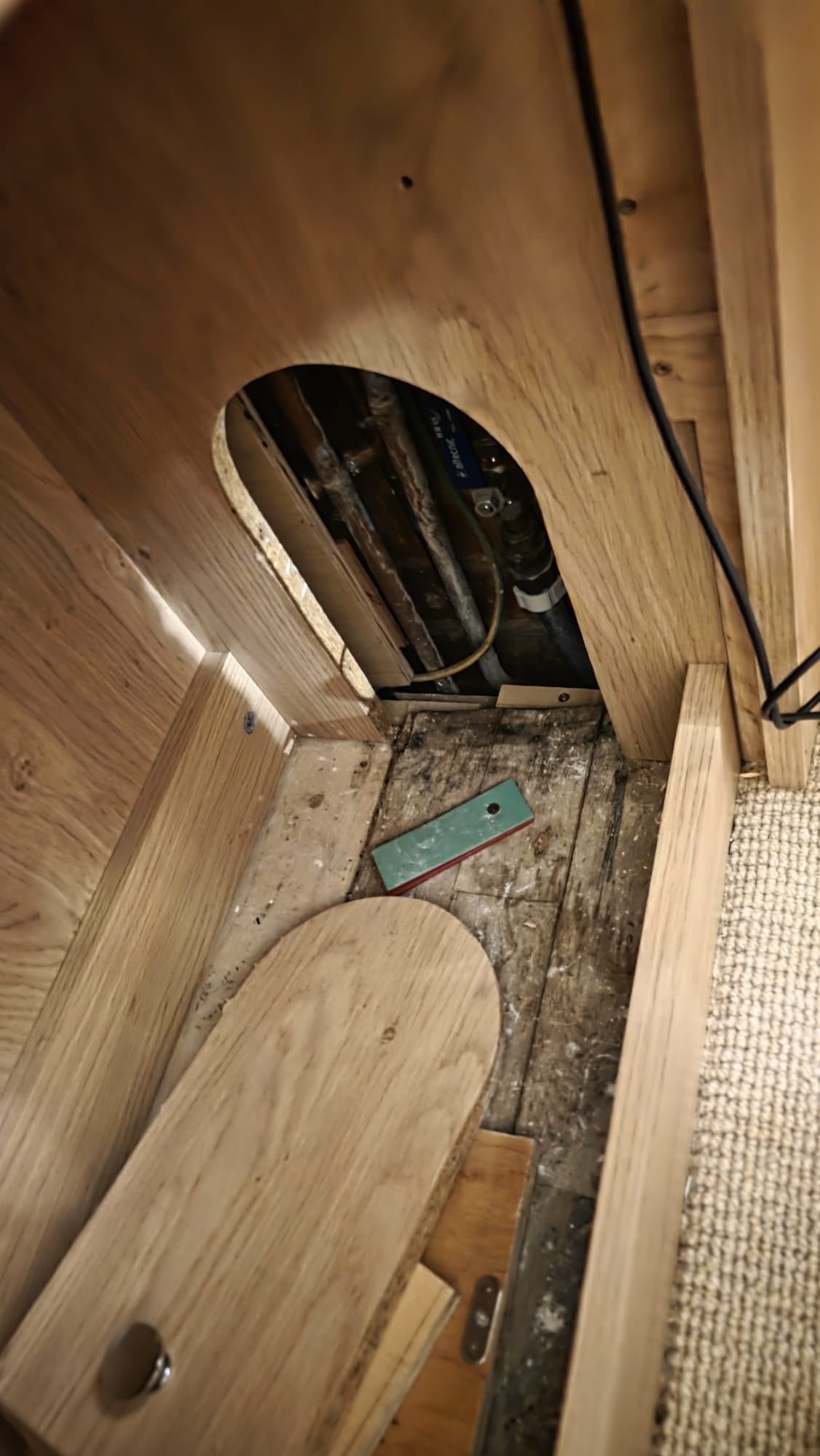
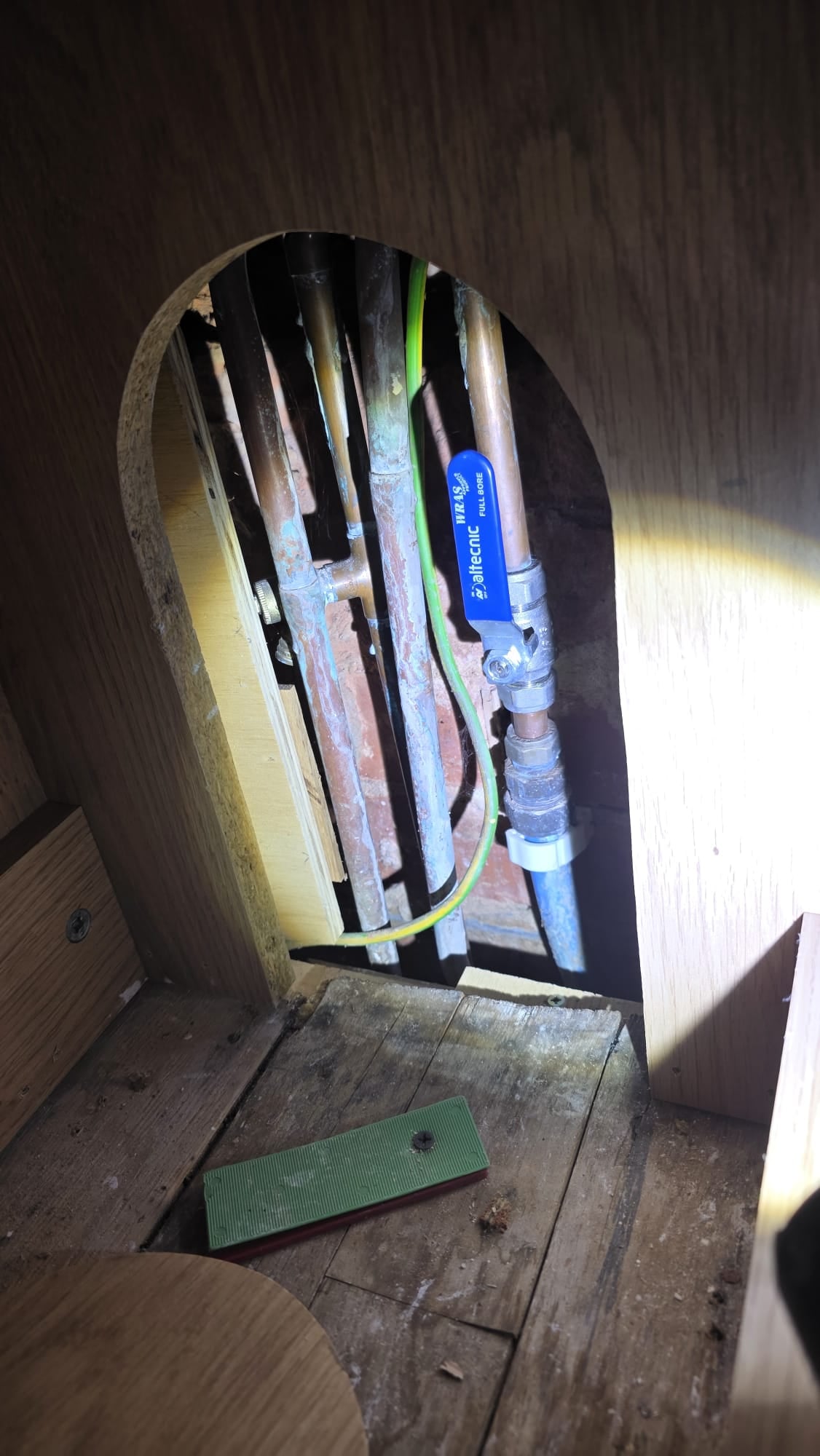
The above is all assumption.Please see the photos from the drawing room. Inside the cupboard, I can access the main water stop valve. The pipe inside the cupboard splits into two—one line goes directly to the kitchen and supplies the dishwasher and sink, and the other goes to the loft tank.
If I install the softener before this split, I will need a method to route unsoftened water to the kitchen, which is in a different room. If I install the softener inside this cupboard but after the split, then only the tank-fed outlets will receive softened water. The kitchen sink and dishwasher would still receive unsoftened water.
In that case, I would also need to find a way to run the waste pipe from the softener to an external drain, which is quite difficult from this drawing room location. For these reasons, installing the softener in the loft next to the tank—although inconvenient—seems like the best of the limited options. Please see the photos.
 1
1 -
This softener has one cold mains inlet, one softened-water outlet, and one drain connection. It doesn’t require a power supply, as it operates using the kinetic energy of the water flow.
A drain in the loft should be fine, as there is already an overflow pipe from the water tank, and the connection looks straightforward. Access and lighting in the loft are also good.
0 -
Section62 said:WIAWSNB said:...I'm guessing these devices have - one cold mains inlet, one softened water outlet - which will supply the CWS, one drain, and one power supply?Installation in the loft should be very doable, but you'd need to allow for the drain - I wonder if the 22mm overflow pipe will double as this?
...Also an overflow connection, which needs to run downwards from the connection point on the side of the body of the softener and exit somewhere the overflowing water will be seen.The drain needs to be larger than 22mm - there has to be an 'air gap' between the exit of the drain pipe attached to the softener and any water contained in the installed drain run - to prevent backflow into the softener. I wouldn't use anything less than 40mm for this, and wouldn't have it shared with anything else before getting to the stack or underground drainage.If the unit develops a fault then the drain and overflow are the two things which prevent mains pressure/volume water escaping into the loft.... with obvious consequences for anything below.The other issue is weight - I couldn't find a weight in the specs, but softeners tend to be heavy when empty, and considerably more heavy when the ion exchange tank(s) and brine reservior fill up with water. Personally I wouldn't put one in a loft, but if there were no choice then I'd put it on a platform with a load-spreading structure underneath so the weight is over at least three rafters (and remembering the rafters already supporting the water tank may not have been designed for that purpose).For the overflow connection, I can follow a similar approach to the existing tank overflow pipe, which is already in place and connected.
The weight is also not a concern—even with salt, the current water-tank platform should easily be able to support the softener.
0 -
Yes, there are two sets of Aqualisa shower units, including all pumps and related equipment, installed in the loft.
0 -
Section62 said:sujsuj said:
....
Before installing it, I want to test whether it still works properly, since it hasn’t been used for over three years. I’ve found instructions on how to test it, and I plan to do that over the weekend.
...A good idea to test it before installation, but after standing unused for a long time you'll also want to flush it through with lots of clean water. So not just a functional test, but flushing for say an hour, leave to stand for 24 hours, then flush for a further hour. You'll want to do the flushing shortly before putting the unit back into use... don't flush it and then leave it 6 months before you get round to doing the install.The ion exchanger has a vast surface area for bacteria and other nasties to potentially grow on, so you'll want to make sure they have all gone.Also, under no circumstances whatsover, put anything other than clean mains water into the unit to clean/flush it. E.g. no bleach, disinfectant or washing up liquid should be going anywhere near the inside of the machine.Yes, testing is the first step. Since it’s a kinetic softener, I need to connect it to a running water supply to make sure the mechanism operates correctly. I plan to test it thoroughly before installation.
Good point regarding bacteria, as the unit has been unused for a long time. I’m fully aware not to use any disinfectants.
0





Confirm your email address to Create Threads and Reply

Categories
- All Categories
- 355.8K Banking & Borrowing
- 254.9K Reduce Debt & Boost Income
- 456.2K Spending & Discounts
- 248.3K Work, Benefits & Business
- 605.9K Mortgages, Homes & Bills
- 179K Life & Family
- 263.7K Travel & Transport
- 1.5M Hobbies & Leisure
- 16.2K Discuss & Feedback
- 37.7K Read-Only Boards