We’d like to remind Forumites to please avoid political debate on the Forum.
This is to keep it a safe and useful space for MoneySaving discussions. Threads that are – or become – political in nature may be removed in line with the Forum’s rules. Thank you for your understanding.
📨 Have you signed up to the Forum's new Email Digest yet? Get a selection of trending threads sent straight to your inbox daily, weekly or monthly!
Can someone please explain what the 2K threshold and NI contributions change means
Comments
-
I'm unclear if this change applies to things like the Local Government Pension Scheme? I currently make Additional Voluntary Contributions (AVCs) into a separate pot: Additional Voluntary Contributions :: LGPS is that considered salary sacrifice or not?0
-
You need to know if your AVCs are through salary sacrifice. Not all LGPS schemes offer it. If it is fill your boots over the next three years. However also have in mind LGPS AVCs currently have different rules over other pension AVCs regards tax free drawdown amounts, so the devil will be in the detail once the law has been worked through,daeargwr said:I'm unclear if this change applies to things like the Local Government Pension Scheme? I currently make Additional Voluntary Contributions (AVCs) into a separate pot: Additional Voluntary Contributions :: LGPS is that considered salary sacrifice or not?
Regardless of this the chances are there will be an election before this change comes into force.1 -
The current system itself is also unfair,doodling said:Hi,
Im expecting HMRC (and maybe government through legislation) to be playing "whack a mole" with that and other, similar approaches for several years.zagfles said:Companies have a long time to react to this. Wonder how many will start operating "reverse sal sac" schemes? Offer jobs paying eg £30k with £30k employer pension conts, with the option to trade pension conts for extra salary
The exact definition of salary sacrifice previously hasn't really mattered since it didn't really affect how much tax was paid - it does now and the creative skills of those at the edge of the tax system will no doubt be put to full use.
I can see some employers, after consultation with staff, paying pay rises as increases in pension contributions for the next few years - that wouldn't be salary sacrifice either providing it wasn't done on an individual basis.
The fundamental problem is that the government has decided to tax based on how something is done, not on what is done - that approach will always create loopholes and unfairness.
Only about a third of private sector employees and 10% of public sector employees are actually in salary sacrifice schemes. Plus of course the self employed and minimum wage workers do not benefit.
So everybody else is paying their full NI , whilst those lucky enough to be in salsac schemes do not .
According to the budget data, 74% of basic rate taxpayers in salsac schemes will not be affected by the change.
So at a rough guess, about 12% of employees overall will be affected. Mainly those with the broadest shoulders I think.
On the other hand those with the broadest shoulders can still fill their boots with 40% tax relief on pension contributions, so could have been a lot worse.
3 -
The main issue would probably be employees applying for mortgages, loans, car finance etc .kermchem said:My pension scheme is USS, but I will be retired by the time these changes are applied, so “asking for some friends”. In USS employers currently pay 14.5% and employee 6.1% of salary. My employer offers salary sacrifice. My pension contributions this year well exceed 2k.
Given recent history I am not sure this could be agreed, but what stops employers, USS and unions agreeing that employers pay 20.6%, employees take a pay cut, all of this is free of NI, and the Treasury finds itself no better off? I believe it is called a non-contributory scheme. Where is my thinking flawed?
With salsac most credit providers are aware of it and will use the 'pre sal sac' full salary when calculating eligibility.
In the example you give, that would not be possible.
Also I think USS is a bit of a niche example, as the large majority of public sector schemes do not have salsac arrangements anyway.0 -
The general consensus in the workplace over the budget today. “Phew, we got away with it”0
-
Those with the broadest shoulders are tired from having to carry so many people.Albermarle said:
The current system itself is also unfair,doodling said:Hi,
Im expecting HMRC (and maybe government through legislation) to be playing "whack a mole" with that and other, similar approaches for several years.zagfles said:Companies have a long time to react to this. Wonder how many will start operating "reverse sal sac" schemes? Offer jobs paying eg £30k with £30k employer pension conts, with the option to trade pension conts for extra salary
The exact definition of salary sacrifice previously hasn't really mattered since it didn't really affect how much tax was paid - it does now and the creative skills of those at the edge of the tax system will no doubt be put to full use.
I can see some employers, after consultation with staff, paying pay rises as increases in pension contributions for the next few years - that wouldn't be salary sacrifice either providing it wasn't done on an individual basis.
The fundamental problem is that the government has decided to tax based on how something is done, not on what is done - that approach will always create loopholes and unfairness.
Only about a third of private sector employees and 10% of public sector employees are actually in salary sacrifice schemes. Plus of course the self employed and minimum wage workers do not benefit.
So everybody else is paying their full NI , whilst those lucky enough to be in salsac schemes do not .
According to the budget data, 74% of basic rate taxpayers in salsac schemes will not be affected by the change.
So at a rough guess, about 12% of employees overall will be affected. Mainly those with the broadest shoulders I think.
On the other hand those with the broadest shoulders can still fill their boots with 40% tax relief on pension contributions, so could have been a lot worse.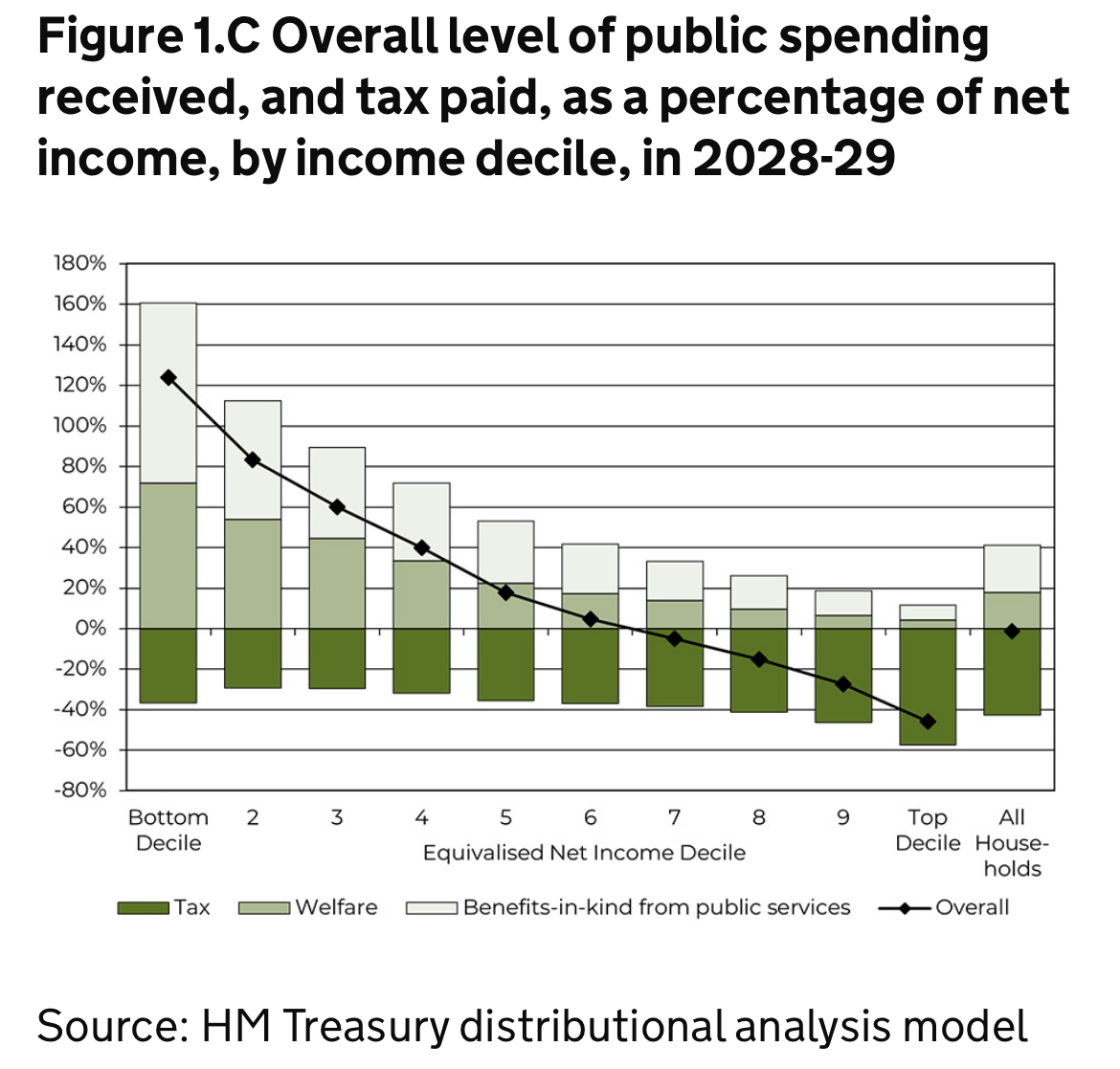
0 -
Andy_L said:
Depends if its sal-sac or not. I doubt there are many (if any?) sal-sac DB schemes, what would be the point as contractual "inflexible" pension contributions are already NI freegatters said:How does this affect employer contributions to a defined benefit pension scheme?
USS is a hybrid DB/DC scheme, where the salary (before sac!) up to a threshold goes into the DB, and over a threshold goes into DC. My USS employer offers sal-sac1 -
I'd suggest it is those who are mainly looking out for themselves if the £2K limit means they "are tired from having to carry so many people".BlackKnightMonty said:
Those with the broadest shoulders are tired from having to carry so many people.Albermarle said:
The current system itself is also unfair,doodling said:Hi,
Im expecting HMRC (and maybe government through legislation) to be playing "whack a mole" with that and other, similar approaches for several years.zagfles said:Companies have a long time to react to this. Wonder how many will start operating "reverse sal sac" schemes? Offer jobs paying eg £30k with £30k employer pension conts, with the option to trade pension conts for extra salary
The exact definition of salary sacrifice previously hasn't really mattered since it didn't really affect how much tax was paid - it does now and the creative skills of those at the edge of the tax system will no doubt be put to full use.
I can see some employers, after consultation with staff, paying pay rises as increases in pension contributions for the next few years - that wouldn't be salary sacrifice either providing it wasn't done on an individual basis.
The fundamental problem is that the government has decided to tax based on how something is done, not on what is done - that approach will always create loopholes and unfairness.
Only about a third of private sector employees and 10% of public sector employees are actually in salary sacrifice schemes. Plus of course the self employed and minimum wage workers do not benefit.
So everybody else is paying their full NI , whilst those lucky enough to be in salsac schemes do not .
According to the budget data, 74% of basic rate taxpayers in salsac schemes will not be affected by the change.
So at a rough guess, about 12% of employees overall will be affected. Mainly those with the broadest shoulders I think.
On the other hand those with the broadest shoulders can still fill their boots with 40% tax relief on pension contributions, so could have been a lot worse.
Those of us who appreciate that salary sacrifice is a very generous tax saving mechanism can accept paying a little more to support those that need it.2 -
I paid over £50k in income tax and NIC last year, shoulders ache so much. I am deeply resentful in paying a penny more.MeteredOut said:
I'd suggest it is those who are mainly looking out for themselves "are tired from having to carry so many people".BlackKnightMonty said:
Those with the broadest shoulders are tired from having to carry so many people.Albermarle said:
The current system itself is also unfair,doodling said:Hi,
Im expecting HMRC (and maybe government through legislation) to be playing "whack a mole" with that and other, similar approaches for several years.zagfles said:Companies have a long time to react to this. Wonder how many will start operating "reverse sal sac" schemes? Offer jobs paying eg £30k with £30k employer pension conts, with the option to trade pension conts for extra salary
The exact definition of salary sacrifice previously hasn't really mattered since it didn't really affect how much tax was paid - it does now and the creative skills of those at the edge of the tax system will no doubt be put to full use.
I can see some employers, after consultation with staff, paying pay rises as increases in pension contributions for the next few years - that wouldn't be salary sacrifice either providing it wasn't done on an individual basis.
The fundamental problem is that the government has decided to tax based on how something is done, not on what is done - that approach will always create loopholes and unfairness.
Only about a third of private sector employees and 10% of public sector employees are actually in salary sacrifice schemes. Plus of course the self employed and minimum wage workers do not benefit.
So everybody else is paying their full NI , whilst those lucky enough to be in salsac schemes do not .
According to the budget data, 74% of basic rate taxpayers in salsac schemes will not be affected by the change.
So at a rough guess, about 12% of employees overall will be affected. Mainly those with the broadest shoulders I think.
On the other hand those with the broadest shoulders can still fill their boots with 40% tax relief on pension contributions, so could have been a lot worse.
Those of us who appreciate that salary sacrifice is a very generous tax saving mechanism can accept paying a little more to support those that need it.0 -
If I had a workplace, I'd probably come to the same consensus.Cobbler_tone said:The general consensus in the workplace over the budget today. “Phew, we got away with it”0













Confirm your email address to Create Threads and Reply

Categories
- All Categories
- 355.7K Banking & Borrowing
- 254.9K Reduce Debt & Boost Income
- 456.1K Spending & Discounts
- 248.3K Work, Benefits & Business
- 605.9K Mortgages, Homes & Bills
- 179K Life & Family
- 263.7K Travel & Transport
- 1.5M Hobbies & Leisure
- 16.2K Discuss & Feedback
- 37.7K Read-Only Boards