We’d like to remind Forumites to please avoid political debate on the Forum.
This is to keep it a safe and useful space for MoneySaving discussions. Threads that are – or become – political in nature may be removed in line with the Forum’s rules. Thank you for your understanding.
📨 Have you signed up to the Forum's new Email Digest yet? Get a selection of trending threads sent straight to your inbox daily, weekly or monthly!
Can someone please explain what the 2K threshold and NI contributions change means
Comments
-
Not sure why the othee thread was closed.0
-
This one has been specifically designed to cover the next 4 years of speculation and u turns leading up to the eventual cancelling of this poorly thought out policyLeft is never right but I always am.1
-
I almost made a comment ahead of it happening that I expected it to come, because no doubt there will be an 'official' one that can steal the thunder. Whatever, heaven forbid I'm a cynic or anything when it comes to the invisible mods here.westv said:Not sure why the othee thread was closed.0 -
How does that work as I have been doing it for years and my accountant hasn't said anything and nor have I had a 15% bill..DairyQueen said:
The employer will pay 15%.fizio said:
There is no salary sacrifice involved for me. I just look at the annual profit and chuck the majority of it into a sipp via an employers contribution (yes there is a nominal employee salary involved). I am not sure it's clear if the employer always only pays the 2% rate regardless of employee salary - given all this talk about 8%.DRS1 said:
I think it is going to be trickier to tell that a director/shareholder in a one man company is salary sacrificing. They can easily structure things so they get a lowish fixed salary and then the company's profits above that salary (and associated tax etc) are paid as employer contributions to a pension or as dividends to the shareholder. You might call that dividend sacrifice!MeteredOut said:
Ltd company directors will will follow the same rules as everyone else regarding the £2K threshold. And those who salary sacrifice via Umbrella companies will pay incremental EE and ER NI contributions over the £2K too.fizio said:I take it this mean that a small LTD company director who gets a large pension contribution from his company instead of salary/dividends, will be hit - hopefully by 2% rather than 8%?0 -
rom the budget docs.. This seems to suggest that a director of a LTD can continue to have the employer contribution with no NICs.
2. What this means for employers
From April 2029, salary sacrifice arrangements for pensions can continue and the first £2,000 of contributions per employee will be exempt from NICs.
Employers will need to report the total amount sacrificed through their existing payroll software. HMRC will engage with stakeholders on this and publish further guidance on this.
All employer pension contributions will continue to be free of NICs.
2 -
My pension scheme is USS, but I will be retired by the time these changes are applied, so “asking for some friends”. In USS employers currently pay 14.5% and employee 6.1% of salary. My employer offers salary sacrifice. My pension contributions this year well exceed 2k.
Given recent history I am not sure this could be agreed, but what stops employers, USS and unions agreeing that employers pay 20.6%, employees take a pay cut, all of this is free of NI, and the Treasury finds itself no better off? I believe it is called a non-contributory scheme. Where is my thinking flawed?1 -
Looks like Ltd Co Directors will be able to still pay themselves the basic salary and large company pension contributions as the individual never had the large salary to sacrifice.MeteredOut said:
Ltd company directors will will follow the same rules as everyone else regarding the £2K threshold. And those who salary sacrifice via Umbrella companies will pay incremental EE and ER NI contributions over the £2K too.fizio said:I take it this mean that a small LTD company director who gets a large pension contribution from his company instead of salary/dividends, will be hit - hopefully by 2% rather than 8%?
It is possible that UCs may find a way to offer differential contracts that allow higher employer pension. They have three years to get the rules correct.
Also, the whole thing may never happen given the start date of this change is quite possibly after the next GE.0 -
Ltd company contributions are a business expense from profits before Corporation Tax, so no NICs to pay and an effective saving of the Corporation Tax too (19-25% tax saving goes into your pension instead of HMRC). It’s a huge benefit for ltd company directors that doesn’t seem to have been affected at all by the budget.
If anything, it’s even more useful now as dividend tax rates appear to have increased by 2%, except for the additional rate which stays at 39.35%.0 -
Hi,
Im expecting HMRC (and maybe government through legislation) to be playing "whack a mole" with that and other, similar approaches for several years.zagfles said:Companies have a long time to react to this. Wonder how many will start operating "reverse sal sac" schemes? Offer jobs paying eg £30k with £30k employer pension conts, with the option to trade pension conts for extra salary
The exact definition of salary sacrifice previously hasn't really mattered since it didn't really affect how much tax was paid - it does now and the creative skills of those at the edge of the tax system will no doubt be put to full use.
I can see some employers, after consultation with staff, paying pay rises as increases in pension contributions for the next few years - that wouldn't be salary sacrifice either providing it wasn't done on an individual basis.
The fundamental problem is that the government has decided to tax based on how something is done, not on what is done - that approach will always create loopholes and unfairness.
1 -
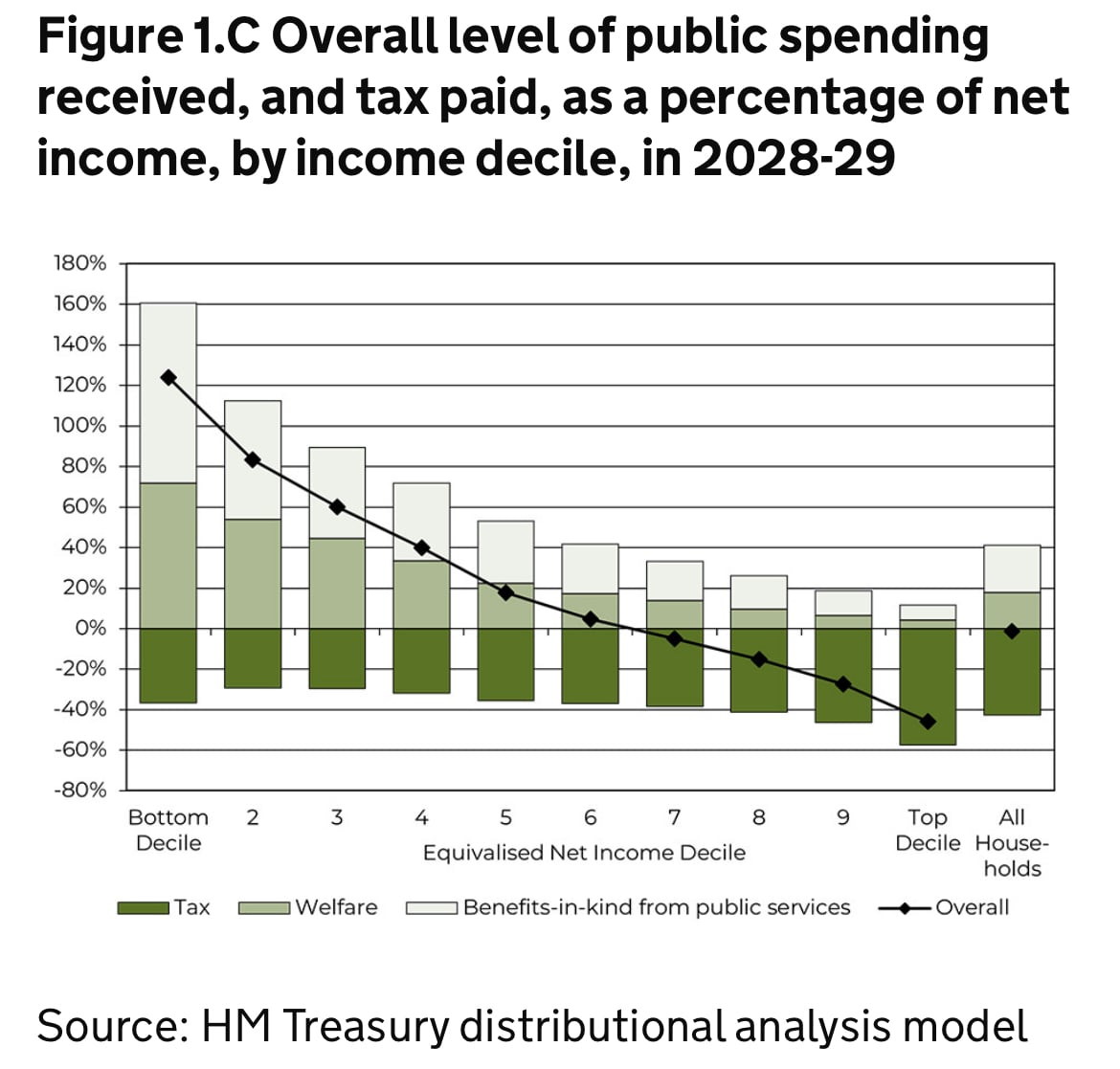
When people generally aren’t saving enough for retirement, this decision discourages, it is so short sighted. Meanwhile the welfare bill goes up up up. Leading to fewer and fewer people (~30%) actually NET contributing to the economy.
1














Confirm your email address to Create Threads and Reply

Categories
- All Categories
- 355.7K Banking & Borrowing
- 254.9K Reduce Debt & Boost Income
- 456.1K Spending & Discounts
- 248.3K Work, Benefits & Business
- 605.9K Mortgages, Homes & Bills
- 179K Life & Family
- 263.7K Travel & Transport
- 1.5M Hobbies & Leisure
- 16.2K Discuss & Feedback
- 37.7K Read-Only Boards